Newfoundland Rentals Compared to Bringing Your Own
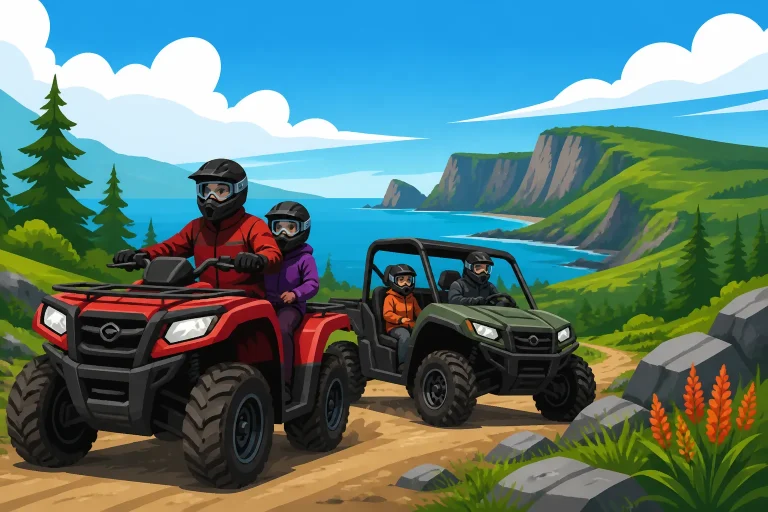
Choosing between renting an ATV or side-by-side and bringing your own to Newfoundland is about more than the machine. Ferry logistics, local rules, trail access, gear and the kind of trip you want all affect the decision. Here’s how to compare the options, plan the practical details and avoid paying to transport a machine you may not need.
The short answer: rent for convenience, bring your own for flexibility
Renting is usually the simpler choice if you want a short ride, are travelling without a tow vehicle, or would rather not manage a machine on the ferry. You avoid transporting your ATV or UTV across the water, and an operator can explain the machine, local conditions and pickup arrangements. The trade-off is that you’re limited by the rental company’s availability, terms and service area.
Bringing your own can make more sense for a longer trip, a group that already owns machines, or a rider who wants to explore on a personal schedule. You can use a machine you know, carry the gear you prefer and plan routes around your own itinerary. In return, you’ll need to arrange transport, secure the machine, handle paperwork and make sure it meets Newfoundland’s requirements.
The comparison is not simply “rental fee versus ferry fare.” A fair calculation includes the machine’s transport, any trailer costs, fuel, rental terms, accommodation, time spent collecting or unloading equipment, and the value you place on flexibility.
| Your situation | Renting may suit you if | Bringing your own may suit you if |
|---|---|---|
| Trip length | You want one outing or a short tour | You plan several riding days |
| Travel setup | You have no truck, trailer or towing experience | You already have a suitable tow vehicle and trailer |
| Riding experience | You want an orientation or guided support | You know your machine and can manage routine checks |
| Route plans | You’re comfortable with a defined pickup area or tour route | You want to plan multiple stops and ride independently |
| Group size | A local operator has suitable machines available | Your group has its own machines and transport |
| Preparation | You want fewer transport and registration tasks | You’re willing to research rules and prepare paperwork |
There’s no universal winner. A rental can cost more per riding day but save time and logistics. Bringing a machine can be worthwhile on a longer trip, but the ferry and trailer arrangements may erase the savings on a short visit. Start by deciding what kind of riding you actually want, then compare the full trip cost and effort.
If you’re still deciding whether a rental is practical, see [Can You Rent an ATV in Newfoundland?]. If you already own a machine and want to understand the registration side, start with Newfoundland Registration for a Machine Shipped In.
Compare the whole trip cost, not just the machine
The largest mistake in this decision is comparing one visible charge with another. A rental quote is not always the full cost of a riding day, and the ferry fare for an owned machine is only one part of bringing it over.
What to include in a rental estimate
Ask the rental operator what the quoted amount includes and what you’ll pay separately. The details can vary between operators and packages. Confirm whether the rental includes a helmet, eye protection, fuel, a guided tour, trail access, delivery, or any other equipment. Do not assume that an item is included just because it appears in a photograph or package description.
Also ask about the amount placed on your payment card, the conditions for returning it, and what could lead to a damage charge. A machine that needs bog recovery or comes back with damage may be handled differently from routine wear. Read the waiver and rental agreement before you sign, especially if the route may include wet ground, rough ballast or changing weather.
Other costs may include:
- Transportation from your accommodation or the airport to the rental location
- Fuel and any refuelling requirements
- A passenger charge or a different rate for a multi-seat UTV
- Guided-tour costs if you choose a guide rather than a self-guided rental
- Clothing and protective equipment you need to buy or bring
- Accommodation and meals if the ride is outside your base
- A possible charge for delivery or pickup, if offered
Ask whether the rental is priced by time, distance, tour length or another arrangement. Confirm when the clock starts and ends, what happens if weather delays the ride, and how changes or cancellations are handled. These terms can make a major difference to the actual cost.
If you’re browsing tours through a marketplace such as Viator, compare the listing with the operator’s own information before booking. Check the meeting point, duration, included equipment, age or licence conditions, cancellation terms and whether the ride is guided. A booking listing is not a substitute for confirming the details that matter to your group.
For more on what to ask about a rental, see Newfoundland Rental Questions Worth Asking and Questions to Ask Before Booking a Rental.
What to include when bringing your own
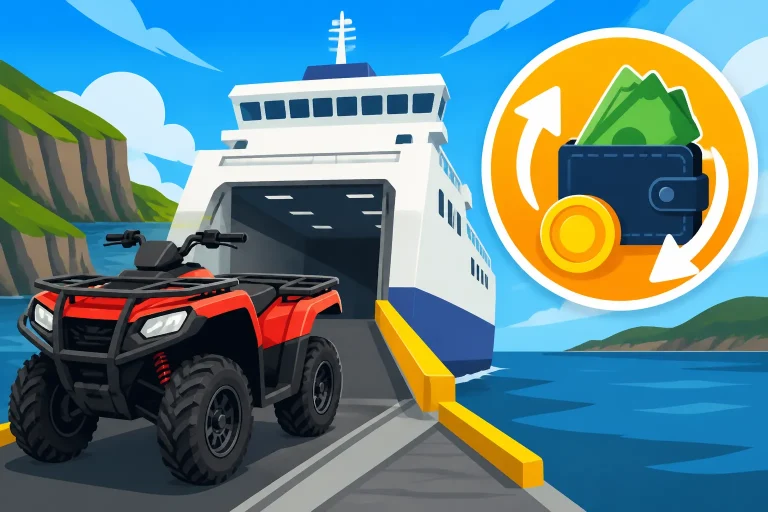
For an owned machine, build a separate transport and riding budget. The relevant ferry fare depends on how the machine is carried and whether you’re also bringing a trailer or towing vehicle. Check the ferry provider for current fares and booking rules rather than relying on an old estimate. A motorcycle or ATV fare does not necessarily answer what you’ll pay for the whole combination.
Include:
- The machine’s ferry transport
- Trailer transport, if applicable
- Transport for the towing vehicle and passengers
- Fuel for the vehicle and the ATV or UTV
- Any extra night or travel day needed to manage the crossing
- Tie-downs and any equipment needed to load and secure the machine
- Maintenance or repairs needed before a long trip
- Lodging and storage arrangements at your destination
- The time required to unload, inspect and prepare the machine
If you’re travelling with a trailer, check how the ferry measures and classifies it, what details must be entered when booking, and where you’re expected to secure the machine. Do not assume a machine can be left unsecured or that the booking form treats every trailer combination the same way. Booking the Newfoundland Ferry With a Quad Aboard and How a Trailer Is Measured for the Fare cover useful points to check.
A longer visit makes the fixed effort of transporting a machine easier to justify, especially if you expect several separate rides. On a short trip, the total costs and time can outweigh the benefit of having your own machine. But if you’re already driving a suitable vehicle with a trailer and plan to ride for much of the visit, the calculation may look different.
Compare costs over riding days
Rather than asking which option has the lower headline price, compare the full cost divided by the number of days you realistically expect to ride. Include travel and setup costs for the owned machine, and include equipment, transport to the rental location and other extras for a rental.
This calculation is only a planning tool. The value of a guided ride, a familiar machine or a flexible schedule is personal and won’t show up in the arithmetic. It can still reveal when a seemingly cheap option is becoming expensive because of additional transport, equipment or accommodation.
Ferry, towing and travel logistics
Bringing your own machine adds a transport step that renting avoids. The details matter because a small booking or loading mistake can cause stress before the riding part of the trip begins.
Marine Atlantic operates ferry services between North Sydney and Port aux Basques, and a seasonal service between North Sydney and Argentia. Which route makes sense depends on your destination, dates and wider itinerary. Check the operator’s current sailing schedule, vehicle requirements, fares and booking conditions directly. Route availability and schedules can change, so build the travel plan around confirmed details.
With your own machine, you’ll need to decide whether it travels on a trailer or by another approved arrangement. Confirm that your booking accurately reflects the vehicle, trailer and dimensions involved. Leave time to load and secure the machine as instructed. Bring suitable tie-down equipment and make sure the machine is stable before departure.
On arrival, there is still a journey from the ferry terminal to your accommodation or riding area. A trailer makes that manageable if the tow vehicle and parking arrangements are suitable. Without a trailer, you need a legal, practical way to move the machine from the terminal. Riding directly from the ferry is not a safe assumption: the route, road rules, access permissions, machine equipment and local restrictions all matter.
For a rental, the operator may provide a pickup location, an orientation, or a tour that starts near a riding area. Ask exactly where you have to go, whether transport is included and how long it takes to reach the machine. A rental that seems convenient on a map can still involve a significant drive from your lodging. If the operator offers delivery, confirm the location, timing and any conditions.
Check availability before building an itinerary
Rental options and machine types may be limited in some areas. A particular location may not have the number of machines, passenger seats or dates your group wants. Do not book accommodation and assume a rental will be available nearby later. Contact operators early, especially if you need multiple machines, a four-seat UTV, a child passenger arrangement or a ride during a busy travel period.
If you bring your own, availability is less about finding a machine and more about confirming ferry space, lodging, trailer parking and access to the routes you want. The machine still needs to be suitable for the trip and in good working condition. A breakdown far from services can consume the time you expected to spend riding.
A useful planning order is:
- Choose the general region and dates for your trip.
- Check ferry availability if you’re bringing a machine, or rental availability if you’re hiring one.
- Confirm where you can legally ride and whether the intended routes suit your machine.
- Book accommodation and transport that fit the riding plan.
- Confirm equipment, paperwork, pickup details and weather or cancellation arrangements.
This prevents a common mismatch: securing a ferry or a hotel before checking whether the machine, route and dates line up. For more detail on transporting an owned machine, see Newfoundland Shipping a Machine by Ferry and Newfoundland Ferry Routes for Riders.
Rules, registration and trail access
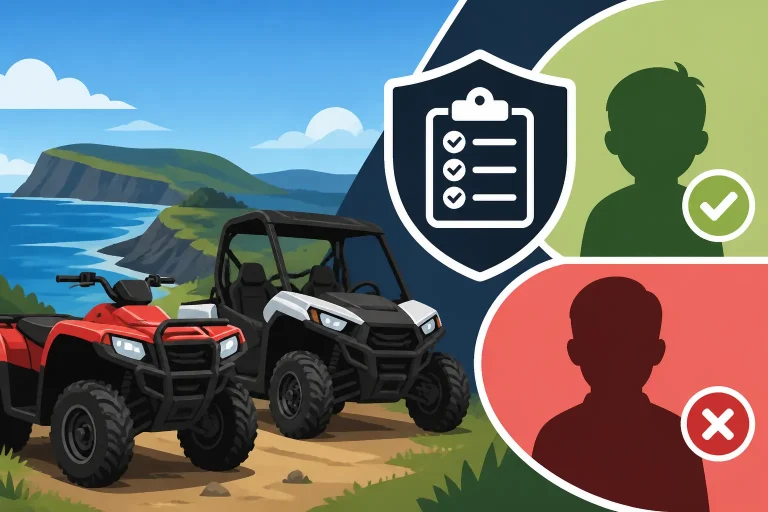
Whether you rent or bring your own, having a machine does not mean every road or trail is open to you. You need to understand the rules that apply to the machine, the rider and the land. A tour operator can help explain its route and procedures, but riders are still responsible for following applicable requirements.
If you bring your own
A machine registered in another province may be used in Newfoundland as a visitor within the applicable visitor period. If you stay beyond that period, registration requirements can change. Check the current rule and your situation before travelling; do not assume that registration in your home province removes every Newfoundland obligation. The practical details are covered in Newfoundland’s 30-Day Visitor Exemption and When a Visiting Machine Has to Register in Newfoundland.
Carry proof of ownership and registration, and confirm what documents you need for your machine. Keep the registration details accessible rather than packed where you cannot reach them. If you are bringing a newly purchased or shipped machine, paperwork and ownership history deserve particular attention.
Newfoundland’s off-road vehicle rules also cover matters such as insurance, safety equipment, rider age and road use. A highway crossing is not the same as ordinary highway travel, and permission to ride one road or trail does not grant permission everywhere else. Before you go, read Newfoundland ORV Road Rules Explained, Newfoundland Insurance Requirements for Riders and Newfoundland Equipment Requirements.
If you rent
The operator generally manages the rental machine’s registration and should explain the paperwork and conditions that apply to its use. Ask what documents you need to carry and what the rental covers. If you’re taking a self-guided rental rather than joining a tour, find out whether the permitted route is restricted and whether the operator supplies trail access information or a trail sticker.
Do not assume a rental waives rider obligations. You may still need to meet age, licence, training, helmet or insurance conditions, depending on the machine and circumstances. Confirm the requirements with the operator before paying. If a child will ride or travel as a passenger, discuss the exact age, size, seating and supervision arrangements in advance.
For visitor rules and coverage questions, see Newfoundland Insurance Rules for Visitors and Does the Training Rule Apply to a Renter?. For a detailed explanation of access markers on managed trails, see Newfoundland Managed Trail Rules.
Trail access is separate from ownership
Newfoundland has different kinds of land and routes, with distinct access restrictions. Some managed trails require a sticker, while other areas may have their own permissions or restrictions. Crown land access is not a blanket invitation to ride anywhere, and a map alone may not tell you whether an area is open, restricted or subject to a temporary closure.
The T’Railway is a major corridor that many riders consider, but it is shared and conditions vary by section. A machine that is legal to operate does not make every part of the corridor suitable or available at every time. Check the current information for the section you plan to use, respect posted signs and yield to other trail users. Newfoundland ATV Trails: The T’Railway and Beyond and Newfoundland Approved and Restricted Areas can help you plan the access side.
Before following a route from a phone or a friend’s message, check whether the route crosses private land, a restricted area, a municipal road or a trail with local conditions. A rental operator may supply a specific route, but you should still ask where the permitted riding begins and ends.
What you gain and give up with a rental
A rental is attractive because it removes several jobs from your trip. You don’t have to transport your machine across the ferry, maintain it before departure or plan how to store it at your accommodation. A guided ride can also provide local context and help you make decisions about terrain, weather and route conditions.
Advantages of renting
- Less transport planning: No ATV or UTV to load, secure and carry on the ferry.
- No need to own a tow vehicle or trailer: This is a significant advantage for visitors flying in or travelling without a towing setup.
- Local orientation: An operator may explain the machine, route, operating procedures and nearby conditions.
- Access to a suitable configuration: Depending on availability, you might choose an ATV, a two-seat UTV or a larger side-by-side.
- A practical choice for a trial ride: Renting lets you try a machine before committing to transporting your own on a longer trip.
- Potentially less repair planning: Routine maintenance is normally the operator’s responsibility, although damage and misuse conditions still matter.
A guided tour is especially useful if you’re unfamiliar with the area, have limited time or want someone else to plan the route. A self-guided rental offers more independence, but may come with a defined riding area, return time or route. Confirm those boundaries rather than assuming the machine can go wherever you choose.
Trade-offs of renting
The biggest limitation can be availability. The operator may have only certain machines, pickup times or dates. A machine that suits one rider may not suit another, particularly when passenger comfort, height, physical ability or child seating is involved.
You also have less control over the machine’s setup. Check the model and configuration, ask how it is maintained and report any concern before leaving. Take time during the orientation to understand the controls, braking, shifting, four-wheel drive and recovery equipment. If you have never driven a side-by-side, don’t treat it as a car; its handling and operating limits differ.
The rental agreement can shape the day. Operators may set rules about where you may ride, what happens after a breakdown, how late returns are handled and who pays for damage. Ask directly about bogs, water crossings and recovery. A route that looks short on a map can be slow in difficult ground or poor weather.
Rentals can also be a poor fit if you want to ride at dawn, return after a long day, cover multiple regions or keep a machine at a cabin. A rental is tied to its location and schedule unless the operator expressly offers another arrangement. If you need a machine at a specific place, see Newfoundland Rentals Delivered to a Cabin and confirm whether delivery is genuinely available for your location and dates.
What you gain and give up by bringing your own
Your own machine offers familiarity and control, but those benefits come with responsibility. You manage the transport, preparation, compliance and recovery plan. It is the stronger option for some trips and needless complication for others.
Advantages of bringing your own
- Familiar controls and setup: You know how the machine behaves and can prepare it to your preferences.
- More freedom to plan: You aren’t limited to a rental pickup window or tour departure time, subject to access rules and safe operating hours.
- Useful for a longer trip: Several riding days can make the transport effort more worthwhile.
- Your own equipment: You can bring the helmets, clothing, tools, communications gear and storage setup you already use.
- A better match for a group of owners: Friends or family travelling with their own machines can coordinate around a shared itinerary.
Familiarity matters on unfamiliar terrain. If you bring your own machine, inspect it before leaving home and make sure it is appropriate for the planned conditions. Check tires, brakes, steering, lights, belt or drive components as applicable, fluids, battery, winch and recovery points. Carry basic tools and parts suited to your machine, but don’t let a packed toolbox substitute for a realistic route and recovery plan.
Trade-offs of bringing your own
Transport adds effort and cost. You need to book the right ferry arrangement, load and secure the machine, tow it to and from the terminal, and arrange parking or storage at your destination. If something goes wrong during the trip, you are responsible for the repair plan.
A personal machine can also tempt riders to travel farther than conditions justify. Newfoundland terrain includes exposed areas, wet ground, rough surfaces and stretches where phone service may be limited. Check the route, weather and communications plan. Carry enough water and essential supplies, and tell someone where you expect to ride. For longer or more remote rides, review Cell Dead Zones Along the Railbed and Carrying a Paper Map Where There Is No Signal.
Bringing a machine is not a way around local rules. You still need to check registration, insurance, safety equipment, trail access and any visitor requirements. A machine that is legal at home may need adjustments or additional preparation for local conditions. Review Newfoundland Rules for an Out-of-Province Machine before departure.
If you’re travelling with a group, consider what happens if one machine breaks down. Decide whether anyone can tow or assist, how you’ll keep the group together, and what the plan is if a rider wants to turn back. The more remote the route, the more important it is to have a conservative turnaround plan.
Choosing by trip style and group needs
The best option usually becomes clear when you plan around the actual ride rather than the machine.
A short visit or one planned outing
For a brief stay with one ride on the itinerary, renting is often easier. You avoid ferry arrangements and can focus on a half-day or day tour. A guide may be worthwhile if you have little local knowledge or want a structured experience. Check the meeting point and return time against your accommodation and other plans.
If you’re only interested in a short independent ride, compare the rental’s permitted area and duration with the time you’ll spend travelling to it. A rental that requires a long drive each way may be less convenient than expected.
Several riding days
For multiple days, compare the total rental cost with the full cost of bringing your machine. Include ferry transport, trailer costs, lodging, fuel and the days needed for travel. A multi-day rental may still be the better value if it avoids complicated transport or if you don’t already have a suitable towing setup.
If you do bring your own, plan distinct routes rather than assuming you can repeat the same trail without checking conditions. Weather can change quickly, and a route that was straightforward one day may be slow or unsafe after rain. Newfoundland Trail Conditions Before You Ride and Newfoundland Riding After Heavy Rain are relevant planning reads.
Families and mixed-experience groups
A UTV can be more comfortable for some passengers, but seating capacity is not the only consideration. Confirm that every passenger has a proper seat and that the machine is suitable for the riders’ ages and sizes. Ask the rental operator about passenger rules, restraint requirements and child seating before booking. For an owned machine, check the manufacturer’s seating and safety requirements and the provincial rules that apply.
For a mixed-experience group, a guided ride can make the day easier to coordinate. Ask whether the tour is suitable for beginners, what the pace is, and whether riders can change plans if someone is uncomfortable. If your group has different abilities, don’t assume everyone will enjoy the same terrain or ride length.
If you bring several machines, arrange a group plan before setting out. Agree on a lead and sweep rider, stopping points, signals, what to do if separated and a sensible pace. A large group can move more slowly than expected, especially on narrow or shared trails.
Cabin-based or regional trips
If your accommodation is near a particular riding area, a rental may or may not be available close by. Confirm the pickup location and whether delivery is offered. If you bring your own, verify that the accommodation allows trailer parking and has a safe place to store the machine.
A machine stationed at a cabin can be convenient, but it still needs to be registered and used within the rules that apply. Riding only near a cabin does not automatically remove registration or access requirements. Read Does a Cabin-Only Machine Still Need Registering? if that describes your plan.
For a trip spanning different parts of the island, transporting your own machine may provide more flexibility, but don’t underestimate the distances between stops. Plan realistic riding days, fuel and accommodation. A route across the island is not a continuous invitation to ride every connecting road; confirm where the machine can legally operate.
First-time riders
A first-time rider may find a guided tour reassuring, especially when the operator provides an orientation and keeps the ride within a planned area. Be honest about your experience when booking. Ask what training or instruction is provided and whether the route includes terrain that can challenge a new rider.
If you bring your own, consider whether the machine and route are appropriate for your skill level. Practice controls and braking in a safe, permitted area before tackling a long or remote ride. Have an experienced rider explain recovery equipment and riding signals. Don’t treat a long trail as a training ground.
A practical decision checklist
Use this checklist before committing to either option:
- Set your riding goal. Is this one guided outing, several trail days, a family ride or a longer independent trip?
- Choose the likely riding area. Check access, restrictions, local conditions and whether the route fits your machine and experience.
- Check availability. Contact rental operators or confirm ferry arrangements before booking the rest of the trip.
- Calculate the complete cost. Add transport, trailer, fuel, equipment, accommodation and rental extras.
- Confirm the rules. Check registration, insurance, training, age, safety equipment and trail access for your situation.
- Review the machine arrangement. Ask about seating, condition, recovery, breakdowns and what you must carry.
- Plan for weather and communications. Check forecasts, tell someone your route and have a plan for poor conditions or no cell service.
- Keep a backup plan. Know what you’ll do if a tour is cancelled, a machine fails or a route is closed.
If renting, get key details in writing: machine type, pickup location, tour or rental duration, included equipment, fuel arrangements, deposit or card hold, cancellation terms and damage conditions. Ask whether the operator supplies a trail sticker or other access information when needed.
If bringing your own, confirm the ferry booking, trailer details, securing requirements, registration documents and insurance. Take photos of the VIN and machine condition before departure. Make sure the machine is prepared for the journey and that your lodging can accommodate it.
Either way, don’t leave legal and safety questions until the day of the ride. An operator can clarify its own service, but the route, rider requirements and access rules deserve a check before you set out. For a broader preparation list, see What to Bring to Your Registration Appointment if paperwork is part of your plan, and Newfoundland Registration Before Your First Ride for the machine-side checks.
Frequently Asked Questions
Is renting always cheaper for a short trip?
Not necessarily, but it often avoids the transport and towing costs of bringing your own. Compare the full rental cost with ferry transport, trailer costs, travel time and any extra lodging. The better value depends on how many days you’ll ride and what the rental includes.
Can I bring an ATV from another province for a visit?
Visitors may be able to use an out-of-province registered machine for a limited period, but the relevant time limit and conditions matter. Confirm the current requirements for your circumstances before travelling. Do not assume your home registration settles every local requirement.
Does a rental include a trail sticker?
It depends on the operator and the ride. Ask whether access to a managed trail is included and whether the operator provides, attaches or explains any required sticker. A rental booking by itself does not tell you which land or trail you may use.
Should I book a guided tour or a self-guided rental?
A guided tour can suit new riders, visitors with limited time or people who want local support. A self-guided rental offers more independence but may have route, time and return conditions. Check the operator’s terms and be realistic about your experience.
What if I’m bringing a side-by-side with passengers?
Confirm the machine’s approved seating, passenger requirements, age conditions and safety equipment before travelling. For a rental, provide the operator with the group’s details before booking. Do not assume that a seat is suitable for every passenger simply because it is present.
Disclaimer
This article is for general informational purposes only and does not constitute professional advice. Laws, prices and regulations vary by location and change over time. Consult a qualified professional for guidance on your specific situation.