Newfoundland ORV Road Rules Explained
It's a common dilemma, isn't it? You've got your ATV or side-by-side all geared up, ready for a day on the trails, but getting to those trails often means interacting with paved roads, gravel highways, or even small community streets. The rules can feel like a tangled mess, leaving you wondering where you can legally ride, what equipment you need, and what could land you in hot water. This guide is here to untangle those knots and provide a clear, comprehensive understanding of Newfoundland's Off-Road Vehicle (ORV) road rules, helping you navigate the province safely and legally.
Understanding Newfoundland's Off-Road Vehicles Act
Navigating the world of ATVs and UTVs in Newfoundland really starts with understanding the foundational rules. It's not just about what feels right or what you've seen others do; there's a specific piece of legislation, the province's Off-Road Vehicles Act, that governs nearly every aspect of how we operate these machines. This Act was put in place to ensure safety for riders, other road users, and to protect our beautiful natural environment. For anyone who owns or plans to ride an ORV here, getting familiar with its basic tenets is absolutely crucial.
The Core Legal Framework
The Newfoundland's Off-Road Vehicles Act serves as the primary rulebook for all things ORV-related. It details everything from registration requirements to permissible riding areas, and, most importantly for this discussion, the conditions under which an ORV can even touch a public road or highway. Before this Act came into force, the rules were perhaps a little less clear, leading to confusion and inconsistent enforcement. Now, there's a comprehensive framework that aims to provide clarity for both riders and enforcement officers. It's a significant document that touches on many aspects of your riding experience, designed to make Newfoundland a safer place for everyone.
This legislation isn't static, either. It has evolved over time to address new types of machines and changing riding patterns. For example, recent amendments have clarified the status of side-by-sides, recognizing their growing popularity and integrating them more explicitly into the regulatory structure. Knowing that this Act exists and understanding its purpose is the first step toward responsible riding. It’s not just about avoiding a ticket; it’s about contributing to a safe riding culture that allows us all to enjoy the incredible wilderness and trail systems this province has to offer.
How ORVs Are Defined
Under the Act, an "off-road vehicle" is quite broadly defined, encompassing most of the machines we love to ride. This includes your typical all-terrain vehicles (ATVs), often called quads, as well as snowmobiles, dirt bikes, and even larger utility task vehicles (UTVs) or side-by-sides. The definition is important because it dictates which rules apply to your specific machine. If it falls under the ORV definition, then all the regulations concerning registration, equipment, and road use come into play. It doesn't matter if you call it a side-by-side, a UTV, or an SXS; if it fits the legal description, it’s bound by the Act.
This broad definition means that whether you're on a single-rider quad or a multi-passenger side-by-side, you're expected to adhere to the same core set of rules when it comes to road interaction. This isn't always intuitive, especially for those new to the sport or those who have ridden in other jurisdictions with different classifications. The key takeaway here is that if your machine is designed for off-road use, even if it has some features that might seem "road-friendly," it is still an ORV in the eyes of Newfoundland law and subject to these specific regulations. This foundational understanding helps bridge the gap between what a machine can do and what it's legally allowed to do on provincial roads.
When Can an ORV Touch a Highway or Road?
This is perhaps the biggest head-scratcher for most riders in Newfoundland. You look around, and you see all sorts of machines on the roads, but what's truly legal and what's just… happening? The province has very specific, and sometimes frustratingly narrow, allowances for when an off-road vehicle can even briefly interact with a public highway or road. It's not about convenience or getting from one point to another quickly; it's almost always about accessing the actual trail systems. Straying from these defined situations can easily lead to fines or worse, so understanding these boundaries is critical for staying on the right side of the law.
Crossing a Highway Safely
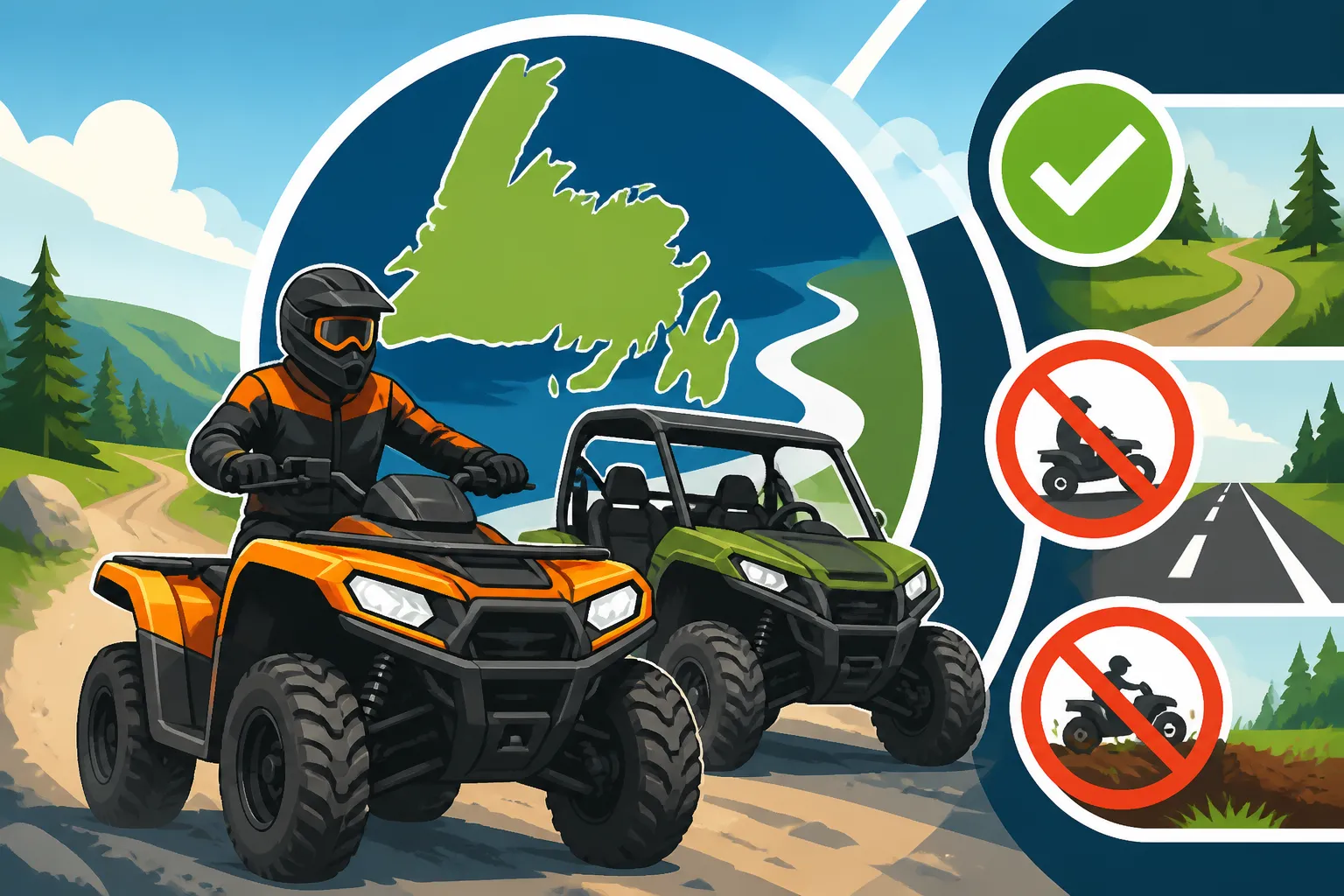
One of the most common situations where an ORV interacts with a public road is when crossing a highway to get from one trail section to another, or to access a service like a gas station or shop. The Act is quite clear here: you are allowed to cross a highway, but only under very strict conditions. First and foremost, you must make a direct, perpendicular crossing. No meandering, no riding parallel to the road for any distance. It's literally a straight shot from one side to the other. Furthermore, you need to ensure visibility. The rule stipulates that you must have a clear, unobstructed view of the highway for at least [Newfoundland's 150-Metre Crossing Visibility Rule] in both directions. This means no crossing blind crests, around sharp corners, or where trees block your view.
Before you even start your crossing, you must yield to all highway traffic. This isn't a suggestion; it's a mandatory requirement. Highway traffic always has the right of way. You should stop, look both ways multiple times, and only proceed when it is absolutely safe and clear to do so. Think of it like crossing a busy intersection on foot – caution is paramount. This rule is designed to prevent collisions and ensure the safety of both ORV operators and conventional vehicle drivers. Ignoring these safety precautions can lead to serious accidents and significant legal repercussions.
Riding the Shoulder to Access Trails
Another tightly regulated scenario involves riding on the shoulder of a highway. This isn't a general permission to cruise along the shoulder; it's specifically for accessing an approved trail. You are permitted to ride on the shoulder for a very limited distance, explicitly stated as [Newfoundland's 1-Kilometre Shoulder Rule]. That's it – one kilometre, not two, not five. The intent is to allow riders to connect from, say, a cabin road or a private driveway, to an official trail access point located a short distance along the shoulder. It's not for covering significant travel distances.
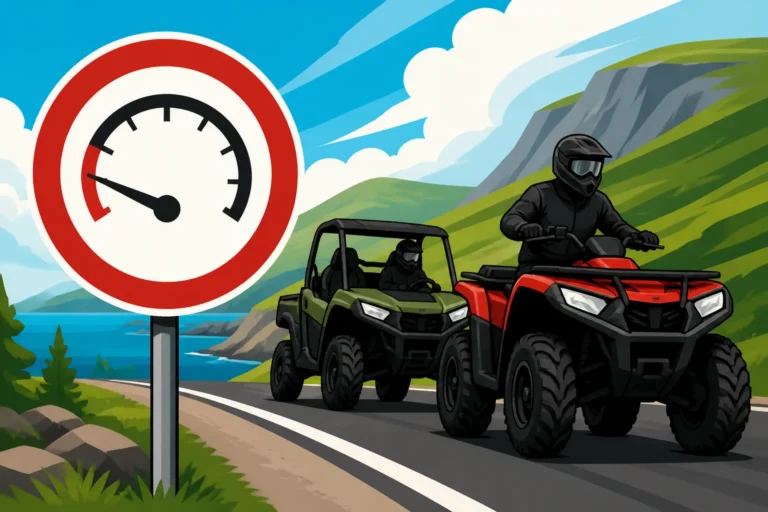
While on the shoulder, your speed is also heavily restricted. The maximum speed permitted is [Newfoundland's 20 km/h Shoulder Limit]. This slow pace is to ensure you maintain full control and can react to any unforeseen circumstances, given you are sharing a space adjacent to high-speed traffic. It also ensures you are easily visible and can be safely passed by other vehicles. This rule often causes frustration for riders who see it as inconvenient, but it's a critical safety measure. Always remember, the shoulder is not an extension of the trail; it's a temporary, restricted pathway to get to the trail.
Specific Speed and Distance Limits
Beyond the general shoulder rules, the Act imposes very clear speed and distance limits on any interaction with public roads. We've already touched on the 20 km/h limit on shoulders and the 1-kilometre distance restriction. These numbers are non-negotiable. Exceeding them, even slightly, can be deemed a violation. The whole point of these stringent limits is to minimize the time an ORV spends in an environment it wasn't designed for, and where it poses a higher risk to itself and others. An ATV or UTV, even one equipped with street-legal accessories from a company like SuperATV, still handles very differently from a car or truck on pavement, especially at higher speeds.
In addition to explicit road allowances, there are also areas like designated "woods roads" or unmaintained public roads where ORVs might be permitted, but these often fall under different classifications and local bylaws. It's crucial not to confuse these with provincial highways or paved municipal roads where the strict crossing and shoulder rules apply. Always check [Newfoundland Municipal Road Bylaws] for specific communities, as local governments can introduce their own additional restrictions or designated ORV routes. When in doubt, assume more caution and stricter rules apply, and prioritize safety above all else.
Mandatory Equipment for Road-Legal Use
Even for those brief, legally permitted moments on a public road, your ORV isn't just subject to traffic rules; it also needs to meet specific equipment standards. This isn't about making your machine look pretty; it's about ensuring it's visible, audible, and safe for everyone on or near the road. Cutting corners here isn't just a risk for a ticket; it's a risk to your safety and the safety of others. Just because your machine is great on the trail doesn't mean it's automatically ready for even a fleeting interaction with a paved surface.
Lights, Reflectors, and Visibility
When operating an ORV on a highway or shoulder, especially during low light conditions or from sunset to sunrise, proper lighting is absolutely non-negotiable. Your machine must be equipped with working headlamps and tail lamps. The headlamp typically needs to emit an amber or white light, while the tail lamp must be red. These lights aren't just for your benefit; they're to make you visible to other drivers who might not expect an ORV on the shoulder or crossing a road. Adequate lighting helps prevent those "I didn't see them!" scenarios.
Beyond powered lights, reflectors also play a vital role. You'll need amber reflectors visible from the front and sides, and red reflectors visible from the rear. These passive safety devices help illuminate your machine when hit by another vehicle's headlights, providing an extra layer of visibility. Many riders consider aftermarket LED light bars or additional reflectors for enhanced safety, especially for machines that might see more frequent road crossings or operate often in foggy coastal conditions. Companies like SuperATV offer a range of robust lighting solutions that go beyond basic requirements, offering better visibility and durability for the tough Newfoundland environment. Keeping your lights clean and operational is just as important as having them installed in the first place; caked-on mud from the trail won't do anyone any favours when you hit the pavement.
Mufflers, Tires, and Other Requirements
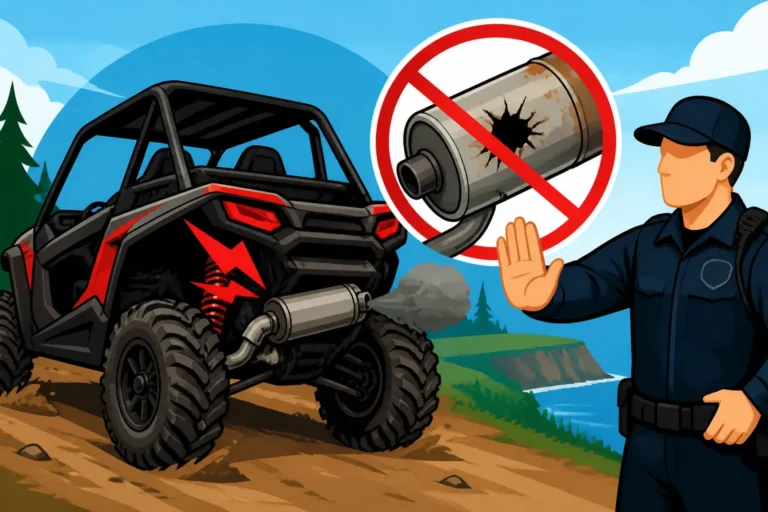
Noise is a common complaint when ORVs are near residential areas or on public roads, and the Act addresses this through muffler regulations. Your ORV must be equipped with an effective exhaust system that directs engine exhaust gases safely away and keeps noise levels within reasonable limits. "Cut-out" exhausts or any modifications that bypass the muffler are explicitly prohibited and can lead to hefty fines. The goal is to minimize disturbance to communities and wildlife, especially when you're transitioning between trail and road.
Tires are another crucial component. While there isn't a specific "street-legal" tire mandate for ORVs in Newfoundland, the spirit of the law implies that tires should be appropriate for safe operation on the surfaces you're encountering. Aggressive knobby tires, while fantastic for mud and rock, can behave unpredictably on pavement, especially in wet conditions. [Newfoundland Low Pressure Tire Rules] generally apply to wheeled machines, and ensuring they are in good condition and properly inflated is key. Finally, the Act now allows for tire chains, a welcome change for those who need extra traction in winter conditions when briefly traversing paved sections. Ensuring your machine is in good working order, from brakes to steering, is a fundamental responsibility for any operator venturing near public roads.
Helmets and Eye Protection for All Riders
This is one of the most emphasized safety requirements in the entire Act, and it applies universally, regardless of where you are riding your ORV. [Newfoundland Helmet Law for Every Rider] means that the operator and any passengers on an ORV must wear an approved helmet at all times when the machine is in operation. This isn't just for children; it applies to adults too. The helmet must be properly fastened with a chin strap and meet specific safety standards, such as those set by the Canadian Standards Association (CSA), the U.S. Department of Transportation (DOT), or the European Economic Commission (ECE). This is an absolute non-negotiable for safety.
In addition to helmets, eye protection is also mandatory. If your ORV doesn't have an enclosed cab or a windshield that provides adequate eye protection, then both the operator and passengers must wear goggles, a face shield, or other suitable eye protection. This protects against dust, debris, insects, and even the occasional small rock kicked up by other vehicles, ensuring clear vision for safe operation. Many riders find that a full-face helmet with a visor or a combination of an open-face helmet and robust goggles works best. These requirements are simple, clear, and designed to save lives and prevent serious injuries. Always ensure your gear is in top condition and properly fitted before you even start your engine.
Licensing, Insurance, and Registration Essentials
Just like operating any other vehicle on public roads, even brief interactions with highways and shoulders on your ORV come with essential administrative requirements. It's not enough to have a well-equipped machine and a helmet; you need the paperwork to back it up. Skipping these steps can lead to immediate fines, vehicle impoundment, and significant legal headaches. These are the fundamental responsibilities of any ORV owner in Newfoundland and are designed to ensure accountability and protection for everyone.
Driver's Licence Requirements on Public Roads
Here's where many riders get confused. While you don't generally need a driver's licence to operate an ORV off-road on a trail, the moment your machine touches a public highway or shoulder, even for a crossing or a short stint, the rules change. The Act stipulates that anyone operating an ORV on a highway or highway shoulder must hold a valid driver's licence. This means a provincial driver's licence (Class 5 or equivalent) or a valid licence from another jurisdiction. It's the same requirement as driving a car or truck on that road. This ensures that anyone operating an ORV in a public road environment has demonstrated a basic level of road knowledge and driving competence.
This requirement is critical for public safety. It implies that when you're crossing a road or riding a shoulder, you are expected to understand and follow the rules of the road that apply to conventional vehicles, such as signaling, yielding, and understanding traffic flow. It's a significant distinction from pure off-road trail riding where specific licensing is not generally mandated. For any young riders or those without a licence, this means strict adherence to off-road-only routes and avoiding all public road interaction. For more detailed information, you can always check [Newfoundland Licence Requirements on a Highway].
Minimum Insurance Coverage Explained
Another critical component for road interaction is insurance. When operating an ORV on a public highway or shoulder in Newfoundland, you are required to have a minimum amount of third-party liability insurance. The current minimum floor is typically set quite high to ensure adequate protection in case of an accident. This insurance covers damages or injuries you might cause to other people or their property while operating your ORV. It is not optional; it's a legal mandate to protect you and other road users.
You must be able to produce proof of this insurance if requested by a peace officer. The Act generally gives you [Newfoundland Insurance Proof Within Two Days] to do so if you don't have it on you, but it's always best practice to carry proof of insurance with you, perhaps with your [Newfoundland Registration Paperwork Explained], whenever you ride, whether on a trail or near a road. This prevents any delays or potential complications during a roadside stop. Insurance provides a crucial safety net and is a sign of responsible ORV ownership. Don't risk riding near public roads without it.
The Importance of a Valid Registration
Every off-road vehicle operated in Newfoundland and Labrador must be registered with the Registrar of Motor Vehicles, unless specifically exempted (e.g., temporary visitors from out of province for less than 30 days). This is a one-time registration, and [Newfoundland Registrations Never Expire] as long as you own the machine. A valid registration means your ORV has a unique identifier, an identification plate, and that ownership is officially recorded. This is crucial for tracking machines, particularly in cases of theft or accidents.
Your registration plate must be clearly displayed on your ORV, usually at the rear, and kept free of mud, dust, or any obstruction that might hide it from view. This plate serves as the primary identification for your machine. If you've just purchased a new machine, you'll need a New Vehicle Information Statement (NVIS) from the dealer to register it. For used machines, a proper [Newfoundland Bills of Sale From Each Owner] is vital for transferring ownership. The registration process ensures accountability and contributes to a safer and more orderly riding environment throughout the province.
| Scenario | Driver's Licence Required? | Insurance Required? | Registration Required? | Speed Limit on Shoulder | Distance Limit on Shoulder | Crossing Visibility |
|---|---|---|---|---|---|---|
| Pure Off-Road Trail Riding | No | Yes (Recommended) | Yes | N/A | N/A | N/A |
| Crossing a Public Highway | Yes | Yes | Yes | N/A | N/A | 150 metres clear view |
| Riding Public Highway Shoulder | Yes | Yes | Yes | 20 km/h | 1 kilometre | N/A |
| Private Land (Own/Permission) | No | Yes (Recommended/Check) | Yes | N/A | N/A | N/A |
Age, Supervision, and Passenger Rules
Operating an ORV isn't just about the machine; it's also about the operator and anyone riding along. Newfoundland has specific rules regarding who can operate these machines, particularly concerning age, and strict guidelines for carrying passengers. These rules are put in place to protect vulnerable riders and ensure that those in control of powerful machines are capable and responsible. Misunderstanding these regulations can lead to serious risks for young riders and their supervisors.
Age Restrictions for Operators
The Act sets clear age limits for who can operate an ORV. Generally, you need to be at least 16 years old to operate an ORV independently. However, there are provisions for younger riders. For example, a child as young as 12 years old can operate an ORV, but only if they are under the direct supervision of an adult (18 years or older) who holds a valid driver's licence and has sufficient ORV experience. This adult supervisor must be in close proximity, typically riding on their own ORV, able to intervene if necessary. [Newfoundland Rules for a 12-Year-Old Rider] requires the supervisor to have completed the mandatory safety training as well.
These age restrictions are based on safety research and the physical and mental maturity required to handle an ORV safely, especially when near public roads. The power and weight of these machines, combined with unpredictable terrain and the need for quick decision-making, make them unsuitable for very young, unsupervised operators. It's vital for parents and guardians to adhere to these rules strictly, ensuring that young riders gain experience in a controlled and safe environment. Compliance with these age rules is not just about avoiding fines; it's about safeguarding our children.
Rules for Carrying Passengers and Young Riders
Carrying passengers on an ORV is also strictly regulated. Generally, an ORV is designed to carry only the operator, unless it is specifically manufactured and equipped with a designated passenger seat and footrests. This means no riding double on a single-rider ATV, even for short distances. Side-by-sides, by their design, often come with multiple factory-installed seats, making them suitable for passengers, but those passengers must utilize the designed seating and wear seat belts where provided. [Newfoundland Passenger Seat Requirements] are very clear on this.
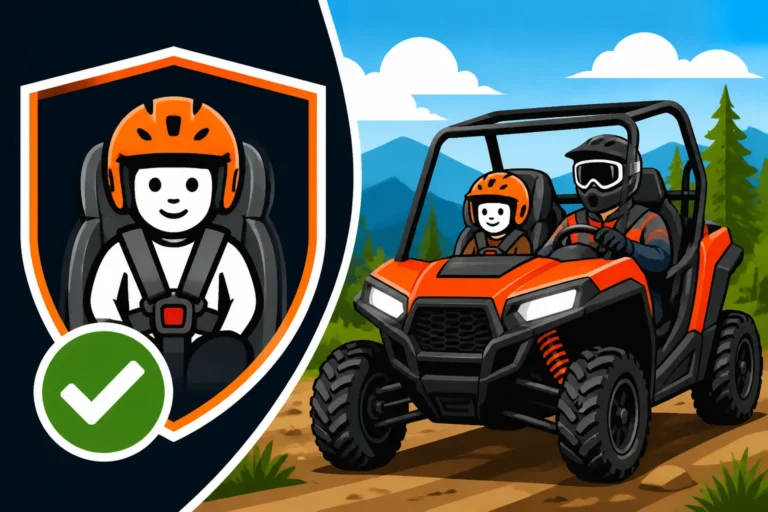
When it comes to young children, even more stringent rules apply. Children require proper restraint and protection. For side-by-sides with multiple seats, children typically need to be in an appropriate car seat, much like in a conventional vehicle, if they are too small to properly use the machine's seat belt system. This ensures they are secure and protected in case of sudden movements or impacts. It's paramount to put safety first for our youngest riders, ensuring they are not only comfortable but also properly secured for the entire ride.
Supervisor Responsibilities
If a minor (under 16) is operating an ORV, the responsibility falls squarely on the shoulders of the supervisor. As mentioned, the supervisor must be at least 18 years old, hold a valid driver's licence, and be experienced in ORV operation. Their role is to ensure the young rider is operating the machine safely, adhering to all rules, and avoiding any areas where they shouldn't be. This isn't a passive role; it's active supervision, implying constant vigilance and the ability to intervene if the situation demands it. [Newfoundland Supervisors Must Be 18 and Licensed] underscores this crucial role.
Furthermore, supervisors are also responsible for ensuring that the minor has completed the mandatory [Newfoundland Safety Training Is Mandatory] if they are of a certain age and operating without direct parental supervision on their own family land. This training provides essential knowledge about safe operation, hazard identification, and responsible riding practices. It's a key step in equipping young riders with the skills they need to enjoy the sport safely. The supervisor's commitment to these rules is a direct reflection of their commitment to the safety and well-being of the young rider.
Navigating Municipal Bylaws and Local Variations
While the provincial Off-Road Vehicles Act provides the overarching framework for ORV use, it's not the only set of rules you need to be aware of. Many communities and municipalities across Newfoundland and Labrador have the authority to enact their own bylaws that can further restrict or even prohibit ORV use within their boundaries. This can create a patchwork of rules that sometimes feels confusing, but understanding how to navigate these local variations is crucial for staying compliant and respectful of local residents.
The Impact of Local Community Rules
Imagine pulling your machine into a small town, thinking you're just passing through to access a trail on the other side. You might be surprised to find signs prohibiting ORV use on municipal roads, or even specific designated routes you must follow. This is the impact of local community rules. Municipalities can pass bylaws to address local concerns, such as noise, traffic safety, or environmental protection. These bylaws can be more restrictive than the provincial Act, meaning that even if the provincial Act allows you to cross a highway, a municipal bylaw might prohibit you from riding on a specific street within town limits. [Newfoundland Municipalities With ORV Bylaws] are becoming more common, especially in more populated areas or those with specific tourism goals.
These bylaws are often a response to residents' complaints about ORV noise, dust, or perceived safety risks on local streets. For riders, this means you can't assume provincial rules are the only ones you need to follow; you must also be aware of the local regulations of any community you plan to ride in or through. A quick check with the local town council or municipal office before you head out can save you a lot of hassle and potential fines. Being a respectful rider also means adhering to these local rules, even if they feel inconvenient, to maintain good relations with the communities that often serve as gateways to our trails.
Finding Information on Municipal Restrictions
So, how do you find out about these local rules? It takes a bit of proactive research, but it's well worth the effort. The best first step is to contact the municipal office or town council of the specific community you plan to visit or ride through. Many towns will have their bylaws posted online on their official websites, or they can provide you with a copy. Some communities also put up signage at key entry points into town, clearly indicating ORV restrictions or designated routes. It's far better to spend a few minutes doing this research than to face a fine or an unpleasant encounter with local enforcement.
Another good resource can be local ATV clubs or riding associations. These groups often have up-to-date information on local bylaws and can share insights on how best to navigate specific areas legally. They often work directly with municipal governments to establish safe and legal riding zones. Websites like [Newfoundland Bylaw Lookups Before You Ride] can also be a helpful starting point, though direct contact with the municipality remains the most reliable method for current information. Remember, ignorance of a bylaw is rarely an acceptable excuse in the eyes of the law, so make an effort to be informed.
Consequences of Non-Compliance: Fines and Penalties
Ignoring the rules, whether intentionally or out of ignorance, can lead to serious consequences. Newfoundland's Off-Road Vehicles Act carries significant penalties for violations, ranging from monetary fines to vehicle impoundment and even criminal charges in severe cases. These enforcement measures are in place not just to punish, but to deter unsafe and illegal riding, ensuring the safety and enjoyment of the trails and roads for everyone. It's a stark reminder that responsible riding means respecting the law.
Common Offences and Associated Fines
Many of the most common offences relate directly to the rules we've already discussed. For example, riding on a highway or shoulder outside of the permissible conditions (e.g., exceeding the 1-kilometre distance or 20 km/h speed limit) can quickly lead to a fine. Operating an unregistered machine, or one without proper insurance or a valid plate, are also common violations. Even something as seemingly minor as having a plate obstructed by mud or cargo can result in a penalty. The fines for these offences can vary, but even a first offence can be a significant hit to your wallet, often starting in the hundreds of dollars.
Other common offences include not wearing an approved helmet, failing to provide proof of insurance when requested, or having a modified, loud exhaust system. Peace officers, including the RCMP and various provincial enforcement agencies, are authorized to stop ORVs and issue tickets. These aren't just minor inconveniences; they can also lead to demerit points on your driver's licence if the offence occurs on a highway, potentially impacting your driving record. It's always cheaper and safer to follow the rules than to face the financial burden and stress of a fine. For an idea of what costs to expect, you might look into [Newfoundland Ticket Costs for Riders].
Machine Seizure and Impaired Operation
One of the most severe consequences under the Act, short of criminal charges, is machine seizure. A peace officer has the authority to seize an ORV if it is being operated without a valid registration, without insurance, or by an unlicensed driver on a highway. The machine can also be seized if the operator is violating a significant provision of the Act. Retrieving a seized machine is not a simple process; it involves paying impoundment fees, storage fees, and often demonstrating that the underlying issue (e.g., no registration or insurance) has been rectified. These costs can quickly add up, often exceeding the initial fine. You might ask [The $100 Application to Get a Seized Machine Back] is just the start.
Perhaps the most serious offence an ORV operator can commit is impaired operation. Just like with cars and trucks, operating an ORV while under the influence of alcohol or drugs is strictly prohibited. The penalties for impaired ORV operation are severe, mirroring those for impaired driving of a conventional vehicle. This can include significant fines, loss of driving privileges, mandatory safety training, and even jail time. [Newfoundland Impaired Riding Penalties] are designed to send a strong message: impaired operation of any motor vehicle, including an ORV, is a serious criminal offence with life-altering consequences. There's zero tolerance for putting yourself and others at risk by riding while impaired.
Important Considerations for Responsible Riding
Being a responsible ORV rider in Newfoundland goes beyond just knowing the rules; it's about adopting a mindset that prioritizes safety, respect, and environmental stewardship. The provincial Act gives us a framework, but how we choose to operate our machines within that framework truly defines our impact on the riding community and the beautiful landscape we get to explore.
Yielding to On-Road Traffic
This cannot be stressed enough: whenever your ORV is on or near a public road, conventional vehicle traffic always has the right of way. Always. [Newfoundland Riders Yield to Highway Traffic] is a fundamental principle that must be internalized by every ORV operator. This means if you're waiting to cross a highway, you wait until it is absolutely clear. If you're on the shoulder, you are attentive to traffic behind and beside you. ORVs, by their nature, are less visible, slower to accelerate, and handle differently on pavement than cars and trucks.
Making eye contact with drivers, using hand signals if necessary, and generally acting predictably are all part of safe road interaction. Never assume a driver sees you or will yield to you. Be defensive, be patient, and prioritize avoiding a collision above all else. A split-second decision based on an assumption can lead to a devastating accident for which the ORV operator will likely be held responsible. Remember, you are a visitor on the road, and the primary users are cars and trucks.
Planning Your Route Legally
One of the best ways to ensure you stay compliant and safe is to plan your route in advance, especially if it involves any road crossings or shoulder riding. Don't just head out hoping for the best. Use maps, online resources, and even call local municipal offices to confirm permissible routes. If you're using a GPS, be aware that it might route you onto roads that are illegal for ORV use. Always double-check. Consider whether the trail you're trying to reach has a designated, legal access point, or if it truly requires a highway crossing.
Knowing where you can and cannot ride legally will significantly reduce your chances of being stopped by enforcement or ending up in an unsafe situation. This is especially true for longer trips, such as attempting to ride sections of the [The T'Railway's 883 Kilometres in Newfoundland], where you might encounter numerous road crossings and interactions with local communities. Planning also involves ensuring your machine is properly equipped for any road sections, your registration is current, and your insurance is in force. This proactive approach makes for a much more enjoyable and stress-free riding experience.
Respecting Private Property and Environment
While not strictly "road rules," responsible riding also includes a deep respect for private property and the natural environment. Never trespass on private land, even if it seems like a shortcut. Always obtain permission from landowners before riding on their property. This not only prevents legal issues but also maintains good relationships within the community. Similarly, sticking to designated trails, avoiding sensitive ecological areas, and practicing "leave no trace" principles are vital.
The Newfoundland and Labrador landscape is breathtaking, and part of the privilege of riding here is helping to preserve its beauty. This means no littering, avoiding excessive noise in residential areas, and taking care not to damage trails or wetlands. Companies like SuperATV, which provide aftermarket accessories, often emphasize responsible use and environmental awareness in their communities, echoing the sentiment that proper gear goes hand-in-hand with proper etiquette. By riding responsibly and ethically, we ensure that the incredible ORV opportunities in Newfoundland remain accessible and enjoyable for generations to come.
Disclaimer
This article is for general informational purposes only and does not constitute professional advice. Laws, prices and regulations vary by location and change over time. Consult a qualified professional for guidance on your specific situation.