Newfoundland’s 150-Metre Crossing Visibility Rule
Crossing a busy highway on your ATV or side-by-side in Newfoundland can feel like a high-stakes gamble, fraught with anxiety about oncoming traffic and whether you're even allowed to be there. This guide dives deep into Newfoundland's crucial 150-metre crossing visibility rule, explaining exactly what it means, why it’s so important for your safety and the safety of others, and how to navigate highway intersections legally and confidently.
Understanding the 150-Metre Visibility Rule
One of the most critical safety regulations for off-road vehicle (ORV) operators in Newfoundland, especially when interacting with public highways, is the 150-metre crossing visibility rule. This isn't just a suggestion; it's a hard-and-fast requirement designed to prevent collisions and ensure everyone on the road, whether in an ORV or a passenger car, has ample time to react. Many riders overlook this detail or misunderstand its intent, putting themselves and others at unnecessary risk.
The Letter of the Law: What 150 Metres Means
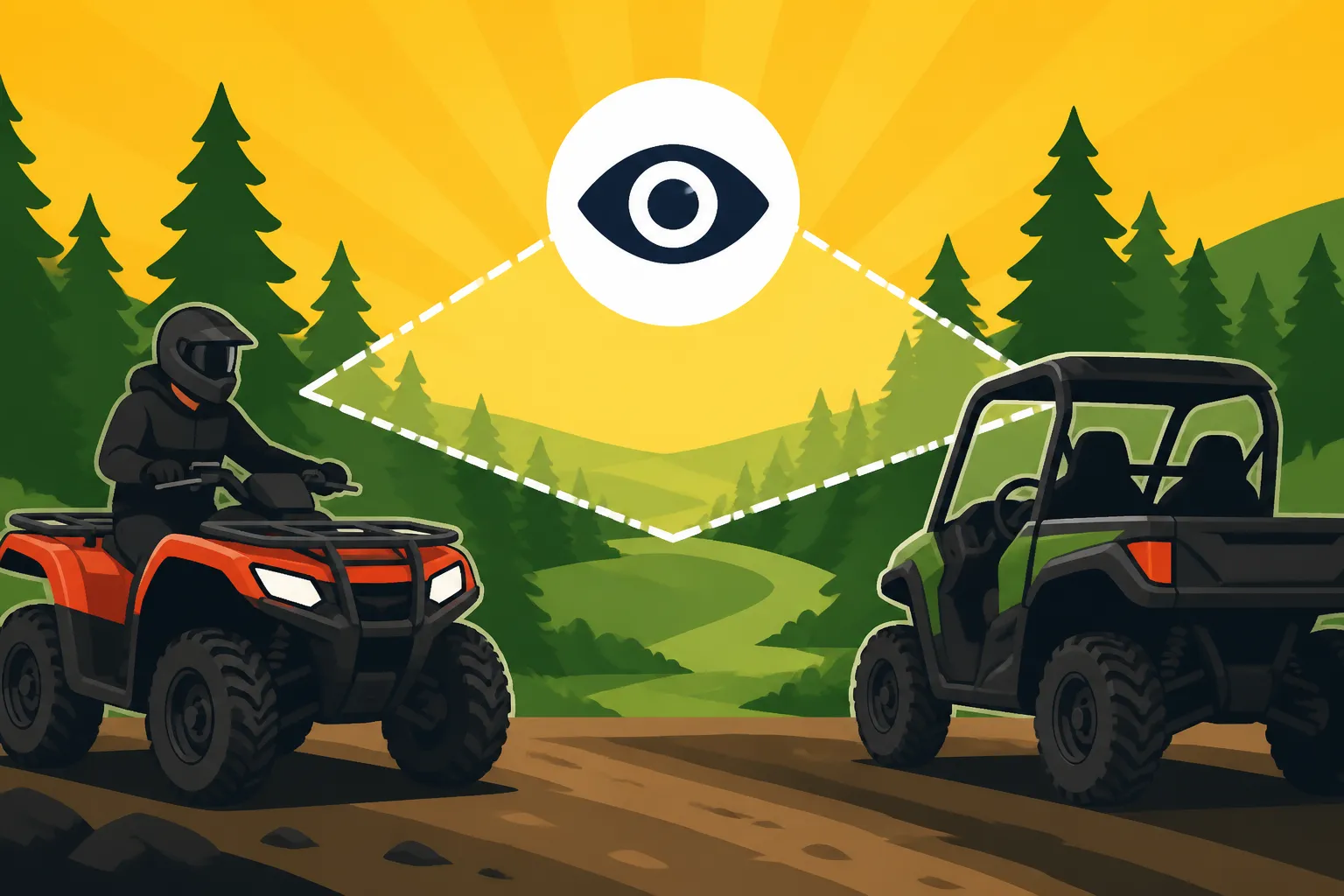
Simply put, the rule dictates that when you intend to cross a highway, you must have an unobstructed view of at least 150 metres in both directions along that highway. This means you need to be able to see clearly down the road for about a football field and a half's length (or more, if you're thinking of Canadian football fields) in either direction without any hills, sharp turns, buildings, or heavy vegetation blocking your view. It's about ensuring that any approaching vehicle is visible to you, and more importantly, that you are visible to them, well before you enter their path.
Imagine you're at the edge of the Trans-Canada Highway, ready to cross from one trail segment to another. Before you even think about engaging your clutch or pressing the throttle, you must mentally measure or visually confirm that 150-metre clear line of sight. If there's a crest of a hill just ahead that you can't see over, or a bend in the road that disappears into the trees, you cannot cross at that point. The law is clear: if you don't have that 150 metres, you need to find another, safer spot. This rule applies every single time you attempt to cross.
Why This Specific Distance?
The 150-metre figure isn't arbitrary; it's based on established safety principles relating to vehicle speeds, reaction times, and braking distances. At typical highway speeds, a driver needs a significant amount of time and distance to perceive a hazard, react, and then brake or maneuver to avoid a collision. When an ORV suddenly appears on the highway, especially a machine that might be smaller or less visible than a car, that reaction time becomes even more critical.
This buffer zone ensures that if a car is approaching at 100 km/h, the driver has several seconds to see your ORV, understand your intention, and take appropriate action. Conversely, it gives you, the ORV operator, enough time to confirm the road is truly clear before proceeding. It's a mutual safety zone, designed to account for human perception and mechanical capabilities. Failing to adhere to this distance is essentially gambling with those precious seconds and metres, and that's a bet no one should take.
Common Misinterpretations and Mistakes
Many riders mistakenly believe that if they can just "gun it" across quickly, the visibility rule isn't as strict. This is a dangerous assumption. The law isn't about how fast you can cross; it's about the safety envelope surrounding that crossing. Another common error is assuming that if traffic is light, the rule doesn't apply. It applies universally, regardless of traffic density.
Some riders also get tripped up by what constitutes an "unobstructed" view. A patch of tall bushes, a parked transport truck, or even glare from the sun can obstruct your view, even if it's only for a small portion of that 150 metres. You need a continuous, clear line of sight. It's also easy to misjudge distances, especially on unfamiliar roads. What looks like 150 metres might actually be far less, particularly when you're focusing on the immediate task of crossing. Always err on the side of caution.
Why This Rule Matters: Safety First
The 150-metre visibility rule isn't just bureaucratic red tape; it's a cornerstone of safety that directly impacts the likelihood of serious accidents. When you're out on the trails of Newfoundland, enjoying the rugged beauty, the last thing you want is for your adventure to take a tragic turn because of a highway crossing gone wrong. This rule is designed to protect not only you and your passengers but also everyone else on the road.
Preventing Collisions with High-Speed Traffic
Highways are designed for speed, and vehicles travel at rates far greater than those of an ORV. A collision between a highway vehicle and an ATV or side-by-side can be catastrophic for the ORV operator and passengers due to the sheer difference in mass and structural protection. The 150-metre rule provides a critical buffer. If you cross when you don't have that clear visibility, you're essentially darting into traffic with insufficient warning for either yourself or the highway driver.
Think of it from a highway driver's perspective: they're often travelling at 90-100 km/h, focused on the road ahead. An ORV suddenly appearing from a treeline or a dip in the road can be an unexpected and terrifying event, leaving them precious little time to react. This rule is there to give everyone a fighting chance to avoid a crash, ensuring that highway drivers can see you coming, and you can see them approaching, well in advance. It’s about mutual respect for speed and safety.
Mitigating Risks for Off-Roaders
While the highway driver has the advantage of a larger, heavier vehicle, the ORV operator faces far greater personal risk in a collision. Even a low-speed impact can result in severe injuries, given the open design of most ATVs and side-by-sides. The 150-metre rule is your first line of defence against becoming another statistic. It forces you to pause, assess the situation thoroughly, and only proceed when it is genuinely safe to do so.
Ignoring this rule not only puts your physical well-being at risk but also carries significant legal and financial consequences. If you're involved in an accident while violating this rule, you could face hefty fines, legal liability for damages, and potentially devastating increases in your insurance premiums, assuming your policy even covers such a scenario. [Newfoundland Insurance Requirements for Riders] are critical, but they can't always negate the consequences of unsafe practices.
Protecting Oncoming Motorists
It's not just about your safety; it's about the safety of others. A sudden obstruction like an ORV on a highway can cause other vehicles to swerve violently, brake hard, or even collide with each other. This ripple effect of danger extends far beyond your immediate machine. Imagine causing a multi-vehicle pile-up because you misjudged a crossing. The emotional, legal, and personal repercussions of such an event would be immense.
The 150-metre rule serves as a clear directive for responsible riding. It tells ORV operators that highway interactions are serious business and demand the utmost caution. By adhering to it, you contribute to the overall safety of Newfoundland's roads, ensuring that everyone can travel with a greater sense of security. It's a small effort with a potentially life-saving impact.
Practical Application: How to Judge 150 Metres
Knowing the rule is one thing, but actually applying it safely and accurately in the field is another challenge entirely. Many riders struggle with visual estimation, especially when the landscape is varied or unfamiliar. Properly judging 150 metres of unobstructed visibility is a skill that improves with practice and conscious effort. It's about developing a keen eye for distances and understanding what truly constitutes a clear view.
Visualizing the Distance
One of the best ways to gauge 150 metres is to use familiar objects as reference points. A typical Canadian football field is 110 yards (about 100 metres) long. So, 150 metres is roughly one and a half football fields. If you can envision that length of open road in both directions, free of obstructions, you're on the right track. Another common reference is the length of power poles; they're often spaced about 50-60 metres apart, so you'd need to see at least three of them down the road.
When you're stopped at a crossing point, take a moment. Look left, then look right. Scan the horizon, identifying any dips, rises, sharp curves, or dense tree lines. If your line of sight is broken by anything within that estimated 150-metre zone, you cannot proceed. It's also important to consider weather conditions; fog, heavy rain, or even low sun can drastically reduce visibility, meaning you might need significantly more than 150 metres to feel truly safe.
Identifying Obstructions
An "obstruction" isn't just a physical barrier directly in your path. It can be anything that limits your ability to see an approaching vehicle or an approaching vehicle's ability to see you. This includes:
- Hills or Crests: If the road goes up and over a hill within 150 metres, you don't have the required visibility.
- Sharp Curves: A bend in the road, even if it looks gentle, can hide an oncoming vehicle until it's too late.
- Dense Vegetation: Trees, tall bushes, or even thick crops can create blind spots along the roadside.
- Buildings or Structures: Barns, houses, or commercial properties close to the highway can block views.
- Weather Conditions: Fog, heavy snow, rain, or bright sun glare can reduce effective visibility to near zero.
Always be aware of these potential hazards. If you're unsure, or if any of these elements are present, assume you don't have 150 metres and seek an alternative. Remember, your ORV might have specific visual limitations compared to a car; a raised SuperATV UTV might offer a better vantage point, but it still doesn't negate the rule for the approaching highway traffic.
The "Too Close to Call" Scenario
There will be times when you're at a crossing, and you're just not quite sure if you have the full 150 metres. Maybe it's close, or maybe there's a slight rise you're second-guessing. In these "too close to call" situations, the safest and only legal course of action is to not cross. Find an alternate route, or if none exists, backtrack and find a crossing point that is unequivocally safe and compliant.
This might mean riding a bit further down a trail, or even turning around if the trail system doesn't offer a better option. It can be frustrating, especially if you're on a long ride, but it's a small inconvenience compared to the potential consequences of an unsafe crossing. Taking the extra time to ensure you have clear [Crossing a Newfoundland Highway Needs 150 Metres of Visibility] is a sign of a responsible and experienced rider.
Other Highway Crossing Rules for ORVs
While the 150-metre visibility rule is paramount, it's just one piece of the puzzle when it comes to safely navigating highways in Newfoundland. There are several other critical regulations that ORV operators must adhere to when their machines come into contact with public roads. Understanding these rules fully is essential for staying legal and, more importantly, staying safe.
Direct Crossing Only: No Joyriding on the Pavement
When you encounter a highway, the law is very clear: your ORV is generally only permitted to cross it directly at a right angle. This means you cannot drive parallel to the highway for any distance, even a short one, before turning to cross. The intent is to minimize the time your ORV spends on the paved surface, reducing conflict with high-speed traffic. Think of it as the shortest possible path from one side to the other.
This direct crossing rule is a cornerstone of ORV road safety. It acknowledges that ATVs and side-by-sides are not designed for highway speeds and are often much harder for highway traffic to see and anticipate. Therefore, their presence on the road should be as brief and predictable as possible. Any deviation, such as riding down the centre line or even curving across rather than making a straight shot, is a violation and a significant safety risk.
Yielding Every Single Time to Highway Traffic
This rule might seem obvious, but it's often overlooked in the rush to cross. When you approach a highway, regardless of the visibility, speed of oncoming traffic, or your perceived right-of-way, you must yield to all highway traffic. This means coming to a complete stop, assessing the situation, and only proceeding when the road is completely clear and safe to do so. You never have the right-of-way over highway vehicles.
Think of yourself as entering a separate, higher-speed environment. Highway traffic has the priority, and it's your responsibility to ensure your entry or crossing does not impede or endanger them. This means waiting patiently, even if it feels like a long time. [Newfoundland Riders Yield to Highway Traffic] is a fundamental principle that keeps everyone safe. Never assume a driver has seen you or will slow down for you.
Maximum Speed Limit While Crossing
While the main focus is on getting across quickly and safely, there isn't a specific high-speed limit for crossing, but rather a general expectation of prudence. You should cross at a speed that is reasonable and safe for the conditions, your machine, and the specific intersection. This typically means accelerating firmly but smoothly to clear the highway as efficiently as possible, without being reckless. You're not meant to crawl across, but you're also not meant to blast across in a way that suggests you're trying to outrun traffic.
It's about making a deliberate, confident, and swift crossing once you've confirmed the path is clear. Do not hesitate in the middle of the highway. However, your speed should still allow you to maintain control of your machine, especially if the ground is uneven or the pavement is wet. The goal is a quick, controlled transition from one trail segment to the other, minimizing your exposure to highway traffic.
Road Shoulder Use: The 1-Kilometre and 20 km/h Limits
Sometimes, a direct crossing isn't immediately feasible or safe, and the only way to reach another trail segment is by briefly using the road shoulder. Newfoundland's Off-Road Vehicles Act provides very specific, limited circumstances under which this is permitted. It's not a free pass to ride alongside the highway; it's a tightly regulated exception designed to facilitate access to trails, not for extended travel.
The 1-Kilometre Limit: How Far is Too Far?
The law states that an ORV may operate on the shoulder of a highway for a maximum distance of one kilometre. This is a very precise limit, intended to allow riders to move from an unsafe crossing point to a safer one, or to reach a trail access point that's just a short distance down the road. It is absolutely not an invitation to travel long distances on the shoulder. Many riders get this wrong, believing they can ride for several kilometres to reach a specific destination.
One kilometre might not sound like much, but it can feel like a considerable distance when you're hugging the edge of a busy highway. It's roughly the length of ten Canadian football fields. You should always be aware of your distance travelled when on the shoulder, and if you find yourself approaching or exceeding that 1-kilometre mark, you are in violation of the law. This rule reinforces the idea that ORVs belong on trails, not alongside highways.
The 20 km/h Speed Limit: Slow and Steady
When operating on a highway shoulder, your speed is strictly limited to 20 kilometres per hour. This is a very slow speed, roughly equivalent to a brisk jog or a slow bicycle ride. The purpose of this low limit is twofold: first, it ensures that ORVs are operating at a significantly lower speed than highway traffic, making them more predictable and giving highway drivers more time to react. Second, it emphasizes that shoulder riding is a temporary measure, not a mode of transport.
Operating at 20 km/h requires constant vigilance. It’s easy to inadvertently exceed this limit, especially on a relatively flat or downhill section of shoulder. Always keep an eye on your speedometer. This low speed, combined with the 1-kilometre distance, creates a very controlled and minimal interaction with the highway environment. [20 km/h on a Shoulder] isn't just a guideline; it's a legal requirement designed to reduce risk for everyone.
Where and When Shoulder Use is Prohibited
Even with the 1-kilometre and 20 km/h rules, there are still situations where shoulder use is strictly prohibited. You cannot use the shoulder in areas where ORVs are explicitly banned, such as within certain municipal boundaries or near designated protected areas. Also, shoulder use is generally not permitted on divided highways or controlled-access highways where entry and exit points are limited, as these roads are designed for continuous high-speed travel.
Furthermore, if the shoulder itself is unsafe – perhaps it's very narrow, full of debris, or there's no safe place to pull off at the end of your 1-kilometre limit – you should avoid using it. The intention is to provide a safe temporary passage, not to force you into a hazardous situation. Always use your judgment, and if in doubt, find an alternative route that avoids highway shoulder use entirely. Riding the shoulder is a privilege, not a right, and it comes with strict limitations. [Newfoundland's 1-Kilometre Shoulder Rule] and [Newfoundland's 20 km/h Shoulder Limit] are non-negotiable.
Equipment Requirements for Road Intersections
While the 150-metre visibility rule and other road-specific laws govern how you operate your ORV near highways, certain equipment requirements ensure that your machine is visible and safe when it interacts with the road. These aren't optional accessories; they are legal necessities designed to protect you and others, especially in low-light conditions or when crossing busy thoroughfares.
Headlamps and Taillamps: See and Be Seen
Anytime your ORV is operating between sunset and sunrise, or during any period of reduced visibility (like fog or heavy rain), it must be equipped with working headlamps and taillamps. Your headlamp should project a white or amber light visible from at least 150 metres to the front, while your taillamp must emit a red light visible from the same distance to the rear. This isn't just for looking cool; it's for crucial visibility. [Newfoundland Head and Tail Lamp Rules] are clear on this.
Having functional lights is paramount when crossing a highway, even in broad daylight. While not strictly required by law during the day, having them on provides an extra layer of visibility to oncoming highway traffic. A small ORV can be surprisingly difficult to spot against certain backgrounds, and bright lights help break through that visual camouflage. Regularly check your bulbs, wiring, and fuses to ensure your lighting system is always ready. Aftermarket lights from brands like SuperATV can often provide superior illumination, ensuring you are highly visible.
Reflectors: Passive Safety All the Time
Beyond active lighting, your ORV must also be equipped with passive reflectors. Typically, these include amber reflectors on the front sides and red reflectors on the rear sides of your machine. These small, often overlooked, safety devices play a critical role, especially if your active lights fail or if you're parked by the roadside. They catch and reflect light from other vehicles, providing a crucial warning to approaching drivers.
Ensure your reflectors are clean, unobstructed, and securely attached. Mud, dirt, or even cargo can easily obscure them, rendering them useless. Take a moment before each ride to wipe them down, especially if you've been splashing through boggy terrain. These inexpensive pieces of equipment are silent guardians of your safety, constantly working to make your machine more noticeable to others.
Horn: Making Your Presence Known
While not directly related to visibility, a working horn is another mandatory piece of safety equipment for an ORV operating in Newfoundland. Its primary function is to alert other trail users or animals to your presence. However, it can also be a vital tool when interacting with highways. If you find yourself in an unexpected or dangerous situation during a crossing, a quick honk can draw attention to your position.
A horn is not a substitute for proper visibility or yielding, but it's an important supplemental safety device. Ensure your horn is easily accessible and produces a clear, audible sound. Just like your lights, check its functionality regularly as part of your pre-ride inspection. All these small details add up to a much safer riding experience, particularly when you're crossing areas of high-speed traffic.
Consequences of Non-Compliance: Fines and Safety Risks
Ignoring the specific rules for highway crossings and shoulder use in Newfoundland isn't just a minor infraction; it carries significant legal, financial, and personal consequences. The authorities take these regulations seriously because the stakes – human lives and serious injuries – are incredibly high. Understanding the repercussions can be a strong motivator for adherence.
Legal Penalties and Fines
Operating an ORV in violation of the 150-metre visibility rule, the 1-kilometre shoulder limit, the 20 km/h shoulder speed limit, or failing to yield to highway traffic can result in substantial fines. Peace officers and RCMP officers are empowered to enforce these regulations, and they frequently patrol areas where ORVs might interact with highways. The fines for these types of offences can range significantly, but they are designed to be a deterrent, not just a slap on the wrist.
Beyond the immediate fine, you could also face court costs, and repeat offences often lead to escalating penalties, including potential suspension of your ORV registration or even impoundment of your machine. [Newfoundland Penalties for Riding Illegally] are clearly outlined in the Off-Road Vehicles Act. It's not just a hypothetical scenario; riders are ticketed and charged for these violations every season.
Increased Risk of Accidents and Injuries
The most severe consequence of non-compliance is, without a doubt, the drastically increased risk of an accident. As discussed, highways are dangerous environments for ORVs due to speed differentials and visibility challenges. Violating the rules essentially amplifies these dangers. An accident involving an ORV and a highway vehicle is rarely minor; it often results in severe injuries or fatalities for the ORV operator and passengers.
These injuries can be life-altering, leading to long-term physical impairments, extensive medical bills, and significant emotional trauma. Even if you walk away from a crash, the experience of being involved in such a high-impact incident can be deeply scarring. No trail ride is worth taking such a profound risk with your personal safety or the safety of those riding with you.
Insurance Implications and Liability
If you're involved in an accident while violating these highway crossing rules, your insurance company might deny your claim or significantly reduce your coverage. Insurance policies often have clauses that exclude coverage for incidents occurring while operating a vehicle illegally or recklessly. This means you could be personally liable for all damages, including repairs to your own machine, medical bills, and damages to the highway vehicle involved.
The financial burden of such liability could be immense, potentially leading to lawsuits and long-term financial hardship. Even if your insurance does cover a portion, expect your premiums to skyrocket, making future ORV ownership more expensive. It's a stark reminder that obeying the law isn't just about avoiding a ticket; it's about protecting your financial future and assuming personal responsibility. Always ensure you have adequate [Newfoundland Insurance Requirements for Riders] in place, but remember that insurance can't fix reckless behaviour.
Planning Your Ride: Avoiding Highway Crossings When Possible
While the Newfoundland Off-Road Vehicles Act provides strict guidelines for legal highway crossings, the best advice for any ORV operator is often to avoid them altogether if possible. Eliminating the interaction with high-speed traffic is the safest option. Careful planning and knowledge of the local trail network can often help you achieve this.
Utilizing Dedicated ORV Underpasses and Overpasses
Many well-developed trail networks, particularly along the T'Railway, feature dedicated underpasses or overpasses that allow ORVs to cross highways without ever sharing the same surface as highway traffic. These are by far the safest options and should always be prioritized when available. They are specifically designed for ORV traffic, eliminating the need to judge visibility, yield to cars, or worry about speed limits.
Before you head out, consult local trail maps or online resources. Organizations like the Newfoundland T'Railway Council often provide detailed maps that clearly mark these safe crossing structures. Make them a part of your planned route. It might mean a slight detour or adding a few extra minutes to your journey, but the peace of mind and enhanced safety are well worth it. These structures are invaluable resources for safe riding.
Researching Alternative Trail Segments
Sometimes, a single trail might be interrupted by a highway crossing, but there's a parallel or slightly diverted trail segment that bypasses the road entirely. Take the time to research your route. Online trail mapping apps, local ATV clubs, or even talking to experienced local riders can reveal these alternative paths. What looks like a straight shot across a highway on a basic map might have a safer, more scenic detour you're unaware of.
Consider the time of day and year, too. Some crossings might be more hazardous during peak traffic hours or in adverse weather conditions. If you know a particular crossing is tricky, and there's another way around, even if it adds a bit of distance, it's almost always the better choice. The goal is to maximize your time on dedicated trails and minimize your exposure to public roads.
Contacting Local ATV Clubs and Trail Operators
Newfoundland is home to many passionate ATV and UTV clubs and managed trail operators. These groups are an invaluable source of local knowledge. They often have firsthand experience with challenging highway crossings and can offer advice on the safest routes, alternative trails, or recent changes in road conditions or trail access. They might even organize group rides that utilize known safe crossings.
Don't hesitate to reach out to them before planning a new route. Many clubs have social media pages or websites where you can ask questions. Their insights can save you from hazardous situations and help you discover the best and safest ways to enjoy Newfoundland's vast trail network. They are often the best resource for staying current on [Newfoundland ATV Trails: The T'Railway and Beyond] and how to navigate them safely.
Table: Summary of Key ORV Road Rules in Newfoundland
To help keep these crucial rules clear in your mind, here's a quick summary of the main regulations discussed when your ORV interacts with Newfoundland's highways:
| Rule Category | Specific Requirement | Details & Purpose |
|---|---|---|
| Highway Crossing | 150-Metre Visibility | Must have an unobstructed view of at least 150 metres in both directions along the highway before crossing. Prevents collisions by ensuring ample reaction time for ORV and highway traffic. |
| Direct Crossing Only | Cross highways at a right angle; do not drive parallel. Minimizes ORV exposure to high-speed traffic. | |
| Yield to Highway Traffic | Always come to a complete stop and yield to all highway vehicles. Highway traffic has priority; ORVs must not impede flow. | |
| Safe Speed While Crossing | Accelerate smoothly and confidently to clear the highway efficiently, but maintain control. | |
| Road Shoulder Use | 1-Kilometre Limit | Maximum distance an ORV can operate on a highway shoulder. Allows temporary movement to a safer crossing or trail access point, not for extended travel. |
| 20 km/h Speed Limit | Absolute maximum speed when operating on a highway shoulder. Ensures predictability and minimizes speed differential with highway traffic. | |
| Equipment | Headlamps & Taillamps | Required from sunset to sunrise or in reduced visibility. Essential for being seen by others, especially on highways. |
| Reflectors | Amber on front sides, red on rear sides. Passive visibility, crucial if active lights fail. | |
| Horn | Required to alert others to your presence. |
This article is for general informational purposes only and does not constitute professional advice. Laws, prices and regulations vary by location and change over time. Consult a qualified professional for guidance on your specific situation.