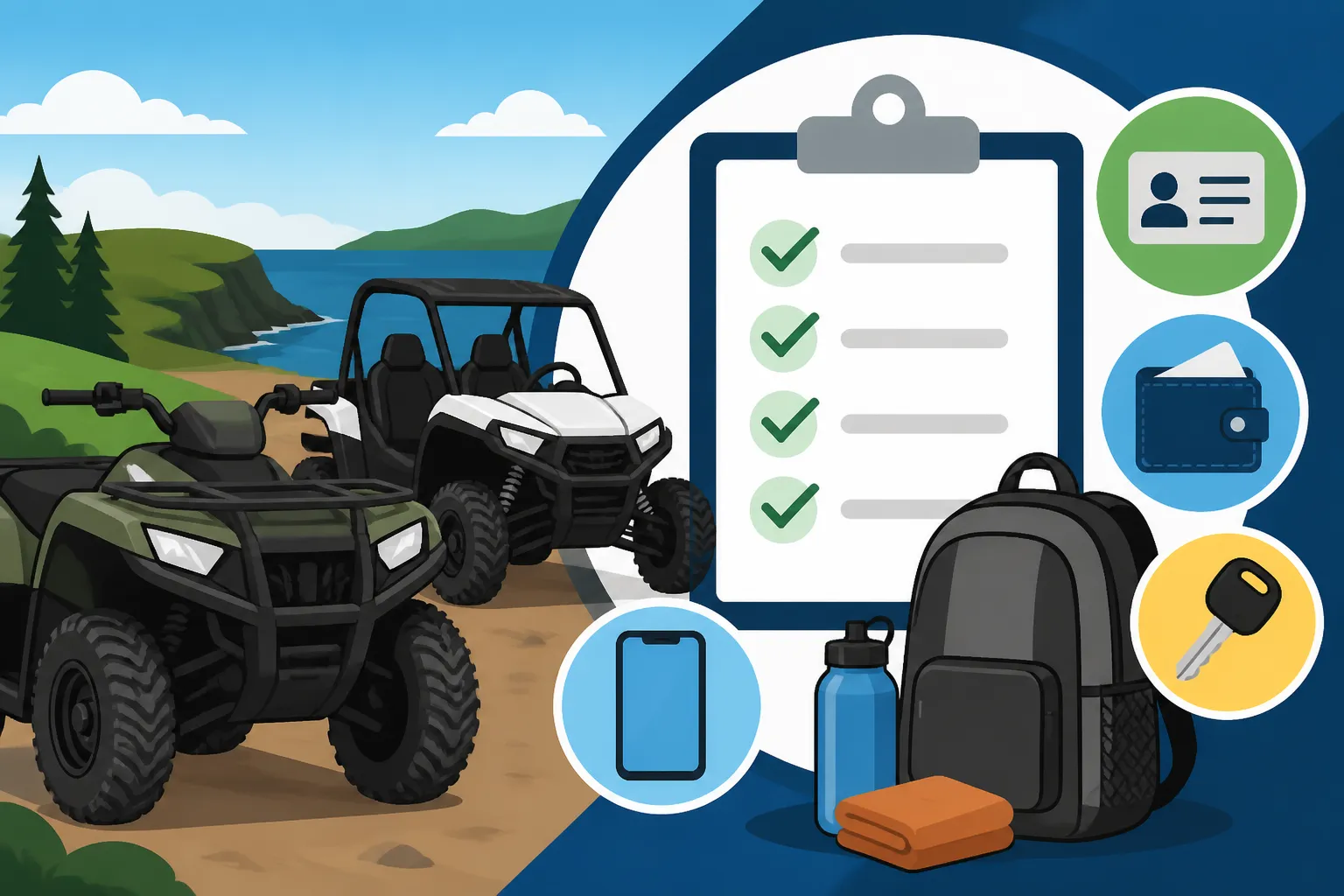
What to Bring to Your Registration Appointment
Showing up at Motor Registration for your ATV or UTV registration appointment, only to be turned away because you're missing a crucial piece of paper, is a special kind of frustration. It wastes your time, their time, and can delay getting your machine out on the trails. This guide is here to walk you through exactly what documents and information you'll need to gather before you head out the door, ensuring a smooth and successful registration process for your off-road vehicle in Newfoundland.
Essential Personal Identification for the Applicant
First things first, the registry needs to know who you are. This might seem obvious, but forgetting a piece of valid identification is a common stumble. You're not just registering a machine; you're establishing yourself as its legal owner with the province. They need to confirm your identity and that you're a resident, or at least have a valid reason to be registering here.
Valid Photo Identification
When you walk through the door, be prepared to present government-issued photo identification. Think of it like proving who you are at an airport or when opening a bank account. A valid driver's licence from Newfoundland and Labrador is usually the easiest and most accepted form of ID. If you don't have one, a provincial identification card or a passport will often do the trick. The key here is photo and government-issued. Don't forget to ensure it's current and not expired, as an expired ID won't cut it. [Newfoundland Registration Paperwork Explained] goes into more detail about the specific forms accepted.
For example, if you're a new resident to Newfoundland, you'll want to ensure your photo ID reflects your current address in the province, or be prepared to provide supplementary proof of residency. They're looking for that clear link between you and the address you're providing for the registration.
Proof of Newfoundland and Labrador Residency
Beyond your photo ID, the registry might also ask for separate proof that you actually live in Newfoundland and Labrador. This is especially true if your driver's licence is from another province or if you've recently moved. They want to ensure the machine is being registered to someone with a legitimate address in the province.
Common documents that serve as proof of residency include recent utility bills (like power or internet), property tax assessments, or even a rental agreement. The important thing is that the document clearly shows your name and your current physical address in Newfoundland. A P.O. box alone usually won't suffice; they need a street address. If you've just moved here, remember the [Newfoundland's 90-Day New Resident Rule] which dictates when you need to register your out-of-province machine. Having these documents organized beforehand can save you a lot of hassle and prevent a second trip.
Documentation for Your Off-Road Vehicle
This is where things can get a little more complex, as the required documentation depends heavily on whether your machine is brand new, used, or if you're importing it. The registry needs a clear paper trail to confirm the machine's identity and its journey to you.
New Vehicle Information Statement (NVIS) for New Machines
If you're buying a brand new ATV or UTV straight from a dealership, the most critical piece of paper you'll receive is the New Vehicle Information Statement, or NVIS. This document is essentially the birth certificate for your machine. It proves that the vehicle has never been registered before and lists all its essential details: make, model, year, and most importantly, the Vehicle Identification Number (VIN). [Newfoundland Requires an NVIS for a New Machine] explains why this document is non-negotiable for new registrations.
The NVIS will also typically include the dealer's information and your purchase details. Ensure all the information on the NVIS is accurate and matches your personal details before you leave the dealership. Any discrepancies here could cause delays at the registry. It's the dealer's responsibility to provide this to you, so double-check you have it safely tucked away.
Bill of Sale for Used Machines
For those of us buying a used machine, the bill of sale is king. This document serves as legal proof of ownership transfer from the previous owner to you. The key is that the bill of sale needs to clearly identify both the buyer and the seller, the date of the sale, the purchase price, and a full description of the off-road vehicle, including its VIN.
If you're buying from a private seller, you'll need a [Newfoundland Bills of Sale From Each Owner] in the chain of ownership. This means if the person you're buying from bought it used, they should have a bill of sale from their purchase, and so on, all the way back to the original NVIS or first registration. Sometimes, this chain can be broken, which can lead to complications requiring extra steps like sworn affidavits. LawDepot is an excellent resource for easily accessible and legally sound bill of sale templates that can help ensure you have all the necessary information covered for a private sale. Don't underestimate the power of a clear, comprehensive bill of sale in preventing future headaches.
Sworn Affidavits and Indemnity Forms (When Paperwork is Missing)
Sometimes, despite your best efforts, you might encounter a used machine where the chain of ownership paperwork is incomplete or entirely missing. This is a common hurdle, especially with older machines or those purchased through less formal channels. In such cases, Motor Registration may require you to provide a [Newfoundland Sworn Affidavits and Indemnity Forms].
A sworn affidavit is a formal written statement of fact, made under oath, typically by the person who sold you the machine or by yourself if you're explaining how you came into possession of it without a complete paper trail. This document essentially testifies to the history of the machine and how it came into your hands. An indemnity form, often required alongside an affidavit, protects the provincial government from any liability should future ownership disputes arise. These forms need to be signed in front of a Commissioner for Oaths or a Notary Public. It's a serious step, but it's the province's way of trying to establish clear title when the usual paperwork isn't available. You might find templates or guidance for such forms on platforms like LawDepot.
Financial and Tax Details
Registering a machine isn't just about proving ownership; it also involves financial transactions and tax considerations. You'll need to be prepared to pay any applicable fees and provide information related to the sales tax paid.
Payment for Registration Fees
There's a fee to register your off-road vehicle, and it's something you need to be prepared for at your appointment. For instance, [Newfoundland Charges $95 for an ATV], while [Newfoundland Charges $5 for a Trail Bike]. The exact amount will depend on the type of machine you're registering. It's always a good idea to confirm the current fees before your appointment.
Motor Registration typically accepts various forms of payment, including debit cards, credit cards, and sometimes cash or cheques. Having your preferred method of payment ready will ensure a quick transaction. Don't assume you can pay later; the registration is usually processed once the payment is confirmed.
Proof of Sales Tax Payment
When you purchase an ATV or UTV, you're generally subject to Harmonized Sales Tax (HST). Whether you bought it from a dealer or a private seller, you'll need to provide proof that this tax has been paid. If you bought from a dealer, the HST will usually be clearly itemized on your purchase agreement or bill of sale. If you bought from a private seller, you might be assessed the HST at the time of registration, based on the declared purchase price. [Newfoundland HST on an ATV Purchase] delves into the specifics of this.
It's crucial to understand that even if you bought a machine from a private seller and didn't exchange HST directly with them, you're still likely responsible for paying it to the province upon registration. This is where [Newfoundland Tax on a Private ATV Sale] comes into play. The registry needs to ensure the province gets its due, so have all your financial records related to the purchase handy. Sometimes, they might even ask for the seller's tax registration details at registration to verify the transaction.
Other Important Considerations
Beyond the core documents, there are a few other things that can make your appointment smoother or are required in specific situations. Being aware of these can prevent last-minute scrambles.
Booking Your Appointment
While not a physical document, securing an appointment is the first and most critical step. Motor Registration offices often operate by appointment only for vehicle registrations. You can't just walk in and expect to be served. [Newfoundland Registration by Appointment] is a must-read for understanding this process. Always book well in advance, especially during peak riding seasons, as slots can fill up quickly. This ensures you have a dedicated time slot and the staff are expecting you.
VIN Inspection
In some cases, especially if there's any doubt about the VIN on your machine or if you're registering a machine with [Newfoundland Registration When the VIN Is Gone], the registry might require a physical inspection of the VIN. While this isn't usually done at the initial appointment, they might direct you to a designated inspection location. Having clear photos of the VIN plate on your machine, or knowing its exact location, can sometimes help the process along, though a physical inspection might still be mandated.
What to Bring: A Quick Checklist
To help you organize everything, here’s a handy checklist of documents to consider bringing to your registration appointment. Remember, specific requirements can vary, so it's always best to call Motor Registration beforehand if you have any unique circumstances or questions.
| Document Type | Required For New Machine | Required For Used Machine | Notes |
|---|---|---|---|
| Valid Photo ID | Yes | Yes | Driver's Licence, Provincial ID, Passport |
| Proof of Residency | Yes (if ID doesn't show) | Yes (if ID doesn't show) | Utility bill, property tax assessment, rental agreement |
| NVIS (New Vehicle Info Statement) | Yes | No | Dealer provides for brand new machines. |
| Bill of Sale | Yes (from dealer) | Yes (from private seller) | Must include VIN, buyer/seller details, purchase price. Consider LawDepot for templates. |
| Chain of Ownership Bills of Sale | No | Yes (if applicable) | For used machines, tracing back to the original owner/NVIS. |
| Sworn Affidavit/Indemnity Form | No | Yes (if paperwork missing) | For machines without clear ownership history. Must be notarized. LawDepot may have templates. |
| Payment for Fees | Yes | Yes | Debit, credit, cash, cheque. Check current fees (e.g., [Why an ATV Registration Costs $95 in Newfoundland]). |
| Proof of HST Payment | Yes | Yes | Dealer invoice, or paid at registry for private sales. |
By meticulously gathering these documents and information before your scheduled [Newfoundland Registration by Appointment], you'll be well on your way to getting your ATV or UTV legally registered and ready for the incredible trails Newfoundland has to offer. Don't let a missing piece of paper be the reason you're stuck at home on a beautiful riding day!
Disclaimer
This article is for general informational purposes only and does not constitute professional advice. Laws, prices and regulations vary by location and change over time. Consult a qualified professional for guidance on your specific situation.