Retrieving an Animal From a Barren
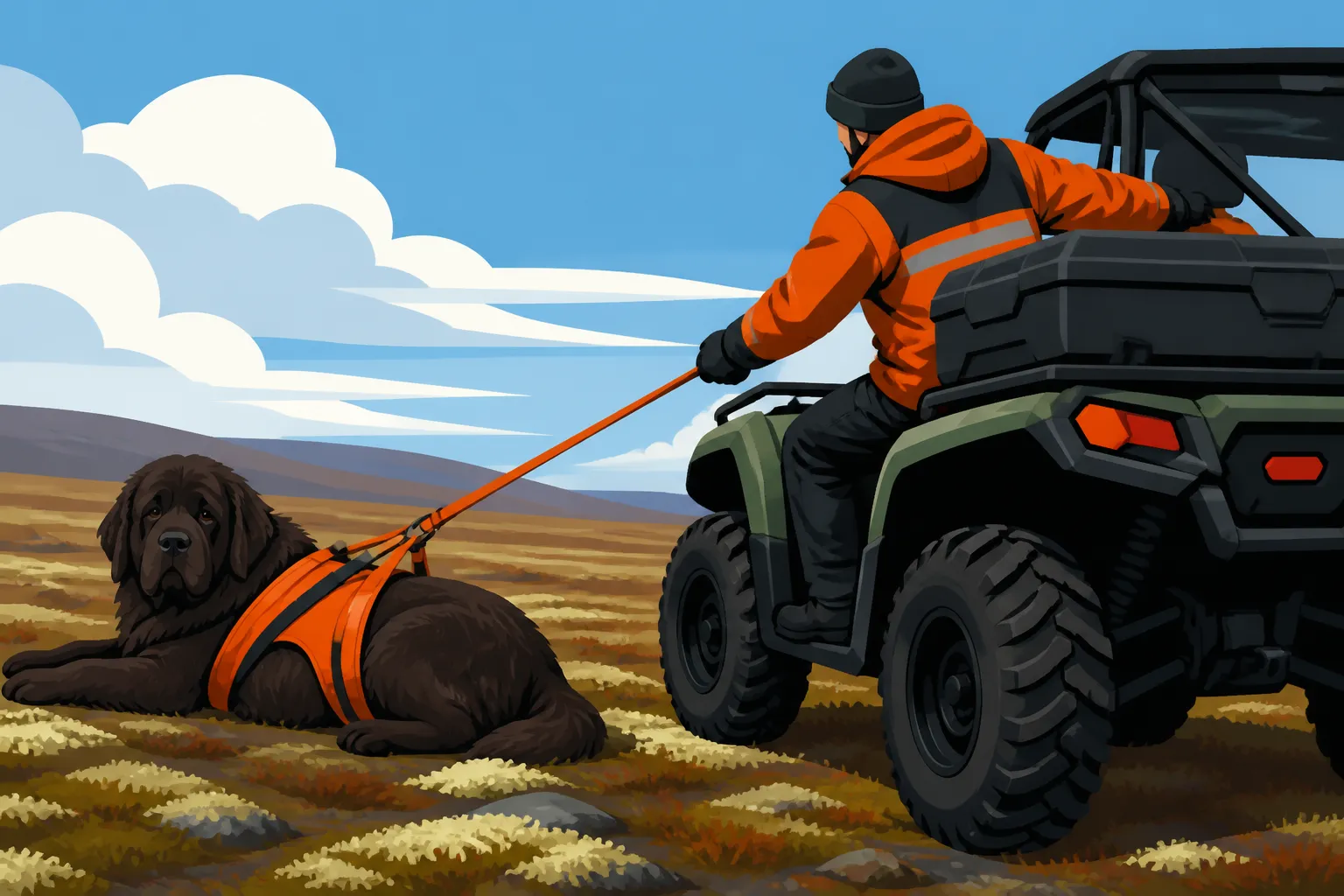
A harvested moose or caribou can be a long, difficult haul from an open barren, and an ATV or side-by-side may seem like the obvious way to bring it out. In Newfoundland, however, game retrieval is not a general pass to ride anywhere. Understand the trip limit, check where machines may travel, and confirm the conditions that apply before you set out.
What the five-trip allowance means
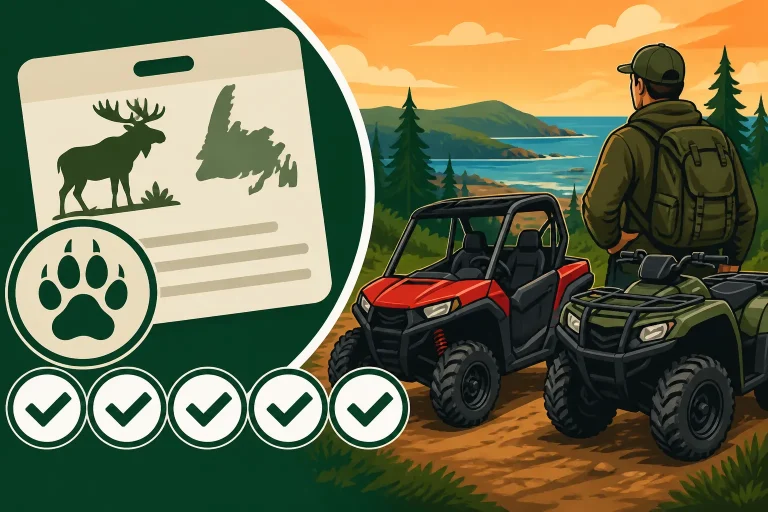
Newfoundland’s big-game rules provide a limited allowance for using an off-road vehicle to retrieve an animal. The allowance is commonly described as up to five trips. It is a narrow retrieval provision, not permission to hunt from a machine, drive freely across Crown land, or use an ATV for unlimited trips between a trailhead and a carcass.
Before relying on it, read the conditions attached to the relevant hunting licence and confirm the current rule with the provincial wildlife authority. Pay attention to what the rules count as a trip, which machines may be used, and whether any limits apply to the route or the animal. Do not assume the allowance means five loads, five machines, or five trips for every person in a hunting party. The written conditions control.
The practical purpose is to allow a hunter to move a harvested animal out of the field within limits. It does not replace the rules that apply to hunting, vehicle registration, trail access, or land use. A valid licence to hunt does not automatically authorize riding in a closed area, crossing private land, or using a machine on a route where ORVs are prohibited.
Keep the retrieval allowance separate in your mind from other permits and requirements:
- Hunting permission concerns the right to hunt and the licence conditions for the season and species.
- Vehicle registration concerns the machine itself. The rules differ by machine class and situation; see Do You Need to Register an ATV in Newfoundland?
- Trail access may require a managed trail sticker or other proof, and some areas have separate access restrictions. Finding Approved Areas on the Provincial Map can help you understand why an open-looking barren is not automatically open to ORVs.
- Landowner permission is needed where your route crosses private land. A hunting licence does not grant access across someone else’s property.
- Other operating rules still apply to your machine, its equipment, and the people riding it. The broad requirements are covered in Newfoundland ORV Road Rules Explained.
If you are unsure how a specific trip is counted, ask before riding. A phone call or written clarification before the hunt is far easier to deal with than a disagreement after an officer finds an ATV off a permitted route. Keep any relevant licence conditions or official guidance accessible, but remember that carrying a document does not make an otherwise prohibited route legal.
Plan a legal route before retrieving the animal
The shortest line between the carcass and the road may not be a lawful route. On open barrens, that distinction matters: a wide, treeless area can look easy to cross while still being protected, restricted, privately owned, or unsuitable for motorized travel.
Start by identifying where the animal lies and the route you would need to use. Check the provincial information for approved and restricted areas, and look for current closures or seasonal restrictions. In a restricted area, access may be limited to marked trails rather than allowing cross-country travel. The rules are not necessarily the same from one area to another. Newfoundland Crown Land Access Rules and Newfoundland Restricted Area Permissions explain the difference between general access and access limited to designated routes.
Do not treat the retrieval allowance as an exemption from area rules unless the applicable conditions clearly say so. If the carcass is beyond an approved route, ask the appropriate land or wildlife authority whether machine access is allowed for that particular retrieval and what route or permit is required. If you cannot confirm permission, make a plan that keeps the machine on legal ground and use another method to move the animal.
National parks require particular care. Motorized access is tightly restricted there, and a hunting or retrieval purpose does not create a general right to ride off-road. Check the park’s rules directly; Newfoundland National Park Machine Rules summarizes the key issue that machines are not permitted on park trails simply because a visitor has a valid hunting licence. Never assume a park boundary is obvious on the ground. Check a map before travelling and stop if you are unsure where you are.
For a private parcel, get permission from the owner before crossing it, even if the detour looks minor. A gate, posted sign, or established track is not an invitation to pass. Written permission is useful when arrangements involve a specific route or multiple riders. Permission From a Landowner Before Crossing Private Ground covers the practical value of getting consent in advance.
A good route plan should include:
- The carcass location and the nearest lawful trail or access point.
- The property and management boundaries along the route.
- Any marked-trail requirements, closures, or seasonal restrictions.
- A route that avoids wetlands and fragile ground wherever possible.
- A fallback plan if weather, water, or ground conditions make the route unsafe.
If maps are unclear or conflict with signs on site, do not resolve the uncertainty by riding ahead. Contact the responsible authority or land manager for clarification. Who to Call About Crown Land Access is a useful starting point for working out which office can answer an access question.
Protect the animal, the ground, and your machine
Retrieving a large animal across a barren is a recovery job, not ordinary trail riding. A vehicle can sink, damage sensitive ground, or become stranded before it reaches the carcass. A loaded machine also handles differently: extra weight affects braking, turning, stability, and the ability to climb or cross uneven ground.
Avoid making new tracks to save time. Wetland and barren vegetation can be slow to recover, and deep ruts can channel water and worsen erosion. If the ground is saturated, thawing, or visibly soft, delay the trip or choose a route that stays on a firm, permitted trail. The environmental concerns are more than cosmetic; Wetland Damage That Cannot Be Undone explains why vehicle tracks in fragile areas can have lasting effects.
Before leaving, assess whether the machine is suitable for the terrain and the load. Follow the manufacturer’s limits for carrying or towing, and secure the animal so it cannot shift, drag, or interfere with steering, lights, or the plate. Do not put a passenger in an unsafe position or exceed the machine’s capacity. If the animal cannot be moved safely in one load, do not assume the five-trip allowance means you should keep returning over soft ground. Reassess the route and the recovery method.
Bring the equipment needed for a safe return, not just the gear needed to reach the animal. That may include a tow strap, recovery equipment suited to the machine, basic tools, food and water, warm and waterproof layers, and a way to communicate if service is unavailable. A winch can help with a recovery, but it does not make a prohibited route legal or guarantee that a machine can be freed without damaging the site. Keep bystanders clear of tensioned straps and cables.
Take special care when crossing water or bog. A concealed hole, soft edge, or sudden change in depth can turn a short retrieval into a dangerous recovery. Do not enter water or peat that you cannot assess, and do not drive through a wet area simply because another vehicle has left tracks there. Existing tracks do not prove that access is legal or that the ground can support another pass. For a deeper look at the risks, see Newfoundland Bog and Machines.
The carcass itself also needs sensible handling. Protect the meat from dirt, exhaust, and contamination; keep it secured and covered appropriately for the conditions. Follow the hunting rules for tagging, reporting, and possession of the animal. Vehicle transport does not excuse missing a required tag or moving the animal in a way that breaches licence conditions. If the trip involves more than one hunter, decide in advance who is responsible for the licence, animal identification, and paperwork.
A practical checklist before you ride
A few checks before departure can prevent both a legal problem and a difficult recovery. Use this checklist for the specific animal and location rather than assuming a previous hunt had the same conditions.
| Check | What to confirm |
|---|---|
| Licence conditions | The retrieval allowance, trip limit, and any conditions for the species and season |
| Area access | Whether the carcass and planned route are in an approved area, restricted area, private parcel, or park |
| Route | Whether machine travel is allowed on the exact trail or access corridor |
| Machine | Registration and any other requirements that apply to the ATV or side-by-side |
| Land permission | Consent for any private land crossing |
| Ground conditions | Whether the route is firm enough to travel without getting stuck or causing damage |
| Load and recovery | The machine’s capacity, safe load arrangement, and recovery plan |
| Animal requirements | Tagging, reporting, and transport conditions under the hunting licence |
It is also worth settling the trip plan with the rest of the party before anyone starts moving the animal. Agree on who will ride, who will remain with the carcass, which route will be used, and how the party will communicate. Keep the number of people and machines as small as practical. Extra traffic can widen tracks and increase the chance of confusion about the permitted route or the trip allowance.
If the route is uncertain, the ground is too soft, or the machine cannot carry the load safely, stop and choose a different method. That may mean packing the animal out, arranging help, waiting for better conditions, or asking an authority whether a particular access option is allowed. A retrieval allowance is useful, but it is not a substitute for judgement.
The simplest rule is to plan the route and verify the conditions before the hunt, not after the animal is down. Confirm the five-trip limit as it applies to your licence, stay on authorized ground, respect private property and closures, and avoid damaging the barren to save a few minutes. These steps protect your hunt and help preserve access for other riders.
Disclaimer
This article is for general informational purposes only and does not constitute professional advice. Laws, prices and regulations vary by location and change over time. Consult a qualified professional for guidance on your specific situation.