Hunting Season on a Shared Trail
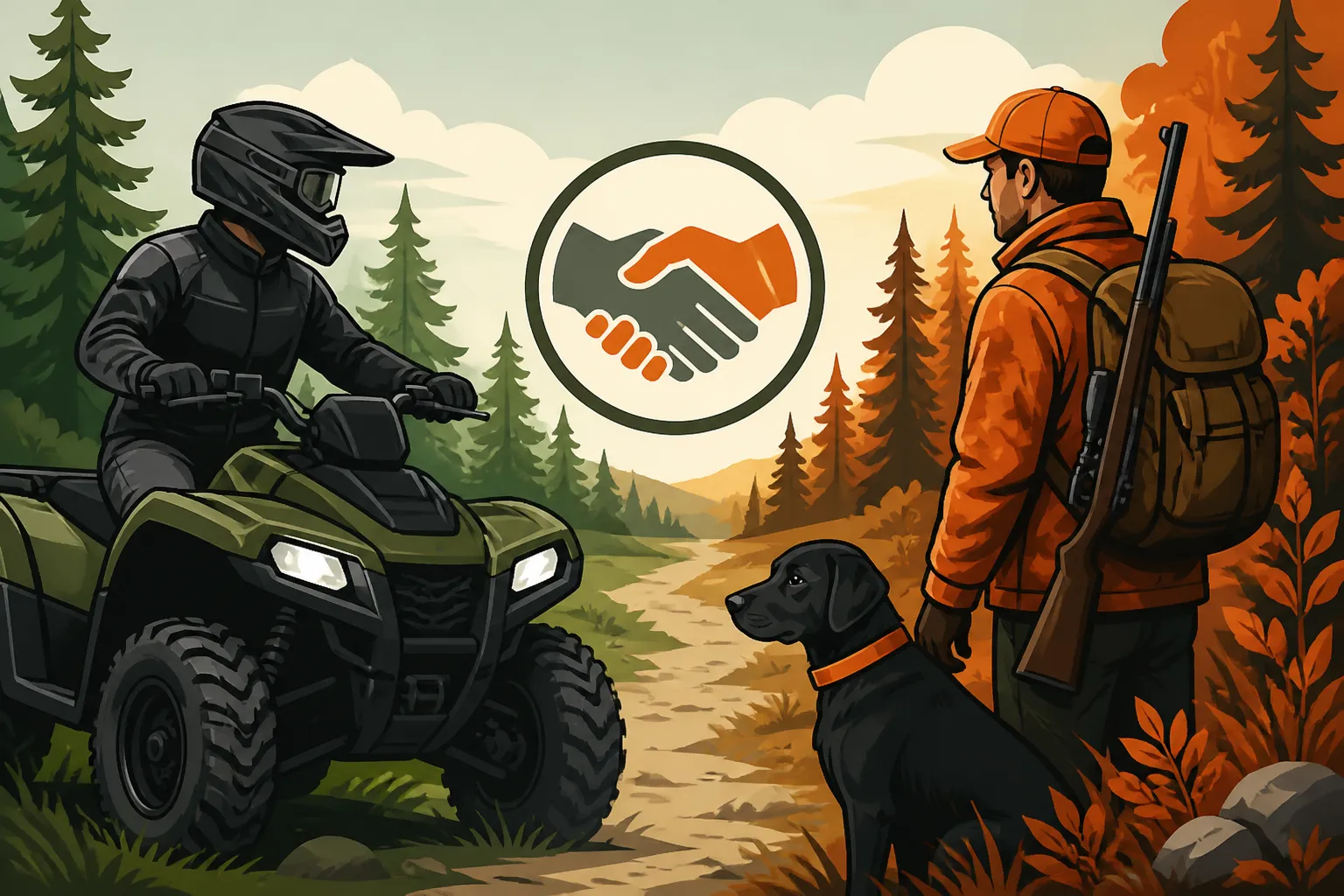
Hunting season changes the feel of a shared trail: hunters may be carrying equipment or retrieving game while riders are moving through the same area. A little planning helps prevent close calls and keeps access respectful. Here’s how to check where you can ride, share the route safely and handle an encounter without adding risk.
Check access before you ride
A trail that is open to riding at one time of year may be affected by seasonal restrictions, local rules or landowner decisions when hunting activity is underway. Don’t assume that a familiar route is open simply because it was open on your last trip. Check the current rules for the area and any notices from the trail operator before unloading.
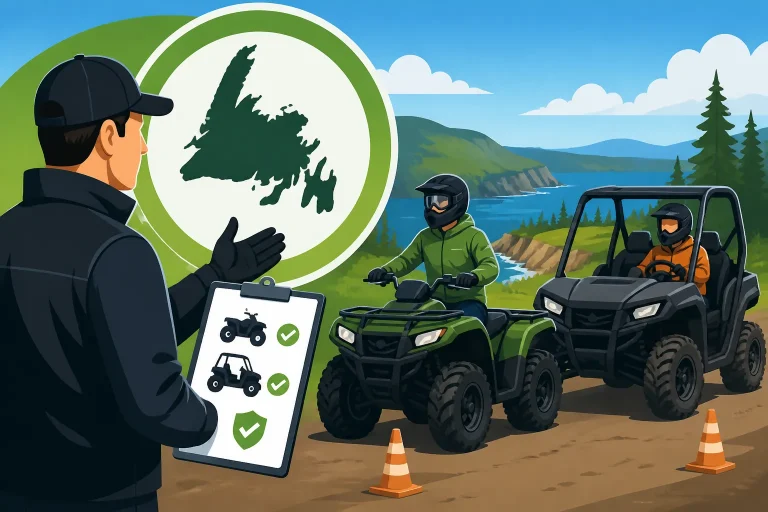
This matters especially when a route crosses Crown land, private property, a managed trail or a restricted area. Those places can have different access rules, and a visible trail does not automatically mean every nearby route is legal to use. Start with Newfoundland Crown Land Access Rules and Newfoundland Restricted Area Permissions, then confirm any local closures or conditions with the relevant operator or land manager.
If you plan to use a managed trail, check whether it is open and whether you need the required trail sticker. A hunting licence does not replace trail requirements, and a trail sticker does not give permission to hunt or cross land where access is restricted. For the basics, see Newfoundland Managed Trail Rules.
Before setting out, check:
- Whether your planned route is open to ATVs or UTVs during the trip.
- Whether any part of the route crosses private land or a restricted area.
- Whether the trail operator has posted a seasonal notice or closure.
- Whether hunting activity is expected in the area and whether an alternative route is available.
- Whether your machine, registration and any required trail documents are in order.
For hunting-specific details, consult Newfoundland Hunting Season Trail Rules. Hunting seasons, permitted areas and conditions can differ by species and location, so don’t rely on an old calendar, a social-media post or a route that another rider says is open. Confirm the current information through official sources before travelling.
A practical way to reduce uncertainty is to plan two routes: your intended route and a legal alternative. If a trailhead is busy with hunters, a route is closed, or conditions feel uncomfortable, you can turn back without improvising through private or restricted land. Make sure everyone in your group knows where the alternatives are before leaving an area with reliable cell service.
| Before leaving | What to confirm |
|---|---|
| Trail access | The route is open to your type of machine and has no current closure |
| Land access | You have permission where needed and understand any restrictions |
| Hunting activity | You know whether hunters may be using the area and how to avoid conflict |
| Machine requirements | Registration, insurance and any trail documents are in order |
| Group plan | Everyone knows the route, turnaround point and backup option |
Share the trail with care
A shared trail is not a place to assume that every person ahead or behind you is another rider. During hunting season, you may encounter people walking, carrying gear, working with a dog or moving an animal. Approach slowly, leave room and be ready to stop.
Reduce speed when sightlines are short, near a trail junction or when you hear voices, a vehicle or a dog. On a narrow section, stop in a safe place and let other trail users pass. Avoid crowding someone who is working with equipment or handling an animal. If you cannot tell what is happening, wait at a distance and ask calmly rather than riding closer to get a better look.
A few habits make a noticeable difference:
- Slow down before bends, blind rises and junctions, not after you reach them.
- Use a steady, moderate pace near other people; avoid sudden acceleration or loud throttle blips.
- Keep a safe gap between machines so riders behind you have time to react.
- Do not block the route while your group stops. Pull well clear where the trail allows.
- Give walkers and people handling dogs extra space, and follow any directions they give about passing.
- Avoid riding around a closure, barrier or posted sign, even if another route appears to reconnect nearby.
- Keep noise down when stopping, especially near cabins, camps and active hunting areas.
The noise and dust from a machine can affect other people’s plans and make a tense encounter harder to manage. Riders should be especially cautious where a trail passes a hunting access point or intersects with a walking route. If a group of hunters is preparing to move through a narrow section, waiting a few minutes is usually safer than trying to pass between them.
A hunting party may not be easy to see from a moving machine. Trees, terrain and weather can block your view, while a stationary person may blend into the surroundings. That is one reason speed matters even when the trail looks empty. The advice in Newfoundland Trail Etiquette Locals Expect is useful year-round, but it becomes particularly important when several activities overlap.
Carry a map or have your route saved for offline use. Do not stop in a spot where a blind corner hides your machine from approaching traffic. If you need to check directions or regroup, choose a wide, visible place well away from the main line of travel. Where a trail has no safe passing room, wait until it does.
Keep hunting and riding activity separate
A machine can help hunters reach an area or move gear, but riding access and hunting permission are separate questions. Being allowed to ride a trail does not mean you are allowed to hunt from it, and a hunting licence does not make every trail or parcel of land available for machine use.
Do not fire from a moving or stationary ATV or UTV, and do not treat the trail itself as a shooting position. Keep firearms handled and transported in line with current hunting and firearms rules. If you are riding rather than hunting, do not approach a hunter to ask for a closer look at a firearm or an animal. Stop at a respectful distance, communicate clearly and follow the person’s directions about giving space.
Hunters should also plan around other trail users. Keep equipment secured so it cannot fall onto the route, and avoid leaving a machine where it blocks access or creates a hazard. If you are transporting equipment or game, choose a safe place to load and secure it rather than stopping around a blind bend or on a narrow section.
Big-game retrieval can have specific limits. Newfoundland’s rules include restrictions on machine trips for transporting big game, so do not assume that repeated journeys from a kill site are permitted just because the trail is open. Review Newfoundland Big Game Transport Trips and Why a Big Game Licence Allows Only Five Trips before planning how to move an animal. Confirm the current rule for the species, location and circumstances with the official source; the trip limit is not a general permission to ride anywhere.
If you find an animal or equipment left near the trail, do not move it or handle it unless there is an immediate safety need. Give the area space and avoid disturbing evidence or property. If there is a safety concern, contact the appropriate authority rather than trying to resolve it by confronting someone on the trail.
When riding in a group, agree in advance on how to deal with a hunting party or an unexpected closure. Pick one person to speak, keep machines stopped and voices calm, and avoid surrounding people or blocking their way. If there is disagreement over access, leave the area and check the rules later. A trail-side argument rarely settles the legal question and can put everyone at risk.
Plan for wildlife, weather and changing conditions
Hunting season often brings more people into areas where wildlife is already active. A moose, caribou or other animal may appear on or beside the trail with little warning. Slow down in areas with poor visibility, stay alert for movement and avoid chasing or crowding wildlife. If an animal is close, stop at a safe distance and give it room to move away.
Do not assume that an animal on a trail is abandoned or safe to approach. Keep passengers and dogs away, and do not try to push it along with a machine. If you encounter an injured animal or a situation that appears unsafe, contact the relevant authority rather than attempting to handle it. Newfoundland Wildlife on the Trail offers more context for encounters riders may face.
Weather can make shared routes harder to manage. Rain, fog and early darkness reduce visibility and can hide people, equipment and hazards. Before setting out, check the forecast and the condition of the route, especially if you will be crossing exposed terrain or travelling far from a road. Newfoundland Trail Conditions Before You Ride can help you think through the checks to make before a trip.
A sensible hunting-season ride plan includes:
- Tell someone where you are going, which trailhead you plan to use and when you expect to return.
- Bring a charged phone, but do not rely on service being available throughout the route.
- Carry a map or an offline route plan, and mark a safe turnaround point.
- Wear visible clothing appropriate to the area and conditions, while still following any hunting and safety requirements that apply.
- Leave extra time so that a delay, wildlife encounter or closed section does not push the group into riding after dark.
- Turn around if visibility, trail conditions or activity on the route make it unsafe to continue.
Visibility is a shared responsibility. Riders should use required lights and keep their machines in good working order. Hunters and walkers should also take care to be visible, but their presence is not a reason to ride faster or assume they will move out of the way. Keep to a pace that allows you to stop within the distance you can see.
If you notice fresh signs of hunting activity, such as parked vehicles or people preparing gear, treat that as a reason to slow down and reassess. It does not automatically mean the trail is closed, but it does mean others may be using the area in ways that require more space and quiet. Follow posted signs, respect land access and choose another route if the situation is unclear.
The best shared-trail trip is often the one that stays uneventful: riders reach their destination without disturbing a hunt, hunters can work without a close pass, and wildlife is left room to move. Check the rules before you go, give other users space and be willing to turn back when conditions change.
Disclaimer
This article is for general informational purposes only and does not constitute professional advice. Laws, prices and regulations vary by location and change over time. Consult a qualified professional for guidance on your specific situation.