Newfoundland Parent Riding With a Child
Riding with a child in Newfoundland takes more than choosing a quiet trail. The rules depend on whether the child is operating a machine or riding as a passenger, and supervision, training, equipment and trail access all matter. Here’s how to plan a family ride, understand the key distinctions and avoid treating a child’s presence as a substitute for meeting the rules.
First decide whether the child is driving or riding as a passenger
A child operating an ATV or side-by-side is subject to different requirements from a child riding in a passenger seat. Before setting out, identify which situation applies and check the machine’s manual as well as Newfoundland’s current rules. A child’s ability to sit securely on a machine does not, by itself, mean they may operate it or ride as a passenger.
If your child will operate the machine
Newfoundland has rules for young operators, including requirements connected to supervision, training and the size of the machine. The permitted engine size depends on the child’s age and weight, so don’t assume that a smaller-looking machine is suitable or that a child can use any machine while an adult accompanies them. Check Newfoundland ATV Age Requirements and Newfoundland Engine Size for Age and Weight before choosing a machine.
A parent can be the supervisor only if they meet the legal requirements. Newfoundland’s supervisor rules specify that a supervisor must be at least 18 and hold a driver’s licence. Being nearby is not a substitute for active supervision. Stay close enough to monitor the child and respond, and confirm the current legal meaning of supervision before riding. The details are covered in Newfoundland Supervision Rules for Young Riders.
Training matters, too. Children under 16 are subject to training requirements. Confirm what applies to your child and make sure the required training is completed before the ride, not just booked for later. See Newfoundland Training Required Under 16 for the specific training question.
Even when the child meets the applicable requirements, choose a ride that suits their control and judgment. A short, familiar route is a better first outing than an exposed or remote trail. Keep the pace gentle, take breaks and be ready to turn back if the child is tired, uncomfortable or distracted. A child who is legal to ride is not necessarily ready for every machine or route.
If your child will be a passenger
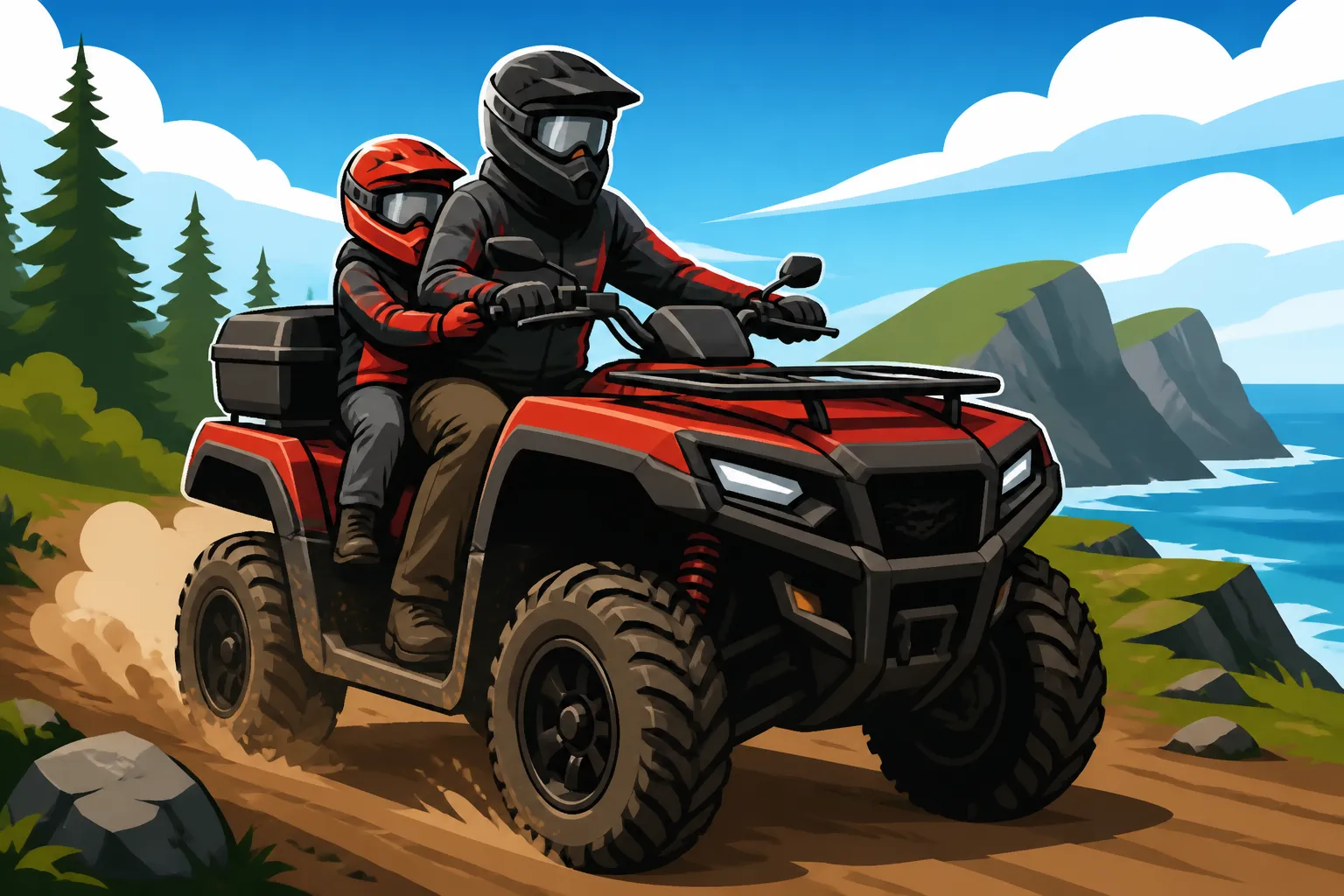
Don’t carry a child on a machine unless it has a passenger seat designed for that purpose. Many ATVs are built for one operator; adding a second person to a single-rider seat can interfere with control and balance. Passengers must sit on a factory-installed seat, so a homemade seat or a child perched in front of the operator is not a safe substitute. Review Newfoundland Passenger Seat Requirements and the manufacturer’s instructions.
A side-by-side may offer a seat and restraint system for a passenger, but that doesn’t automatically make it suitable for every child. Check the manual for the seat’s age, size and weight limits, and make sure the child can sit correctly and use the restraint as intended. If a child needs a car seat, check the applicable requirements and whether the vehicle and seat are compatible. See Newfoundland Car Seat Rules for Children before you assume a regular seat belt is enough.
| Situation | What to check before riding |
|---|---|
| Child operates an ATV or side-by-side | Age, weight, machine size, training and supervision requirements |
| Child rides as a passenger | A factory-installed passenger seat and the machine maker’s limits |
| Child rides in a side-by-side | Appropriate seat, restraint fit and any applicable car-seat requirements |
| Any child rides | Suitable helmet, protective equipment and a route appropriate to their ability |
If the machine has no approved passenger position, plan for the child to ride in a separate, suitable machine only if they meet the operating rules. Don’t carry them on your lap, between the operator and handlebars, or on cargo racks. Those positions can put a child in the way of controls or leave them without a proper restraint.
Prepare the child and machine before leaving
A family ride is easier to manage when the child knows what to expect and the machine is ready for the conditions. Explain the basic plan in plain language: where you’re going, when you’ll stop, how the child should communicate discomfort and what to do if the group separates. Keep the explanation age-appropriate. A child should know not to get off a stopped machine until the adult says it is safe.
Check protective equipment and restraints
Every rider should wear a properly fitted helmet that meets the applicable requirements. A child’s helmet needs to fit their head securely; an adult helmet that is loose or can shift is not a useful substitute. Fasten the chin strap, and use eye protection unless the machine’s equipment provides the permitted protection. For helmet rules, see Newfoundland Helmet Law for Every Rider.
Choose clothing that protects against wind, mud, branches and changing weather. Gloves, sturdy footwear, long sleeves and eye protection help make a ride more comfortable, but they don’t replace a helmet or the machine’s installed safety equipment. For a child riding in a side-by-side, check that the restraint fits and can be fastened correctly. Never leave a belt loose because a child seems uncomfortable; if the restraint doesn’t fit, don’t use that seating position for the child.
Before starting, inspect the machine and make sure the controls, brakes, lights and tires are in suitable condition. On a side-by-side, check that the child can remain seated and restrained through ordinary bumps and turns. On an ATV, don’t let a passenger ride unless the machine is designed for one.
Make the route match the child
Choose a route with manageable terrain and an easy way to stop or return. Deep mud, steep slopes, exposed barrens, poor visibility and long stretches far from help can turn a short outing into a stressful one. Consider the child’s attention span and comfort, not just the distance shown on a map.
Set a conservative pace and leave room between machines. If the child is operating their own machine, give them time to respond to changing ground and instructions. Avoid pressuring them to keep up with faster adults. Stop when needed, and don’t continue just because the group has already covered part of the route.
Weather can change quickly, so take layers and enough water for the outing. A child who becomes cold, wet or tired may have a harder time concentrating. Set a clear rule that anyone can ask to stop, and treat that request seriously.
Check permits, training and access for the ride you plan
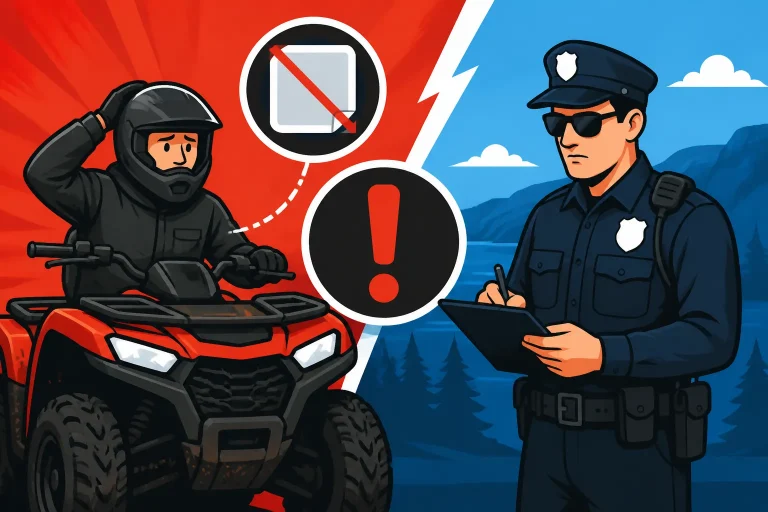
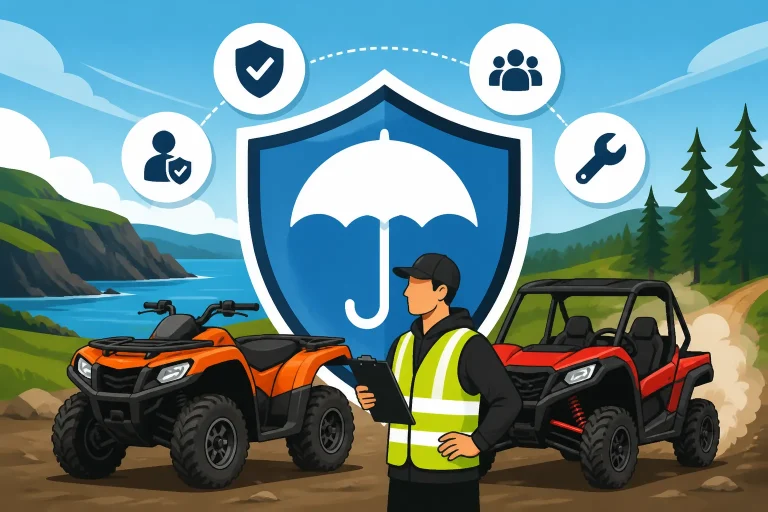
Meeting the rules for a child and machine doesn’t automatically mean every trail is open to you. Registration, safety training, insurance, trail access and local restrictions are separate considerations. Check each one before loading the machine or leaving home.
For managed trails, confirm whether a trail sticker is required and how to obtain it. Don’t assume that a registration plate or a sticker from another place meets Newfoundland’s trail requirements. Managed Trails Require a Sticker on Your Machine explains why the sticker question is separate from registration.
Make sure the machine is properly registered and that you have any required proof available while riding. If you’re visiting Newfoundland with a machine registered elsewhere, check the visitor rules and the length of time the machine may be used before registration is required. A visitor’s status doesn’t remove the need to confirm insurance or trail access. For insurance details, see Newfoundland Insurance Requirements for Riders.
Private property, family land and managed trails can each have different access rules or exemptions. Don’t assume that permission to ride on one property carries over to a nearby trail or road. Ask the landowner or trail operator where needed, and check current local restrictions before you go. A family outing is not exempt from the rules just because the machine is used recreationally or the child is riding with a parent.
A useful pre-ride check is to ask:
- Is the child driving or riding as a passenger, and is the machine designed for that role?
- Does the child meet the applicable age, size, training and supervision requirements?
- Are the helmet, seat, restraint and other equipment suitable and correctly fitted?
- Is the machine registered, insured and permitted on the planned route?
- Does the route allow children and the type of machine you plan to use?
- Does the child know how to signal that they need to stop?
If any answer is unclear, pause and verify it before riding. The machine manual, the relevant provincial information and the trail operator can help resolve questions about equipment or access. It is safer to choose a different route or seating arrangement than to guess.
Keep the first family ride simple
A first ride should be short enough that the child can finish comfortably, with a clear stopping point and a straightforward way back. Don’t combine a new machine, unfamiliar terrain and a long day into one outing. If the child is learning to operate, choose a suitable area and keep the adult close enough to supervise. If the child is a passenger, make sure the seat and restraint are appropriate before the machine moves.
Agree on simple signals before starting. A child can say they need a break, but engine noise or a helmet may make conversation difficult. Establish a hand signal or another way to communicate, and stop periodically to check how the child is feeling. Keep the group together and avoid placing a child between machines where they could be hard to see.
If conditions worsen or the child is no longer comfortable, turn back. A shorter ride is a successful ride when everyone returns safely. Recheck the machine after the outing, especially if the route was muddy or rough, and talk with the child about what felt manageable and what should change next time.
Disclaimer
This article is for general informational purposes only and does not constitute professional advice. Laws, prices and regulations vary by location and change over time. Consult a qualified professional for guidance on your specific situation.