Newfoundland Penalties for No Sticker
Newfoundland’s trail sticker is easy to confuse with an ATV registration plate, but they serve different purposes. If you ride a managed trail without the required sticker, you may face enforcement as well as a disrupted trip. Here’s where the sticker rule applies, which exemptions may matter, and how to check the current penalty before you head out.
When Newfoundland requires a trail sticker
A managed trail sticker is an access requirement for riding on trails covered by the provincial rules. It is separate from registering your ATV or side-by-side. Registration identifies the machine; the sticker relates to use of a managed trail. Having one does not replace the other.
The practical rule is straightforward: before riding a managed trail, check whether the trail requires a sticker and make sure you have one in the required form. A sticker may be attached to the machine or carried, depending on the applicable rule. The exact requirement matters, so check Managed Trails Require a Sticker on Your Machine and Attach the Sticker or Carry It in Your Pocket before relying on a sticker kept somewhere in your gear.
A sticker is not a general permit to ride anywhere in Newfoundland and Labrador. It does not give permission to enter a restricted area, cross private land without permission, or use a route that is closed to machines. Nor does it replace registration, insurance, safety training, or any other requirement that applies to your ride. Check the rules for the place you plan to travel, including Finding Approved Areas on the Provincial Map.
| Requirement | What it covers | What it does not replace |
|---|---|---|
| Managed trail sticker | Access requirements on applicable managed trails | Registration, insurance, training, or permission to enter restricted land |
| Registration plate and permit | Registration of the machine | A managed trail sticker |
| Safety training proof | Required training obligations that apply to the rider | Trail access permission |
| Landowner permission | Access across private land where permission is required | A sticker or registration |
The distinction is important because getting one part right does not cure a problem with another. A registered machine can still be missing a required sticker. A sticker does not make an unregistered machine legal to use, and it does not make a closed trail open.
The sticker requirement is also not necessarily the same for every place a rider might call a “trail.” A managed trail, a woods road, a private access road, a route on Crown land, and a municipal road can be subject to different rules. Do not assume that a sticker is either required everywhere or irrelevant everywhere. Confirm the status of the specific route and follow any signs or instructions from its operator.
For steps to obtain one, see How to Get a Newfoundland Trail Sticker. For the current cost, check Newfoundland Trail Sticker Cost and confirm the amount with the relevant trail operator before you go. Requirements and fees can change, and a general online description is not a substitute for current instructions.
What penalties can apply for riding without one
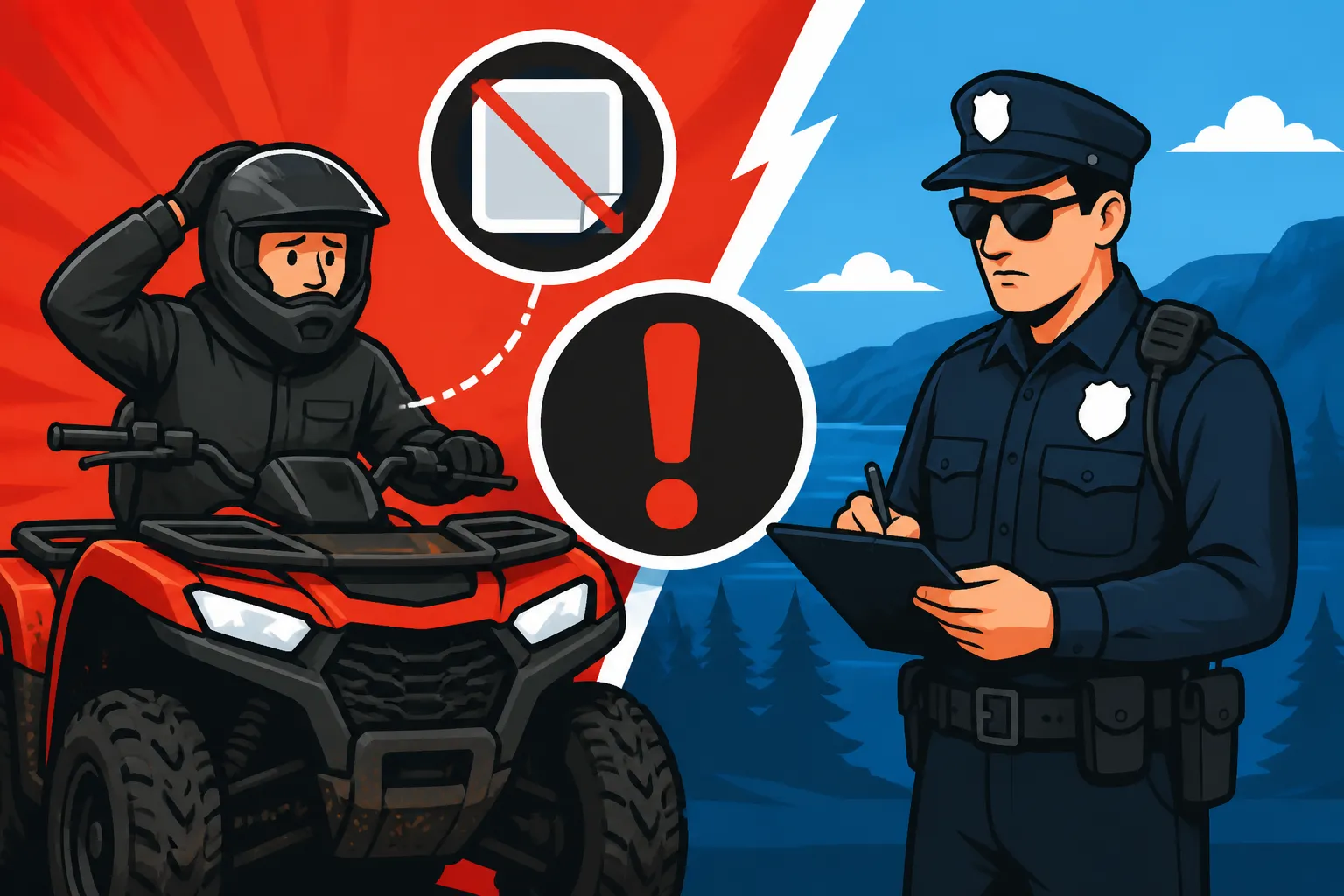
If a sticker is required on the trail you are using and you do not meet the requirement, you may be stopped or told not to continue. Depending on the circumstances and the rule being enforced, a rider may also receive a ticket or face a fine. The consequences can be more than financial: you could lose time at a checkpoint, have to turn back, or be unable to complete the planned route.
There is no single penalty amount to rely on without checking the current law and enforcement information. The amount and process can depend on the specific offence and the rules in force. Avoid making a decision based on a fine figure copied from an old post, a discussion forum, or a rider’s recollection. Before you set out, ask the trail operator or the appropriate provincial office what rule applies and what penalty is currently prescribed.
It also matters what the officer or trail operator says the problem is. “No sticker” might mean the rider has no sticker at all, has not obtained the right sticker, or has not attached or carried it in the required way. If the sticker is present but not being displayed or carried as required, explain that clearly and follow the instructions you receive. Do not assume that producing it later will erase an alleged violation.
A sticker issue may be only one part of a stop. An officer can check other obligations as well, such as registration, insurance, training proof, or whether the rider is allowed to be on that route. You can review the separate training requirement in Carrying Your Safety Certificate on Every Ride. Visitors should also check the rules that apply to their machine and stay current on insurance; Insurance a Visitor Still Carries in Newfoundland explains why a visitor’s status does not remove every riding obligation.
If you are given a ticket, read it carefully and note the offence, the location, and any response deadline stated on the document. Keep any sticker receipt, registration papers, or messages from the trail operator that relate to the ride. If you think the ticket is wrong, use the process described on the ticket or ask a qualified professional about your options. Do not ignore it because the sticker requirement seemed unclear.
Exemptions and situations that cause confusion
Some exemptions apply in particular circumstances, but an exemption should not be treated as a blanket pass to ride any managed trail without a sticker. The details may depend on who owns the land, who is riding, where the machine is being used, and which rule applies. Check the conditions for your own situation instead of relying on a broad statement that “family land is exempt” or “visitors do not need a sticker.”
For example, rules may treat land owned by the rider or an immediate family member differently in specified circumstances. That does not necessarily mean the same exemption follows the rider onto a managed trail elsewhere. Read Land You or Your Family Own for the scope of that exemption, and confirm whether it applies to the exact property and use you have in mind.
There are also specific provisions connected with the Labrador Inuit Settlement Area and certain Inuit or community government activities. These are limited categories, not a general exemption for anyone riding in Labrador or near an Inuit community. If you believe one applies, verify the eligibility conditions and the boundaries involved before relying on it.
Visitors need to separate registration reciprocity from trail access. A machine registered in another province may have a visitor exemption from local registration for a limited period, but that does not automatically answer whether a managed trail sticker is required. See Newfoundland Visitor Rules and the 30-Day Limit for the separate visitor registration issue, then ask the operator about the sticker requirement for the trail you plan to use.
Other common misunderstandings include:
- “My machine is registered, so I do not need a sticker.” Registration and managed trail access are separate requirements.
- “I have ridden this route before without one.” The route’s status or enforcement practice may have changed, or a previous ride may not have involved the same section.
- “The sticker is in my truck, so I can show it if asked.” Check whether the rule allows it to be carried and whether it must be with the rider or machine.
- “A sticker lets me use any Crown land route.” A sticker does not override closures, restricted-area rules, or route-specific limits.
- “The operator did not ask me for one at the entrance.” Not being checked at the gate does not necessarily mean the requirement does not apply.
When an exemption is relevant, keep the facts that support it clear. Be prepared to explain whose land you are on, how you are connected to the owner if that matters, and why the exemption applies. If the issue is a boundary or land category, verify it before riding rather than trying to resolve it on the trail.
How to avoid a sticker problem before you ride
A short check before departure can prevent a long argument or an early trip back to the truck. Use this process whenever you are riding an unfamiliar route or returning after a long gap.
- Identify the route. Find out whether it is a managed trail and whether the specific section is open to your type of machine. A route name alone may not tell you which rules apply along its full length.
- Ask the trail operator. Confirm whether a sticker is required, who can issue it, and whether the sticker must be attached or may be carried. If you are unsure which operator manages the route, use the contact information available for the trail or ask a local trail organization.
- Check exemptions carefully. If you believe you qualify for an exemption, confirm the exact conditions with the relevant authority or operator. Do not assume an exemption for private family land applies elsewhere.
- Carry the right proof. Bring the sticker in the required form, along with your registration and any other documents the rules require. Keep paperwork protected from water and dirt, but accessible if asked.
- Check the other riding rules. Confirm that the machine is registered where required, that insurance is in place, and that the rider has any required training proof. Check route closures and land-access permissions separately.
- Keep a record. Save the sticker receipt or confirmation and note the operator’s instructions. A record can help clear up a misunderstanding, although it does not guarantee that a ticket will be cancelled.
If you are stopped, stay calm and ask which requirement the officer believes has not been met. Show the sticker and relevant documents if you have them, and follow lawful instructions. Avoid removing a sticker or changing its placement during a stop unless the officer directs you to do so. If you receive a ticket, keep the paperwork and follow the response instructions.
For a group ride, the organizer should confirm the sticker rule before setting the meeting point. Do not assume that one person’s sticker or a group booking covers every machine. Each rider should know whether their own machine and intended route meet the requirements. This is especially useful when the group includes visitors, borrowed machines, or riders who are new to the area.
The safest approach is to treat the sticker as one part of a pre-ride check, not as a substitute for checking access. Confirm the managed-trail requirement, follow any valid exemption only within its scope, and verify current penalties with an official source or trail operator. That way, you are less likely to discover the rule at a gate or during a roadside stop.
Disclaimer
This article is for general informational purposes only and does not constitute professional advice. Laws, prices and regulations vary by location and change over time. Consult a qualified professional for guidance on your specific situation.