Newfoundland Parental Consent for Minors
Newfoundland Parental Consent for Minors
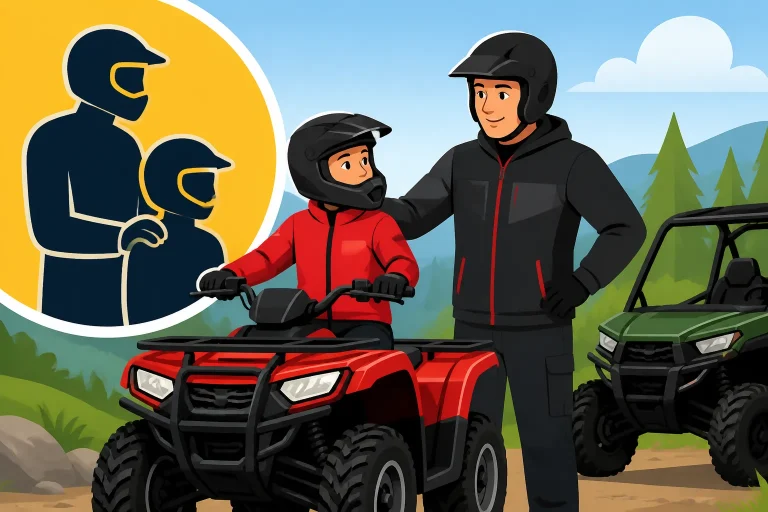
If a child needs ATV or UTV safety training in Newfoundland and Labrador, a parent or guardian may need to be involved before the minor can enroll or complete the required training. The key is knowing what consent covers, what it does not, and how to keep the paperwork and riding rules straight. Here’s how to prepare without treating a signed form as permission to ride anywhere.
What parental consent is for
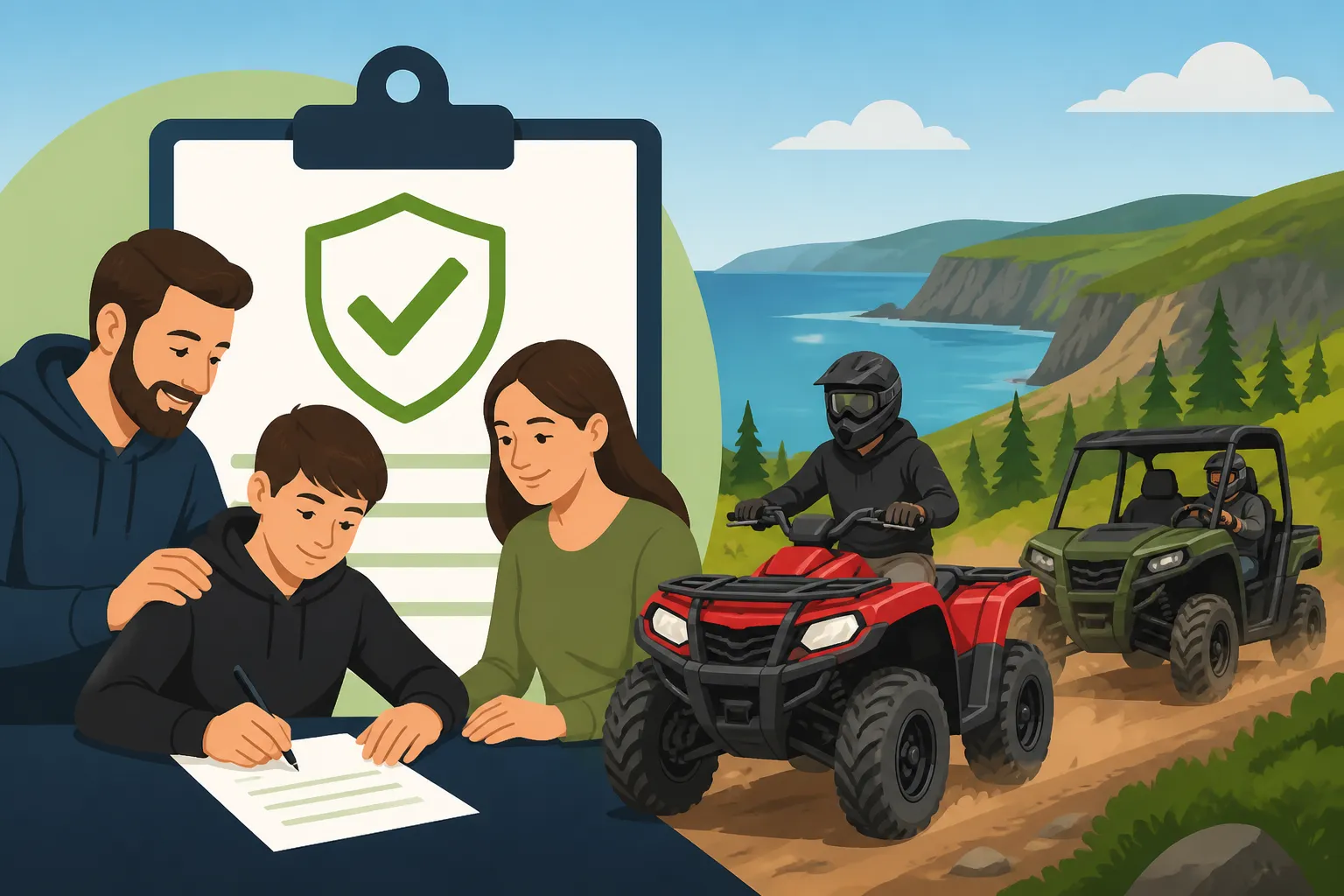
Parental consent is an adult’s acknowledgment that a minor may take part in a training activity. Depending on the course or test, that may mean permission to register, participate, or have the minor’s result recorded. The training provider or the current registration process can tell you exactly what it requires.
Consent is not the same as a safety certificate. A parent’s signature does not show that a young rider has completed training, passed an assessment, or met any other requirement. It also does not override age, machine-size, supervision, equipment, insurance, registration, or land-access rules.
That distinction matters because the steps often happen close together. A family may arrange training while preparing a machine for a first ride, then assume the consent form has taken care of everything. In fact, each requirement serves a different purpose:
| Requirement | What it addresses | What it does not replace |
|---|---|---|
| Parent or guardian consent | Permission for a minor to participate in a training or enrollment process, when required | Training completion or riding permission |
| Safety training | Knowledge or skills required for the rider’s circumstances | Age, supervision, equipment, insurance, or access rules |
| Registration documents | The machine’s registration status and ownership details | A rider’s training or parent’s consent |
| Supervision | Who must accompany or oversee a young rider | The rider’s own training or legal eligibility |
| Land or trail permission | Whether riding is allowed in that location | Registration, insurance, or safety requirements |
Newfoundland and Labrador has a safety-training requirement that can apply to young riders. The exact course or assessment route, and the way a minor’s consent is collected, can depend on the current process. Before enrolling, check the instructions for the specific route you plan to use. The overview in Newfoundland Safety Training Is Mandatory can help you understand the broader requirement.
A parent or guardian should treat consent as the first administrative step, not the final clearance. A minor may still need to complete the required training and carry proof while riding. The machine and the planned route must also meet the rules that apply to them.
How to handle consent before training
The safest approach is to confirm the provider’s requirements before starting a course or online assessment. A form that is incomplete, signed by the wrong person, or submitted through the wrong channel can delay enrollment or leave the family unsure whether the minor is eligible to proceed.
Use this sequence:
- Confirm the rider’s age and the training route. Check whether the minor needs the province’s safety test, an accepted course, or another option. Don’t assume that a certificate from a different activity automatically counts.
- Ask what consent is required. Find out whether the provider needs a signed parental consent form, an online acknowledgment, or another form of permission. Ask whether consent must be submitted before enrollment or brought to the session.
- Confirm who may sign. If a parent is not available, ask whether a legal guardian can provide consent and what documentation, if any, the provider needs.
- Check identification and name details. Use the minor’s correct legal name and any information the registration or course system requests. Keep spelling consistent across forms and records.
- Complete the consent process before the minor starts. Follow the provider’s directions for signing and submitting the form. Keep a copy or confirmation if one is available.
- Save the training result. Once the minor completes the required process, keep the certificate or other proof in a place where it can be found again.
- Check the riding rules separately. Before the first ride, confirm the machine, supervision, insurance, equipment, and location requirements.
If you use an approved course rather than the online test, ask the course provider what it accepts and whether there are additional forms for minors. The accepted alternatives are not necessarily identical in length or procedure. Courses the Registrar Accepts Instead of the Test is useful background when comparing routes.
For an online option, check the official instructions before beginning. A minor may need an adult to help with registration or to complete a consent step, but the adult’s participation does not mean they can take the assessment on the child’s behalf. The rider who is required to train must complete the work and meet the applicable standard. See Newfoundland’s Online Training Test for more on the online route.
Questions to ask before enrolling
A quick call or message to the provider can prevent avoidable back-and-forth. Ask:
- Does this training route accept minors?
- Is a parent or guardian consent form required?
- Who is allowed to sign it?
- Does the form need to be submitted before the course or test?
- Is the form completed online, sent in advance, or brought to the session?
- What proof of identity or age should the minor bring?
- How will the minor receive proof of completion?
- What should the family do if the consent form or certificate is lost?
If there is any uncertainty about whether a course is accepted for Newfoundland and Labrador’s requirement, confirm that before paying for or attending it. A course can teach useful riding skills without necessarily serving as the required provincial training.
Consent does not decide whether a minor may ride
A signed consent form is not a waiver of the riding rules. Parents sometimes focus on the course paperwork and overlook the separate limits on who may operate a machine, what kind of machine they may use, and whether an adult must supervise.
Age and machine capability can matter together. Rules for a young rider may depend on more than the number of years old they are; engine size, vehicle weight, and the machine’s intended configuration can also be relevant. A child who is old enough to train is not automatically permitted to operate every ATV or side-by-side. Check Newfoundland ATV Age Requirements and Newfoundland Engine Size for Age and Weight against the specific rider and machine.
Supervision is another independent requirement. A parent signing a consent form does not necessarily satisfy a rule that calls for an adult to be physically present or to meet particular qualifications. Check who can supervise, what the supervisor must do, and whether the requirements change with the rider’s age. The details in Newfoundland Supervisors and Training Duties can help families separate a training role from a riding-supervision role.
A practical way to prevent misunderstandings is to make a short eligibility checklist for the exact outing:
- Is this rider old enough for this machine under the applicable rules?
- Does the machine’s engine size and weight suit the rider’s age and circumstances?
- Has the minor completed the training required for them?
- Is the required adult supervisor present and eligible?
- Is the machine registered and insured as required?
- Is the route open to this type of machine?
- Does the rider have the required helmet and protective equipment?
Answer each question separately. A “yes” to one does not answer the others. For example, a minor may have passed training but still be too young for a particular machine or lack the required supervision for a particular ride.
Build the right habits before the first ride
Parental consent is a useful point to talk through the responsibilities that go with riding. It is a chance to explain that training is not just a formality and that a certificate does not make every trail, road, or piece of private land available.
Make sure the young rider knows how to stop, how to ask for help, and what to do if the group becomes separated. Review where they are allowed to ride, which routes are off limits, and what to do if weather or trail conditions change. A minor should understand that a parent’s permission for a family outing cannot grant access to land where the family has no right to ride.
Fit also matters. A child needs to be able to reach and use the controls safely, understand the machine’s limits, and follow instructions. Protective gear should fit properly rather than simply being adult equipment tightened as far as it will go. These practical checks do not replace the legal requirements, but they can help parents judge whether a rider is ready for a particular machine and trip.
Keep training and riding records organized
Once the minor has completed training, keep proof somewhere accessible. A digital copy can be useful, but do not rely on a phone battery or cell service on the trail. Follow the current requirement for carrying or producing proof, and keep a backup at home. Newfoundland Proof Carried While Riding explains why it is worth checking the document rule before setting out.
Keep the consent record with the training paperwork if the provider gives you a copy or confirmation. You may also want to record:
- The minor’s full name as used for the course or test
- The course or assessment completed
- The completion date
- The provider or official system used
- Where the certificate is stored
- Any instructions the provider gave about replacement proof
Be careful not to confuse the minor’s training certificate with the machine’s registration permit. They relate to different things: one concerns the rider, while the other identifies the machine and its registration details. If the family is preparing a new or recently purchased ATV, review Newfoundland Registration Paperwork Explained as well.
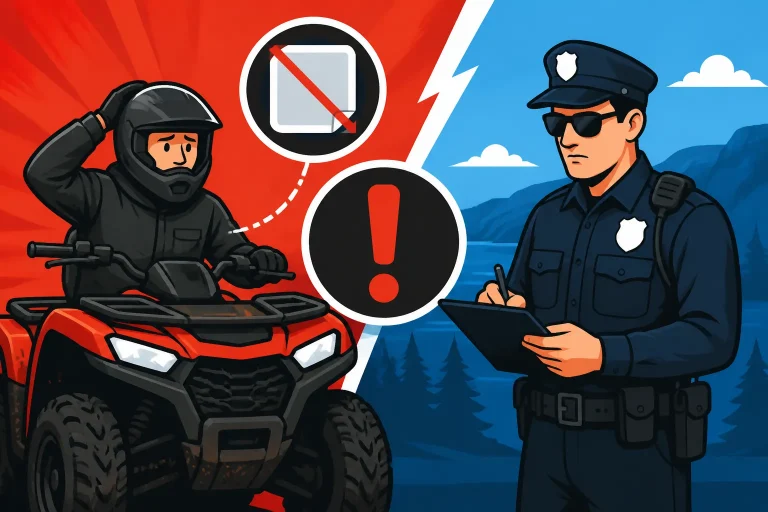
Before heading out, check the papers for the machine and the rider together. If an officer, trail operator, or other official asks for documentation, the adult should know where it is and how to provide it. For a youth rider, it is sensible for the supervising adult to carry copies rather than assuming the child can keep every document secure.
If a form or certificate is missing
If the provider never received the consent form, contact them before the minor attempts to continue. Ask whether the form can be resubmitted and whether the minor’s enrollment or result is on hold. Do not guess that a verbal conversation or a parent’s presence will substitute for a documented consent step.
If the certificate is missing after the minor completed the course or test, contact the organization that issued it and ask how to retrieve or replace the proof. Keep any registration confirmation or completion email while you sort it out. Avoid having the minor repeat training unless the responsible provider says it is necessary.
If the minor’s name, date of birth, or other details were entered incorrectly, ask how to correct the record. A certificate that cannot be matched to the rider may be difficult to use when proof is needed. Correct the record through the issuing organization rather than altering a document yourself.
For families who are still arranging machine registration, remember that the adult’s signature on a training form does not establish ownership or authorize a transfer. Those are separate administrative matters. Use What to Bring to Your Registration Appointment to prepare the machine paperwork.
Common mistakes parents can avoid
Most problems are not caused by a complicated rule; they come from treating one step as if it covered the rest. These are the mistakes worth watching for.
Assuming consent equals training
A signed form gives permission for the relevant process where consent is required. It does not demonstrate that the minor completed the course or passed the assessment. Wait for the official proof of completion before treating the training step as finished.
Assuming training equals permission to operate
A certificate is not a blanket license to operate every type of ATV or UTV. Check the age and machine rules for the rider, along with any supervision requirement. If the machine is a side-by-side, do not assume that rules written for another class of ORV apply in exactly the same way.
Using a course without confirming acceptance
A course can be valuable and still not meet the provincial training requirement. Verify that the Registrar accepts the course or credential for the minor’s circumstances before enrolling. When in doubt, ask the provider or the relevant registration office directly.
Leaving paperwork until the day of the ride
A missing signature, unclear form, or incomplete course record can create stress at the last minute. Complete the consent and training steps early enough to resolve questions before the family loads the machine.
Treating parental permission as landowner permission
A parent can decide whether their child may join a family ride, but that does not create permission to ride on someone else’s property. Confirm that the route is legal and that any required landowner or trail permission is in place.
Forgetting the adult’s own responsibilities
Supervision is more than being nearby. The adult should understand the applicable duties, keep the young rider within their ability, and choose a route and pace that suit the child. If supervision is required, a signed consent form cannot stand in for the supervisor.
Assuming a visitor’s paperwork automatically settles everything
A family visiting from another province should check the rules that apply to visiting riders, their machine, and any training proof they carry. Do not assume that a parent’s consent or an out-of-province certificate answers every Newfoundland and Labrador requirement. The visitor information in Newfoundland Visitors Registered Elsewhere is a useful place to start.
Frequently Asked Questions
Does a parent have to sign before a minor takes ATV safety training?
A minor may need parental or guardian consent as part of enrollment or participation, depending on the training route and provider. Check the current instructions before registering, and confirm who may sign and how the form must be submitted.
Does parental consent allow a child to ride an ATV or UTV?
No. Consent is separate from the rules for training, age, machine size, supervision, registration, insurance, equipment, and legal access. Check each requirement before riding.
Can a parent complete the safety test for a minor?
No. The minor who is required to train must complete the applicable training or assessment. A parent may help with enrollment or consent steps but should not answer or complete the assessment for the rider.
What should a parent keep after the minor completes training?
Keep the official certificate or other proof of completion, any course or test confirmation, and a copy of the consent record if one is provided. Check the current rule on carrying proof while riding and keep a backup in a safe place.
Disclaimer
This article is for general informational purposes only and does not constitute professional advice. Laws, prices and regulations vary by location and change over time. Consult a qualified professional for guidance on your specific situation.