Who Must Supervise a Young Newfoundland Rider
A young rider may be ready to handle a quad or side-by-side, but Newfoundland rules do not make supervision optional just because a parent is nearby. The key questions are who qualifies as a supervisor, what meaningful supervision looks like, and what other age, training and machine rules still apply. Getting those details straight helps you plan a ride without assuming that permission alone is enough.
Who can supervise a young Newfoundland rider
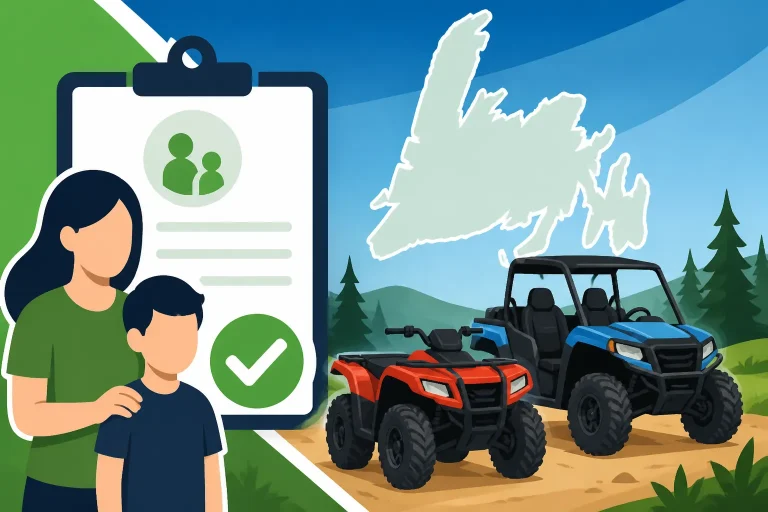
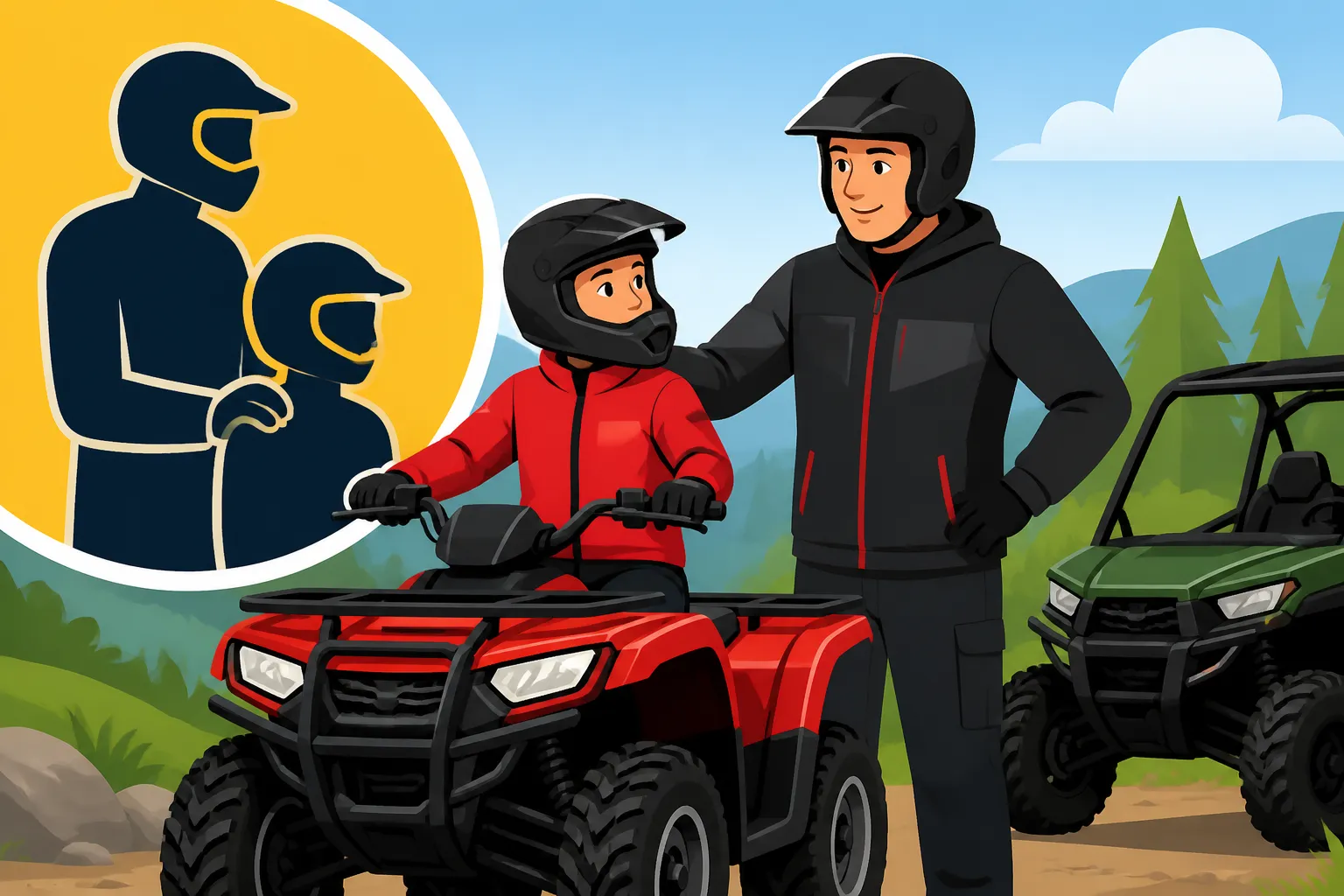
A rider under 16 must be supervised by someone who is at least 18 and holds a valid driver’s licence. A parent or guardian can fill that role if they meet both requirements, but being a parent does not automatically make someone a qualified supervisor. An adult without a valid licence, or a licensed person who is not yet 18, does not meet the stated conditions.
The supervisor’s role is to oversee the young person while they operate the machine. It is not enough to give permission before the ride and then leave the young rider to travel independently. Supervision needs to be active enough for the adult to monitor the ride and respond if the young person gets into difficulty.
The rule is about the person supervising, not just the young rider’s relationship to that person. A qualified adult could be a parent, guardian, relative or another responsible person. Before setting out, check that the adult is old enough, their licence is valid, and they understand that they are responsible for supervising the young operator.
For a closer look at the age threshold and related restrictions, see Newfoundland ATV Age Requirements. The supervision requirement is also covered in Newfoundland Supervision Rules for Young Riders and Supervisors Must Be Eighteen and Hold a Licence.
| Supervisor check | What to confirm |
|---|---|
| Age | The supervisor is at least 18 |
| Licence | The supervisor holds a valid driver’s licence |
| Availability | The adult is actually overseeing the ride, not just reachable by phone |
| Readiness | The adult can monitor the young rider and respond to changing conditions |
| Other rules | The young rider meets training and machine requirements too |
These are separate conditions. A young rider’s training certificate does not replace adult supervision, and a qualified supervisor does not remove the need for any training or age-related limits that apply to the operator. Treat the requirements as a set, rather than choosing whichever one seems most relevant.
A common planning mistake is to assume that any licensed adult at the trailhead counts, even if that adult is not accompanying or monitoring the young rider. If the adult cannot keep track of where the young person is and what they are doing, it is hard to describe the ride as properly supervised in a practical sense. Plan a route and group arrangement that let the supervisor stay engaged.
What supervision should look like on the ride
The basic legal conditions identify who can supervise. They do not mean every ride will be safe simply because a qualified adult is present somewhere nearby. The adult should be able to pay attention, communicate with the young rider and respond promptly if the route, weather, traffic or the rider’s confidence changes.
A sensible arrangement is for the supervisor to travel with the young rider and keep them within practical sight or close enough to monitor the ride. The exact setup will depend on the route and the machines involved. On a narrow, winding trail, for example, a supervisor who rides far ahead may not be able to see whether a young rider has stopped or fallen behind. On an open route, the group may be easier to keep together, but distance and visibility can change quickly.
Before moving off, agree on simple instructions:
- Stay with the group and do not take an unplanned side trail.
- Stop at agreed points and wait if separated.
- Signal or call out if the machine develops a problem or the rider feels unsure.
- Do not try a steep, muddy or unfamiliar section without checking with the supervisor.
- Follow the supervisor’s direction to slow down, turn around or end the ride.
The adult should also choose a pace that suits the least experienced rider. A young person who can operate a machine on easy ground may not have the judgement or skill to handle deep mud, steep slopes, water crossings or fast-moving groups. Supervision is most useful when the route and pace give the rider room to learn without creating avoidable pressure.
If several children are riding, the adult needs to be able to supervise all of them effectively. There is no benefit in treating the presence of one adult as a blanket solution if the group spreads out or includes riders with very different abilities. Keep the group small enough for the supervisor to monitor, set clear regrouping points, and avoid routes that make communication difficult.
The supervisor should not be impaired, distracted or occupied with a task that prevents them from overseeing the ride. That includes situations where the adult is focused on navigating for the whole group, handling a breakdown, or keeping up with faster riders while the young operator falls behind. If the adult cannot concentrate on supervision, pause and reorganize before continuing.
Supervision also does not give a young rider permission to use every road or trail. The route must be legal for the machine, and the young rider must follow the same applicable riding rules as other operators. Check Newfoundland ORV Road Rules Explained before planning any route that might involve a road, shoulder or highway crossing. Rules for those situations can be more specific than the general requirement to have an adult supervising.
Training, age limits and the machine still matter
Supervision is only one part of the rules for a young rider. Training requirements may apply as well, and the rider’s age and the machine’s characteristics can affect whether they may operate it. Do not assume that an adult can authorize a young person to ride a machine that is not appropriate for that rider under the applicable rules.
Newfoundland’s requirements include safety training for young operators. Make sure the rider has completed the training that applies to them and can produce proof if required. Training helps a young person understand the controls and basic safety expectations; it is not a substitute for an adult’s ongoing oversight. For the details, see Newfoundland Training Required Under 16 and Newfoundland ATV Safety Test.
Check the machine before assigning it to a young rider. A larger, heavier or more powerful ATV may be difficult for a child to control, even if the child has ridden a smaller one. Age and weight can matter when deciding which machine a young operator may use. Review Newfoundland Engine Size for Age and Weight rather than relying on a general impression that the machine “looks manageable.”
A side-by-side needs the same careful planning. The fact that it has a steering wheel, seat belts or a passenger cabin does not automatically make it suitable for every young operator. Confirm that the rider is legally eligible to operate that type of machine and can reach and use the controls safely. The rules for young riders and passengers are not interchangeable: a child riding as a passenger is not the same as a child operating the machine. For passenger-related requirements, check Newfoundland Rules for a Child Passenger.
The young rider also needs to wear the required protective equipment and ride a machine that meets applicable equipment rules. A helmet is not optional just because a parent is supervising. Review Newfoundland ATV Helmet Law, and check Newfoundland ATV Insurance Requirements before heading out. A safe machine, required equipment and appropriate insurance all matter alongside age and supervision.
Use this pre-ride sequence to avoid treating supervision as the only check:
- Confirm the rider’s age and whether they are eligible to operate that machine.
- Confirm the required training is complete and proof is available.
- Check that the supervisor is at least 18 and holds a valid driver’s licence.
- Choose a machine the rider can control and a route suited to their ability.
- Check the machine, protective equipment, insurance and any route-specific rules.
- Agree on pace, boundaries, regrouping points and what to do if the group separates.
If any of these checks is uncertain, postpone the ride until you can confirm the requirement. A trip to a familiar cabin or family property does not automatically remove rules that apply to young operators. Property access and permission are separate from the operator requirements.
Planning for common situations
A parent riding a separate machine with a child is a straightforward way to keep oversight practical, provided the adult meets the age and licence conditions and stays engaged with the young rider. The adult should not assume that being on the same trail is enough if the child is out of sight for long stretches or the group regularly divides.
If the adult is driving a side-by-side and the young person is operating a separate ATV, plan the spacing carefully. The larger machine may travel at a different pace or take up more room on the trail. Make frequent stops where the group can safely pull aside, and do not let the young rider feel pushed to keep up with a faster operator.
If the young person is riding as a passenger rather than operating, check the rules for passengers, seating and child restraints separately. Do not treat a passenger arrangement as a way to bypass the operator rules if the child is actually controlling the machine. The person at the controls is the operator, so make sure the applicable requirements match what the young person will really be doing.
For a first ride, keep the route short and familiar. Explain how to stop, where to wait, and what to do if the machine gets stuck or the rider loses sight of the group. The adult can then judge whether the young person is ready for a longer trip or more challenging terrain. A successful short ride is a better basis for building confidence than pushing through a difficult route because the group has already committed to it.
Conditions can also change what is reasonable. Poor visibility, rain, heavy mud, cold or a busy shared trail can make it harder to supervise and harder for a young rider to respond calmly. Be prepared to turn back. The supervisor’s job is not just to start the ride safely, but to make good decisions as the ride unfolds.
Rules can depend on the type of machine and the rider’s circumstances, and official requirements may change. If you are unsure whether a particular young person can operate a particular ATV or side-by-side, confirm the current rule with the appropriate registry or provincial authority before riding. For general questions to raise, Questions Worth Asking a Registry Office can help you prepare.
Disclaimer
This article is for general informational purposes only and does not constitute professional advice. Laws, prices and regulations vary by location and change over time. Consult a qualified professional for guidance on your specific situation.