Snowmobile Training Offered Alongside the ATV Course
A snowmobile course may be offered alongside an ATV course in Newfoundland, but that does not automatically mean the courses are interchangeable. If you ride both types of machine, it matters which training you take, what proof you receive and whether the course is accepted for your situation. Here’s how to check before enrolling.
What it means when snowmobile training is offered alongside an ATV course
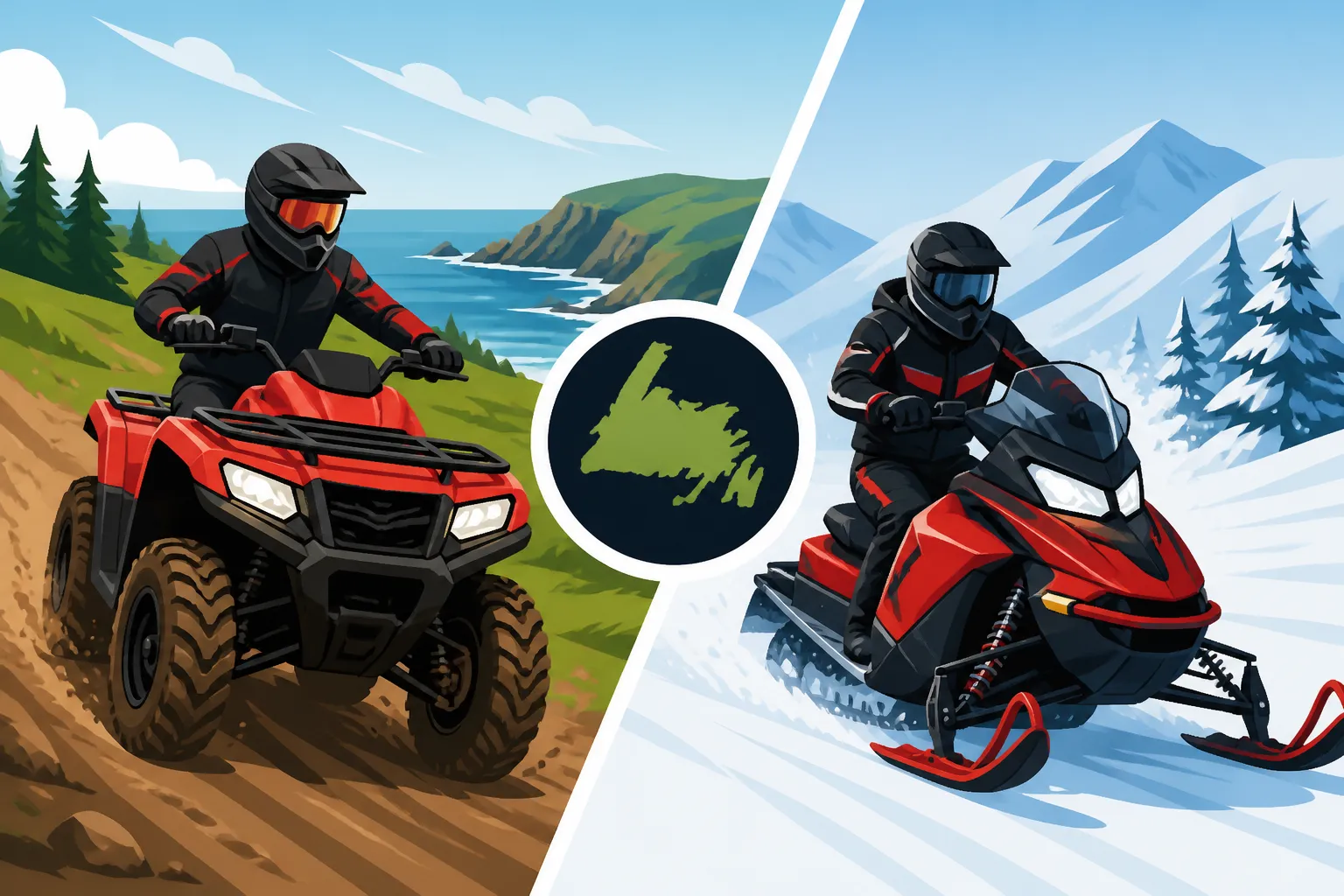
A training provider may offer instruction for both ATVs and snowmobiles, either as separate courses or through a program that covers more than one machine type. “Offered alongside” describes how training is available; it does not, on its own, tell you whether one course covers both machines or whether you’ll receive one certificate or two.
Before you register, confirm three things with the provider:
- Which machine the course covers. Ask whether it is specifically for snowmobile operation, ATV operation or both.
- What proof you will receive. Find out whether the provider issues a completion certificate and whether that proof is recognized for the requirement you need to meet.
- Whether one course meets both needs. If you ride an ATV and a snowmobile, ask whether you must complete separate training for each.
This distinction is useful because people often use “ATV training” as a broad term for off-road vehicle instruction. A snowmobile has its own controls and operating risks, and a course for one type of machine should not be assumed to qualify you for the other. Likewise, a general safety talk or a course offered at the same time as another course may not be a substitute for the specific training or proof required.
Newfoundland’s safety-training rules and approved options can depend on the rider and the type of machine. For an overview of the broader requirement, see Newfoundland Safety Training Is Mandatory. If you are registering a machine for the first time, Newfoundland Training for First-Time Registrants can help clarify how training fits into that process.
Training and registration are also separate questions. Completing a course does not register a snowmobile or ATV, and registering a machine does not necessarily settle whether a particular rider has completed the right training. A visiting rider should check the applicable rules for their circumstances rather than assume that a home-province registration or certificate answers every Newfoundland requirement. The visitor rules are covered in Newfoundland Visitor Rules and the 30-Day Limit.
What to confirm before you enrol
Course names can be similar, so use the details—not just the title in an advertisement—to decide whether a program suits you. A provider should be able to explain the machine type, course format, eligibility and proof issued. If those details are unclear, ask before paying or making travel plans.
| What to check | Why it matters | What to ask |
|---|---|---|
| Machine covered | ATV and snowmobile instruction may be separate | “Does this course cover snowmobiles, ATVs or both?” |
| Course recognition | Not every course necessarily satisfies every training requirement | “Is this course accepted for the requirement I need to meet?” |
| Certificate or record | You may need proof after completing training | “What document or certificate will I receive, and how do I access it?” |
| Age or eligibility | Requirements may differ for younger riders | “Are there age limits or consent forms?” |
| Course format | Classroom, online and hands-on elements may differ | “Is there practical instruction, and where does it take place?” |
| Schedule and completion | A course may involve more than one session or step | “What must I finish before the course is considered complete?” |
| Machine and gear | Some sessions may require equipment or specific clothing | “Do I bring a machine, helmet or other safety gear?” |
The provincial online safety test is one training route that appears in Newfoundland’s ATV training information. If you are considering that option, confirm which machine and requirement it applies to before relying on it for snowmobile riding. Information about the online route is available in Newfoundland’s Online Training Test, while Courses the Registrar Accepts Instead of the Test covers the distinction between a test and other course options.
Do not assume that a certificate from an ATV course automatically proves snowmobile training. Ask whether the provider’s snowmobile instruction is a separately recognized course, a module within a combined program or an optional session that does not issue independent proof. The answer affects what you should keep and what you can show if asked.
It is also worth checking the course’s completion conditions. A provider may require attendance at every part, a passing result on an assessment, or completion of practical instruction before issuing proof. If you miss a session or only complete the online portion, ask whether you have finished the course or need to make up work.
How to choose between a course and an online test
A course and an online test are not automatically equivalent. The right choice depends on the rules that apply to you, the machine you plan to ride and the kind of instruction you want. A test may be a convenient way to meet an accepted requirement, while a course can offer a more structured opportunity to learn. Neither should be selected on convenience alone if it does not cover the machine you intend to operate.
Use this process to compare your options:
- Identify the machine. Decide whether you need training for an ATV, snowmobile or both. If you operate a side-by-side, confirm whether it falls under a separate course or category rather than treating it as an ATV by default. See Why Side-by-Sides Have Their Own Driver’s Course for that distinction.
- Identify the rider’s situation. Age, registration history and whether the rider is new to operating a machine can affect which pathway applies. If a young person will ride, check the training requirement and supervision rules as separate issues.
- Confirm the accepted pathway. Check with the appropriate official source or course provider whether the test or course you are considering satisfies the requirement for that rider and machine.
- Compare what is taught. Ask whether the content includes machine-specific controls, safe operating practices and any practical component. A course advertised for several machine types may still devote different sessions to each.
- Check what proof you will hold. Confirm the exact certificate or record provided and whether you need to print it, download it or keep a confirmation from the provider.
- Keep records together. Store training proof separately from registration paperwork so you can find each document when needed.
If the provider offers ATV and snowmobile training in the same program, ask whether enrolling in one automatically enrols you in the other. A bundled schedule can be convenient, but convenience is not proof that both requirements have been met. The provider should be able to say which parts you have completed and what each completion record covers.
For an adult rider who is simply trying to choose a route, it may help to compare the options in practical terms. An online test can be easier to complete around work and travel, but it may not provide hands-on instruction. A scheduled course can give you time to ask questions and learn from an instructor, but you need to attend the required sessions and confirm the course is recognized for your purpose. Course delivery and availability can vary, so check current details directly.
If you are unsure whether training is needed for a particular registration or rider, avoid relying only on what another rider did. Their machine, age, previous training or registration history may be different. Ask the relevant registry or provider a precise question: “For this rider, on this machine, which training option is accepted, and what proof should they carry?” That is more useful than asking only whether “ATV training” is available.
Keeping proof and preparing to ride
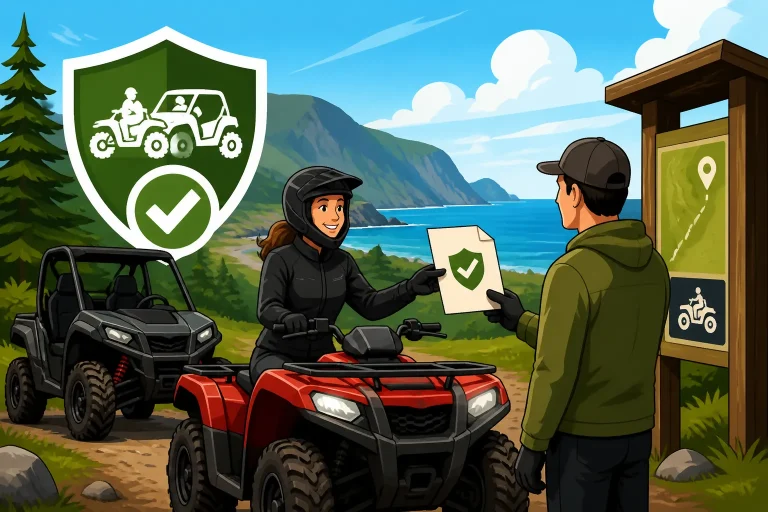
Once you complete the right course or test, keep the proof accessible. A digital copy can be useful, but a phone may lose power, get wet or have no service in a remote area. If the applicable rules require proof to be carried, make sure you know what form is accepted and have it available when riding.
A simple preparation routine helps:
- Save a digital copy somewhere you can open without a data connection, if the certificate is provided electronically.
- Keep a printed copy with your other riding documents if that is practical.
- Use a waterproof document pouch or dry bag to protect papers from rain, mud and snow. A basic pouch from a local outdoor shop or Amazon can solve the storage problem, but it does not replace the certificate itself.
- Check that the name and course details are legible.
- Keep training proof distinct from the machine’s registration permit and any trail-related sticker or authorization.
Training proof is only one part of being ready. You still need to confirm that the machine is registered when required, that insurance and equipment rules are met, and that your planned route permits that type of machine. A certificate does not grant access to every trail or replace any separate trail requirements. For a broad checklist before heading out, see Newfoundland Registration Before Your First Ride.
If you ride more than one type of machine, make a short record of what each document covers. For example, note whether a certificate is for an ATV, a snowmobile or both, and keep it with the relevant machine paperwork. That small step can prevent confusion later, especially if training was completed through a combined program.
The safest approach is straightforward: verify the course’s machine coverage, confirm that it is accepted for your situation, and keep the resulting proof where you can produce it. A provider offering snowmobile training alongside an ATV course may be a convenient option, but ask enough questions to know exactly what you are completing.
Disclaimer
This article is for general informational purposes only and does not constitute professional advice. Laws, prices and regulations vary by location and change over time. Consult a qualified professional for guidance on your specific situation.