Parental Consent Before a Minor Trains
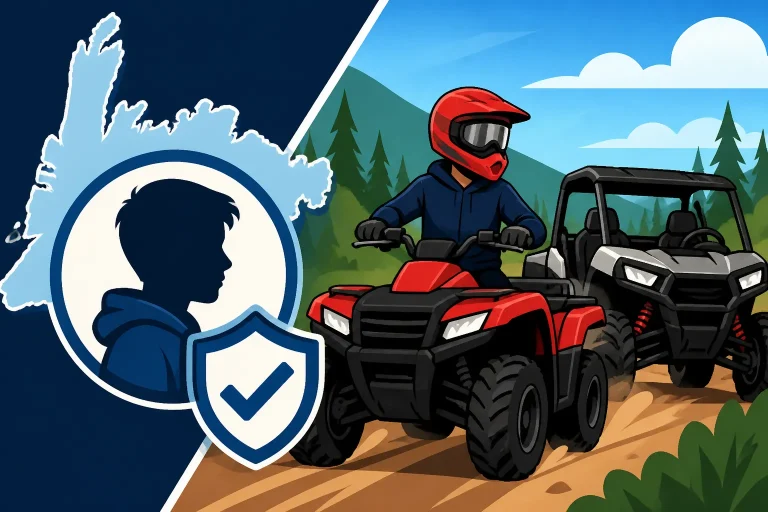
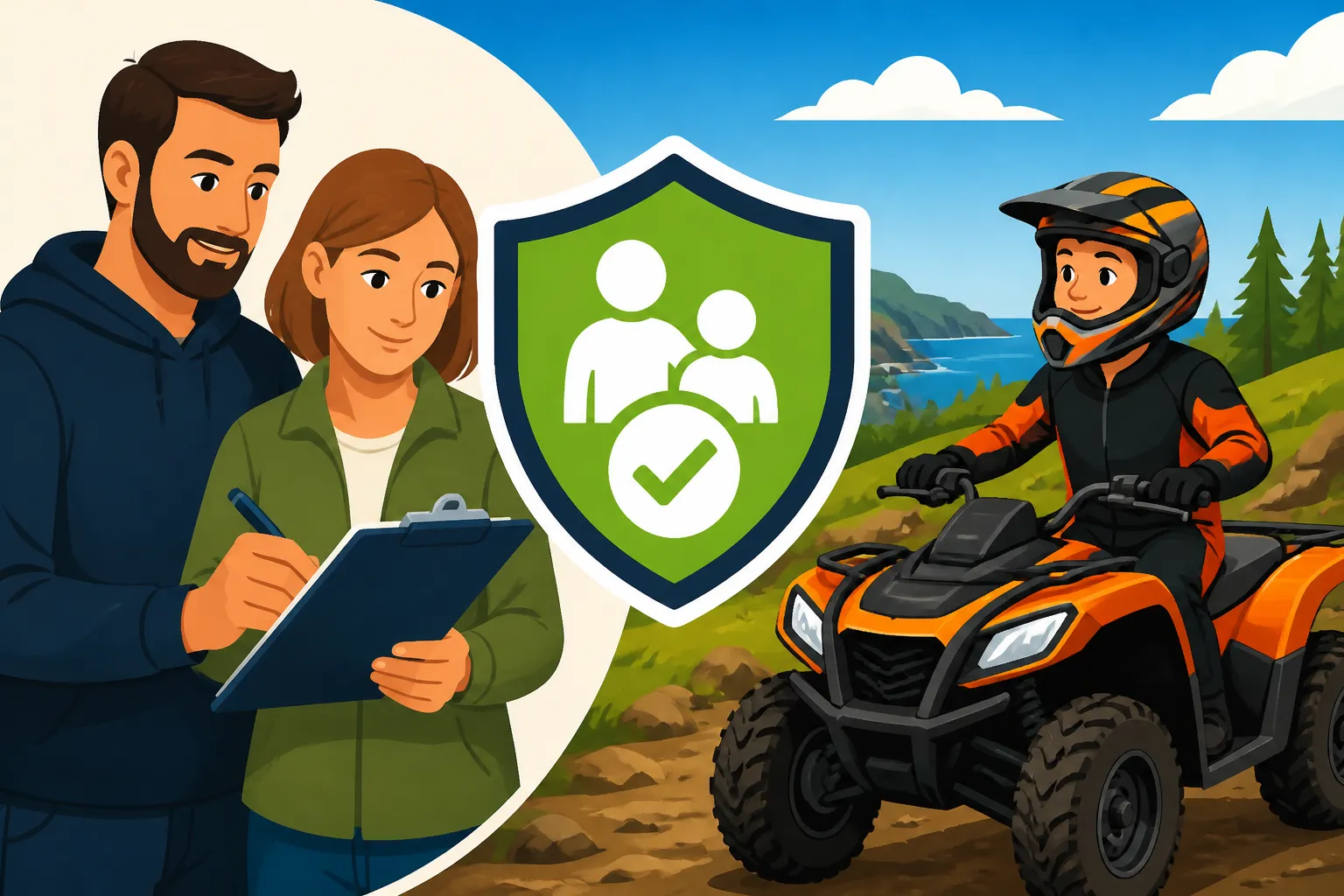
A parent or guardian may need to give consent before a minor starts Newfoundland ATV or UTV safety training. The paperwork can feel like a small detail, but getting it wrong may delay training or leave a young rider unsure what is required. Here’s how to prepare, what to confirm with the training provider, and why consent is only one part of getting a minor ready to ride.
What parental consent does and does not do
Parental consent is a step that must be handled before a minor begins training. It gives the training provider the required permission to let the young person take part. The exact form or process may depend on the training option, so confirm the current requirement with the provider or the official training service before the minor starts.
Consent is not the same as a safety certificate. It does not show that a young person completed training, passed a test, or is ready to operate a machine. Those are separate steps. A parent’s permission also does not replace the rules about supervision, the machine a minor may operate, or where riding is allowed.
This distinction matters because several requirements can apply at once. A minor may need consent to participate in training, training proof before riding, and a qualified supervisor when riding. The applicable machine and riding rules still matter even after the training is complete. For a broader overview, see Newfoundland Safety Training Is Mandatory and Newfoundland Training Required Under 16.
Consent is permission to train, not permission to ride anywhere
The parent or guardian should treat consent as authorization for the training activity only. It does not override road rules, access restrictions, age and machine requirements, or a landowner’s decision about whether a rider may use private property.
Before the first ride, review the rules that apply to the young person’s age and the machine. Newfoundland ATV Age Requirements covers age-related riding rules, while Newfoundland Supervision Rules for Young Riders explains the adult supervision issue. A supervisor’s role is not just to be nearby: the applicable rules and responsibilities still need to be followed.
The machine itself matters, too. A child’s age and weight can affect which engine size is suitable or permitted. A machine that seems manageable in the driveway may be too powerful or too heavy for a young rider to control safely. Check Newfoundland Engine Size for Age and Weight before choosing a machine or planning a ride.
Who should provide consent
A parent or legal guardian is the right person to arrange consent for a minor. If the child is attending training with another adult, such as a relative, that adult should not assume they can give permission on the parent’s behalf. Ask the provider whether the parent or guardian must complete the paperwork directly, whether an authorized adult can submit it, and whether the minor must attend with a parent.
Consent requirements can be different from a provider’s practical check-in rules. For example, a provider may ask for the form in advance, ask to see identification, or require a parent to be reachable during training. These details should be confirmed rather than guessed. Do not rely on a verbal “it should be fine” from someone who is not responsible for the training program.
A useful starting point is to ask one clear question: “What must a parent or guardian complete before this minor can begin?” Then confirm whether the answer applies to the exact course or test the young person will take.
How to prepare before the minor starts
The simplest way to avoid a wasted trip is to confirm the training route first, then complete the consent step exactly as directed. Newfoundland training options may include an online safety test and approved alternative courses. The available option, eligibility conditions, and process should be checked with the official service or accepted provider. See Newfoundland Approved Course Providers if the family is considering a course instead of the online test.
1. Choose the training route
Find out whether the minor will take the online test or an approved course. Do not assume that every course, video, or safety program counts toward the provincial requirement. Ask the provider whether it is accepted and whether the young person’s age affects eligibility.
For the online option, the listed process is through MyGovNL. The article Taking the Free Safety Test on MyGovNL can help explain that route. If using an in-person or other approved course, ask about its schedule, prerequisites, and how proof of completion is issued.
Training details can differ by program. Confirm whether the minor needs an account of their own, whether a parent must help with registration, and whether the training can be completed in more than one session. For an online test, make sure the young person has a suitable device, a reliable connection, and a quiet place to concentrate.
2. Ask what consent form is required
Before filling out anything, ask the training provider or official service which consent form applies. A general permission note may not meet the program’s requirements. If a form is provided, use that version and follow its instructions rather than copying wording from an old document or another provider’s paperwork.
Check the form for:
- The minor’s full name and any other identifying details requested
- The parent or guardian’s name and contact information
- The signature and date fields
- Any instructions about submitting the form before training
- Whether the form must be submitted online, brought in person, or sent to the provider
- Whether additional identification or proof of guardianship is required
Do not include sensitive information unless the form specifically requests it through an appropriate process. If a field is unclear, contact the provider before submitting the form. Keep a copy or confirmation for your records, especially if the consent was submitted electronically.
3. Confirm the minor’s identity and account details
If the chosen training route uses an online account, check that the account information is accurate and that the minor can access it on training day. A parent may need to help with setup, but should not assume the account can be registered under the parent’s name if the training record must identify the young rider.
Ask whether a parent or guardian needs to remain present during the online test or course. Even when attendance is not required, a parent can help a minor understand instructions and avoid avoidable technical delays. The young person should still answer the training questions themselves.
4. Plan around the test or course requirements
If the minor takes the online test, it helps to know the basic format before starting. The listed safety test has fifteen questions, with twelve correct answers needed to pass. The details are covered in Fifteen Questions Stand Between You and a Certificate and Twelve Right to Pass. Confirm the current test instructions before the child begins.
For a course, ask what the young person needs to bring and whether any preparation is expected. Training is not a race. Make sure the minor has enough time to pay attention, ask questions, and understand safe operation rather than simply aiming to finish quickly.
This comparison can help you organize the steps:
| Step | Parent or guardian should confirm | Why it matters |
|---|---|---|
| Training option | Online test or approved course | Not every safety program necessarily qualifies |
| Consent | Correct form, signature, and submission method | Permission may need to be in place before training begins |
| Account or registration | Whose name and details are required | Training proof should identify the young rider correctly |
| Test or course logistics | Timing, equipment, attendance, and prerequisites | Prevents delays and helps the minor focus |
| Proof of completion | How the certificate or record is issued | Training proof may need to be available when riding |
After training: check proof, supervision, and riding rules
Passing a test or completing a course is not the end of the preparation. Make sure the family understands how the training proof is provided and what the minor must carry or be able to show when riding. A certificate that is only saved in a parent’s email may not be convenient if an officer asks the young rider to produce proof.
The training record is also not the same as machine registration or permission to use a trail. Keep those requirements separate. Before a ride, check the machine’s documents, the route’s rules, and any managed-trail requirements. The overview The Trail Sticker and Training Proof Newfoundland Requires can help clarify how training proof fits alongside trail access requirements.
Keep the certificate accessible
Once the minor completes the required training, follow the instructions for printing, downloading, or otherwise retaining proof. If a certificate can be printed, keep a copy with the rider’s papers and store another copy safely at home. If the proof is digital, make sure it can be opened without relying on a weak signal at the trailhead.
Review the rules about carrying proof, not just the rules about obtaining it. Carrying Your Safety Certificate on Every Ride and Newfoundland Proof Carried While Riding address this practical part of compliance. If the minor changes devices or the family changes email accounts, save the record somewhere it will remain accessible.
Confirm who supervises the ride
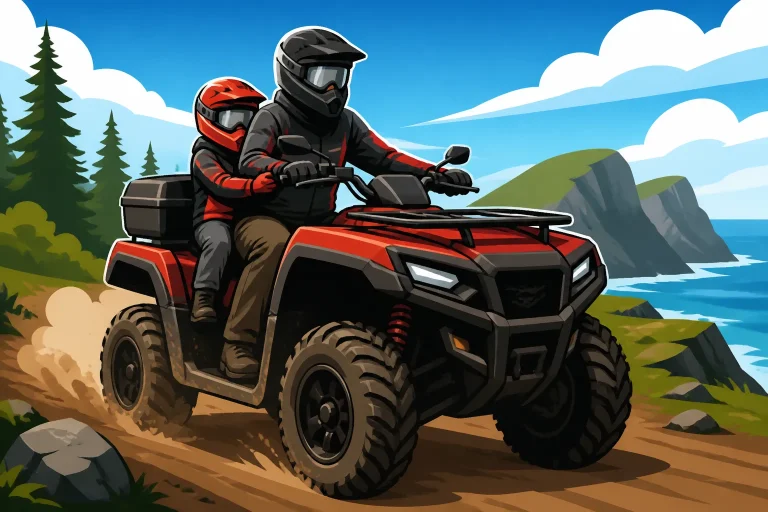
A parent’s signature on a training form does not automatically make that parent a qualified supervisor for every riding situation. Check the supervision requirements separately, including who is eligible to supervise and what responsibilities apply. The supervisor should know the route, understand the young rider’s experience level, and be prepared to stop the ride if conditions or behaviour become unsafe.
For a first outing, choose a familiar, manageable place rather than a route that demands hours of attention or difficult recovery decisions. Keep the group small enough for the supervising adult to monitor the young rider. Discuss hand signals, stopping points, and what to do if the group becomes separated before starting.
The machine should fit the minor, and its controls should be understood before the ride. Go over braking, throttle control, starting and stopping, gear selection if applicable, and how to shut the machine down. The parent or supervisor should also check that the young rider can reach and use the controls while wearing the required protective gear.
Match the machine and route to the rider
Passing training does not establish that a minor is ready for every machine or every trail. A young rider may understand the rules but still lack the strength, judgment, or experience to handle steep ground, deep mud, water, traffic, or a large passenger vehicle.
Choose a machine and route appropriate to the rider’s age, size, ability, and experience. Review Newfoundland Rules for a Side-by-Side Driver if the young person will be operating a UTV, since a side-by-side has its own practical considerations. Do not assume ATV rules and UTV rules are interchangeable in every situation.
Protective equipment needs to fit properly. A helmet that is too large, loose gloves, or boots that interfere with controls can undermine an otherwise careful plan. Check applicable equipment rules, including Newfoundland Helmet Law for Every Rider and Newfoundland Equipment Requirements. A parent should inspect the machine before the ride, not just the rider’s gear.
If consent or proof is missing
If the training provider cannot confirm the consent paperwork, pause and ask what is needed before the minor participates. Do not try to substitute a signed note or a parent’s phone call unless the provider says that is acceptable. If the young person has already completed training but cannot locate the certificate, ask the training service how to retrieve or reprint it before planning a ride.
If the rules are unclear, contact the responsible training provider or registry office and describe the situation precisely: the minor’s age, whether the training is online or in person, and what proof or consent is available. Keep the answer and any paperwork together. A short check before training is easier than discovering a missing requirement at the course, test, trailhead, or roadside stop.
The most dependable approach is straightforward: confirm the accepted training route, obtain the right parental consent before the minor starts, preserve completion proof, and check supervision and machine rules separately. That way, consent does what it is meant to do without being mistaken for a complete riding authorization.
Disclaimer
This article is for general informational purposes only and does not constitute professional advice. Laws, prices and regulations vary by location and change over time. Consult a qualified professional for guidance on your specific situation.