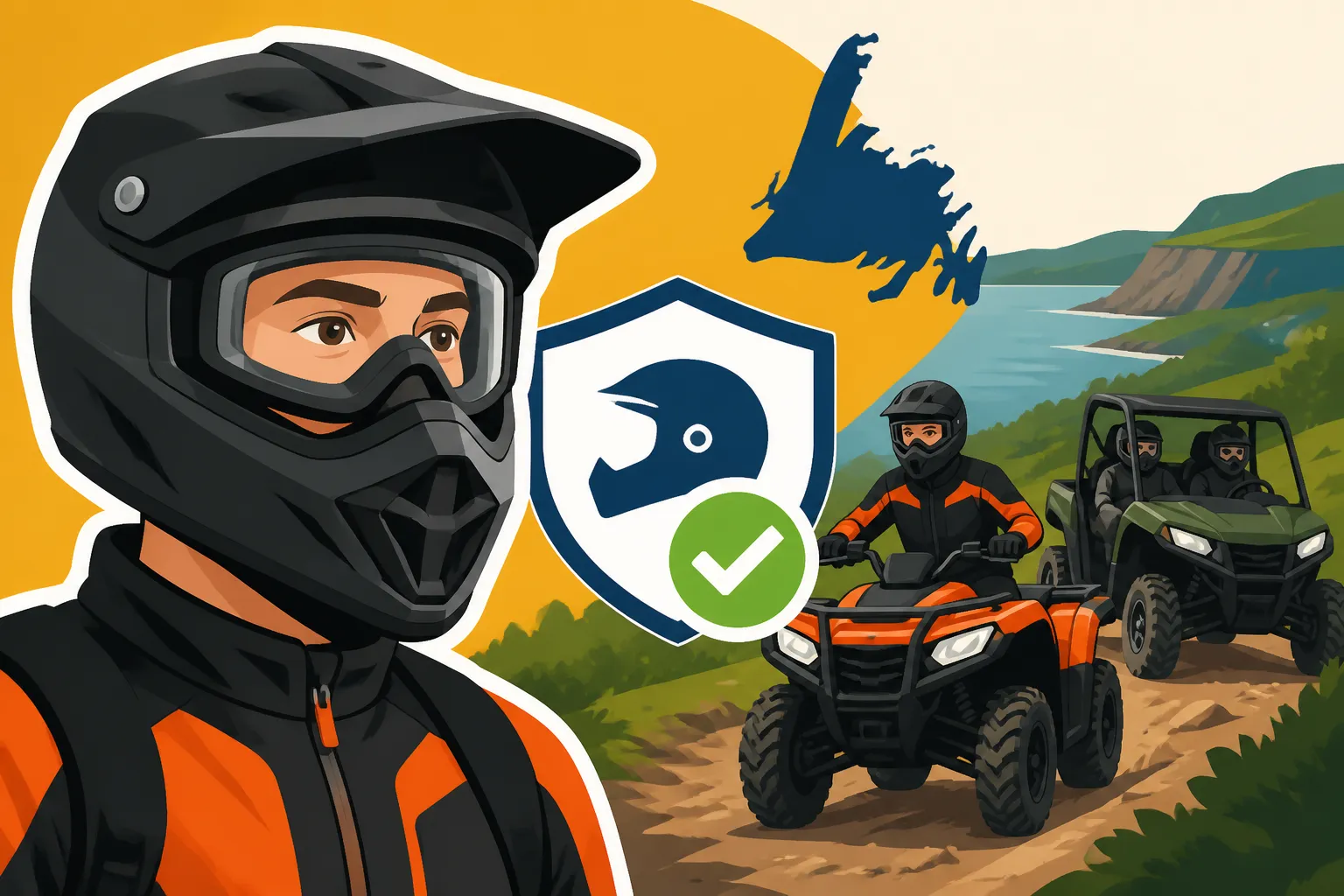
Newfoundland Helmet Law for Every Rider
We all know the thrill of hitting the trails in Newfoundland and Labrador, feeling the wind, and enjoying the incredible scenery our province offers. But sometimes, in our excitement, we might overlook one of the most fundamental aspects of staying safe: wearing a helmet. It's easy to think a quick spin doesn't warrant the full gear, or that you're an experienced enough rider to handle anything, but the reality is that accidents can happen to anyone, anywhere. This guide is here to walk you through Newfoundland's helmet laws, why they're so crucial, and what you need to know to protect yourself and your loved ones every time you ride.
Why Helmets Are Non-Negotiable in Newfoundland
Let's be honest, putting on a helmet before every ride can sometimes feel like a chore, especially when you're just heading down the road to a friend's cabin or to your favourite fishing spot. But the truth is, helmets aren't just a suggestion here in Newfoundland; they're a critical piece of safety equipment mandated by law, and for very good reason. The landscapes we love to explore on our ATVs and UTVs, while beautiful, are also inherently unpredictable and can pose significant risks.
The Harsh Realities of Off-Road Riding
Think about the varied terrain we encounter: rocky trails, boggy patches, steep inclines, unexpected ruts, and slippery mud. Even a familiar path can change overnight after a heavy rain or snowmelt. It's incredibly easy to misjudge a turn, hit an unseen obstacle, or have your machine lose traction. When an ATV or UTV rolls or tips, which happens more often than most riders care to admit, your head is one of the most vulnerable parts of your body. The sheer force of impact, even at relatively low speeds, can lead to catastrophic head injuries if you're not properly protected. We're talking about concussions, skull fractures, and even permanent brain damage that can change your life, and your family's lives, in an instant. It’s not about how skilled you are; it’s about the physics of impact.
Preventing Serious Injury
A good helmet is designed specifically to absorb and distribute impact forces, protecting your brain from these devastating injuries. It acts as a shield, creating a buffer between your skull and whatever unforgiving surface your head might strike, whether that's a rock, the ground, or even another part of your machine. Helmets are engineered with layers of specialized materials, like expanded polystyrene (EPS) foam, that crush upon impact, dissipating energy rather than transferring it directly to your head. Beyond just impact, they also offer protection from abrasions, branches, and flying debris that can be kicked up by other machines or from your own tires. When you consider the relatively small investment in a high-quality helmet against the potential cost of a severe head injury – not just financially, but in terms of quality of life – the choice becomes incredibly clear. A helmet isn't just a piece of gear; it's a life-saver, plain and simple.
Decoding Newfoundland's Off-Road Vehicles Act on Helmets
Newfoundland and Labrador takes off-road vehicle safety seriously, and that's reflected directly in the provincial legislation, specifically the Off-Road Vehicles Act. This act, and the regulations that accompany it, clearly outline the rules around helmet use, ensuring that riders and passengers are as protected as possible when out enjoying our trails and wilderness. It's not just a guideline; it's the law. If you're going to ride, you need to know these rules inside and out.
Who Must Wear a Helmet
The Act is pretty clear: [Helmets Are Required for Operators and Passengers Alike]. This means whether you're driving the ATV or UTV, or simply along for the ride as a passenger, you must have an approved helmet securely fastened on your head. This applies to all ages. There's no exception for adults who might feel they're "too old" for a helmet, nor for young children who might be passengers. The vulnerability of a child's developing brain makes helmet use even more critical for them. When you see folks out on the T'Railway or crossing a barren, everyone, regardless of their role on the machine, should have that helmet on. It’s about collective safety and setting a good example for new riders and younger generations.
What Constitutes an Approved Helmet
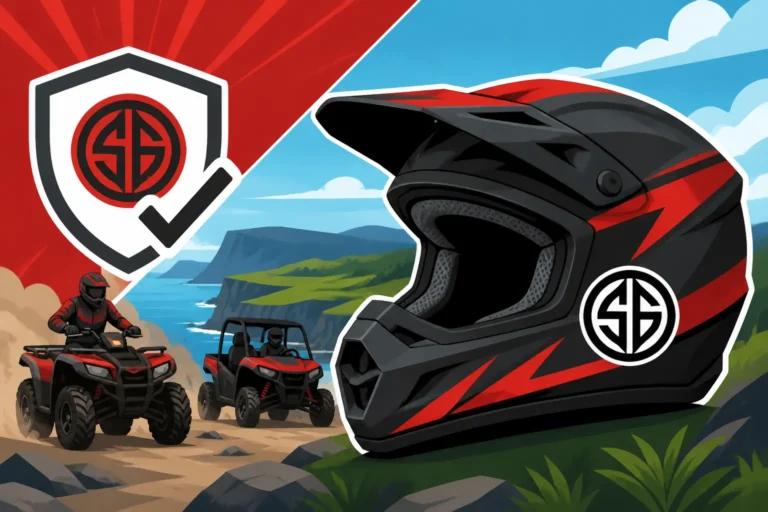
This is where things can sometimes get a little fuzzy for riders, but it's vital to understand. Not just any helmet will do; it must meet specific safety standards. The law requires helmets to comply with certain recognized certifications. In Newfoundland, this typically means a helmet that meets standards set by:
- Canadian Standards Association (CSA): Look for the CSA approval marking. These helmets are rigorously tested to Canadian safety specifications.
- US Department of Transportation (DOT): [US-Approved Helmets Are Accepted on Provincial Trails] if they have the DOT certification. This means they meet the minimum performance standards for motorcycle helmets in the United States, which are widely accepted for ORVs.
- Economic Commission for Europe (ECE): [European ECE Helmets and What the Marking Means] is another standard that's accepted. ECE 22.05 or ECE 22.06 are common markings you'll find on these helmets. These are internationally recognized and known for their stringent testing protocols.
You'll usually find a sticker or label inside the helmet indicating which standard it meets. It's not enough for a helmet to just look sturdy; it needs to have one of these official markings to be considered compliant with Newfoundland's laws. For example, a helmet designed solely for cycling might not provide adequate protection for the higher speeds and different impact types associated with ATVs and UTVs, and therefore wouldn't meet the legal standard. Always check for the proper certification when you buy a helmet, whether it's from a local dealer or an online retailer like SuperATV.
Fastening Your Chin Strap: It's the Law
Having an approved helmet is only half the battle; it also needs to be worn correctly. The [Newfoundland Helmet Straps Must Be Fastened] requirement is not just a detail; it's absolutely critical for the helmet to do its job. An unfastened or loosely fastened chin strap means the helmet can easily come off your head in an accident, rendering it utterly useless. Imagine hitting a sudden bump or having your machine roll over – if that helmet isn't secured, it's going to fly right off, leaving your head completely unprotected at the moment you need it most.
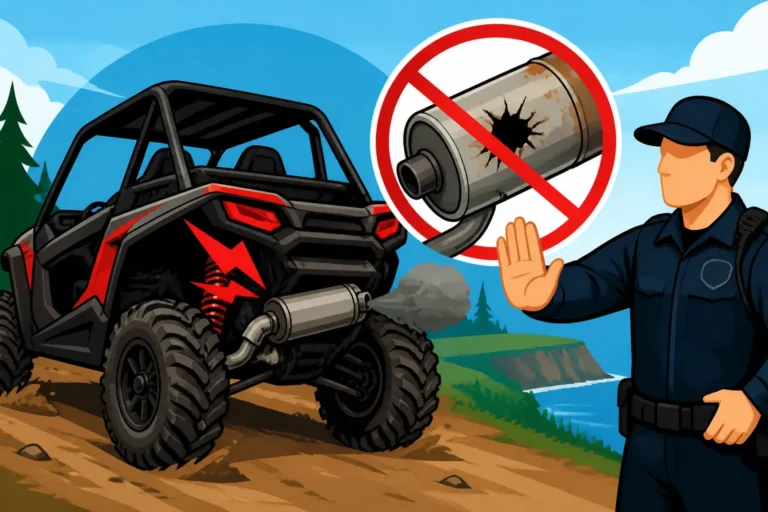
Peace officers in Newfoundland are trained to look for this, and they won't hesitate to issue a ticket if your strap isn't properly fastened. It's a quick click or cinch that literally takes seconds, but those seconds are a small price to pay for genuine safety. Make it a habit: helmet on, strap buckled, every single time. There's no "almost" safe when it comes to head injuries; you either are or you aren't.
Exceptions to the Rule: When You Might Not Need a Helmet
While the general rule in Newfoundland is that a helmet is mandatory for every rider and passenger on an off-road vehicle, the law does recognize a very specific, limited exception. It's crucial to understand this exception fully, as misinterpreting it could lead to serious consequences, both legal and physical. This isn't a loophole for casual rides; it's a narrow allowance for a particular activity under strict conditions.
The Hunting and Trapping Exemption
Newfoundland is a province steeped in hunting and trapping traditions, and the law acknowledges this. There is a specific [Newfoundland's Hunting and Trapping Helmet Exception] in the Off-Road Vehicles Act. This exemption allows an operator or passenger involved in active hunting or trapping activities to remove their helmet while on a portion of an off-road vehicle trail or area designated for hunting or trapping, provided the vehicle is travelling at a low speed.
However, this is not a blanket "no helmet needed for hunting" rule. Here's what's important:
- Active Activity: You must be actively engaged in hunting or trapping. This means you might be scouting, setting snares, checking traps, or retrieving game. It doesn't mean you're just driving your ORV to a general hunting area for leisure.
- Low Speed: The exemption is specifically for low-speed operation. The intent is to allow for better visibility and communication when moving slowly through thick brush or challenging terrain while scanning for game or checking traps. If you're speeding along a main trail, this exemption does not apply.
- Designated Area: This exemption is for specific areas or trails designated for hunting or trapping. You can't just take your helmet off anywhere you please.
- Still Recommended: Even with this legal exemption, safety experts and experienced riders will tell you that wearing a helmet is still highly recommended, even at low speeds. A fall at 10 km/h can still cause a severe head injury. The exemption exists for practical reasons related to the activity, but it doesn't negate the inherent risks.
So, while the law makes this allowance, it's critical to use common sense and prioritize your safety. Just because you can take it off doesn't always mean you should.
Private Land and Machine Ownership
A common misconception is that if you're riding on your own private land, or on land owned by your immediate family, the helmet rules don't apply. This is generally not the case. The Off-Road Vehicles Act applies to the operation of ORVs across the province, not just on public trails. Unless specifically exempted by local bylaws or provincial regulation (which is extremely rare for safety equipment), the helmet requirement typically extends to private property too.
The spirit of the law is to protect individuals from injury, regardless of where they choose to ride. While enforcement might be different on private land compared to a public trail, the legal requirement for an approved, fastened helmet usually remains. It's always best to assume the rules apply unless you can confirm a specific exemption for your exact situation. Don't risk a fine or, more importantly, a serious injury, by making assumptions about where the law applies. Always consult the latest version of the [Newfoundland's Off-Road Vehicles Act] or contact Motor Registration for definitive answers regarding specific private property use.
Beyond the Helmet: Essential Eye Protection and Gear
While the helmet rightly gets a lot of attention due to its critical role in preventing head injuries, it's just one piece of the safety puzzle when you're out riding an ATV or UTV in Newfoundland. The Off-Road Vehicles Act also addresses other crucial safety equipment designed to protect you from the elements, debris, and potential impacts. Overlooking these can not only lead to legal penalties but can also significantly increase your risk of injury or impair your ability to ride safely.
Goggles vs. Windshields: Seeing Clearly and Safely
Clear vision is paramount for safe off-road riding, which is why [Newfoundland Eye Protection Requirements] are in place. The law states that operators and passengers must wear eye protection unless the machine is equipped with a windshield that provides adequate protection.
- Goggles: For most ATV riders and many UTVs, goggles are the go-to solution. They provide a snug fit, prevent dust, mud, branches, and insects from getting into your eyes, and shield against wind and glare. Good quality goggles also typically have anti-fog coatings, which are essential when riding in our often-damp Newfoundland climate, especially when crossing a bog or going through dense, humid woods. You want a pair that integrates well with your helmet, ensuring no gaps that could let in debris or wind. Look for reputable brands or those offered by retailers like SuperATV that specialize in off-road accessories.
- Windshields: Many side-by-sides are equipped with windshields, which can offer sufficient eye protection. However, ensure the windshield is clean and free of cracks or obstructions that could impair visibility. If your UTV has a partial windshield, or if you find yourself frequently looking over or around it, supplemental eye protection like safety glasses or goggles might still be necessary to stay compliant and safe.
The danger of inadequate eye protection isn't just discomfort; it's about reaction time. A stone flung from another machine's tire, a low-hanging branch, or a sudden gust of wind can cause you to blink, flinch, or lose sight of the trail, potentially leading to a serious accident. Don't compromise on clear vision.
The Importance of Appropriate Clothing and Footwear
While not always explicitly spelled out in the same detailed manner as helmets and eye protection, wearing appropriate clothing and footwear is another crucial layer of personal safety that every rider in Newfoundland should take seriously.
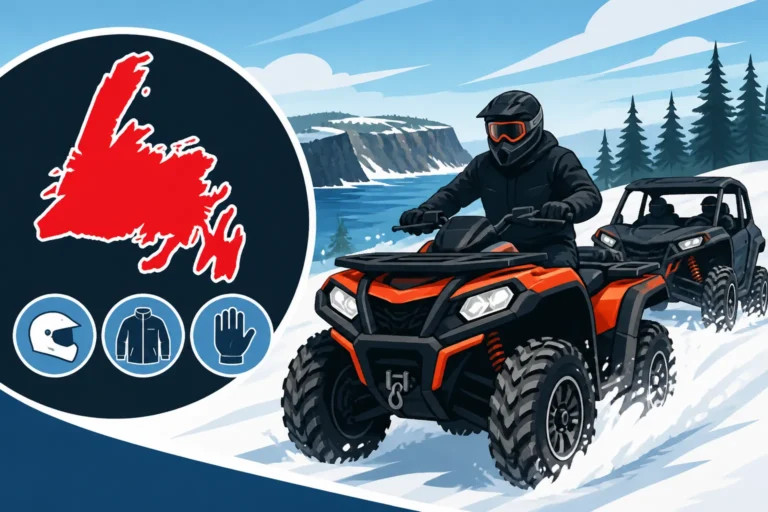
- Clothing: Think layers. Our weather can change rapidly, even within a single ride. Breathable, moisture-wicking base layers are great, followed by insulating layers and a waterproof outer shell. This protects you from rain, wind, and splashes. Long sleeves and pants are always advisable, even on warm days, to guard against scrapes, cuts, and sunburn. Denim offers some abrasion resistance, but specialized riding gear offers far superior protection. Bright colours are a good idea for visibility, especially during hunting season.
- Footwear: Sturdy, over-the-ankle boots with good grip are essential. They protect your feet and ankles from impacts, provide stability on the footrests, and help prevent slips when dismounting or walking on uneven terrain. Avoid open-toed shoes, sneakers, or anything that could easily come off or offer minimal protection. Bog water, sharp rocks, and hot engine parts are all hazards that proper boots can mitigate.
- Gloves: Riding gloves provide grip, reduce vibration fatigue, and protect your hands from blisters, abrasions, and the elements. They can also offer a bit of extra padding in case of a minor fall.
Investing in good quality riding gear, including helmets and eye protection, is just as important as maintaining your machine. It's all about minimizing risk and maximizing your enjoyment of the ride.
Penalties for Non-Compliance: What It Costs to Ride Without a Helmet
Riding an ATV or UTV in Newfoundland without an approved and properly fastened helmet isn't just a safety lapse; it's a direct violation of the provincial Off-Road Vehicles Act. And like any legal infraction, there are consequences. These penalties are designed to deter unsafe riding practices, protect individuals from serious injury, and ensure public safety on our shared trails and wilderness areas. Ignoring the helmet law can hit you in the wallet, and potentially much harder than that.
Fines and Tickets for Helmet Violations
A peace officer—which could be an RCMP officer, a RNC officer, or a provincial conservation officer—has the authority to issue tickets for helmet non-compliance. These fines aren't insignificant and can certainly put a damper on your riding day. While specific fine amounts can change (so always check the latest regulations), you can expect to face a significant penalty for riding without a helmet or for having one improperly fastened.
For example, [Newfoundland Fines for No Seat Belt] on a side-by-side or for other safety equipment violations are clearly defined, and helmet infractions fall into a similar category of seriousness. The initial fine is often just the beginning. There can also be administrative fees, court costs if you choose to dispute the ticket and lose, and potentially an impact on your insurance premiums, depending on the severity and frequency of the offence. Imagine having to pay a couple hundred dollars simply because you couldn't be bothered to buckle your chin strap for a five-minute ride. It's a costly lesson to learn, and entirely avoidable.
The Risk of Machine Seizure and Other Consequences
The financial penalty for a helmet violation is bad enough, but in more serious cases, or for repeat offences, the consequences can escalate dramatically. The Off-Road Vehicles Act gives peace officers considerable power to enforce safety regulations, and this can include the seizure of your machine.
If an officer determines that you are operating your ORV in a manner that poses a significant risk to yourself or others, or if you are a repeat offender for safety violations, they have the authority to impound your ATV or UTV. Getting your machine back from impound isn't a quick or cheap process. You'll likely face:
- Towing and Storage Fees: These accumulate daily and can quickly add up to hundreds of dollars, if not more, depending on how long your machine is held.
- Administrative Release Fees: There's often a fee just to initiate the release process, such as [The $100 Application to Get a Seized Machine Back].
- Proof of Compliance: Before your machine is released, you may need to demonstrate that you've rectified the issue – for instance, by showing you now possess an approved helmet and understand the safety rules.
Beyond seizure, repeated safety violations can lead to more severe outcomes, including potential suspension of your driving privileges (if applicable to the specific offence) or even court appearances. These aren't just minor inconveniences; they can significantly disrupt your life and cost you far more than the price of a good helmet. Think about the potential for [Newfoundland Impaired Riding Penalties] which are among the heaviest, but even lesser safety violations carry serious weight. It’s a stark reminder that safety isn’t optional on our trails.
Choosing the Right Helmet for Newfoundland Conditions
Selecting the right helmet isn't just about meeting legal requirements; it's about finding a piece of equipment that offers maximum protection, comfort, and visibility for the specific conditions you'll encounter on Newfoundland's diverse terrain. With so many options available, it can feel a bit overwhelming, but focusing on key features and fit will help you make the best choice.
Types of Helmets for ATV and UTV Riders
Different helmet styles offer varying levels of protection, ventilation, and features, making some more suitable for off-road adventures than others.
- Full-Face Helmets: These offer the most comprehensive protection, covering your entire head, face, and chin. They often have integrated visors. While excellent for road riding, they can be hot and may have less ventilation for strenuous off-road use, sometimes causing visors to fog up. However, many newer designs incorporate better airflow for diverse use.
- Motocross/Off-Road Helmets: These are incredibly popular with ATV riders. They feature a distinct peak (visor) to shield from sun and roost, and a prominent chin bar for face protection. Crucially, they have excellent ventilation to keep you cool during intense riding. They don't typically come with a face shield, so you'll need to wear [Goggles Unless There Is a Windshield] to protect your eyes. Many riders find these to be the most comfortable and functional for true off-road adventures, especially when combined with a quality pair of goggles.
- Modular/Flip-Up Helmets: These offer the versatility of a full-face helmet with a chin bar that can flip up. This is great for quick conversations or breaks without removing the entire helmet. However, when the chin bar is open, it offers no protection. For dedicated off-road riding, the moving parts can sometimes add weight and reduce overall structural integrity compared to a fixed full-face or motocross helmet.
- Open-Face/3/4 Helmets: These cover the top, back, and sides of your head, but leave your face exposed. While some riders prefer the open feel, they offer significantly less protection than full-face or motocross helmets, particularly for the chin and jaw. For ATV/UTV riding, these are generally not recommended due to the inherent risks of face-first impacts.
When browsing for options, consider what kind of riding you primarily do. If you're tackling challenging trails and mud, a motocross-style helmet with good ventilation and separate goggles from a company like SuperATV might be your best bet.
Ensuring a Proper Fit and Comfort
Even the most expensive, highly-rated helmet is useless if it doesn't fit correctly. A helmet that's too loose can shift during an impact, compromising its protective ability, while one that's too tight can cause discomfort and headaches, distracting you from the trail.
- Sizing: Most manufacturers provide sizing charts based on head circumference. Use a soft tape measure to find your size, measuring just above your eyebrows and ears.
- Trying It On: When trying on a helmet, it should feel snug all around your head, with no pressure points. Your cheeks should feel slightly compressed. If you can move the helmet independently of your head by grabbing the chin bar and trying to rotate it, it's too big.
- Field of Vision: Ensure the helmet provides a wide, unobstructed field of vision. This is especially important for peripheral awareness on trails.
- Comfort: Wear the helmet for at least 5-10 minutes. Any pressure points that feel minor at first can become excruciatingly painful during a long ride. Make sure the interior padding is comfortable against your skin.
Remember, a properly fitting helmet should be snug but not painful. It shouldn't wiggle or slip around on your head, even when you shake your head vigorously. A good fit is crucial for both safety and rider comfort.
Maintenance and Replacement: Keeping Your Helmet Safe
Your helmet isn't a "set it and forget it" piece of equipment. Proper maintenance and knowing when to replace it are just as important as choosing the right one.
- Cleaning: Regularly clean the exterior with mild soap and water. The interior padding can often be removed and washed. Avoid harsh chemicals that could degrade the helmet's materials.
- Inspection: Periodically inspect your helmet for any signs of damage: cracks in the shell, compressed or deteriorating foam, or frayed chin straps. Even minor damage can compromise its protective capabilities.
- Storage: Store your helmet in a cool, dry place away from direct sunlight or extreme temperatures, which can degrade materials over time. Avoid dropping it, even from a small height, as internal foam could be damaged without visible exterior signs.
- Replacement After an Impact: This is the most critical rule: always replace your helmet after any significant impact, even if there are no visible signs of damage. The helmet's internal foam is designed to absorb impact by crushing, and once it has done its job, it won't be as effective for a second impact. Think of it as a single-use airbag for your head.
- Age: Helmets also have a lifespan. Manufacturers generally recommend replacing helmets every 3-5 years, even if they haven't been involved in an impact. Over time, materials can degrade due to exposure to UV light, sweat, and general wear and tear, reducing their effectiveness.
Treat your helmet as an investment in your safety. Taking care of it and replacing it when necessary ensures it will be there to protect you when you need it most.
Promoting a Culture of Safety: More Than Just the Law
While legal requirements are a strong motivator for helmet use, true safety on Newfoundland's trails goes beyond simply following the rules. It involves fostering a culture where safety is paramount, where experienced riders lead by example, and where community organizations actively promote responsible riding. It's about recognizing that every time we choose to ride safely, we contribute to a better, more enjoyable, and ultimately safer environment for everyone who loves off-roading.
Leading by Example: Parents and Experienced Riders
One of the most powerful tools for promoting helmet use and overall safety is leadership from experienced riders. If you've been riding for years, your actions speak volumes to new riders and, most importantly, to younger generations. Children are incredibly impressionable, and if they see their parents, grandparents, or mentors consistently wearing a helmet and other appropriate gear, they are far more likely to adopt those habits themselves.
Parents have a unique responsibility here. Not only must they ensure their children comply with rules like [Newfoundland Helmet Law for Every Rider] and [Newfoundland Supervision Rules for Young Riders], but they must also demonstrate these rules themselves. A parent who insists their child wears a helmet but doesn't wear one themselves sends a mixed message that undermines the importance of safety. Make it a non-negotiable family rule that everyone gears up before the machine even starts. This positive reinforcement, day in and day out, embeds safety as a fundamental part of the riding experience, not just an inconvenient regulation.
The Role of ATV Clubs and Organizations
Newfoundland is home to a vibrant community of ATV and UTV enthusiasts, many of whom are active in local clubs and provincial organizations. These groups play an invaluable role in promoting safety beyond what the law mandates. They are often at the forefront of:
- Education: Offering safety courses, organizing workshops, and sharing best practices for responsible riding. Many clubs emphasize the importance of [Newfoundland Safety Training Is Mandatory] for new riders and encourage ongoing education for all members.
- Trail Development and Maintenance: Working to ensure trails are well-marked, safe, and sustainable, which in itself reduces risks.
- Advocacy: Lobbying for reasonable regulations that enhance safety without unnecessarily restricting access.
- Community Building: Creating opportunities for group rides and social events where safety is naturally reinforced through peer example.
By joining a local ATV club, you not only connect with fellow enthusiasts but also become part of a movement that champions safe and responsible riding. These clubs often distribute information, host events like poker runs where safety is a key component, and generally serve as excellent resources for understanding and upholding the spirit of the [Newfoundland's Off-Road Vehicles Act]. They are a testament to the idea that safety isn't just about avoiding fines; it's about valuing every rider's well-being and preserving our access to the incredible riding opportunities Newfoundland has to offer.
| Helmet Standard | Origin | Key Features & Focus | Accepted in Newfoundland |
|---|---|---|---|
| CSA | Canada | Focus on cold-weather impact performance, penetration resistance. | Yes |
| DOT | USA | Minimum performance standards for crash protection, impact absorption, penetration. | Yes |
| ECE | Europe | Rigorous testing for impact absorption, abrasion resistance, and chin strap integrity. Often considered very comprehensive. | Yes |
Disclaimer
This article is for general informational purposes only and does not constitute professional advice. Laws, prices and regulations vary by location and change over time. Consult a qualified professional for guidance on your specific situation.