Do You Need to Register an ATV in Newfoundland?
It can feel like a real headache trying to figure out all the rules when you just want to get out and enjoy Newfoundland's incredible landscapes on your ATV or UTV. Many riders assume that if they're only on private land or remote cabin roads, they can skip the red tape. This guide is here to clear up that common misunderstanding and walk you through why registration isn't just a good idea, but a mandatory step for almost every off-road vehicle in our beautiful province, ensuring you ride legally and safely.
Why Registration Is Non-Negotiable for Almost Every Machine
Let's cut right to it: yes, you absolutely need to register your ATV or UTV in Newfoundland. There's a common misconception that if you're not riding on public roads or designated trails, you might be exempt. Unfortunately, that's rarely the case. The provincial government's commitment to safety and accountability means almost every off-road vehicle, whether it's a quad, a side-by-side, a dirt bike, or even a snowmobile, needs to be officially registered with Motor Registration. This isn't just about collecting a fee; it's about identifying machines, ensuring ownership, and keeping our trails and communities safe for everyone.
The Letter of the Law: Newfoundland's Off-Road Vehicles Act
The core reason behind mandatory registration lies directly in [Newfoundland's Off-Road Vehicles Act]. This piece of legislation, especially the updated version from 2022, clearly outlines what constitutes an off-road vehicle and the requirements for its operation within the province. It doesn't differentiate much based on where you plan to ride; if it's an ORV, it needs to be registered. This act was put in place to standardize rules, improve safety, and create a comprehensive system for managing off-road recreation. It means that whether you’re planning a serious expedition across the barrens or just a quick run to your local fishing hole, your machine needs to be on the books.
Think about it this way: just like your car needs to be registered to drive on public roads, your ATV needs to be registered to be operated in most areas here. The Act covers a broad spectrum of machines, from the trusty quad you use for hauling firewood at the cabin to the high-performance side-by-side you take on weekend adventures. It even specifically added classes for newer types of machines like side-by-sides in its 2022 update, ensuring that as technology evolves, the regulations keep pace. This blanket requirement ensures that authorities have a record of who owns what and can manage enforcement more effectively.
Safety, Accountability, and Trail Management
Beyond legal compliance, registration plays a crucial role in promoting safety and accountability across the province. When a machine is registered, it's tied to an owner, which helps deter theft and allows for easier recovery if your machine goes missing. It also means that in the event of an accident, particularly those involving multiple parties, there's a clear record of who is responsible. This isn't just about blame; it's about ensuring that everyone involved can access the necessary information for insurance claims or medical attention.
Moreover, the funds collected from registration fees often go back into maintaining and developing our incredible network of trails. Organizations work tirelessly to keep these routes clear, safe, and enjoyable for all users. Your registration is a small but significant contribution to that effort. It helps support the infrastructure that makes our outdoor lifestyle possible, from the T'Railway to countless local trails. So, while it might feel like another hoop to jump through, it's actually contributing to the very experience you're seeking.
Understanding the Penalties for Unregistered Operation
Ignoring the registration requirement might seem like an easy way to save a few dollars or avoid some paperwork, but the potential consequences are far more costly and inconvenient. Peace officers, including the RCMP and RNC, are authorized to enforce the Off-Road Vehicles Act, and they take unregistered machines seriously. Getting caught without proper registration can lead to significant fines, impoundment of your machine, and a whole lot of stress that could have been easily avoided.
Fines, Seizure, and Legal Headaches
Imagine you're out for a peaceful ride near your favourite hunting grounds, only to be stopped by an officer. The first thing they'll ask for, after your driver's licence and proof of insurance, is your ORV registration. If you can't produce it, you're looking at a fine, which can range significantly depending on the specific circumstances and whether it's your first offence. These aren't small, easily forgotten tickets; they can put a serious dent in your wallet.
Even worse than a fine is the possibility of your machine being seized. Yes, you read that right. An unregistered machine can be impounded, meaning it's taken away from you on the spot. This isn't just inconvenient; it's a huge hassle. You'd then be facing not only the initial fine but also impoundment fees, storage fees, and potentially other administrative costs to get your machine back. This process can be lengthy and frustrating, taking away precious riding time and adding unexpected expenses. Furthermore, persistent or severe infractions can lead to more serious legal troubles, including court appearances and even suspension of riding privileges. It's simply not worth the risk.
Protecting Your Investment and Peace of Mind
Beyond the immediate financial and legal repercussions, operating an unregistered machine carries hidden risks for your investment. If your ATV or UTV is stolen and it's not registered, proving ownership and getting it back can become an uphill battle. The registration certificate provides undeniable proof of your legal ownership, making it much easier for law enforcement to track and return your property. Without it, you're essentially relying on circumstantial evidence, which can prolong the process and even prevent recovery.
Consider also the impact on insurance. While [Newfoundland's Minimum Insurance Requirement] is mandatory for all ORVs, an unregistered machine might complicate any claims you need to make. Your insurance company might have questions if the vehicle isn't legally registered, potentially affecting your coverage or the processing of a claim. Registering your machine gives you peace of mind, knowing that you've fulfilled your legal obligations and protected your valuable asset. It's a small investment in time and money for significant protection against future headaches.
The Straightforward Path to Registering Your ATV or UTV
So, you've accepted that registration is a must, and now you're wondering how to actually get it done without too much fuss. Good news! While it requires gathering some documents and a trip to Motor Registration, the process itself is quite straightforward once you know what to expect. There are specific forms and proofs of ownership you'll need, whether you're registering a brand-new machine or one you've just purchased used.
Gathering Your Essential Paperwork
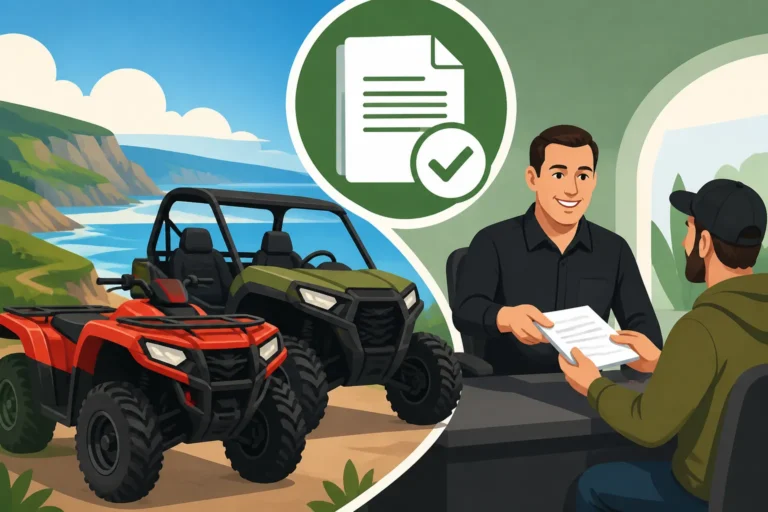
The key to a smooth registration process is having all your ducks in a row before you head to Motor Registration. What you need will vary slightly depending on whether your machine is new or used.
For a brand-new machine:
- New Vehicle Information Statement (NVIS): This is a crucial document provided by the dealer when you purchase a new ATV or UTV. It proves that the machine is brand new and has never been registered before. [Newfoundland Requires an NVIS for a New Machine] is a vital piece of this puzzle.
- Bill of Sale: Your purchase agreement or bill of sale from the dealer.
- Proof of Identification: A valid driver's licence or other government-issued ID.
- Proof of Address: A utility bill or other document showing your current Newfoundland address.
- Payment for Fees: Be ready to pay the [Newfoundland ORV Registration Cost]. For an ATV, this is typically a one-time fee, and it's worth noting that [Newfoundland Registrations Never Expire] as long as you own the machine.
For a used machine (private sale):
- Bill of Sale: This is where it gets a little trickier. You need a properly completed bill of sale from the person you bought the machine from. It's incredibly important that this document is clear, detailed, and includes the full names and addresses of both buyer and seller, the date of sale, the purchase price, and the full Vehicle Identification Number (VIN) of the machine. If the previous owner wasn't the original registrant, you might need a chain of bills of sale from each prior owner to establish a clear ownership history.
- Previous Registration Permit: Ideally, you'll also have the previous owner's registration permit. This helps verify the machine's identity and confirms it was previously registered.
- Proof of Identification: As above, your valid ID.
- Proof of Address: Again, to confirm your residence.
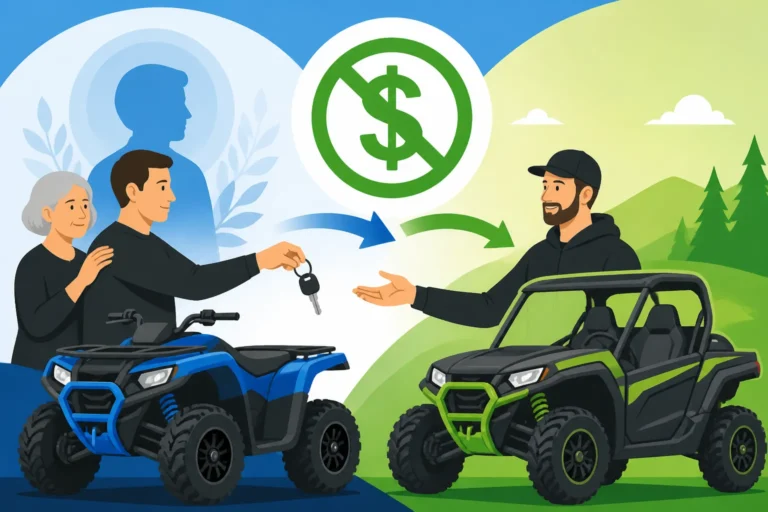
- Payment for Fees: You'll need to pay the applicable transfer fee. Keep in mind that [Newfoundland Transfers Cost $16 for Seniors] in some cases, so check if you qualify for any reduced rates.
If you find yourself without a clear bill of sale, especially when buying a used machine that's changed hands a few times, you might need to prepare additional documents like a sworn affidavit and indemnity form. Services like LawDepot can be incredibly helpful for generating legally sound documents like a bill of sale or an affidavit if you're trying to piece together the ownership history or buying from a less formal seller. These tools can ensure you have the correct legal wording to present to Motor Registration.
Navigating the Motor Registration Office
Once you have all your documents ready, the next step is to visit a Motor Registration office. It’s highly recommended to [Book an Appointment at Motor Registration Before You Go]. This saves you a lot of waiting time and ensures someone will be available to assist you. When you arrive, be prepared to:
- Present your documents: Hand over all the paperwork you've gathered. The staff will review everything to ensure it's complete and correct.
- Verify your identity and address: They’ll confirm your identification and proof of residence.
- Confirm machine details: They'll verify the VIN of your ATV or UTV. Make sure the VIN on your machine matches all your paperwork precisely.
- Pay the fees: This includes the initial registration fee (if new) or transfer fee (if used) and any applicable sales tax. Remember, [Newfoundland HST on an ATV Purchase] applies to the purchase price of the machine itself, not just the registration.
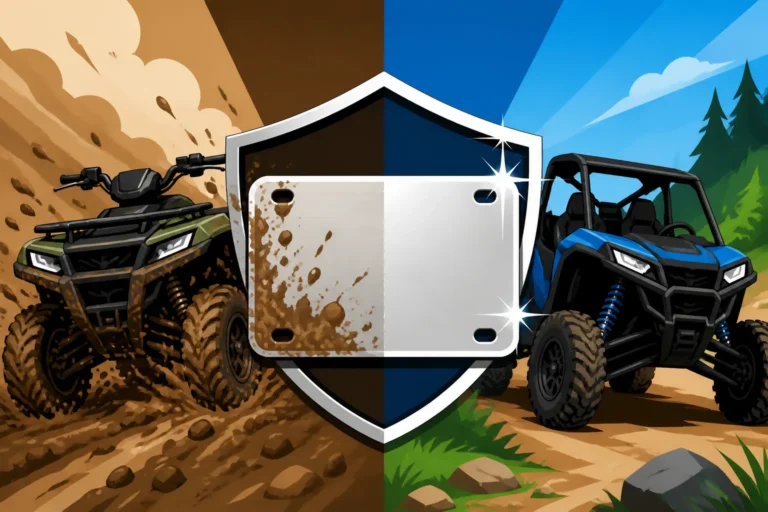
- Receive your registration permit and plate/decal: Once everything is processed and fees are paid, you'll receive your official registration permit. You'll also be issued an identification plate or decal, which must be affixed to your machine in a visible location. Remember, [Newfoundland Plates Kept Free of Mud] is a requirement, ensuring it's always legible for enforcement.
The entire process, if you're prepared, can be surprisingly quick. In the end, you'll walk out with the legal documentation and identification plate needed to ride your ATV or UTV legally and enjoy the trails with confidence. For detailed steps on used machines, you can review [Newfoundland Transfer of Ownership Steps].
Special Circumstances: When Rules Can Feel a Little Different
While the general rule is "register everything," there are always a few edge cases that might leave you scratching your head. What if you're just visiting? What if you've recently moved to the province? Or what about that old machine you only ever use way out at the cabin? Understanding these nuances can save you from unexpected trouble.
Visitors, New Residents, and Temporary Exemptions
Newfoundland is a popular destination for outdoor enthusiasts, and many visitors bring their own ATVs or UTVs to explore our unique terrain. Thankfully, the province has a provision for this. If you're visiting from another province or territory where your machine is already registered, you generally benefit from [Newfoundland's 30-Day Visitor Exemption]. This means you can ride your out-of-province registered machine here for up to 30 consecutive days without needing to re-register it in Newfoundland. However, you must still comply with all other provincial ORV rules, including helmet laws, insurance requirements, and operating restrictions. If your visit extends beyond 30 days, then yes, you'll need to register your machine with Motor Registration.
For those making Newfoundland their new home, there's also a grace period. If you've moved to the province and brought your ATV or UTV with you, you have [Newfoundland's 90-Day New Resident Rule] to get your machine registered here. This gives you ample time to settle in, get your Newfoundland driver's licence, and then complete the ORV registration process. It's a thoughtful allowance, recognizing that moving is already a busy time. Again, during this 90-day period, your machine must still be legally registered in your previous province or territory, and you must adhere to all Newfoundland ORV operating regulations.
Cabin Machines and Farm Use: Still Need Registration
A very common question, and a source of some frustration, revolves around machines that "never leave the cabin road" or are only used on private property for work. The realistic answer, and often the frustrating one for owners, is that these machines usually still need to be registered. The Off-Road Vehicles Act is quite broad in its definition of an "off-road vehicle" and its requirement for registration. Unless your machine is exclusively operated on your own private land and never, ever touches any other land, trail, or public right-of-way, it falls under the Act's purview.
For many, a "cabin machine" is used to access Crown Land to cut firewood, get to a fishing pond, or simply explore the wilderness around their retreat. In almost all these scenarios, you're venturing beyond strictly private property onto areas governed by the Act. Even a short hop across a public road to get to another part of your land, or riding on an unmarked trail that crosses Crown Land, brings you under the registration requirement. The intent is to ensure that all machines operating in the broader Newfoundland environment are identifiable and accounted for. While it might seem excessive for a machine that rarely sees the light of day, it's about the potential for interaction with the public domain. For those with machines used primarily for agriculture or forestry on their own vast private tracts, there might be specific, narrow exemptions, but it’s always best to check with Motor Registration directly, as these are usually very specific circumstances. When in doubt, register it. It's better to be safe than face a fine miles from anywhere.
| Scenario | Registration Required? | Key Documents/Actions | Common Frustration |
|---|---|---|---|
| Brand New ATV/UTV | Yes | NVIS from dealer, Bill of Sale, ID, Proof of Address, Payment for [Newfoundland Charges $95 for an ATV] or other applicable fee. | "Another fee right after buying!" |
| Used ATV/UTV (Private Sale) | Yes | Bill of Sale (from all prior owners if needed), Previous Registration Permit (if available), ID, Proof of Address, Transfer fee. LawDepot can help with [Newfoundland Bills of Sale From Each Owner]. | "Tracking down old paperwork is a nightmare." |
| Visiting (Under 30 Days) | No (if registered elsewhere) | Must have valid out-of-province registration, insurance, and follow NL ORV rules. | "Different rules in every province!" |
| Visiting (Over 30 Days) | Yes | Treat as new resident: proof of ownership, ID, address, NL registration fee. | "I'm only here a little longer; why bother?" |
| New Resident (Under 90 Days) | No (if registered elsewhere) | Must have valid out-of-province registration, insurance, and follow NL ORV rules. | "Moving is stressful enough without more paperwork." |
| New Resident (Over 90 Days) | Yes | Proof of ownership, ID, NL address, NL registration fee. | "Didn't realize I had to re-register my own machine." |
| "Cabin Only" Machine | Yes (usually) | Proof of ownership, ID, address, NL registration fee. | "It never leaves my land! Why do I need to register it?" |
| Machine with No Prior Paperwork | Yes | May require a sworn affidavit of ownership, indemnity form. [Newfoundland Registration Without a Bill of Sale] can be complex; LawDepot templates can assist. | "I bought it years ago, lost the papers, and now I'm stuck." |
In almost every scenario where your off-road vehicle is going to be operated, the answer to "Do you need to register an ATV in Newfoundland?" is a resounding yes. It's a fundamental part of responsible off-road vehicle ownership in our province, contributing to safety, accountability, and the sustainability of our riding areas. So, take the time to get it done right; it'll save you a heap of trouble down the trail.
Disclaimer
This article is for general informational purposes only and does not constitute professional advice. Laws, prices and regulations vary by location and change over time. Consult a qualified professional for guidance on your specific situation.