Why a Transfer After a Death Costs Nothing
Dealing with the estate of a loved one who has passed away is an incredibly difficult time, filled with grief, complex emotions, and often, an overwhelming amount of paperwork. When that estate includes off-road vehicles like ATVs or UTVs, it can add another layer of confusion to an already daunting process. Many people assume every legal transfer comes with a hefty fee, but in Newfoundland, there's a specific exemption that can provide a small measure of relief during a tough period. This guide will walk you through the process of transferring ownership of an ATV or UTV after the original owner's death in Newfoundland, clarifying why, in this particular circumstance, the transfer costs nothing.
Understanding Off-Road Vehicle Transfers in Newfoundland After a Death
When someone passes away, their assets, including their cherished off-road vehicles, become part of their estate. Navigating what happens next with these machines can feel like a bureaucratic maze, especially when you're still processing a loss. Newfoundland's Motor Registration Division understands that grief shouldn't be compounded by unnecessary financial burdens for certain administrative tasks.
The Emotional and Practical Challenges of Estate Management
It's completely normal to feel overwhelmed when faced with settling an estate. There are so many details to attend to, from financial accounts to personal belongings, and dealing with vehicles often falls somewhere in the middle. You might be wondering about the sentimental value of the machine, whether it should be kept in the family, or if it needs to be sold. On top of that, there's the practical side: understanding the legal steps, tracking down documents, and dealing with government offices. It’s a lot to handle, and the last thing anyone needs is another bill or unexpected fee during such a vulnerable time. We often hear stories from families who dread the transfer process, assuming it will be expensive and complicated, only to find that some parts are more straightforward than they feared.
What "Costs Nothing" Truly Means
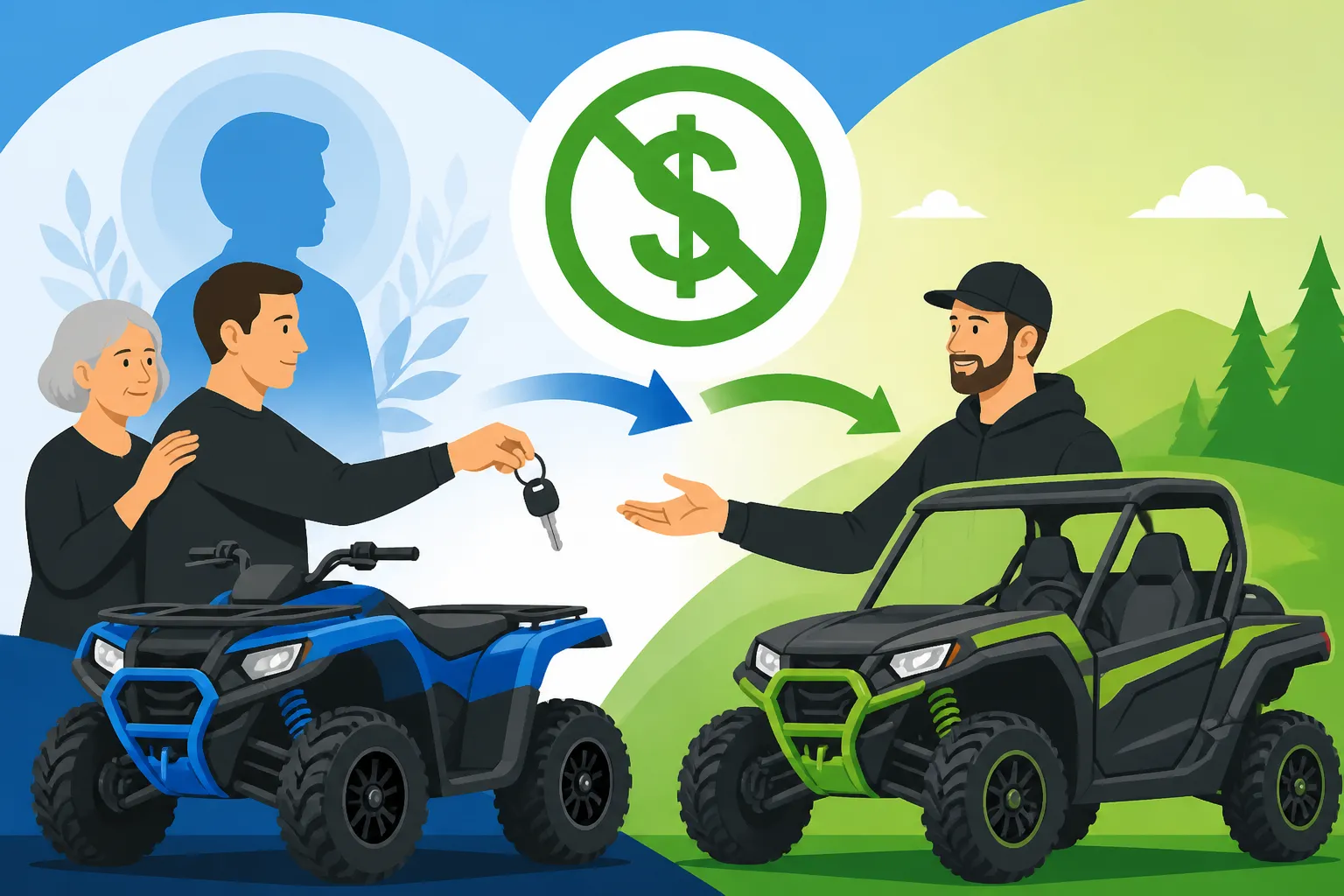
The phrase "costs nothing" in this context refers specifically to the transfer fee that would typically be charged by the Motor Registration Division for changing ownership of an off-road vehicle. In many other transfer scenarios, like a standard sale between two private parties, there would be a fee associated with processing the change of ownership. However, in Newfoundland, the provincial government has made a compassionate exception for transfers occurring due to the death of the registered owner. This doesn't mean the entire estate process is free, of course. You might still incur costs for legal advice, probate fees, or obtaining official death certificates. But for the actual act of updating the off-road vehicle's registration in the new owner's name, the province waives its administrative fee. This is a small but significant detail that can alleviate one less worry for grieving families.
Distinguishing Between Wills and Intestacy
How the transfer proceeds can depend greatly on whether the deceased owner left a valid will. If a will exists, it typically names an executor (or executrix) who is legally responsible for carrying out the deceased's wishes, including distributing assets like an ATV or UTV. The will should ideally specify who inherits the machine. In this scenario, the executor would be the one to initiate the transfer process, acting on behalf of the estate and the named beneficiary.
However, if there is no will – a situation known as dying "intestate" – the process becomes a bit more complex. In such cases, the province's intestacy laws dictate how assets are distributed among next-of-kin. This usually means a court will appoint an administrator (often a close family member) to manage the estate. The administrator then follows the legal order of distribution. Either way, whether through an executor or an administrator, someone will need legal authority to act on behalf of the estate to transfer the off-road vehicle. For many, finding reliable templates for these legal documents, like a will or an affidavit of intestacy, can be helpful. Services like LawDepot offer various legal forms that can guide you through preparing such documents, whether you're planning your own estate or navigating one after a loss.
The Specifics of a Deceased Owner Transfer at Motor Registration
Navigating the Motor Registration Division can seem intimidating, but when you know what to expect and what documents to bring, it becomes much smoother. The key is to have all your ducks in a row before you head to the counter.
Required Documentation for the Transfer
To successfully transfer an off-road vehicle after the death of the owner, you'll need to gather several critical documents. This paperwork proves your legal right to act on behalf of the estate and identifies the new owner.
First and foremost, you'll need the original death certificate or a certified copy. This is the fundamental proof that the registered owner is deceased. Secondly, you'll need documentation that establishes who has the legal authority to manage the estate. If there was a will, this would typically be the Letters of Probate. If there was no will, you'd need Letters of Administration from the court. These legal documents are essential as they confirm the executor or administrator's authority to act.
You'll also need the original off-road vehicle registration permit (sometimes referred to as the "registrant permit" or "plate permit") for the ATV or UTV. If this document is lost, you might need to apply for a [Newfoundland Duplicate Registrations at $25] first, which does have a fee, but it's not the transfer fee itself. The new owner will also need valid photo identification and proof of their address. Sometimes, the registry might request an affidavit confirming the facts of the death and the relationship of the new owner to the deceased, especially if the will is complex or there's no will at all. For those needing assistance with drafting affidavits or other legal forms, resources like LawDepot can provide templates to ensure accuracy.
Who Can Initiate the Transfer
The person legally empowered to initiate the transfer is typically the executor named in the will, or the administrator appointed by the court if there's no will. These individuals are responsible for managing the deceased's estate according to the will or the laws of intestacy.
If the will specifies that the ATV or UTV goes to a particular beneficiary, the executor will facilitate the transfer to that person. If there's no will, and a new owner is determined by the laws of intestacy (e.g., a spouse or child), the administrator would process the transfer to them. It's crucial that whoever comes to the Motor Registration Division has the official legal documents (Letters of Probate or Administration) confirming their authority. Without these, the registry simply cannot proceed with the transfer, as they need to ensure the ownership change is legitimate and lawful. They'll want to see that the person acting on behalf of the estate has the proper judicial backing.
Steps to Take at the Motor Registration Office
Once you've gathered all your documents, the next step is to head to the Motor Registration Division. It's highly recommended to [Newfoundland Registration by Appointment] to avoid long wait times.
Here's a general outline of the steps:
- Book an Appointment: Use the provincial government's online booking system or call ahead to schedule your visit. Specify that you are there for an off-road vehicle transfer after a death.
- Gather Documents: Double-check that you have the original death certificate, Letters of Probate or Administration, the original off-road vehicle registration permit, and the new owner's identification and proof of address.
- Complete Necessary Forms: At the registry, you will likely need to complete a transfer of ownership form. The staff can guide you through this. Be prepared to provide details about the deceased owner and the new owner.
- Present Documentation: Submit all your supporting documents to the clerk. They will review everything to ensure it's complete and correct. This is where they verify your authority to act on behalf of the estate.
- New Registration Permit Issued: Once everything is processed, a new registration permit will be issued in the name of the new owner. Remember, as discussed, the administrative fee for this specific transfer is waived. The new owner then officially becomes the registered owner of the ATV or UTV.
| Transfer Type | Typical Fee (Approx.) | Documents Needed | Notes |
|---|---|---|---|
| Standard Private Sale | Varies | Bill of Sale, Old Registration, New Owner ID | Buyer typically pays the transfer fee and HST. |
| Transfer After Death | $0 | Death Certificate, Probate/Admin. Letters, Old Reg, New Owner ID | Specific transfer fee waived, other estate costs may apply. |
| Transfer to a Senior (Sale) | $16 | Bill of Sale, Old Registration, New Owner ID, Proof of Age | Reduced fee for qualified seniors. [Newfoundland Transfers Cost $16 for Seniors] |
| Duplicate Registration Permit | $25 | ID, Proof of Ownership | If original permit is lost, this fee applies to get a copy. |
Potential Hurdles and How to Navigate Them
Even with the best intentions and preparation, things can sometimes get complicated. Estate matters rarely run perfectly smoothly, and off-road vehicle transfers are no exception. Knowing common pitfalls can help you prepare or at least understand what challenges you might face.
When There's No Will or the Paperwork is Missing
One of the most frequent headaches in estate administration is when the deceased didn't leave a will. As mentioned, this means the courts must appoint an administrator, and the distribution of assets follows specific provincial laws of intestacy. This process can be time-consuming and add stress. Without a will clearly stating who inherits the ATV, there might be disagreements among family members, which can further delay the transfer.
Another common issue is missing paperwork. What if the original registration permit for the ATV is nowhere to be found? Or perhaps there's no clear bill of sale from when the deceased originally acquired the machine? In these situations, the Motor Registration Division will need alternative proof of ownership. This might involve preparing a [Newfoundland Registration Without a Bill of Sale] or, for more complex situations, completing a [When Ownership Is Unclear: Affidavit and Indemnity Form]. These forms require you to swear under oath to the facts of ownership and indemnify the government against any future claims, which means taking on potential liability. It's always best to try and locate every piece of original documentation possible, as it streamlines the process significantly.
Dealing with Multiple Heirs or Disputes
It's not uncommon for an off-road vehicle to be highly valued, either sentimentally or monetarily, and if a will isn't crystal clear, or if there's no will at all, disputes can arise among heirs. Perhaps two children both believe they should inherit their parent's ATV, or an ATV is left to multiple beneficiaries without clear instructions on joint ownership or sale.
When there are multiple heirs, they will all generally need to agree on who will become the registered owner, or if the machine is to be sold, how the proceeds will be divided. If an agreement cannot be reached, it can lead to legal challenges, requiring court intervention to settle the dispute. Until such a dispute is resolved, the Motor Registration Division cannot complete the transfer, as they require clear consent and legal authority from all parties with a claim. In cases of joint ownership, the new registration permit can be issued with multiple names, as outlined in [Newfoundland Registration With Two Owners], but again, all parties must be in agreement.
Addressing Liens or Outstanding Debts
Before transferring any vehicle, including an off-road machine, it's prudent to check if there are any outstanding liens or financial encumbrances against it. A lien means that a creditor (like a bank or finance company) has a legal claim on the vehicle until a debt is paid off. If the deceased had financed the ATV or UTV, and there's still a balance owing, that debt is usually part of the estate's liabilities.
The executor or administrator is responsible for settling these debts from the estate's assets. If a lien exists, it generally needs to be cleared before the transfer of ownership can be finalized, or the new owner will inherit the debt along with the machine. You can often perform a lien search (sometimes called a Personal Property Registry search) on the vehicle's VIN to uncover any registered financial claims. The Motor Registration Division typically records liens against registered vehicles, and this information can sometimes be accessed during the transfer process or through a separate search. This is why understanding [Newfoundland Registration and Lien Records] is crucial. It ensures that the person inheriting the machine isn't unknowingly taking on someone else's financial burden.
Broader Implications and Best Practices
While the administrative transfer of an off-road vehicle after a death in Newfoundland might not incur a direct fee, there are broader considerations and best practices that can make the entire process smoother, both during and after the transfer.
Why This Fee Exemption Matters
The provincial decision to waive the transfer fee for deceased owners is a thoughtful gesture. It acknowledges the emotional and financial strain that often accompanies estate settlement. While it may seem like a small amount in the grand scheme of things, every little bit of relief helps when you're dealing with loss. It also reflects a recognition that these transfers are not commercial transactions, but rather administrative necessities arising from a difficult life event. This contrasts sharply with other transfer scenarios, such as when [Newfoundland Charges $95 for an ATV] for a standard purchase, or the reduced [Newfoundland Transfers Cost $16 for Seniors]. The $0 fee for a deceased owner transfer stands out as a compassionate provision designed to ease the burden on grieving families.
Beyond the Registration: Insurance and Operation
Once the ATV or UTV is legally transferred into the new owner's name, the responsibility doesn't end there. The new owner must ensure that the machine is properly insured before it hits any trails or private land. Just like with any other vehicle, [Newfoundland Insurance Requirements for Riders] are critical. You'll need to contact an insurance provider to update the policy or acquire a new one in the new owner's name. Driving an uninsured off-road vehicle can lead to significant fines and liabilities in the event of an accident. The new owner should also familiarize themselves with all current operating regulations, including helmet laws, age restrictions, and where the machine can legally be ridden. [Newfoundland ATV Insurance Requirements] typically stipulate a minimum liability coverage, so be sure to discuss your options with your insurer.
Planning Ahead: The Value of an Estate Plan
Dealing with an estate where a will is unclear or non-existent truly highlights the importance of proactive estate planning. While it's a conversation many prefer to avoid, taking the time to create a clear will and succession plan can save your loved ones immense stress, time, and potential financial burdens down the road.
Even for assets like ATVs and UTVs, clearly stating your wishes in a will can prevent disputes among family members and simplify the transfer process significantly. Consider listing specific beneficiaries for your off-road vehicles. If you intend for multiple people to inherit a machine, specify whether it should be sold and proceeds divided, or if it's for joint use. Resources like LawDepot can be invaluable here, offering user-friendly templates for wills and other estate planning documents that help you lay out your wishes precisely. Planning ahead ensures that when the time comes, your family can focus on remembering you, rather than navigating complex legal hurdles for your cherished machines.
Disclaimer
This article is for general informational purposes only and does not constitute professional advice. Laws, prices and regulations vary by location and change over time. Consult a qualified professional for guidance on your specific situation.