Getting a Duplicate Registration Document for $25
We've all been there: you're getting ready for a fantastic weekend ride on your ATV or side-by-side, you go to grab your registration document from its usual spot – maybe the glove box, a binder, or that "safe place" you can never quite remember – and it's just… gone. Or maybe it's emerged from a season of cabin trips looking like it went through the wash a few too many times. Dealing with lost or damaged official paperwork is a hassle nobody needs, especially when you just want to get out and enjoy Newfoundland's incredible trails. This guide is here to walk you through the straightforward process of getting a duplicate registration document in Newfoundland, making sure you have all your ducks in a row for your next adventure.
The Frustration of a Missing Registration Document
It might seem like just a piece of paper, but your ATV or UTV registration document is a crucial part of owning and operating your machine in Newfoundland. When it goes missing or gets damaged, it can throw a wrench into your riding plans and even lead to bigger headaches down the road.
Why Your Registration Matters on the Trail and Off It
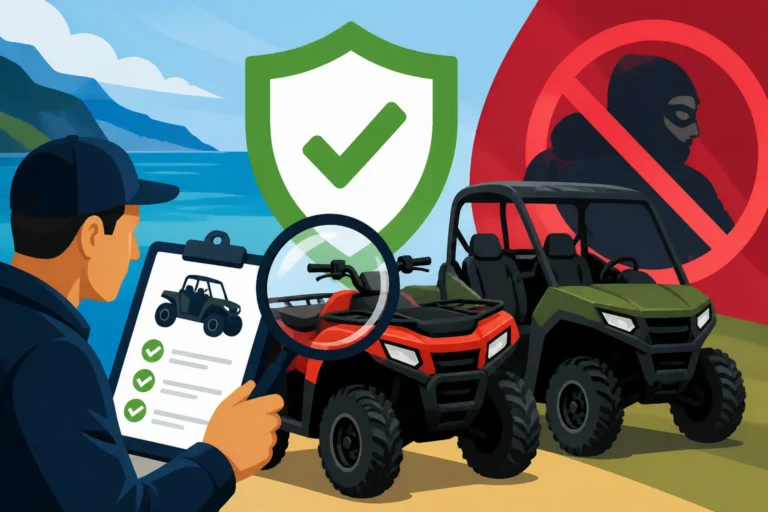
Think of your registration document as your machine's birth certificate and ongoing ID card rolled into one. On the trail, if a peace officer pulls you over for a routine check, they'll want to see proof that your machine is properly registered to you. While they can often look up the plate or VIN, having the physical document makes everything smoother and shows you're a responsible rider. It confirms you've met the provincial requirements under [Newfoundland's Off-Road Vehicles Act].
Beyond routine checks, this document is absolutely critical when it comes time to sell your machine. Without it, proving ownership can become a complicated, drawn-out affair that will likely scare off potential buyers. Imagine trying to sell a truck without its ownership papers – it's the same principle for your quad or side-by-side. It's also vital for insurance claims, proving you are the rightful owner in case of theft, or even just for your own records if you need to recall details about your machine for maintenance or upgrades. Keeping it handy means you're prepared for any eventuality, whether it's an impromptu chat with an officer or a planned transaction.
Common Ways Registration Documents Go Missing or Get Damaged
Life happens, and sometimes paperwork just doesn't survive the rugged lifestyle of an off-road vehicle enthusiast. One of the most common scenarios is simply misplacing it during a spring cleaning spree in the garage or a move. You put it somewhere "safe," only to find that "safe" place has become a Bermuda Triangle for important documents.
Another frequent culprit is the elements. That plastic baggie in the glove compartment isn't always as waterproof as you'd hope, and a sudden downpour on the trail or a forgotten pocket in wet gear can turn a crisp document into an illegible pulp. Many riders keep their papers at their cabin, and with all the comings and goings, it's easy for it to get mixed up with other cabin paperwork or accidentally tossed. Sometimes, kids playing around, or even a curious pet, can get hold of papers and leave them less than pristine. Whatever the reason, if your registration document is no longer in a usable state, you'll need a replacement.
The Step-by-Step Process for a Duplicate Registration in Newfoundland
The good news is that replacing a lost or damaged registration document in Newfoundland isn't an insurmountable task. The process is designed to be relatively straightforward, provided you have the right information and know where to go.
Who You Need to Contact and What You'll Need
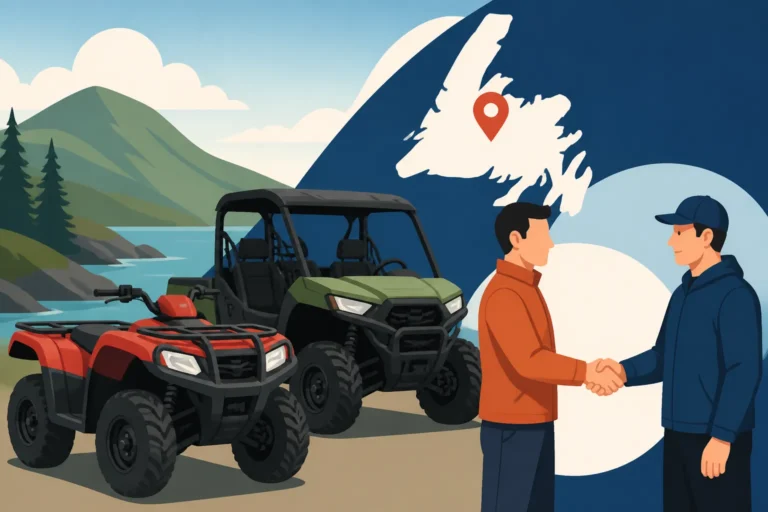
To get a duplicate registration document, your first and only stop is the Motor Registration Division of the Department of Digital Government and Service NL. They are the keepers of all vehicle registration records in the province, including off-road vehicles.
When you contact them or visit in person, you'll need to be prepared with specific information to prove you are the rightful owner and identify your machine. This typically includes your personal identification (like a valid driver's licence), and all the details pertaining to your ATV or UTV. The most crucial piece of information for your machine will be its Vehicle Identification Number (VIN). This unique 17-character code is typically stamped on the frame of your ATV or side-by-side and is how Motor Registration identifies your specific vehicle. If you happen to have a photo of your old registration document or can recall its registration number, that will also be incredibly helpful in speeding up the process. Without your personal ID and the machine's VIN, they won't be able to proceed with your request.
The Application Process: In Person or By Mail?
You have a couple of options for applying for your duplicate registration document, depending on your location and preference.
The most common method, and often the quickest, is to visit a Motor Registration Division office in person. Many people find this reassuring, as you can speak directly with a representative and clarify any questions you might have on the spot. Before you go, it's always a good idea to check if the office requires an appointment. Many government services have moved to an appointment-based system to manage traffic and ensure efficient service. You can often book an appointment online or by phone. Bringing all your required documents – your ID, the VIN, and the $25 fee – will help ensure a smooth visit. Don't forget, if you're making a special trip, confirm their operating hours before you head out. For scheduling, check the details on [Newfoundland Registration by Appointment].
If an in-person visit isn't feasible, perhaps due to distance or time constraints, you can generally apply for a duplicate registration by mail. You'll need to send a written request clearly stating that you require a duplicate off-road vehicle registration document, along with your full name, address, contact information, your driver's licence number, and most importantly, the VIN of your ATV or UTV. You'll also need to include the payment for the $25 fee. It's highly recommended to send payment by a secure method like a money order or certified cheque, rather than cash, and to make copies of everything you send for your own records. Always ensure your mailing address is current so your new document arrives without issue.
Understanding the $25 Fee
Yes, there is a fee for a duplicate registration document, but at $25, it's quite a reasonable cost for peace of mind and compliance. This fixed fee covers the administrative cost of accessing your records, printing a new document, and processing your request. It's standard across the board, whether you're replacing a document for an ATV, a snowmobile, or a side-by-side.
Payment methods typically include cash (if applying in person), debit, or credit card. If you're mailing in your request, a money order or certified cheque made out to the "Minister of Finance" is the standard practice. While it might feel like an extra expense, consider it an investment in hassle-free riding. Having your current, valid registration document can prevent potential fines or complications down the line if you're ever questioned about your machine's status. It's a small price to pay to ensure you're always operating legally and can easily prove ownership when needed.
What to Do While You Wait and Once Your Duplicate Arrives
Getting a duplicate registration document isn't an instant process, and there might be a short waiting period. Knowing what to do in the interim, and how to protect your new document once it arrives, is just as important as the application itself.
Riding Without Your Paperwork: Risks and Realities
While you're waiting for your duplicate registration to arrive, you might be tempted to head out for a quick spin. However, riding without proof of registration carries some inherent risks. The Off-Road Vehicles Act requires operators to be able to produce their registration permit when requested by a peace officer. While an officer can often verify your registration electronically, the onus is on you to prove your compliance. If you're stopped and can't provide the physical document, you might receive a warning, but you could also face a fine, depending on the officer's discretion and the specific circumstances.
If you absolutely must ride, and you've already applied for your duplicate, it's wise to carry any proof of that application, such as a receipt or a copy of your mailed request. Be polite and cooperative if you're stopped, explain the situation, and offer any information the officer requests. They will generally exercise common sense, but it’s always better to avoid putting yourself in that position. It's much safer to wait until your new document is in hand, especially for longer trips or rides in remote areas where verifying information might be more challenging for law enforcement. [What an Officer Can Ask You to Produce] goes into more detail about what to expect during a stop.
Safekeeping Your New Document
Once your duplicate registration document arrives, take a moment to celebrate the end of your paperwork woes! But don't just toss it in the nearest drawer. This is your chance to implement a better safekeeping strategy to avoid needing another duplicate down the road.
Many riders choose to laminate their registration document, or at least place it in a durable waterproof sleeve. This protects it from moisture, tears, and general wear and tear that comes with being stored on a machine or handled frequently. Consider making a digital copy – a clear photo or scan saved to your phone or cloud storage – as an extra backup. While a digital copy isn't usually accepted as official proof on its own, it can be invaluable for quickly recalling details or even showing an officer you possess the necessary information while you retrieve the physical copy. When storing the physical document, choose a location that's both secure and accessible. Many opt for a dedicated binder at home, a waterproof compartment on the machine that's not exposed to the elements, or even a zippered pouch in their riding jacket. The goal is to keep it safe from damage and loss, but also easy to retrieve when you need it.
Common Questions and Scenarios
Navigating government paperwork can sometimes feel like a maze, especially when unique situations arise. Here are answers to some common questions and scenarios you might encounter when dealing with duplicate registrations.
What if the Machine is Co-Owned or You're Not the Original Registrant?
Things can get a little more complex when the machine isn't solely in your name or if you're not the one who originally registered it. If your ATV or UTV is co-owned, meaning two or more people are listed on the registration, generally any one of the registered owners can apply for a duplicate. However, they will still need to provide their own identification and the machine's VIN. It's always a good idea for all registered owners to be aware of the process and perhaps even sign the application if submitting by mail, just to avoid any potential hiccups. For more on this, check out [Newfoundland Registration With Two Owners].
If you're dealing with a machine where the original registrant is no longer available – perhaps due to a death in the family – the process becomes a transfer of ownership, not just a duplicate. In such cases, you'd be looking at proving your legal right to the machine (e.g., through a will or affidavit) before you can get a registration in your own name, let alone a duplicate of an old one. This usually involves more paperwork than a simple duplicate request. The same applies if you bought a machine from someone who never registered it or lost their papers and you're trying to establish the first official registration in your name. For cases involving a deceased owner, refer to [Newfoundland Registration After the Owner Dies].
Related Situations: Transfer of Ownership and Lost Plates
It's important not to confuse getting a duplicate registration document with other related processes, as they each have their own specific requirements and fees.
A transfer of ownership occurs when you buy or sell a registered off-road vehicle. This isn't about getting a new copy of an existing document; it's about updating the official records to reflect the new owner. The seller must provide the buyer with the original registration permit, which the buyer then takes to Motor Registration, along with a bill of sale, to transfer the machine into their name. This process has its own fee and set of requirements. You can learn more about this in [Newfoundland Transfer of Ownership Steps].
Similarly, if you've lost your physical identification plate (the license plate for your ATV or UTV) or it's become damaged beyond recognition, that's a separate request entirely. While you might be replacing a physical item that identifies your machine, it's not the same as replacing the paper registration permit itself. Replacing a lost plate also has its own fee and process. You'll want to consult [Newfoundland Replacement Plates at $30] for those details. While both involve Motor Registration, understanding the distinction will save you time and ensure you gather the correct information and fees for your specific need.
Using Templates for Affidavits When Paperwork is Complex
Sometimes, the situation is more complicated than simply misplacing your registration. Perhaps you purchased a used machine and the previous owner genuinely can't locate the original registration document or a proper bill of sale. Or maybe the chain of ownership is unclear, and you're trying to register a machine that's been in the family for years without formal papers. In these more intricate scenarios, Motor Registration may require additional documentation, such as a sworn affidavit or an indemnity form, to prove ownership or indemnify the Registrar against future claims.
This is where resources like LawDepot can be incredibly helpful. Instead of trying to draft a legal document from scratch, which can be daunting and confusing, LawDepot provides user-friendly templates for various legal forms, including affidavits and bills of sale. You can customize these templates with your specific details, ensuring that the language is legally sound and covers all the necessary points. For instance, if you're asked for a [Newfoundland Sworn Affidavits and Indemnity Forms] to clarify ownership when an original bill of sale is missing, LawDepot could provide a starting point. While you'll still need to have an affidavit sworn before a Commissioner of Oaths or a Notary Public, having a professionally structured template makes the initial drafting process much simpler and more accurate, helping you fulfill the requirements of Motor Registration with greater ease.
Remember, the goal is always to provide clear, undeniable proof of ownership and the machine's identity. Using reliable resources for legal templates can bridge gaps in your paperwork and help you navigate these more challenging situations effectively, allowing you to eventually get your machine officially registered and hit the trails without worry.
| Document Type | Purpose | Fee (Approx.) |
|---|---|---|
| Duplicate Registration | Replace lost/damaged registration permit | $25 |
| Replacement Plate | Replace lost/damaged ID plate | $30 |
| Transfer of Ownership | Change ownership of a registered machine | See Act |
Disclaimer
This article is for general informational purposes only and does not constitute professional advice. Laws, prices and regulations vary by location and change over time. Consult a qualified professional for guidance on your specific situation.