Newfoundland Registration Compared to Nova Scotia
Riding an ATV or UTV in Atlantic Canada brings a special kind of freedom, but figuring out the rules can feel like trying to navigate a bog after a heavy rain. If you've spent any time riding in Newfoundland and Labrador, and then find yourself looking at the rules for Nova Scotia, or vice versa, you've probably noticed they're quite different. It's not just a minor tweak here or there; the entire philosophy behind registering these machines varies wildly. This guide is here to untangle the often-confusing threads of off-road vehicle registration, specifically comparing what you need to do in Newfoundland versus Nova Scotia, so you can ride legally and confidently.
Understanding the Core Philosophy: Perpetual Versus Annual Registration
One of the biggest headaches for riders who move between provinces, or who own machines in different jurisdictions, is the fundamental difference in how registration works. It’s not just a matter of different forms; it's a completely different way of thinking about how your machine is tracked and acknowledged by the provincial government. This difference can easily catch even seasoned riders off guard.
Newfoundland's "Register Once, Own Forever" Approach
In Newfoundland and Labrador, the system for off-road vehicle registration is pretty unique, especially when you compare it to most other places. Here, when you register your ATV, UTV, or snowmobile, you pay a one-time fee, and that registration is valid for as long as you own the machine. It sounds almost too good to be true, doesn't it? No annual renewal notices cluttering your mailbox, no scrambling to get it done before a deadline, no worry about your registration lapsing if you forget. This perpetual registration is a huge relief for many riders who appreciate the simplicity and the long-term cost savings.
The province introduced this system, or rather solidified it under the [Newfoundland's Off-Road Vehicles Act], which came into force in May 2022. Before that, there might have been some confusion, but now it's clear: you pay once, get your plate, and you're good to go as long as the machine is in your name. This means that once you've gone through the initial hassle of getting all your [Newfoundland Registration Paperwork Explained] in order, you can essentially forget about it until you decide to sell the machine. This is a deliberate choice by the province to simplify things for riders and acknowledge that these machines often have a long life with a single owner, especially those used primarily at cabins or for specific purposes. It really simplifies things for owners of machines that might not see daily or even weekly use, eliminating the stress of remembering an annual renewal for a machine that mostly sits waiting for the perfect weather or hunting season.
Nova Scotia's Yearly Renewal Cycle
Now, cross the Cabot Strait to Nova Scotia, and you're in a completely different world when it comes to registration. Here, off-road vehicles—everything from your quad to your side-by-side—operate on an annual renewal system, much like regular road vehicles. This means every single year, you'll need to re-register your machine and pay a fee to keep it legal to ride on designated trails and public lands. This recurring commitment can be a bit of a shock if you're used to Newfoundland's one-and-done approach.
The annual renewal often comes with a sticker or decal that you need to display prominently on your machine. This sticker acts as immediate visual proof to enforcement officers that your registration is current. For many Nova Scotia riders, this means adding a task to their yearly calendar, alongside vehicle inspections and other administrative duties. It's a system designed for consistent revenue generation and to ensure that the registry has up-to-date contact information for all machine owners. While it provides a clear cut-off for expired registrations, it does add an extra layer of responsibility and cost for owners compared to Newfoundland's model. Missing a renewal can lead to fines, so keeping track of your expiry date is crucial. This is particularly important for riders who might store their machines for long periods, only bringing them out seasonally, as the renewal still applies even if the machine isn't actively being ridden.
Diving Into the Wallet: Costs and Fees Comparison
When it comes to the financial side of registration, the differences between Newfoundland and Nova Scotia become even more apparent. It's not just the amount you pay, but how often you pay it that fundamentally changes the long-term cost of owning an off-road vehicle in each province. Understanding these structures is crucial for budgeting, especially if you're considering buying a machine or moving between these provinces.
Newfoundland's Upfront Investment
In Newfoundland, the initial registration fee is a one-time payment. For example, [Newfoundland Charges $95 for an ATV], and side-by-sides fall into a similar range. Trail bikes are considerably less at [Newfoundland Charges $5 for a Trail Bike]. While that initial outlay might seem a bit higher than an annual fee elsewhere, remember, you don't pay it again. Ever. This structure makes the long-term cost of ownership quite predictable from a registration standpoint. There are no surprise renewal increases, no forgotten deadlines leading to late fees.
This "pay once" model means that over the lifespan of a machine, the cumulative cost of registration in Newfoundland is often significantly lower than in provinces with annual renewals. It's a substantial benefit for long-term owners. This upfront cost also includes the issuance of your permanent identification plate. The province aims to recover the administrative costs of registration and plate issuance at the point of initial ownership, rather than through recurring fees. It's also worth noting that specific machines, like snow groomers, have their own distinct, very low registration fees, further highlighting the tailored approach the province takes. [Newfoundland Charges $10 for a Snow Groomer] is a good example of this kind of machine-specific, low, one-time fee.
Nova Scotia's Recurring Expenses
Nova Scotia, on the other hand, operates on an annual fee basis. While the specific figures can change, you can expect to pay a set amount each year to keep your registration current. This isn't a one-and-done deal; it's a recurring expense you need to factor into your yearly budget for owning and operating your ATV or UTV. These fees contribute to the administration of the off-road vehicle program, including trail maintenance, enforcement, and public safety initiatives.
Over time, these annual fees can add up, making the cumulative cost of registration higher than in Newfoundland, especially for machines kept for many years. It's important to check the current rates directly with Service Nova Scotia or the relevant provincial government website, as these figures are subject to change. The benefit of this system for the province is a steady revenue stream that can be allocated to various programs supporting off-road vehicle use and safety. For the rider, it means a continuous responsibility to renew and pay to stay legal. This is a system that demands more vigilance from the owner, reminding them regularly of their obligations through the annual renewal process.
Differences in Transfer Fees
The cost implications don't stop at initial registration. When you buy or sell a machine, the transfer of ownership also has its own fee structure, and here too, Newfoundland and Nova Scotia diverge.
In Newfoundland, when you transfer ownership of an off-road vehicle, there's a specific fee involved, usually a modest amount. For instance, [What It Costs to Transfer Ownership of a Quad] is a standard fee. However, the province also offers reduced rates for certain situations, like [Newfoundland Transfers Cost $16 for Seniors]. Even more notably, a transfer that occurs after the death of an owner often incurs no fee at all, which can be a small but welcome relief during a difficult time. [Newfoundland Transfers on Death Cost Nothing] underscores this empathetic approach. For all transfers, sellers typically need to provide a bill of sale, and buyers need to present this along with their identification to the Motor Registration Division. Websites like LawDepot can be incredibly helpful for creating a legally sound bill of sale, ensuring all parties are protected and the transfer goes smoothly.
Nova Scotia also has fees associated with transferring ownership, and like its registration fees, these figures are subject to change. The process typically involves both the buyer and seller completing specific sections of the registration certificate or a separate transfer document. The buyer then submits this to the provincial registry, often paying a transfer fee and then the prorated annual registration fee for the remainder of the year. This ensures that the new owner is immediately brought into the annual renewal cycle. While the initial transfer fee might be comparable, the subsequent annual renewal costs quickly differentiate the two provincial systems. It's always best to verify the latest fees and required documentation directly with Nova Scotia's registry to avoid any surprises.
The Paper Trail: Documentation for Registration and Transfer
The actual paperwork you need to gather and present for registration and transfer is another area where riders can get tripped up when moving between Newfoundland and Nova Scotia. While both provinces require proof of ownership and identity, the specific documents and the emphasis on their submission can differ significantly. Understanding these nuances is key to avoiding multiple trips to the registry office.
What Newfoundland Asks For
For an initial registration in Newfoundland, especially for a brand-new machine, you'll need the New Vehicle Information Statement (NVIS) from the dealer. This document is crucial as it proves the machine has never been registered before and outlines its specifications. If you're buying a used machine, the requirements pivot to establishing a clear chain of ownership. This typically means you'll need a [Newfoundland Bills of Sale From Each Owner] leading up to your purchase. This can sometimes be a challenge if a machine has changed hands multiple times without proper documentation at each step.
If the chain of ownership isn't perfectly clear, or if you're buying a machine with missing paperwork, Newfoundland's Motor Registration Division often requires additional steps. This can include a [Newfoundland Sworn Affidavits and Indemnity Forms]. These forms are a legal declaration that you are the rightful owner and you indemnify the province against any future claims of ownership. It's a serious document, and preparing it correctly is essential. Utilizing resources like LawDepot to draft these affidavits or a comprehensive bill of sale can provide peace of mind and ensure you're meeting all legal requirements. The province wants to ensure that every machine on its trails is properly accounted for, and that means a thorough paper trail from the manufacturer to the current owner.
What Nova Scotia Expects
In Nova Scotia, similar to Newfoundland, proof of ownership is paramount for registration and transfer. For new machines, you'll typically need the New Vehicle Information Statement (NVIS) from the dealer. For used machines, the bill of sale is critical, along with the previous owner's signed registration certificate. The Nova Scotia registry looks for a clear, unbroken line of ownership, and any gaps can cause delays.
When transferring ownership in Nova Scotia, the seller needs to complete the transfer section of their existing registration certificate and provide it to the buyer. This, combined with a bill of sale, forms the core of the documentation. The buyer then takes these documents to the registry. While Nova Scotia might not always require the same level of complex affidavits as Newfoundland for minor paperwork discrepancies, having a robust bill of sale is always advisable. A professionally drafted bill of sale, easily obtainable through services like LawDepot, can protect both parties by clearly outlining the terms of the sale, the condition of the machine, and any warranties (or lack thereof). This kind of clear documentation helps streamline the transfer process and ensures that the new owner can register the machine without undue complications.
Plates, Stickers, and Proof of Ownership: What You Display
Beyond the paperwork, how you physically identify your off-road vehicle as registered also varies significantly between the two provinces. One uses a more permanent fixture, while the other relies on a regularly updated visual cue. This difference can impact everything from how you maintain your machine to what an enforcement officer will look for on the trail.
Newfoundland's Permanent Plate System
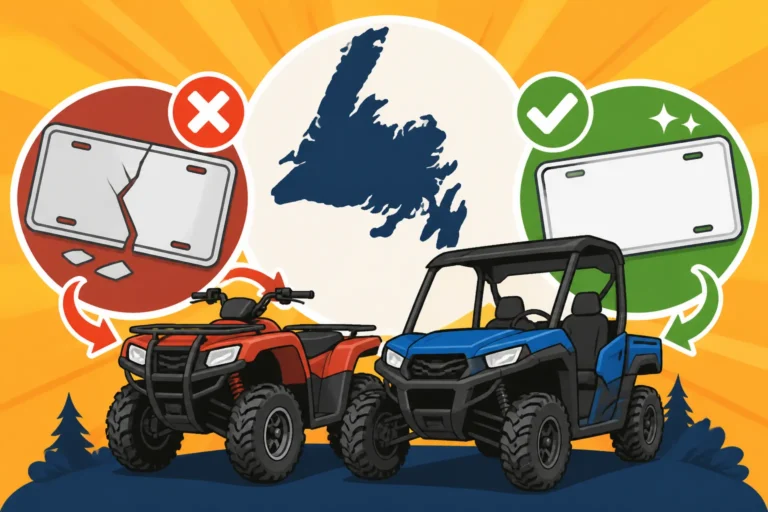
Once your off-road vehicle is registered in Newfoundland, you are issued a permanent identification plate. This plate is typically made of metal and is designed to last the lifetime of the machine under your ownership. You're expected to mount this plate securely on the rear of your machine, ensuring it's clearly visible. [Newfoundland Plates Kept Free of Mud] and [Newfoundland Plates Unobstructed by Cargo] are not just suggestions; they're legal requirements. The idea is that this plate is your machine's unique identifier, much like a licence plate on a car, and it never changes as long as you own the machine.
The permanency of the plate means there are no annual stickers or decals to worry about. This reduces administrative burden for both the owner and the province. However, if your plate is lost, stolen, or damaged, you will need to apply for a replacement. [Newfoundland Replacement Plates at $30] is a fee to consider if you find yourself in this situation. The focus in Newfoundland is on the consistent, long-term identification of the machine, relying on the single registration event and the durable plate to serve as proof. This system also means that enforcement officers are looking for that specific plate, rather than an annual sticker, to verify registration status on the trails.
Nova Scotia's Annual Decal Approach
In Nova Scotia, the system is quite different. While you'll receive a registration certificate, the primary visual proof of current registration is an annual decal or sticker. This sticker is typically brightly coloured and carries the expiry date, making it easy for enforcement officers to quickly see if your machine is legally registered for the current year. You're required to affix this decal in a visible location on your ATV or UTV, often on the front or rear fender, or another prominent spot as specified by the regulations.
This annual decal system ties directly into Nova Scotia's yearly renewal cycle. Each time you renew your registration, you'll receive a new sticker to replace the old one. This provides immediate, current visual verification of registration and helps enforcement identify machines with expired registrations quickly. It also means that if you're buying a used machine, you'll want to ensure the current decal is valid, and then plan to renew it yourself before its expiry. The reliance on a yearly sticker contrasts sharply with Newfoundland's permanent plate, requiring riders in Nova Scotia to be more diligent about updating the visual proof of their registration each year.
Proof of Ownership Across Both Provinces
Regardless of whether you're dealing with a permanent plate or an annual decal, carrying proof of ownership and registration when you're riding is critical in both provinces. This usually means having your registration certificate readily available. An officer can ask you to produce this documentation at any time.
In Newfoundland, even though your plate is permanent, having your [Newfoundland Registration Valid While You Own It] doesn't mean you can leave your papers at home. You should always carry your current registration permit with you. This document details your machine, its unique identification number, and confirms you are the registered owner. In Nova Scotia, you'll carry your current registration certificate, which will correspond to the annual decal on your machine. For both provinces, having these documents, along with valid personal identification, is vital for roadside checks or in the event of an incident. Some riders choose to keep digital copies on their phones, but it's always wise to have a physical copy too, especially in areas with no cell service.
Here's a quick comparison of the key registration differences:
| Feature | Newfoundland and Labrador | Nova Scotia |
|---|---|---|
| Registration Term | Perpetual (one-time fee, valid as long as you own it) | Annual (requires yearly renewal) |
| Primary Visual Proof | Permanent metal identification plate (rear mounted) | Annual decal/sticker (visible, often front/rear fender) |
| Initial ATV Fee | Around $95 (one-time) | Varies annually, recurring |
| Initial Trail Bike Fee | Around $5 (one-time) | Varies annually, recurring |
| Annual Renewal | Not required | Required yearly |
| Transfer of Ownership | Fee applies (e.g., [What It Costs to Transfer Ownership of a Quad]), some exemptions (e.g., death) | Fee applies, often includes prorated annual registration |
| Key Documentation | NVIS (new), Bill of Sale (used), [Newfoundland Sworn Affidavits and Indemnity Forms] (if needed) | NVIS (new), Bill of Sale (used), previous owner's signed registration |
| Online Resources | MyGovNL for services, LawDepot for forms | Service Nova Scotia for services, LawDepot for forms |
When you're dealing with off-road vehicles in Atlantic Canada, it's clear that the rules aren't universal. Newfoundland offers a uniquely simple, long-term approach to registration with its one-time fee and permanent plate. Nova Scotia, on the other hand, opts for an annual renewal system with yearly decals and recurring fees. Neither system is inherently "better" or "worse," but they are profoundly different. As a rider, whether you're a local or a visitor, knowing these distinctions is absolutely essential to ensure you're always riding legally and responsibly, no matter which beautiful province's trails you're enjoying.
Disclaimer
This article is for general informational purposes only and does not constitute professional advice. Laws, prices and regulations vary by location and change over time. Consult a qualified professional for guidance on your specific situation.