Newfoundland Registration Questions Staff Hear
Navigating the world of off-road vehicle registration in Newfoundland and Labrador can sometimes feel like trying to find your way through a thick fog on the barrens. You’ve probably heard stories, or maybe even experienced the frustration yourself, of waiting in line only to realize you’re missing a crucial piece of paper or didn’t understand a specific rule. This guide is here to clear up that confusion, addressing the most common questions and tricky situations that Motor Registration staff hear every single day, so you can ride off into the sunset without a hitch.
The Basics: Why, What, and How Often?
Before we dive into the nitty-gritty of paperwork, let's tackle the fundamental questions that often get folks scratching their heads. Understanding these foundational elements can save you a lot of grief and a second trip to the registry.
Why Do I Even Need to Register My Machine?
It's a question many new or even seasoned riders ponder, especially if they're used to other provinces where rules might differ. In Newfoundland and Labrador, registering your off-road vehicle (ORV) isn't just a suggestion; it's a legal requirement under [Newfoundland's Off-Road Vehicles Act]. This isn't about collecting fees for the sake of it, but rather about accountability, safety, and ensuring that machines operating on Crown land, managed trails, or even briefly on public roadways are identifiable. Think of it like a driver's licence for your quad or side-by-side – it legitimizes your machine's presence and helps manage the vast network of trails and wilderness we all enjoy.
Without registration, you could face fines, or worse, have your machine seized by enforcement officers. It's a simple step that ensures you're a responsible part of the riding community. Plus, having a registered machine makes things much smoother if you ever need to make an insurance claim or report it stolen.
What Exactly Am I Registering?
The term "off-road vehicle" covers quite a bit of ground in our province. It's not just your standard quad. When you head to Motor Registration, they're looking to register a variety of machines, including all-terrain vehicles (ATVs), side-by-sides (UTVs), snowmobiles, dirt bikes, and even some amphibious machines or dune buggies. Each of these might fall into a specific class with its own set of rules and, in some cases, a different fee structure.
It's crucial to be clear about what kind of machine you have, as this dictates the correct paperwork and the applicable fees. For instance, [Newfoundland Side-by-Sides Added in 2022] specifically to the Act, acknowledging their growing popularity and ensuring they're properly categorized. Don't assume that just because it has four wheels and an engine, it's treated the same as every other ORV. If you're unsure, it's always best to check the provincial guidelines or call Motor Registration beforehand.
Does My Registration Ever Expire?
This is one of the most common and often surprising questions staff hear, and for good reason! Many people are used to annual renewals for car registrations or other permits. However, in Newfoundland and Labrador, once you register your off-road vehicle, that registration is generally valid for as long as you own the machine. That's right – there are no annual renewal fees or expiry dates to worry about. This is a huge benefit for riders, eliminating the hassle and cost of yearly re-registration.
This "one and done" approach is a distinctive feature of the province's ORV regulations. So, you pay the initial [Newfoundland ORV Registration Cost] once, and as long as the machine stays in your name, you're good to go. This doesn't mean you're off the hook for other rules, like having a trail sticker for managed trails, but the core provincial registration for ownership remains valid. It's a question that often brings a sigh of relief when explained!
Common Paperwork Puzzles
Paperwork can be the biggest headache, especially when you're excited to hit the trails. Knowing exactly what to bring, and what to do if something is missing, can save you a world of frustration.
What Documents Do I Absolutely Need to Bring?
This is where many people get tripped up. Imagine showing up at the Motor Registration office, having taken time off work, only to be told you're missing a critical piece of the puzzle. To avoid this, you'll generally need:
- Proof of Ownership: This is paramount. For a brand-new machine, you'll need the New Vehicle Information Statement (NVIS) from the dealer. If you're buying a used machine, you'll need a bill of sale that clearly identifies the machine (including its VIN) and both the buyer and seller. Remember, [Newfoundland Registration Paperwork Explained] clarifies that every prior owner in the chain of sales needs to be accounted for, so ensure your bill of sale is robust.
- Proof of Identity: Your valid driver's licence or other government-issued photo ID is essential. They need to verify who you are and that you’re legally able to register a vehicle.
- Proof of Address: Sometimes they'll ask for something like a utility bill to confirm your current residence.
- The Machine's Information: This includes the Vehicle Identification Number (VIN), make, model, and year. It's always a good idea to have a clear photograph of the VIN plate or stamp on your machine, just in case.
It's a good practice to double-check the Motor Registration website or call ahead for the most current list of required documents, especially if your situation is unusual. Getting everything in order before you go will make the process much smoother.
What if I Don't Have a Bill of Sale or the Paperwork is Missing?
This is a really common scenario, particularly with older, privately sold machines that have changed hands multiple times. Sometimes, a previous owner might have lost the bill of sale, or perhaps a machine was inherited without proper transfer documents. It can feel like a dead end, but thankfully, there are processes in place to help.
If you find yourself without a formal bill of sale, or if the chain of ownership is broken, you'll likely be asked to complete a sworn affidavit and possibly an indemnity form. An affidavit is a sworn statement, made under oath, detailing how you came to possess the machine and why you don't have the standard documentation. The indemnity form essentially holds the government harmless should a rightful owner appear later. This process can be a bit more involved and might require a visit to a Commissioner of Oaths or a lawyer to get the affidavit properly witnessed. For these situations, online resources like LawDepot can be incredibly useful, offering templates and guidance for drafting legal documents such as bills of sale or affidavits, which can then be tailored to your specific situation and witnessed accordingly. It ensures that even with missing paperwork, you can eventually get your ORV legally registered. You can find more details on [Newfoundland Sworn Affidavits and Indemnity Forms].
How Does a Transfer of Ownership Work?
Selling or buying a registered ORV in Newfoundland and Labrador involves a specific transfer process that ensures the new owner is officially recorded. This is critical because [Newfoundland Registration Valid While You Own It], meaning the registration essentially follows the owner, not just the machine.
When you sell your machine, you, as the seller, are required to notify Motor Registration within 10 days of the sale. You'll typically complete a Transfer of Ownership form (often found on the back of the original registration permit) and provide it to the new owner, keeping a copy for your records. The new owner then takes this, along with their bill of sale and ID, to Motor Registration to get the machine registered in their name. There's a fee associated with transfers, and it’s important for both parties to ensure the process is followed correctly to avoid any lingering liability for the seller or ownership issues for the buyer.
A common scenario that comes up is when a machine is inherited after an owner passes away. In these cases, the transfer process is slightly different, often requiring a copy of the death certificate and proof of executorship or administration of the estate. The good news is that [Newfoundland Transfers on Death Cost Nothing], which can be a small relief during a difficult time. Getting the transfer done promptly is key for everyone involved.
Specific Scenarios and Special Cases
Life isn't always straightforward, and neither are all registration situations. Motor Registration staff frequently field questions about unique circumstances.
What About Senior Rates or Special Exemptions?
Many provinces offer breaks for seniors, and Newfoundland and Labrador is no exception when it comes to ORV registration. For eligible seniors, there's a reduced rate available for registering an ATV. This is a fantastic initiative to help make the sport more accessible for those in their later years, acknowledging that many seniors continue to be active riders and enjoy the outdoors.
It's important to confirm the exact age requirements and documentation needed to qualify for these [Newfoundland Senior Registration Rates]. Generally, you'll need to present valid identification proving your age at the time of registration. This discount specifically applies to the initial registration fee for certain types of machines, like ATVs. Always ask about any specific exemptions or reduced rates that might apply to you, as they can represent a significant saving.
I Just Moved Here – Do I Need to Re-Register My Out-of-Province Machine?
Welcome to Newfoundland! It's an exciting time, but moving means new rules, and ORV registration is one of them. If you've brought your ATV, side-by-side, or snowmobile with you from another province or territory, you have a grace period before you're required to register it in Newfoundland and Labrador. Specifically, [Newfoundland's 90-Day New Resident Rule] gives you a generous window to get settled and take care of the paperwork.
After those 90 days, your machine must be registered in the province if you intend to operate it here. This involves going through the standard registration process, presenting your out-of-province registration, proof of ownership, and personal identification. It ensures that all ORVs operating long-term within the province are accounted for under local regulations. Don't put this off, as riding unregistered after the 90-day window could lead to penalties. If you need a proper bill of sale for your machine to complete this, LawDepot can offer useful templates for such transactions.
What if I Lose My Plate or Registration Document?
It happens to the best of us. A bump on a rough trail, a forgotten pocket, or a busy day moving things around – and suddenly, your identification plate or your registration document is nowhere to be found. Don't panic; Motor Registration has a process for this, too.
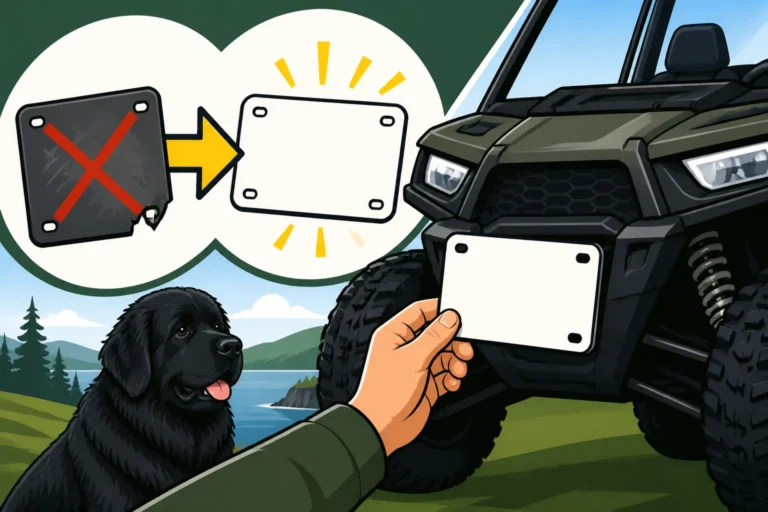
If you lose your ORV's identification plate (the physical plate you attach to your machine), you can apply for a replacement. There's a [Newfoundland Replacement Plates at $30] to cover the cost of manufacturing and issuing a new one. Similarly, if you misplace your actual registration permit document, you can request a duplicate. [Newfoundland Duplicate Registrations at $25] means a modest fee for a new copy. In both cases, you'll need to provide your personal identification and details about your machine to ensure you're the rightful owner requesting the replacement. It's a fairly straightforward process designed to get you back on the trail legally and with all your necessary documentation in order.
Costs and Fees Beyond the Initial Registration
While the "pay once, own forever" model for ORV registration in Newfoundland is fantastic, there are still various fees associated with different types of machines and services. It's not just a single, universal cost.
Understanding the Different Registration Fees
The initial registration fee isn't a one-size-fits-all number. It varies depending on the type of off-road vehicle you're registering. This categorization helps to reflect the different impacts and uses of various machines. For example, [Newfoundland Charges $95 for an ATV], which is the most common off-road vehicle in the province. However, if you're registering a trail bike, you'll find that [Newfoundland Charges $5 for a Trail Bike], a significantly lower amount. Snow groomers, often used by trail groups, also have their own specific, typically nominal, fee structure.
These different fees mean it's crucial to correctly identify your machine's classification when you go to register it. Misclassifying could lead to paying the wrong amount or, worse, having to correct your registration later. These fees are typically one-time payments for the initial registration, as explained earlier, covering your machine for as long as you own it.
What Are the Costs for Transfers and Duplicates?
Beyond the initial registration, there are specific fees for various administrative tasks. When you transfer ownership of an ORV, for instance, there's a fee involved for the new owner to register it in their name. This helps cover the administrative cost of updating the provincial records. [What It Costs to Transfer Ownership of a Quad] is a common query, and it's a separate fee from the initial registration.
| Service Type | Typical Cost Shape | Who Pays (Generally) | Key Documents Needed |
|---|---|---|---|
| New ATV Registration | Standard Fee | Buyer | NVIS / Bill of Sale, ID |
| New Trail Bike Reg. | Nominal Fee | Buyer | NVIS / Bill of Sale, ID |
| Transfer of Ownership | Set Fee | New Buyer | Signed Transfer Form / Bill of Sale, ID |
| Senior ATV Registration | Reduced Rate | Senior Buyer | NVIS / Bill of Sale, ID, Proof of Age |
| Transfer After Death | No Fee | Estate/Beneficiary | Death Certificate, Proof of Executorship, ID |
| Duplicate Registration | Modest Charge | Owner | ID, Machine Details |
| Replacement Plate | Fixed Fee | Owner | ID, Machine Details |
Note: Specific fees are not listed here but are described by their 'cost shape.' Always check current rates with Motor Registration.
Just like the initial registration, these fees are put in place to manage the administrative burden of maintaining accurate records for thousands of off-road vehicles across the province. For seniors, there are often reduced rates even for transfers, as [Newfoundland Transfers Cost $16 for Seniors] is a common reference. Knowing these different charges upfront can help you budget and avoid any surprises when you're at the counter. Having access to templates from providers like LawDepot can help you generate comprehensive bills of sale that clearly detail any agreed-upon transfer costs, ensuring transparency between buyer and seller.
Disclaimer
This article is for general informational purposes only and does not constitute professional advice. Laws, prices and regulations vary by location and change over time. Consult a qualified professional for guidance on your specific situation.