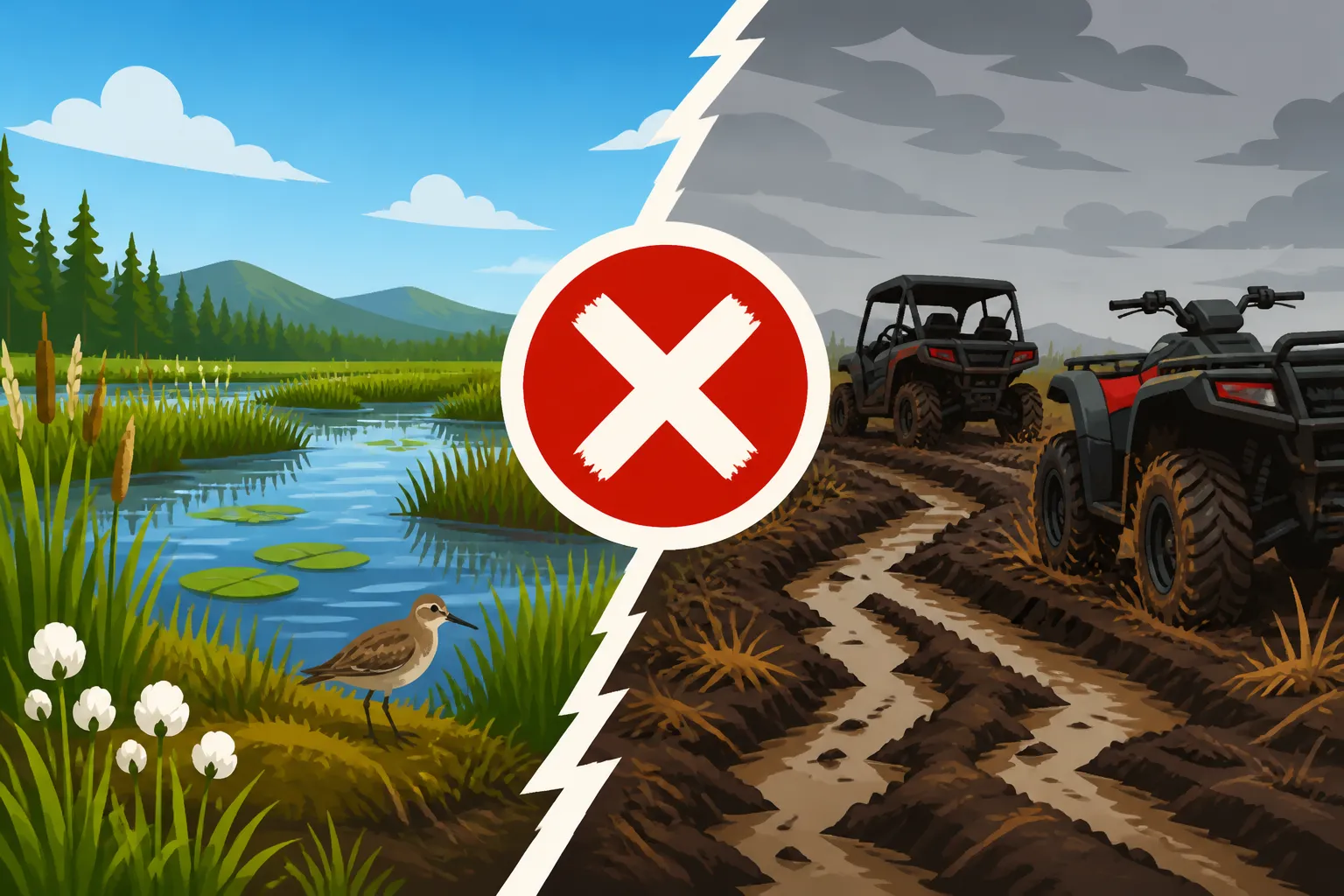
Wetland Damage That Cannot Be Undone
A Newfoundland bog can look like a wide-open shortcut, but its moss, peat and shallow water may be supporting a landscape that takes a very long time to recover from damage. One ATV pass can deepen into a rut that channels water and draws in more riders. This guide explains how wetland damage happens, how to avoid it, and what to do when a route looks unsafe.
Why Newfoundland wetlands are so vulnerable
Peat, moss and water work together
Many Newfoundland wetlands are not simply muddy patches that dry out after a sunny day. In bogs and other peatlands, layers of partly decomposed plants hold water and build up slowly. Mosses, sedges and other low-growing plants help cover and stabilize the surface. The ground may appear firm, especially in dry weather, while remaining saturated underneath.
That combination makes wetlands vulnerable to the weight and turning force of an ATV or UTV. A tire can press through the vegetation and compress wet peat. Once the protective surface is broken, water can collect in the depression, and the exposed soil becomes easier to displace on the next pass. What looks like one shallow track can become a recurring rut.
The damage may be hard to see from a distance. A patch of flattened vegetation can seem minor beside a broad stretch of bog, but the affected area can expand as riders follow the same line or try to steer around a soft spot. Newfoundland Wetland Protection Rules offer useful context on why these landscapes need care, while Newfoundland Bog and Machines looks more closely at the challenges of riding in bog terrain.
Why a rut can keep getting worse
A rut changes more than the appearance of the ground. It can redirect surface water, hold water in a new place, or drain it away from vegetation that depends on the original wet conditions. The exact effect depends on the site, but broken peat and disturbed plant cover are not easy to put back as they were.
Repeated traffic is a major part of the problem. One rider may make a narrow impression; the next sees an established line and follows it. If the first route becomes difficult, later riders may widen it by going around the mud. That creates multiple tracks through the same sensitive area instead of one small disturbance.
This is why “I’ll just go around” can make things worse. A dry-looking edge may be part of the same wetland, and a detour can crush vegetation that has not yet been disturbed. Newfoundland Trail Damage and Bog Ruts explains how rutting can develop into a larger trail problem.
Recovery is slow and uncertain
Wetland recovery is not as simple as waiting for grass to grow back. Peat forms gradually, and a tire-damaged surface may have lost vegetation, structure and its natural pattern of water movement. Some plants may recolonize disturbed ground, but that does not mean the peat has returned to its former condition or that the original habitat has been restored.
The time and outcome vary by location, severity and weather. A light mark on a resilient surface is different from a deep rut through saturated peat. It is safest not to assume that a damaged area will heal quickly—or that a rider can repair it by filling the rut with loose soil, branches or rocks. Unplanned repairs can change drainage or cause further damage.
| What you see | Why it matters | Safer response |
|---|---|---|
| Water sitting in a tire rut | The rut may be holding or redirecting water | Do not ride through it or widen it |
| Flattened moss or vegetation | The protective surface may be damaged | Stay off the affected patch and report it if appropriate |
| Several parallel tracks around mud | Riders may be expanding the disturbed area | Do not add another bypass line |
| A trail edge that looks soft or spongy | The surface may be saturated below the top layer | Turn back before entering it |
| Fresh closure signs or blocked access | The route may be restricted for safety or protection | Respect the closure and choose another route |
How to avoid causing wetland damage
Plan the route before unloading
A little planning can prevent the frustrating moment when a group reaches a boggy section and has to decide what to do on the spot. Before heading out, check whether the route is permitted and whether there are current closures or restrictions. Do not treat an old track on a map—or tire marks on the ground—as proof that riding there is allowed.
Use the provincial information and signs available for the area. Finding Approved Areas on the Provincial Map is a useful starting point, and Reading the Signs That Mark an Approved Area can help riders interpret what they encounter on the ground. A mapping app such as onX Offroad may help you organize a planned route and keep track of where you intend to travel, but it should not replace official access information, posted signs or local direction.
Before leaving, tell someone where you plan to ride and choose a route with a clear way to turn back. That matters especially on open barrens, where a wet patch or an unexpected trail closure can make a planned loop impractical. If you are riding with a group, agree in advance that no one will pressure another rider to cross a questionable wetland simply to keep the schedule.
Read the surface, not just the tire tracks
Existing tracks can be misleading. They may be old, unauthorized, or evidence of damage rather than a recommended line. Look for the condition of the ground itself: shiny or standing water, spongy footing, exposed peat, broken vegetation and deep impressions all suggest that the surface may not support safe, low-impact travel.
Pay attention to changes in weather. Heavy rain can soften trail edges and turn a firm-looking route into a fragile one. After a wet spell, give questionable areas extra space rather than testing them with the front tires. Newfoundland Riding After Heavy Rain covers the kind of conditions that should prompt a more cautious ride, and Newfoundland Trail Closures After a Storm is relevant when weather has affected access.
Slow down when visibility is poor or the surface is unfamiliar. At speed, it is harder to notice a narrow rut, a washed-out edge or a small wetland crossing before the machine is already on it. A passenger or riding partner may see conditions differently from the driver, so stop and discuss a questionable stretch before committing.
Turn around before the ground gives way
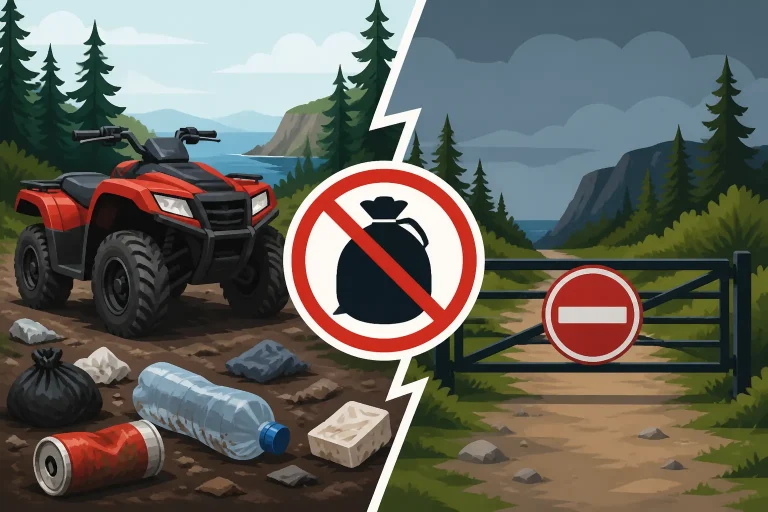
If the route ahead is soft, flooded or visibly damaged, stop on stable ground. Do not drive onto the wet section to “see how deep it is.” A quick test can become a stuck machine, a widened rut and a difficult recovery that tears up even more vegetation.
If you are already on a fragile surface, avoid abrupt turns, wheel spin and repeated attempts to climb out of the same rut. Spinning tires can strip vegetation and move peat. A recovery attempt that drags a machine across the wetland may do more harm than leaving the machine in place briefly while you make a careful plan.
Sometimes the best riding decision is to turn around, even if it means retracing a long stretch. It is aggravating to abandon a route after loading the machine, driving to a trailhead and coordinating a group. But that inconvenience is smaller than creating a damaged track that other riders may follow for years. Keep an alternative route in mind, and use a tool such as onX Offroad to note planned options without treating any app route as permission to cross sensitive ground.
What to do when you find damaged or unsafe ground
Do not make a new bypass
When a rut blocks the usual line, the instinct is often to skirt the edge. That may feel like the gentlest choice in the moment, but it can create a second track across undisturbed vegetation. If other riders repeat the move, the bypass can become a broad scar.
Instead, stop where the ground is stable and assess whether the route can be safely and legally retraced. If it cannot, do not force the machine through or ask the rest of the group to follow. A damaged section may need attention from the people responsible for managing the route, not a series of improvised rider repairs.
Avoid tossing branches, rocks or soil into a rut. Those materials can hide a hazard without restoring the surface, and they may interfere with drainage or create a new obstacle. Unless you are following direction from the relevant land manager or trail operator, leave the site undisturbed and report what you observed.
Share useful information with the right people
A clear report can help a trail operator or land manager understand what has changed. Note the general location, the route you were on, the condition you saw and whether signs or barriers were present. If you can take a photo safely from stable ground without riding closer to the damaged spot, that may help explain the issue.
Use established contact channels for the area rather than assuming every route has the same manager. [Newfoundland Crown Land Access Rules] can help riders understand why land status and access matter, but specific responsibility may vary by location. If signs identify a trail operator or provide a contact method, follow that information.
When using onX Offroad or another mapping app for your own ride notes, keep the distinction clear between a useful location record and official reporting. A pin or saved track can help you describe where you turned back, but it does not establish that the area is approved for riding or that a closure has been lifted.
Respect habitat restrictions beyond the rut itself
Wetland care also means noticing the wider landscape. A route can pass near sensitive habitat even when the trail surface itself looks solid. Wildlife movement, seasonal conditions and posted restrictions may affect where riders can travel. Do not leave an established permitted route to approach animals, explore a tempting-looking side track or get a closer view of a wetland.
Caribou and other wildlife need room to move and use habitat without repeated disturbance. Before riding in an area where restrictions may apply, check the relevant guidance and signs. Newfoundland Caribou Migration Protection provides related context for riders planning trips through sensitive areas.
The same care applies when you see a new track leading away from the main route. It may look like a shortcut to a scenic spot, but an unofficial path can cross habitat or wet ground that is not suitable for vehicles. If you are unsure whether access is permitted, stay on the clearly designated route and ask the relevant trail operator or land manager.
A practical wetland-safe riding routine
Before the ride
Build a simple check into your usual preparation rather than relying on memory at the trailhead. Confirm that your route is open and permitted, look for weather-related changes, and make sure everyone in the group understands that turning around is an acceptable decision. If one rider is unfamiliar with local wetland conditions, explain why a firm-looking surface may still be fragile.
Carry a map or a dependable way to review your planned route, but treat navigation tools as aids rather than authority. onX Offroad can be part of your planning routine, alongside official access information and signs. Save a backup route that avoids known wet areas, and identify places where the group can safely stop without blocking the trail.
On the trail
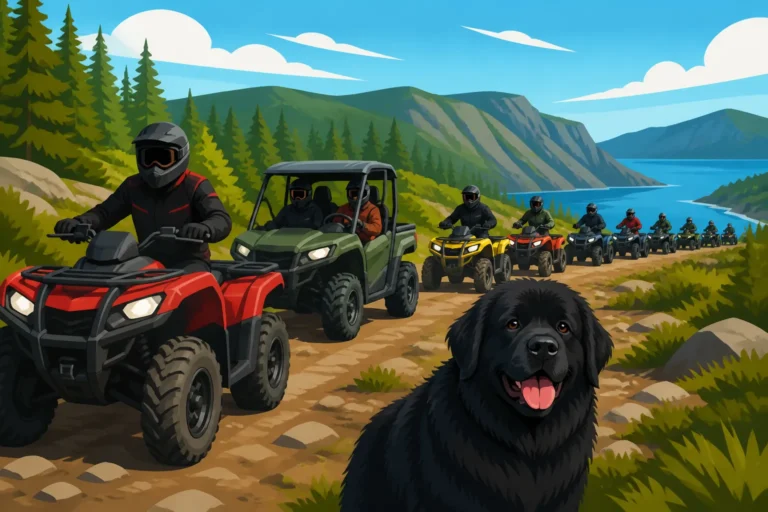
Keep to the permitted route and watch for changes in ground texture, water and vegetation. Leave space between machines where practical so riders can see the surface and avoid sudden braking or steering. If the lead rider stops at a questionable patch, the rest of the group should wait on stable ground rather than bunching up at the edge.
Do not assume that a powerful machine, wide tires or a skilled driver makes a wetland crossing harmless. Different machines can still compress saturated ground, and careful throttle does not undo the damage if the surface gives way. A route that seems passable for one vehicle may become more vulnerable after several machines cross it.
Use a straightforward rule: if you cannot confidently identify a permitted, stable route across the area, do not cross. A scenic detour or shorter line is not worth damaging peatland or creating a hazard for the next rider.
After the ride
If you encountered a closure, fresh rutting or a route that appeared to be deteriorating, share the information through the appropriate channel. Keep your report factual and specific. Avoid posting an unverified shortcut as a recommended route, since a location shared casually can attract more traffic to a sensitive place.
Talk with your riding group about what went well and what you would change next time. Maybe the route needs a seasonal alternative, an earlier turnaround point or a clearer check of access information before departure. These small habits make future trips less stressful and reduce the chance that someone will feel pushed into a bad decision at the edge of a bog.
Wetlands can be beautiful places to travel near, but they are not blank ground to cross wherever a machine can go. Staying on permitted routes, recognizing fragile surfaces and turning back early are practical ways riders can help prevent damage that may be difficult—or impossible—to fully undo.
Disclaimer
This article is for general informational purposes only and does not constitute professional advice. Laws, prices and regulations vary by location and change over time. Consult a qualified professional for guidance on your specific situation.