Why a Tow Strap Belongs Under Your Seat
A boggy trail, slick railbed or unexpected breakdown can turn a routine Newfoundland ATV or UTV ride into a recovery job. A tow strap is compact, but choosing the right one and knowing how to use it matters as much as carrying it. Here’s what to look for, where to keep it and how to reduce the risk of damaging a machine or injuring someone.
Why a tow strap earns a place on your machine
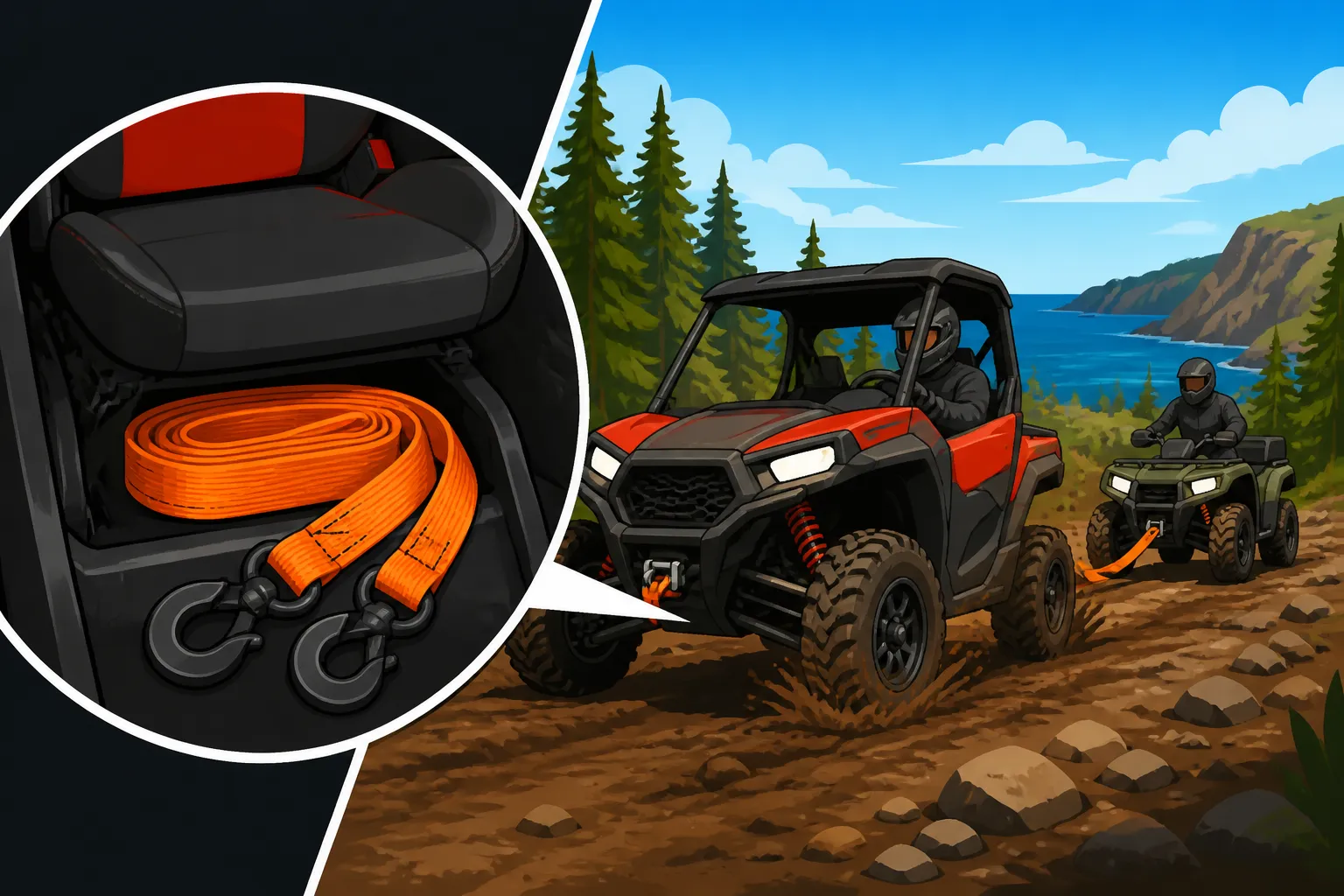
Newfoundland riding can take you across changing ground, from firm gravel to wet bog, soft shoulders and rocky sections. A machine that loses traction or develops a mechanical problem may need help reaching safer ground or getting back to a trailhead. A strap takes up little room compared with many recovery tools, yet it can let another properly equipped machine provide a controlled pull.
That doesn’t mean every stuck ATV or UTV should be towed. A strap cannot make unstable ground safe, replace a winch in every situation or guarantee that a machine can be moved without damage. The point is to have a basic option for a manageable recovery and to recognize when the terrain, load or position calls for a different plan.
A strap can be useful when:
- A machine is bogged down on relatively level ground and needs a gentle pull onto firmer footing.
- A disabled machine needs to be moved a short distance, if its manufacturer permits towing that way.
- A group needs to help a rider reach a safer stopping place while arranging a more suitable recovery.
- A machine is blocking a shared trail and can be moved without putting people in danger or causing further damage.
It is most useful as part of a broader plan, not as a reason to ride farther into difficult terrain. Check Newfoundland Trail Conditions Before You Ride before heading out, and think about how your group would respond if one machine stopped moving. A strap helps only if another machine can reach it, the pull can be made safely and the group has a way to communicate if recovery takes longer than expected.
A tow strap is also not a substitute for a winch. If a machine is buried in deep peat, wedged against an obstacle, leaning toward a rollover or trapped where a direct pull could injure someone, stop and reassess. Winching a Machine Out of Deep Bog covers a different recovery method; even then, a winch needs a suitable anchor and careful use. Some situations are better handled by calling for help rather than trying to pull a machine free.
A strap can be especially valuable when a ride is remote. Cell service may be limited in parts of the province, so being able to help a companion move a disabled machine can make the difference between a slow return and a long wait. Still, do not assume a strap will solve every roadside or trail problem. For remote trips, consider Cell Dead Zones Along the Railbed and carry a backup way to navigate, such as a paper map, as described in Carrying a Paper Map Where There Is No Signal.
Choosing a strap and storing it properly
Not every strap is designed for the same job. A tow strap is generally intended for a steady, gradual pull. A kinetic recovery rope is designed to stretch and transfer energy during a recovery. Those are different tools, and substituting one for the other can create a dangerous amount of force. For ordinary ATV or UTV towing and gentle assistance, choose a strap whose manufacturer clearly identifies it for the intended use.
Before buying, check the product label and instructions for its intended application, rated capacity, length and compatible connection method. Capacity is not a promise that a strap can safely pull any machine under any conditions. The force needed to move a vehicle changes with the ground, slope, load and how firmly it is stuck. A strap that is adequate for a slow pull on level ground may not be suitable for a hard, sudden recovery.
| Feature to check | Why it matters |
|---|---|
| Intended use | Confirms whether the product is meant for towing, recovery or another task |
| Rated capacity | Helps you compare a strap with the machines and loads involved |
| Length | Provides room to connect and move without crowding the machines |
| Material and construction | Affect durability, stretch, handling and how the product should be maintained |
| End fittings or loops | Must be compatible with approved recovery points and connection hardware |
| Instructions and warnings | Explain the maker’s limits, inspection guidance and correct use |
Avoid choosing by appearance alone. A wide, thick-looking strap is not automatically the right strap, and a product advertised for a different kind of vehicle may not suit a small off-road machine. If comparing options on Amazon, read the manufacturer’s description and instructions rather than relying only on a listing title or customer comments. Be cautious if the rated capacity, intended use or connection guidance is unclear.
Length is a practical trade-off. A longer strap can give machines more separation, but it takes more room to store and manage. A shorter strap is easier to carry but may leave the machines too close together, especially on uneven ground. Follow the product directions and leave enough space for the machines to move without putting a rider or helper between them.
Keep the strap clean, dry and protected from damage. A small storage bag helps keep mud and grit off it and makes it easier to find. Store it in a secure compartment or another place where it cannot fall off, become tangled in moving parts or contact hot components. If you carry it under a seat, make sure it does not interfere with the seat latch, wiring, tools or anything that must remain accessible. The strap should be easy to reach without becoming a loose object that could shift while riding.
Inspect it before the trip and after any recovery. Look for cuts, fraying, torn stitching, damaged loops, melted areas, chemical contamination or other signs of wear. If the strap has been overloaded or you are unsure whether it is damaged, follow the manufacturer’s guidance; when in doubt, replace it rather than trusting it for another pull. Do not modify it by knotting, shortening or adding improvised fittings unless the manufacturer specifically permits the method.
How to make a safer pull
A recovery can go wrong quickly if the machines are connected to weak points, the strap is shock-loaded or people stand in the line of tension. Before connecting anything, pause the ride and decide whether a pull is appropriate. Check the ground, slope, machine position and likely direction of movement. If a machine is leaning, partly submerged, pressed against an obstacle or at risk of rolling, a simple tow may make the situation worse.
Use the recovery points specified by the machine’s manufacturer. A rack, bumper, suspension part, axle or trailer ball may not be designed to take a recovery load. A part that looks sturdy can still bend, break or detach when pulled. If the machine does not have an appropriate point, consult its manual or a qualified service provider before trying to use another location.
A careful process helps prevent rushed decisions:
- Stop and secure the scene. Have riders move clear of the machines and the path of the pull. Keep bystanders away from the strap and its connection points.
- Assess the machine and terrain. Check whether it can be moved in the planned direction without tipping, striking an obstacle or sinking deeper. If the pull looks uncertain, stop and choose another recovery method.
- Confirm the strap and connection points. Check the strap for damage, read its instructions and connect only to approved recovery points using compatible equipment.
- Keep people out of the line of tension. Nobody should stand between the machines, beside a loaded strap or directly in its path. Do not step over a strap that is under tension.
- Agree on simple signals. The riders should know who is directing the pull and how to stop it. Avoid conflicting instructions from several people.
- Pull slowly and steadily. Use a gentle, controlled movement. Do not jerk the strap, accelerate hard or use sudden force to break a machine free.
- Stop if anything shifts or fails to move. Reassess rather than repeating a harder pull. Check connections and the machine’s position before deciding what to do next.
- Inspect the gear afterward. Clean and dry the strap as directed, and check it for damage before storing it.
Never use a strap in a way that creates a trip hazard or leaves a person near the tensioned line. A strap can snap, a connection can fail or a mounting point can break loose. Those failures can send equipment moving unexpectedly. Keep all riders clear until the machines are fully stopped and the strap is slack.
A tow strap also needs the right pairing. The assisting machine must be capable of a controlled pull without losing traction, tipping or being dragged into the same hazard. Avoid attaching two machines in a way that leaves the assisting rider unable to steer or stop. On a slope or soft ground, even a modest pull can become difficult to control. If you cannot explain how the machines will stay stable and where they will go when the stuck machine moves, don’t start the pull.
For a heavily stuck machine, avoid using a tow strap as a substitute for an appropriate recovery setup. Do not improvise by wrapping the strap around a tree or connecting it to an unverified anchor. If using a winch or other equipment, follow its manufacturer’s instructions and use suitable rigging. Newfoundland Bog and Machines offers useful context on why wet ground can turn a simple loss of traction into a more complicated recovery.
Make recovery part of your ride plan
A strap is one small item in a larger set of choices that helps keep a ride manageable. Start with the route and conditions: consider whether the trail suits every machine in the group, whether the weather may change, and whether there is a safe place to turn around. Carrying a strap is useful, but knowing when not to attempt a recovery is just as important.
Plan who will carry recovery gear and who knows how to use it. If there are several machines, distribute equipment so one rider’s breakdown does not leave the entire group without basic supplies. Before setting out, make sure everyone knows where the strap is, which recovery points are approved for their machines and how the group will communicate during a pull.
A tow strap does not replace legally required equipment, training or proof that riders may need to carry. Review Newfoundland Equipment Requirements and Carrying Your Safety Certificate on Every Ride as part of your pre-trip planning. For practical supplies beyond recovery gear, What to Carry for First Aid on the Barrens and Packing for Weather That Changes Every Hour can help you prepare for delays and changing conditions.
It is also worth agreeing on a simple rule before the ride: if a recovery needs a hard jerk, puts someone in the line of tension or risks damaging a machine, the group stops and considers another option. A patient reassessment is usually safer than turning a stuck machine into a damaged one or creating an injury.
After the ride, dry the strap fully before putting it away, check it for wear and replace it if it no longer meets the manufacturer’s guidance. Restock any gear used during the trip and adjust your plan if the route or conditions were harder than expected. That way, the strap is ready when you need it, rather than merely taking up space under the seat.
Disclaimer
This article is for general informational purposes only and does not constitute professional advice. Laws, prices and regulations vary by location and change over time. Consult a qualified professional for guidance on your specific situation.