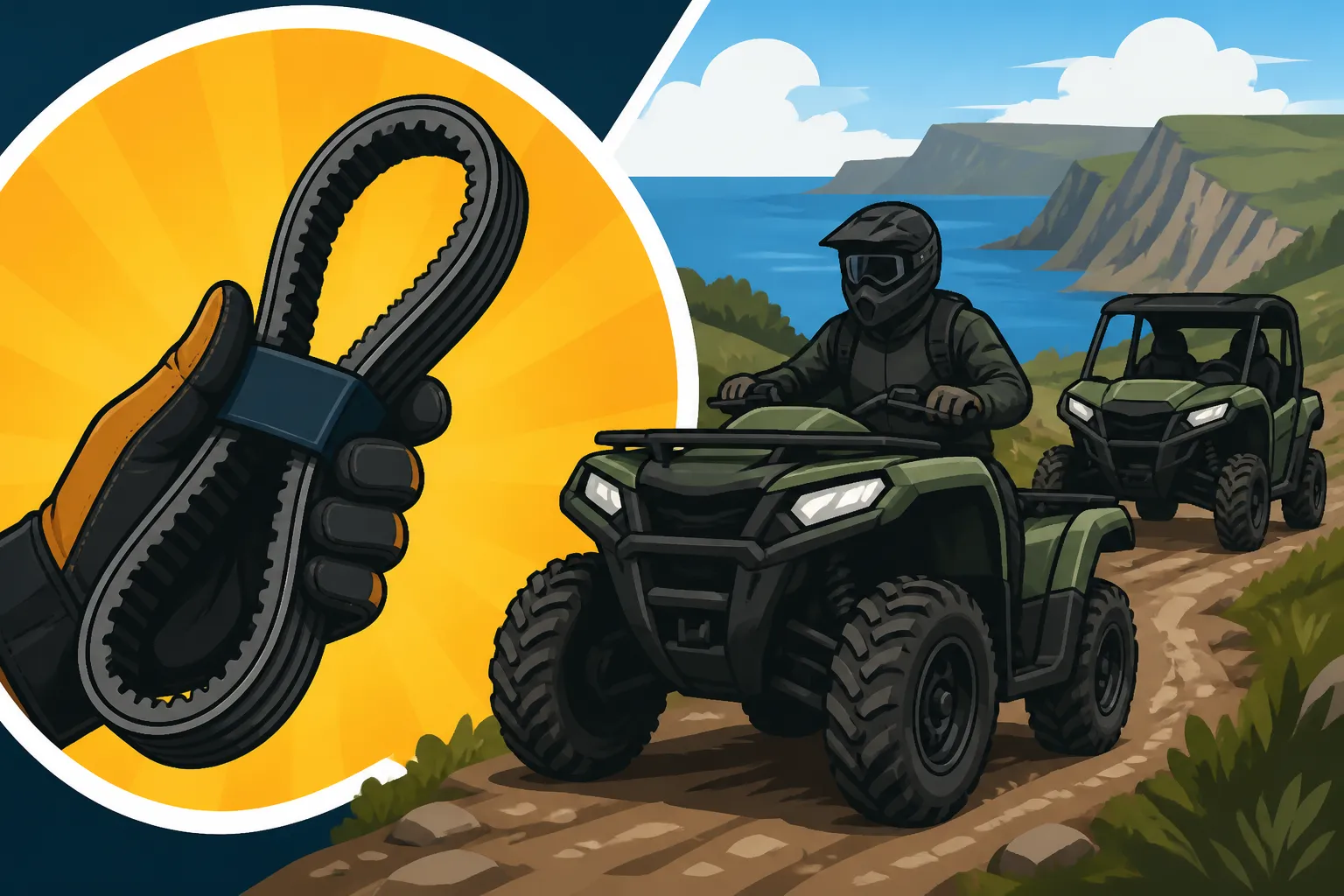
Carrying a Spare Belt on a Long Loop
A broken drive belt can turn a long Newfoundland ATV or side-by-side loop into a recovery problem, especially when you are far from a road or reliable cell service. Carrying a spare is useful, but only if it fits your machine, stays protected and can be installed safely. Here’s how to choose, pack and prepare a belt before you leave.
Decide whether a spare belt belongs on your ride
A spare belt is most valuable when you’ll be travelling a long way from your starting point, riding remote sections, or joining a group where a breakdown could delay everyone. On a short ride close to home, it may be less important. Think about the route, the machine’s condition, and whether you or someone in your group can replace the belt.
A belt does not have to fail suddenly for a spare to be useful. Wear, heat, incorrect adjustment, contamination, or a mechanical problem elsewhere in the drive system can contribute to trouble. Mud, water, and demanding riding conditions can also make a long day harder on a machine. A spare belt is one layer of preparation, not a fix for a machine that already shows signs of trouble.
Before packing one, consider:
- How far you will be from help. A remote loop or a route with limited access points makes a field repair more consequential.
- How long the ride is. More time on the machine can mean more opportunities for a developing problem to become a breakdown.
- How the machine has been performing. A burning smell, slipping, unusual noise, or poor acceleration warrants inspection before the ride, not just a spare in the cargo box.
- Who is riding with you. If no one has the knowledge or tools to change the belt, carrying one may not get the group moving again.
- What the route and conditions are like. Check Newfoundland Trail Conditions Before You Ride and plan around the terrain, weather and access options.
A spare is most helpful when it’s part of a broader plan. A basic tool kit, a charged phone or other communication method, a way to carry the belt without damaging it, and enough time to handle a delay all matter. For routes with weak coverage, see Cell Dead Zones Along the Railbed and consider how your group will communicate or get assistance if a repair does not work.
Choose a belt that matches your exact machine
Drive belts are not universal. Two machines from the same brand may use different belts, and the model name alone may not identify the correct part. Confirm the belt using the owner’s manual, the machine’s model and year, or a reliable parts lookup from the manufacturer or dealer. If you are unsure, ask a parts professional to verify the fit before you buy.
Check the belt specifications and the machine’s requirements rather than judging by how a belt looks. The correct belt needs to match the drive system and be appropriate for the way the machine is used. A belt that appears close in size may still be the wrong choice. Using an incorrect part could leave you stranded or contribute to damage.
| What to check | Why it matters | How to verify |
|---|---|---|
| Make, model and year | Similar-looking machines may use different belts | Check the owner’s manual or a parts lookup |
| Part number or fitment | Confirms the belt is intended for your machine | Compare the listed part number with the machine’s requirements |
| Belt condition | Old, cracked or damaged stock may not be a dependable spare | Inspect it before packing and keep its packaging |
| Installation requirements | The replacement may require specific tools or steps | Read the manual before the trip |
| Seller and return policy | Fitment errors can be costly and inconvenient | Confirm the details with the seller before ordering |
A manufacturer-approved belt is a sensible choice when reliability matters. An aftermarket belt may also be suitable, but verify that it is listed for your exact machine and intended use. Do not assume a cheaper or visually similar option is interchangeable. If shopping online, including on Amazon, compare the fitment information carefully and confirm the part number rather than relying on a broad compatibility claim.
Buy the spare early enough to inspect it and learn how it is packed. Keep the label or part number with it, and avoid throwing away packaging that helps you confirm what you have. If you carry a belt for multiple machines in a group, label each one clearly; a spare for a different machine may not help when a rider needs it.
Pack and protect the belt properly
A spare belt should arrive at the trail in the same condition it was in when you packed it. Keep it away from oil, fuel, mud, sharp tools and heavy cargo that could crush or deform it. Use the original packaging if it is sturdy, or place the belt in a clean, dry container or bag that protects it from abrasion and contamination.
Pack it where you can reach it without unloading everything else. A belt buried under luggage is technically on the machine but may be difficult to retrieve on the trail. At the same time, secure it so it cannot shift, rub against sharp edges, or interfere with controls, moving parts or cargo restraints. Check your machine’s owner’s manual for storage guidance and any restrictions on cargo placement.
Avoid bending, folding or forcing the belt into a tight space. Do not store it next to a hot exhaust or another heat source. If your machine has a dedicated storage location, use it as directed. Otherwise, choose a protected spot and make sure the belt is held firmly without being compressed or twisted.
Keep the tools needed for a belt change together rather than scattering them through different storage compartments. The exact tools and procedure vary by machine, so use the manual as the authority. A practical kit may include the tools specified by the manufacturer, gloves, a clean rag and a small light. Do not guess about a fastener, torque value or belt installation step; an incorrect repair can create a new problem.
Also consider carrying:
- A copy of the relevant belt-change instructions, either in the manual or saved for offline access.
- A small container or bag for dirty parts and tools.
- A basic first-aid kit and suitable clothing for a delay.
- A means of contacting someone if the machine cannot be repaired.
- Enough food and water for the planned ride and an unexpected stop.
The belt is only one part of trip preparation. Review Packing for Weather That Changes Every Hour and What to Carry for First Aid on the Barrens when planning a route where a breakdown might leave you waiting outdoors.
Prepare for a safe trail-side replacement
Do not wait for a breakdown to find out whether you can access the belt housing or identify the required tools. Read the manual at home and, if possible, become familiar with the procedure in a safe setting. The steps differ by machine. Some work may be manageable for a prepared rider; other situations call for a mechanic or recovery service.
If the belt fails during a ride, first move the machine and group to a safe place away from other trail users. Shut the machine off and allow components to cool before working near the drive system. Follow the manufacturer’s instructions, use the specified tools, and do not bypass guards or safety features. If the machine is hot, damaged, difficult to access, or unstable on the ground, do not rush the repair.
A replacement belt may not solve the reason the original failed. Look only for issues you can safely identify, such as obvious debris or visible damage, and avoid reaching into moving or hot parts. If there is a strong burning smell, unusual damage, or uncertainty about the cause, stop and arrange help rather than installing a belt and continuing without confidence in the machine.
Before setting off again:
- Confirm that the belt is installed as directed and that the housing is closed and secure.
- Check that tools, packaging and loose items are clear of the machine’s moving parts.
- Start and test the machine cautiously in a safe area, following the manual.
- Pay attention to new noises, vibration, smell or poor response.
- Stop if anything seems wrong. Do not treat a brief test as proof that a damaged drive system is safe for the rest of the route.
Group planning can make a breakdown less stressful. Tell riders that you are carrying a spare and whether anyone knows the replacement procedure. Agree on a simple plan for stopping, keeping the group together and seeking help if the machine cannot be fixed. Newfoundland Group Ride Planning can help with the wider logistics, while Newfoundland ATV Trail Etiquette Locals Expect is useful for thinking about how to manage a stop on a shared route.
Make the spare part of a complete ride plan
A spare belt is worthwhile when the route, machine and rider make it useful. It does not replace maintenance, a pre-ride inspection or a recovery plan. Check the machine before leaving, especially if it has been sitting for a while or has shown symptoms that could point to a drive-system issue. If a belt is worn or damaged, replacing it before a remote ride is safer than relying on a spare to compensate.
Plan your route with realistic turnaround points and make sure someone knows where you intend to ride and when you expect to return. Review Newfoundland ATV Trail Map Downloads before the trip, and do not assume that a line on a map means every section is open, passable or suitable for your machine. Conditions and access can vary; adjust the plan if the route is beyond the group’s ability or the machine’s condition.
After each ride, check the spare and its storage place. Make sure it has not been soaked, contaminated, crushed or misplaced. If you use it, replace it with a properly matched spare before the next long outing, and have the machine inspected if the failure might have another cause.
The best spare belt is the right one for the machine, protected from damage and paired with the knowledge and tools to use it. For a long loop in Newfoundland, that preparation can turn a difficult delay into a manageable repair—but only when the machine and conditions make continuing safe.
Disclaimer
This article is for general informational purposes only and does not constitute professional advice. Laws, prices and regulations vary by location and change over time. Consult a qualified professional for guidance on your specific situation.