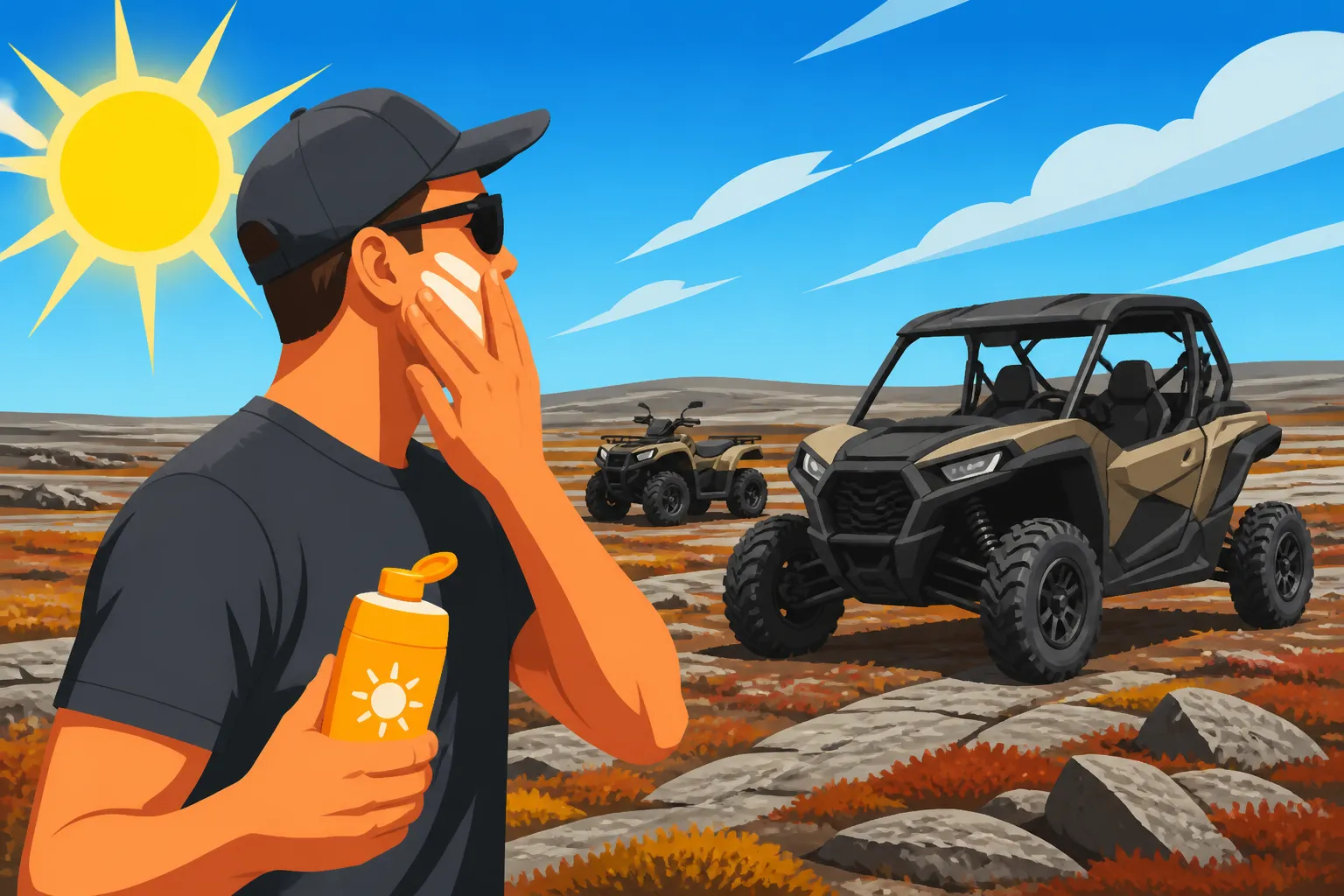
Sunscreen on an Open Barren
An open barren can feel cool, cloudy and windy while leaving you exposed to the sun for hours. That makes sunscreen easy to forget—and easy to apply poorly once a ride is underway. A reliable plan pairs broad-spectrum sunscreen with clothing and eye protection, then makes reapplication part of the ride rather than an afterthought.
Why open barrens call for a sun plan
On an exposed barren, there may be little shade and few places to stop. A long ride can leave your face, ears, neck and hands exposed even when the temperature feels comfortable. Wind can make your skin feel cool, while cloud or fog can make the sun seem less intense than it is. Neither is a reason to skip sun protection.
Sun exposure adds up over the day. It can also be easy to miss when you are focused on the trail, navigating, or keeping up with a group. A little preparation before setting out is more dependable than waiting until skin starts to feel warm or look red.
For broad coverage, choose a broad-spectrum sunscreen with an SPF of 30 or higher. Broad-spectrum products protect against both UVA and UVB rays. Check the label, choose a formula you will actually use, and follow its directions. Water-resistant sunscreen can be useful on a sweaty ride, but it is not waterproof and still needs to be reapplied as directed.
A sunscreen routine is one part of dressing for exposed terrain. Long sleeves, gloves and other coverage can reduce how much skin is exposed, while sunscreen covers areas that clothing cannot. That matters on a ride where stopping to apply lotion may be awkward or where changing weather makes it tempting to leave gear behind. For more on changing conditions, see Packing for Weather That Changes Every Hour.
| Protection | Useful for | Trade-off to plan for |
|---|---|---|
| Broad-spectrum sunscreen, SPF 30 or higher | Face, ears, neck and other uncovered skin | Needs careful application and reapplication |
| Long-sleeved riding layer | Arms and shoulders | Can feel warm if the weather turns mild |
| Riding gloves | Hands and wrists, where the fit allows | Check that cuffs cover the skin without affecting grip |
| Sunglasses or suitable eye protection | Bright light, glare and wind | Use eye protection that fits your helmet and riding needs |
| SPF lip balm | Lips exposed to wind and sun | Reapply according to its label |
A barren ride may include more than one kind of exposure. On a sunny stretch, direct light is the obvious concern. Near water, bright surfaces can add glare. Wind and dust can make eyes uncomfortable, while sweating can cause sunscreen to migrate toward the eyes. Plan for all of these rather than relying on a single product.
Apply it before you ride, and cover the easy-to-miss spots
Apply sunscreen before putting on riding gear, following the product label. Starting at home or at the trailhead gives you time to cover exposed skin without rushing. It also helps avoid handling a sunscreen bottle while wearing gloves or trying to balance on uneven ground.
Use enough to cover the skin evenly. Thin, patchy application can leave gaps, particularly along the hairline, jaw, ears and sides of the neck. Pay attention to the backs of your hands and the space between a glove cuff and sleeve. If you wear a helmet that leaves part of your face exposed, protect that area too.
Commonly missed spots include:
- The tops and backs of the ears
- The hairline, temples and part in the hair
- The back of the neck, especially below the helmet
- The backs of the hands and exposed wrists
- The lips, with a lip balm that includes sun protection
- Any exposed area around a short sleeve, neckline or glove cuff
Sunscreen can sting if it gets into your eyes. Apply it carefully around the face, wash your hands before handling goggles, helmet straps or controls, and give it time to settle according to the label. If your eyes are sensitive, consider a sunscreen format you can apply precisely and rely on suitable eye protection to cover the area around them. Do not put sunscreen on a visor or goggles; it can leave a film that interferes with visibility.
Check how your clothing fits before you leave. A sleeve that rides up when you reach for the handlebars can uncover the wrist. A neck gaiter or collar may shift as you turn your head. Adjust the layers so they cover skin without interfering with the helmet, controls or safe movement. Sun-protective fabric can be a useful addition, but follow its care instructions and do not assume that any fabric offers the same level of coverage.
Sunscreen belongs with your riding gear, but not where it can leak onto equipment. Keep it in a sealed bag or container, away from hot surfaces and anything that could be contaminated by a spill. A small tube or stick can be easier to carry than a large bottle, though it still has to be applied thoroughly. If you are comparing products, check the label and format before buying; Amazon is one place to compare options, but the product’s directions and suitability matter more than the retailer.
Make reapplication part of the route
Sunscreen does not last all day just because it was applied before the ride. Follow the product’s reapplication directions. Many sunscreens call for reapplication about every two hours, and sooner after heavy sweating, water exposure or towel drying. Check the label for the product you carry; water-resistant claims have a stated duration and do not mean you can skip reapplication.
A practical plan is to connect reapplication to a planned stop: a meal break, fuel stop or point where the group already pauses. A phone reminder can help, but do not depend on cellular service in remote areas. Set the reminder before leaving, and carry a watch or another way to keep track of time if you expect to be out of coverage.
Reapply to clean, dry skin when possible. Wipe off sweat and grit before putting on more sunscreen, and avoid rubbing dirt into your skin. If you are wearing gloves, remove them somewhere safe before applying sunscreen to your hands. Let the product settle before putting the gloves back on so your grip and controls are not slick.
A quick check at each stop can reveal gaps before they become a problem. Look for skin exposed by a shifted collar or sleeve, and check the face, ears and hands. If you are riding with others, a reminder can help the whole group stay on schedule. On a longer outing, pack enough product for the ride rather than assuming one application will be sufficient.
Use sunscreen as one layer of protection, not a reason to extend your time in direct sun or ignore signs that you need a break. If your skin becomes painful, unusually hot or visibly red, get out of direct exposure and take care of it. For general trip preparation, What to Carry for First Aid on the Barrens can help you think through other items to bring.
Match sun protection to the ride and your gear
The right plan depends on how long you will be out, how much of your skin your gear covers, and whether you can stop somewhere convenient. Before leaving, look at the route and expected conditions, then decide where sunscreen will be needed and when you can reapply. Trail conditions can affect stop locations and travel time, so check Newfoundland Trail Conditions Before You Ride before committing to a long day.
A short ride close to a vehicle may make it easy to return for supplies. A longer route across exposed terrain calls for sunscreen within reach, spare water and clothing that covers more skin. If rain, fog or wind is expected, do not assume those conditions eliminate the need for sun protection. Keep sunscreen accessible even when it is not the first thing you think of packing.
Riding equipment also sets limits on what works. Sunscreen should not compromise a secure grip, clean lenses or clear vision. Avoid applying it to your hands immediately before operating the machine. If sunscreen gets on the visor, goggles or controls, stop somewhere safe and clean the affected area before continuing. Visibility and control come first.
The wider ride plan matters too. Review your route, weather and expected stops, and tell someone where you are going if you will be out in a remote area. A longer day may involve exposure even when the ride itself feels cool. Newfoundland’s riding season and local conditions vary, so Newfoundland Riding Season Month by Month can help with seasonal planning, while Newfoundland Riding After Heavy Rain is useful when recent weather may affect the route.
Use the same care with protective equipment as with sunscreen. Wear the helmet and eye protection appropriate for the ride, and check that everything fits securely. Sunscreen does not replace required safety gear or safe riding practices. See Newfoundland Helmet Law for Every Rider and Newfoundland Safety Training Is Mandatory for related riding requirements.
Before you set off, a simple check can make the plan easier to follow:
- Apply broad-spectrum sunscreen to exposed skin, following the product label.
- Cover skin with suitable clothing and check for gaps at sleeves, collars and gloves.
- Pack sunscreen where it can be reached safely at a stop, not loose beside controls.
- Decide when to reapply and set a reminder that does not rely on cell service.
- Recheck exposed skin during breaks and reapply as directed, especially after sweating or water exposure.
- Keep sunscreen off lenses, grips and other surfaces where it could affect visibility or control.
An open barren ride is more comfortable when sun protection is planned alongside water, layers and route preparation. A small tube in the pack is useful, but it works only if you apply enough, cover the overlooked spots and remember to reapply. Build those steps into your stops, and do not let cool wind or cloud make the decision for you.
Disclaimer
This article is for general informational purposes only and does not constitute professional advice. Laws, prices and regulations vary by location and change over time. Consult a qualified professional for guidance on your specific situation.