What to Carry for First Aid on the Barrens
A small cut can become a serious problem when your ATV group is far from a road, cell service, or help. On Newfoundland’s exposed barrens, wind, rain, bog water, and changing visibility can make even a minor injury harder to manage. This guide explains what to pack, how to organize it, and how to plan for first aid before you ride.
Why first aid on the barrens needs extra planning
Distance and weather change the stakes
A first-aid kit for a short ride near home may not be enough for a long trip across an exposed area. On the barrens, you may have to wait for help or travel a considerable distance to reach a road or a place with reliable service. That delay matters if someone is bleeding, cold, in pain, or unable to ride.
Weather adds another layer of difficulty. Wind and rain can chill a rider who is wet or injured, while fog can make it harder for a group to stay together or find its way back. A forecast is useful, but it is not a guarantee that conditions will stay pleasant. Before setting out, check the route and conditions, and read Packing for Weather That Changes Every Hour and Fog on an Exposed Barren as part of your preparation.
Think about the trip you are actually taking. A quick loop with several experienced riders is different from a long day with children, newer riders, or a group travelling beyond easy access to a road. Your first-aid supplies and emergency plan should reflect the people, route, weather, and time away.
A kit cannot replace a plan
First aid is only one part of being prepared. Make sure everyone knows the route, the planned return time, and what to do if the group gets separated. Choose a lead rider and a sweep rider, and agree on safe places to stop and regroup. Tell someone at home where you expect to ride and when they should check in if you have not returned.
Cell service can be unreliable in remote areas, so do not assume a phone call will always be possible. Learn what communication options are appropriate for your route and group, and know how to use them before leaving. Cell Dead Zones Along the Railbed is a useful reminder to plan for stretches without a signal. For navigation, an app such as onX Offroad can be one tool, but download any maps you plan to rely on before you leave service. Carry a paper map and know how to read it too; Carrying a Paper Map Where There Is No Signal covers why a backup matters.
Agree in advance on what the group will do if someone is injured. For example, decide who stays with the injured person, who contacts emergency services if possible, and who guides help toward the group. If a rider is seriously hurt, avoid moving them unnecessarily unless the location presents an immediate danger. Call emergency services when possible and follow the dispatcher’s instructions.
What to pack in an ATV first-aid kit
Cover the basics, not just small cuts
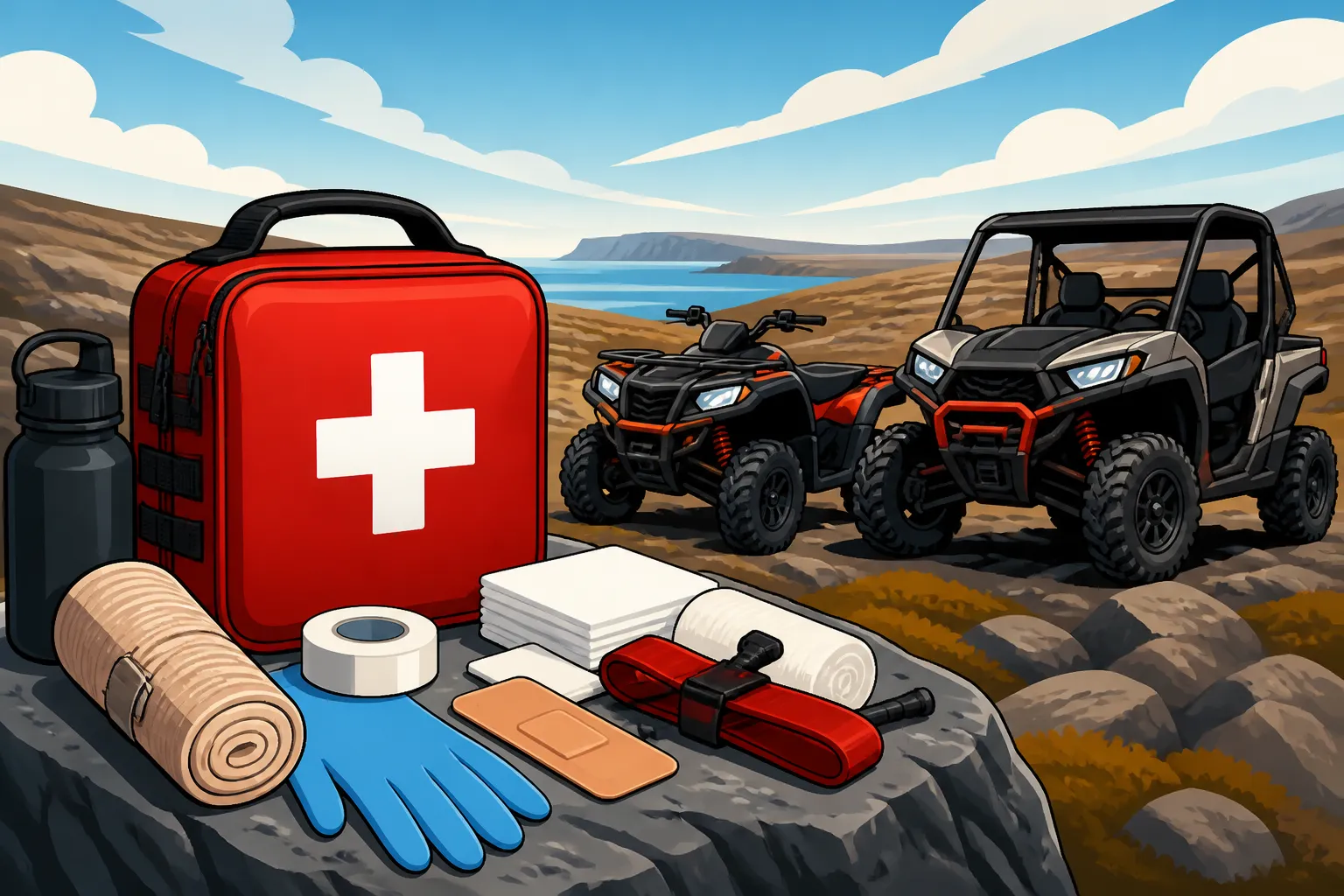
Choose a kit that is easy to reach and appropriate for your group size. A basic kit can include adhesive bandages in several sizes, sterile gauze pads, medical tape, a roller bandage, antiseptic wipes, disposable gloves, and small scissors. Include blister care, since a sore spot can become miserable over a long day of riding.
For bleeding, pack supplies that let you protect your hands and apply firm pressure with clean material. A triangular bandage can help secure a dressing or support an arm, while an elastic bandage can be useful for some minor strains. These supplies do not make you a substitute for a trained medical professional; their value is in helping you provide basic care while arranging further help.
A simple layout makes the kit easier to use when someone is stressed. Put frequently needed items near the top, keep small supplies in labelled bags, and store the kit where it will not get buried beneath tools or lunch. A compact kit that everyone can find is more useful than a large one packed away in a hard-to-reach compartment.
Add supplies for cold, wet, and remote conditions
On a Newfoundland ride, keeping someone warm and dry can be as important as dressing a scrape. Pack an emergency blanket or other compact insulation, a few large plastic bags to help keep items dry, and spare gloves or warm layers suited to the season. These do not replace proper clothing; they provide a backup if a rider is soaked, chilled, or waiting for help.
Include a headlamp or flashlight, spare batteries if needed, and a whistle. A light helps the group see what it is doing if a stop runs into dusk, while a whistle can help someone attract attention without shouting. Keep a charged phone protected from water, and carry any additional communication device your route and group require. OnX Offroad can help with route planning when prepared in advance, but a digital map does not provide emergency communication and should not be your only navigation option.
Pack water and a small amount of food beyond what you expect to use on a routine ride. An injury, mechanical problem, or navigation mistake can lengthen the day. For a trip with greater exposure or fewer easy exit points, consider whether your group’s supplies are enough to manage an unexpected wait.
Make the kit fit the riders
A group that includes children, older adults, or people with specific medical needs may need additional personal supplies. Anyone who regularly uses prescribed medication should bring what they need for the outing and keep it accessible. Do not put essential medication in a bag that might be separated from its owner.
Ask riders privately about allergies or medical concerns that could affect an emergency response. You do not need to collect personal details that are not relevant, but the group should know how to help if someone has a known serious allergy or other urgent medical need. Riders can carry their own personal medication while a designated person knows where it is.
| Situation | Useful supplies to consider | Planning reminder |
|---|---|---|
| Minor cuts and scrapes | Gloves, gauze, bandages, tape, antiseptic wipes | Keep dressings dry and easy to reach |
| Blisters or sore spots | Blister dressings and protective tape | Treat hot spots early during a safe stop |
| Cold or wet rider | Emergency insulation, spare gloves, dry bags | Get the person out of wind and rain when possible |
| Low light or separation | Headlamp, whistle, charged phone | Agree on regrouping and communication steps |
| Longer or remote ride | Extra water, food, navigation backup | Plan for a delayed return or extended wait |
| Rider with personal medical needs | Prescribed medication and relevant personal supplies | Keep essential items with the rider |
How to prepare and use your kit
Check it before every trip
A first-aid kit can look complete and still be unready. Before a ride, check that packaging is intact, supplies are clean and dry, and anything with an expiry date is still within date. Replace used items promptly, and check that the kit has not been crushed, soaked, or left somewhere it will be difficult to reach.
Make one person responsible for the group kit, but make sure everyone knows where it is. If you are riding with a new group, point it out before leaving the trailhead. It is frustrating to discover during an emergency that the only person who knows where the kit is has ridden ahead or is the one who needs help.
Keep a short inventory inside the kit. After a trip, note what was used or damaged and restock before the next outing. If you ride in different seasons, adjust the contents: a warm, wet-weather backup may be especially important on a cold day, while water and sun protection deserve attention during a warmer outing.
Learn the limits of basic first aid
A kit is for basic care, not diagnosis. If an injury seems serious, the rider is getting worse, or you are unsure what to do, contact emergency services as soon as you can and follow their directions. Do not delay calling for help because you are trying to treat a significant injury with supplies that are not intended for it.
It is sensible for regular riding partners to take a recognized first-aid course. Training can help people stay calmer, decide what to do first, and communicate clearly with responders. A course also helps riders understand when a situation is beyond their skills. Practise simple group roles in advance: one person can stay with the injured rider while another attempts to contact help and a third manages the rest of the group.
If someone is cold, wet, and exposed, move them to a safer sheltered spot if you can do so without worsening an injury. Add dry insulation, protect them from wind and rain, and keep monitoring their condition while help is arranged. Avoid giving food or drink to someone who is unconscious, seriously injured, or unable to swallow safely.
Plan the ride around access and navigation
Before departure, share a route plan and a realistic return time with someone who is not riding. Include the general area, the group size, and a way to contact you. If the route changes substantially, update that person when possible. A specific plan gives others a useful starting point if the group does not return as expected.
Study the route before you unload. Make sure you understand where the group can turn around, where it may encounter difficult terrain, and what options exist if weather worsens. onX Offroad may be useful as one part of route preparation, but confirm that the map information is available offline and bring a separate backup. The guide Newfoundland Trail Conditions Before You Ride can also help frame the checks to make before heading out.
Think about whether the route suits the least experienced rider in your group. A faster or more confident rider may be tempted to continue, but the group needs to travel at a pace that lets everyone stay together and respond safely. For shared routes, review Newfoundland Trail Etiquette Locals Expect and remember that other trail users may be nearby. For broader route ideas and considerations, see Newfoundland ATV Trails: The T’Railway and Beyond.
A practical pre-ride first-aid checklist
Before leaving home
Use this quick check as a routine rather than waiting until the group is already at the trailhead:
- Confirm the route, expected return time, and weather plan.
- Tell a trusted person where the group expects to ride and when to check in.
- Check that the first-aid kit is stocked, dry, and accessible.
- Confirm that personal medication and any rider-specific supplies are packed.
- Charge phones and communication devices, and protect them from water.
- Download route information you may need, then carry a paper map as a backup.
- Pack water, food, warm layers, and rain protection appropriate to the trip.
- Make sure the group knows who leads, who rides sweep, and where to regroup.
If you are travelling to a riding area you do not know well, do not rely on memory or a single digital map. Check access information and conditions before setting out, and give yourself time to turn around if the route is unsuitable. onX Offroad can be included in that preparation, but the group should still understand the route without depending on one rider’s phone.
At the trailhead and during the ride
Before engines start, show everyone where the first-aid kit is and make sure riders know how to contact one another. Confirm that the group has the same plan for stops, separation, and a change in weather. A quick briefing may feel unnecessary on a familiar trail, but it can prevent confusion when the group is tired or visibility drops.
During the ride, stop early if someone reports pain, numbness, unusual fatigue, or feeling cold. Small problems are easier to manage before they affect a rider’s concentration or ability to control a machine. Choose a safe place to stop away from moving traffic and other trail users, and keep the group together while assessing what to do next.
After the ride, check the kit and replace what was used. Note any problems with the route, access, or communication plan while they are fresh in your mind. Then adjust the next trip’s supplies and preparation accordingly. The point is not to expect an emergency on every ride; it is to make sure a minor problem does not become harder to handle because the group was unprepared.
Disclaimer
This article is for general informational purposes only and does not constitute professional advice. Laws, prices and regulations vary by location and change over time. Consult a qualified professional for guidance on your specific situation.