Thirty Days in Newfoundland Before You Must Register
A visiting rider can bring a properly registered ATV or UTV to Newfoundland without immediately registering it locally, but the visitor exemption is limited. The important question is what changes after 30 days—and what you still need to do before riding. Here’s how to think about the deadline, the documents to carry and the separate rules that can apply on trails.
How the 30-day visitor period works
Newfoundland and Labrador allows a visitor to use an off-road vehicle registered in another jurisdiction for a limited period without obtaining Newfoundland registration. The commonly stated limit is 30 days. It is an exemption from local registration, not permission to ride without valid registration at home.
This distinction matters if you are planning an extended visit, staying at a cabin or making several trips to the province. A machine that is registered elsewhere does not become exempt from Newfoundland requirements indefinitely simply because it still has a valid home-province plate or document.
The visitor rule is different from the rule for someone who has moved to Newfoundland and Labrador. If you have become a resident, a separate period may apply to getting your machine registered locally. See Newfoundland’s 90-Day New Resident Rule and Newfoundland Registration for a New Resident for that situation. A vacation or temporary visit should not be treated as a move, and a move should not be treated as an ordinary visit.
Keep the visitor rule separate from other requirements
The 30-day exemption concerns registration. It does not automatically exempt you from every other rule that applies to a ride. Depending on where and how you ride, you may also need to consider:
- Whether your out-of-province registration is current and valid for the machine.
- Whether you have the insurance required for the ride.
- Whether the machine needs a managed-trail sticker for the route you plan to use.
- Whether the operator needs to meet Newfoundland and Labrador safety-training requirements.
- Whether the route is open to your type of machine and whether local restrictions apply.
A visitor arriving with a properly registered machine may still need to check the province’s trail and riding requirements. For example, Newfoundland Visitors Still Need Insurance covers a requirement that should not be confused with local registration. Registration, insurance and trail access answer different questions: whether the machine is registered, whether it is insured, and whether you may ride in a particular place.
If your machine is not registered in your home jurisdiction, do not assume that the visitor exemption will cover it. The exemption is generally described for vehicles registered elsewhere. Confirm your situation with the appropriate registry or provincial authority before travelling.
What to do before the 30 days are up
If you expect to stay longer than the visitor period, sort out the registration question before the deadline rather than waiting until the last day. A local registration application can involve paperwork about the machine and its ownership. If a document is missing or the chain of ownership is unclear, resolving it may take extra time.
A practical plan is:
- Check the date the machine entered the province. Keep a note of the arrival date and travel details. Do not rely on memory if the visit is close to the limit.
- Confirm the machine’s home registration. Make sure the registration remains valid and that the identifying information matches the machine.
- Decide whether your visit is temporary or you have become a resident. These are different situations, and they may lead to different deadlines.
- Contact the registry before the visitor period ends if you will stay longer. Ask what application and supporting documents are required for your machine.
- Do not ride past the applicable limit while assuming an application is enough. Ask the registry what you may do while an application is being processed.
The process and paperwork can depend on how you acquired the machine and what documents you have. A machine bought from a dealer, a private seller or an auction may call for different supporting evidence. The broader checklist in Newfoundland Registration Paperwork Explained can help you identify the documents to ask about. If the machine changed hands, Newfoundland Transfer of Ownership Explained is also relevant.
| Your situation | What to check | Practical next step |
|---|---|---|
| Short visit, machine registered elsewhere | That the registration is valid and the visit remains within the visitor period | Carry the registration and note the machine’s arrival date |
| Visit likely to exceed 30 days | Whether local registration is needed and what documents are required | Contact the registry before the limit is reached |
| You have moved to Newfoundland and Labrador | The separate new-resident rule and its start point | Check the residency guidance rather than relying on the visitor exemption |
| Machine is not registered elsewhere | Whether it qualifies for any visitor exemption | Confirm with the registry before riding |
| Trail access is the concern | Sticker, training and route-specific rules | Check the trail operator and provincial requirements separately |
The table is a planning aid, not a substitute for confirming the current rule for your specific circumstances. If your trip crosses the deadline or your residency status is changing, get a clear answer from the relevant office before you ride.
Do not assume travel resets the clock
If you leave Newfoundland and Labrador for a short trip and return, avoid assuming that the visitor period automatically starts over. The result can depend on the rules and the facts of your situation. Keep records of when the machine entered and left the province, and ask the registry how it counts the period if you expect a return visit or multiple stays.
The same caution applies to a machine that remains in the province while its owner travels elsewhere. The key issue is not just where the rider is on a particular day; it is whether the machine is being operated in the province under the visitor exemption and whether the exemption still applies.
Registration is not the same as permission to ride
A common source of confusion is treating registration as a general riding permit. It is not. Meeting the registration rule does not, by itself, make every road, trail or parcel of land open to your ATV or UTV.
Before riding, check the requirements for the specific route. Managed trails may have their own sticker requirements, and Crown land access can depend on whether an area is approved or restricted. Private land may require the landowner’s permission. Municipal bylaws can also affect where machines may travel. The province-wide visitor exemption does not replace these checks.
A visiting rider should also confirm which rules apply to the operator. Do not assume that a home-province safety card or licence automatically meets every Newfoundland and Labrador requirement. The province has specific information for visitors, including Newfoundland Visitors From Nova Scotia, Newfoundland Visitors From New Brunswick and Newfoundland Visitors From Quebec. Check the guidance that matches your home jurisdiction and ask the appropriate authority if it does not address your circumstances.
Insurance deserves its own check. A valid registration document is not proof that your coverage meets the requirements for riding in Newfoundland and Labrador. Confirm with your insurer that the policy covers the machine and the places where you intend to ride. Keep proof available while travelling, and understand how to produce it if asked.
Also check the machine itself before departure. A plate that is loose, obscured by cargo or difficult to read can create avoidable trouble even when the paperwork is in order. Carry the registration document and any other required proof in a place where you can access it without leaving it exposed to rain or mud.
A simple checklist for visitors
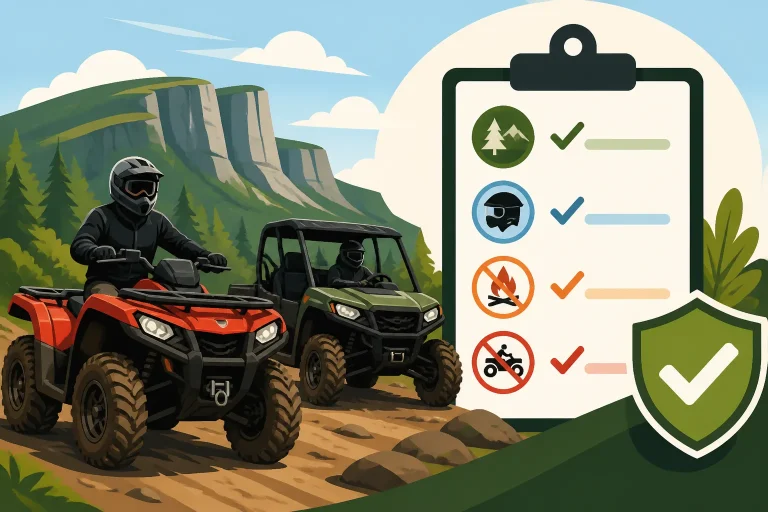
Before loading your machine, confirm these points:
- Registration: The machine is validly registered in the jurisdiction where it is based, and the identifying details match.
- Dates: You know when the machine entered Newfoundland and Labrador and have a plan if your stay may run beyond the visitor period.
- Residency: You have distinguished a temporary visit from a move to the province.
- Insurance: Your insurer confirms coverage for the machine and intended use.
- Trail access: You have checked whether a sticker or other access requirement applies to the route.
- Operator rules: You have checked the requirements for the person operating the machine, including any training, age or licence rules that may apply.
- Local restrictions: You have checked route closures, land access and municipal rules.
- Documents: You can produce registration and any other required proof while riding.
If the visit is clearly shorter than 30 days, the machine is registered elsewhere and all other requirements are met, the visitor exemption may mean you do not need Newfoundland registration for that visit. If you are close to the limit, planning a long stay or unsure whether you count as a visitor, do not guess. Confirm the deadline with the registry and keep the answer with your trip documents.
For a related overview of the visitor rule, see Newfoundland’s 30-Day Visitor Exemption. If you will be in the province beyond the visitor period, What a Visitor Does After Thirty Days is a useful next step. The safest approach is to resolve the registration question before the deadline, then check trail access and operating requirements separately.
Disclaimer
This article is for general informational purposes only and does not constitute professional advice. Laws, prices and regulations vary by location and change over time. Consult a qualified professional for guidance on your specific situation.