Newfoundland’s 90-Day New Resident Rule
Moving to a new province can be a whirlwind of details, and if you’re bringing your off-road vehicle (ORV) with you, figuring out the registration rules can feel like just another hurdle. Many new residents arrive in Newfoundland and Labrador wondering exactly how long they have before they need to officially register their ATV, UTV, or snowmobile here, especially when their machine is already registered in another jurisdiction. This guide is designed to cut through that confusion, explaining the crucial 90-day new resident rule, what it means for your machine, and how to navigate the process smoothly to get you out on our beautiful trails.
Understanding the 90-Day Grace Period for New Residents
When you make the exciting move to Newfoundland and Labrador, the provincial government recognizes that you have a lot on your plate. Establishing a new home, finding services, and getting settled takes time. To ease this transition for ORV owners, there's a specific window designed to allow you to continue using your off-road vehicle while you get your new life in order. This is the essence of the 90-day new resident rule for off-road vehicle registration.
What the 90-Day Rule Actually Means
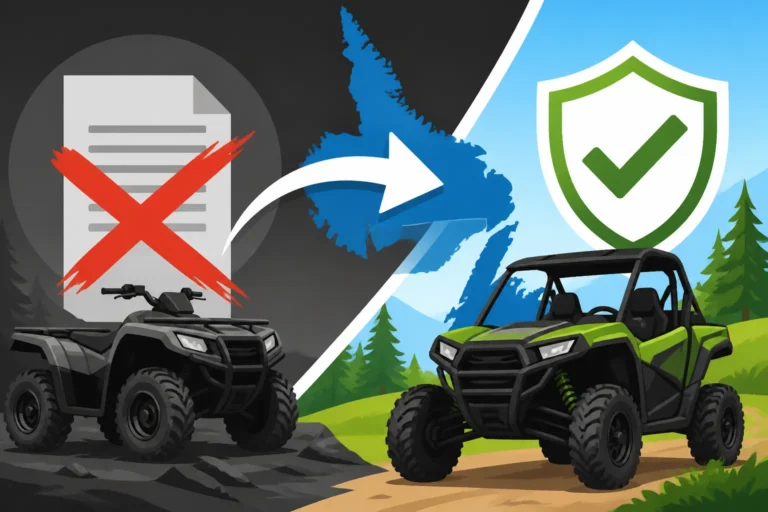
The 90-day rule isn't an exemption from registration; rather, it’s a grace period. It means that if you're a new resident to Newfoundland and Labrador, and your off-road vehicle is legally registered and insured in your previous province or territory, you generally have up to 90 days from the date you establish residency here to transfer that registration over. During this time, your out-of-province registration is usually considered valid for use within Newfoundland and Labrador, provided all other operating rules are met.
The purpose is genuinely practical: it prevents you from having to immediately rush to Motor Registration the moment your moving truck pulls into the driveway. It allows you to breathe, unpack, and attend to more pressing matters before tackling the ORV paperwork. However, it's crucial to understand that "establishing residency" is key here. This typically means you've moved your primary residence, you're working here, or you've enrolled children in local schools. It's not for extended visitors; it's specifically for those making a permanent move.
Conditions for Your Out-of-Province Registration
While the 90-day grace period is a welcome convenience, it comes with important conditions. The most fundamental condition is that your out-of-province registration must be current and valid. If your ATV or snowmobile's registration from, say, Alberta or Ontario expired a month before you moved to St. John's, that expired registration isn't suddenly made valid here for 90 days. You need to ensure everything is up to date in your former jurisdiction before relying on this grace period.
Beyond registration, your machine must also meet the minimum insurance requirements that Newfoundland and Labrador dictates for off-road vehicles. Even if your home province had different insurance minimums, once you're riding here, provincial laws regarding liability insurance apply immediately. This means checking your existing policy to ensure it meets or exceeds Newfoundland's minimums. Furthermore, all of Newfoundland's operational rules, such as helmet laws, age restrictions for riders, and permissible operating areas, apply from day one of your arrival. The 90 days only applies to the registration status, not to the safety or operational requirements of the machine or rider. This means if you're from a province with more lenient helmet laws, you'll still need to wear an approved helmet here immediately.
Why Newfoundland Has a Different Approach to ORV Registration
Many newcomers are surprised by Newfoundland and Labrador's approach to off-road vehicle registration. It’s distinctly different from how motor vehicles are registered, and often, quite different from ORV registration systems in other provinces. Understanding this unique philosophy can help new residents appreciate why the 90-day rule exists and what it transitions into.
The 'One-Time' Registration Philosophy
One of the biggest eye-openers for new residents is discovering that [Newfoundland Registrations Never Expire]. That's right – once you register an off-road vehicle in Newfoundland and Labrador, that registration is generally valid for as long as you own the machine. There are no annual renewal fees, no stickers to pick up every year, and no worry about a lapse in registration as long as the machine remains in your possession. This perpetual system is a significant departure from the yearly renewals common in many other jurisdictions, and it's a huge benefit once you've completed that initial step.
This "pay once, own it forever" model simplifies ownership in the long run. It means that while the initial registration might feel like a bit of paperwork, it’s a task you only have to do once per machine, as long as you don’t sell it. This policy also means that when you transfer your out-of-province registration after your 90-day grace period, you’re not just temporarily registering it – you’re bringing it into a system where [Newfoundland Registration Valid While You Own It]. This long-term thinking is central to the province's ORV management, aiming to reduce administrative burden on owners after the initial setup.
The Off-Road Vehicles Act of 2022
The framework for off-road vehicle operation and registration in Newfoundland and Labrador was significantly updated with the implementation of the Off-Road Vehicles Act. This legislation came into force relatively recently and brought with it clearer definitions, updated rules, and a more structured approach to ORV use across the province. For new residents, understanding that [A Statute in Force Since May 2022] governs these machines is key, as it consolidates many regulations that might have been scattered or less formalized previously.
This Act replaced older legislation, streamlining many processes and addressing the growing popularity and variety of off-road vehicles. Where previous rules might have been vague, especially for machines like side-by-sides, the new Act aims for clarity. The 90-day rule for new residents is part of this comprehensive approach, providing a specific, timed pathway for integration into the provincial system. It reflects a modern attempt to manage ORVs responsibly while acknowledging the practicalities of people moving into the province. The changes enacted by the Act ensure that everyone, including new residents, operates under a clear, consistent set of rules.
Essential Paperwork and Preparations for New Residents
Navigating the registration process, even with a grace period, requires proper preparation. The last thing you want is to arrive at Motor Registration only to realize you’re missing a crucial document. Taking the time to gather everything beforehand will save you immense frustration and potential extra trips. This is especially true when you're dealing with a machine that's been registered elsewhere, as there's a need to establish a clear chain of ownership and residency.
Gathering Your Existing Documents
The foundation of a smooth registration process for a new resident's ORV lies in having all your existing paperwork in order. This means digging out the original registration from your previous province or territory. This document is paramount as it proves your legal ownership and that the machine was, indeed, properly registered where you came from.
Beyond the registration, you'll need proof of ownership. For many, this will be the bill of sale from when you originally purchased the machine, or a previous title document if your former jurisdiction issued one. The bill of sale should clearly identify the buyer, seller, date of sale, and the machine's full description, including its Vehicle Identification Number (VIN). Having a clear, unbroken paper trail is vital for the provincial authorities to confirm you are the rightful owner. If your original bill of sale is less formal or perhaps even missing, you might consider using a reputable service like LawDepot to generate a professional bill of sale template, which can often add credibility and ensure all necessary fields are covered. While not a replacement for an official document, a well-structured document can help clarify ownership details. Additionally, any existing insurance documentation for the machine should be on hand.
Proof of Newfoundland Residency
To qualify as a "new resident" and complete the registration process, you'll need to demonstrate that you have, in fact, established your permanent home in Newfoundland and Labrador. The province requires tangible proof of this. Common documents accepted for [Newfoundland Registration and Proof of Address] include utility bills (electricity, internet, landline phone) in your name at your new Newfoundland address, a lease agreement or property deed, or even an updated Newfoundland and Labrador driver's license.
It’s important that these documents clearly show your full name and your physical address within the province. Simply having a mailing address might not be sufficient; they want to see evidence of your actual physical residency. It’s a good idea to bring a couple of different forms of proof, just in case. The establishment of residency is a key threshold, signaling your transition from a visitor (even an extended one) to a permanent member of the community, and thus, subject to provincial ORV registration requirements. Ensure you start collecting these documents as soon as you settle in, well within that 90-day window, so you're not scrambling at the last minute.
The Step-by-Step Registration Process for New Arrivals
Once you've settled in and gathered all your documents, it's time to officially register your off-road vehicle in Newfoundland and Labrador. While the 90-day grace period offers flexibility, it's not an excuse to delay. Being proactive will ensure you avoid any potential issues and can enjoy your machine legally on the trails. The process is straightforward if you know what to expect.
Booking Your Appointment at Motor Registration
One of the most crucial steps, which many people overlook, is that you often need an appointment to register an off-road vehicle at a Motor Registration Division office. While some smaller regional offices might accommodate walk-ins on slow days, showing up unannounced, especially in busier centres like St. John's or Corner Brook, can lead to extremely long waits or being turned away entirely. This can be incredibly frustrating, especially if you've taken time off work or travelled a distance.
To avoid this, always plan ahead and book your appointment. You can usually do this by calling the Motor Registration Division directly or, increasingly, through online booking systems if available. When you call, be ready to explain that you are a new resident bringing an out-of-province ORV for initial registration. This helps the staff allocate the appropriate time slot and ensure they have the right forms ready for you. Mentioning [Newfoundland Registration by Appointment] during your planning is a smart move to save time and hassle.
What to Bring to Your Registration Appointment
Having a comprehensive checklist of documents for your appointment is non-negotiable. Walking in prepared ensures a smooth and efficient process. You'll need all the ownership documents you gathered, including your previous province's registration and your original bill of sale. For a machine that has been through multiple owners, you might need a chain of bills of sale to show the progression of ownership, ensuring no gaps.
You'll also need your proof of Newfoundland residency (utility bill, lease, etc.) and personal identification (such as a valid driver's license or passport). Crucially, you'll need the Vehicle Identification Number (VIN) of your off-road vehicle. This number is unique to your machine and is essential for its identification. If you're registering a brand-new machine purchased from a dealer (less common for a new resident, but possible), you'd bring the [New Vehicle Information Statement to the Counter]. For used machines, the bill of sale acts as your primary proof of purchase. If there are any ambiguities in your ownership history, or if your bill of sale is very informal, a service like LawDepot can provide templates for a more comprehensive bill of sale or even a sworn affidavit to clarify ownership if needed, which might be helpful to have on hand. Always double-check with the Motor Registration Division directly for their exact requirements before your visit.
Understanding the Fees and Payment
Unlike the annual renewal fees for many highway vehicles, off-road vehicle registration in Newfoundland and Labrador generally involves a one-time fee. This means you pay it once, and as long as you own the machine, you’re good to go. However, the amount of this fee can vary depending on the class of off-road vehicle you are registering. For instance, the cost to register an ATV might be one amount, while a trail bike or a snow groomer could be significantly different.
While I can't give you exact figures, know that there are distinct categories. For example, [Newfoundland Charges $95 for an ATV], but other types of machines have different fee structures. It’s always best to consult the official provincial government website or call Motor Registration directly for the most current fee schedule. They can give you the precise cost for your specific type of ORV. Be prepared to pay this fee at your appointment. Most Motor Registration offices accept various payment methods, including debit, credit card, or sometimes even cash. Understanding [Newfoundland ORV Registration Cost] before you go will help you budget and avoid any surprises at the counter.
Post-Registration: Plates, Decals, and Ongoing Responsibilities
Congratulations! You've successfully navigated the 90-day grace period and officially registered your off-road vehicle in Newfoundland and Labrador. But the process doesn't end when you walk out of the Motor Registration office. There are still important steps regarding your machine's identification and your ongoing responsibilities as an ORV owner in the province.
Receiving and Displaying Your Identification Plate
Once your registration is processed, you won't typically receive a paper "sticker" or decal like some other provinces might issue for ORVs. Instead, you'll be issued a permanent identification plate. This is a physical plate, similar in concept to a vehicle license plate but specific to off-road vehicles. It usually features the provincial crest and a unique identifying number.
This plate is not meant to be tucked away in your glove compartment. It must be securely affixed to the rear of your off-road vehicle. The placement needs to be clearly visible and unobstructed. This means no cargo, bags, or modifications should be blocking the view of your plate from behind. Maintaining its visibility is a legal requirement. If your plate becomes excessively muddy, dusty, or otherwise obscured during a ride, you could face questions from enforcement officers. Therefore, it's good practice to ensure [Newfoundland Plates Kept Free of Mud] and that [Newfoundland Plates Unobstructed by Cargo] are always a priority, especially when heading out for a long day on the trails. Keeping it clean and visible helps ensure compliance and avoids unnecessary stops.
Insurance and Operational Rules for Newfoundland
While the registration is a one-time affair, your responsibilities as an ORV owner are ongoing. One of the most critical requirements in Newfoundland and Labrador is mandatory insurance. Every off-road vehicle operating in the province must carry a minimum amount of third-party liability insurance. This isn't just a suggestion; it's a legal obligation designed to protect you and others in the event of an accident. You should always carry proof of your insurance with you when operating your machine.
Beyond insurance, all operators must adhere to the provincial operational rules, which apply universally to registered machines. This includes [Newfoundland Helmet Law for Every Rider], age restrictions for operators and passengers, and specific rules about where and how you can ride. For instance, there are strict guidelines regarding riding on highways, shoulders, or within municipal boundaries. Furthermore, [Newfoundland Safety Training Is Mandatory] for certain age groups and first-time registrants. While visitors might have a 30-day exemption from training requirements if they're registered elsewhere, new residents are expected to meet these training criteria within a reasonable timeframe after registration. Familiarizing yourself with these operational rules is essential for safe and legal riding.
Common Challenges and Misconceptions for Newcomers
Even with a clear 90-day rule and a defined process, new residents often encounter specific challenges or hold onto misconceptions about ORV registration in Newfoundland and Labrador. Addressing these proactively can save a lot of headaches and ensure a smooth transition to riding in your new province.
What if My 90 Days Are Up and I Haven't Registered?
The 90-day grace period is a generous allowance, but it's not open-ended. If you pass the 90-day mark from establishing residency and your out-of-province ORV is still unregistered in Newfoundland and Labrador, you are operating an unregistered vehicle. This can lead to significant consequences. An unregistered off-road vehicle, even if it was perfectly legal in your previous home, is simply not compliant here after that grace period.
Penalties can include substantial fines, and in some cases, your machine could even be seized by law enforcement. The province takes ORV registration seriously, as it's tied to safety, accountability, and the broader management of trails and public lands. The best advice is to treat the 90-day period as a firm deadline. Plan your appointment and gather your documents well in advance, aiming to complete the registration process within the first two months, giving yourself a buffer for any unforeseen delays. Don't assume that because your machine has a valid plate from another province, you can indefinitely defer local registration.
My Machine Has No Paperwork – Now What?
One of the most common and frustrating scenarios for any ORV owner, but especially new residents, is having a machine without a clear paper trail. Perhaps you bought it informally from a friend years ago, or the original bill of sale has been lost over time. [Newfoundland Registration Without a Bill of Sale] can be a real hurdle, but it's not necessarily an insurmountable one.
In cases where traditional ownership documents are missing or insufficient, Motor Registration may require additional steps to establish legal ownership. This often involves providing a sworn affidavit, a legal document where you solemnly affirm your ownership of the machine, outlining its history to the best of your knowledge. In some situations, an indemnity form might also be required, which essentially protects the province from any future claims of ownership against the machine once they've registered it in your name. Services like LawDepot can provide templates for these types of legal documents, which can be immensely helpful in ensuring they are correctly formatted and contain all necessary information before you get them notarized. You might also need to provide additional proofs, such as maintenance records or old insurance documents, to build a case for your ownership. Always contact Motor Registration directly to understand their specific requirements for machines lacking complete paperwork. [Newfoundland Sworn Affidavits and Indemnity Forms] are tools to bridge these documentation gaps.
Understanding HST and Tax Implications
When you register an ORV, whether new or used, there can be tax implications that new residents might not anticipate, especially if they purchased the machine in another province or through a private sale. Newfoundland and Labrador has Harmonized Sales Tax (HST), which generally applies to the purchase of goods and services.
If you bought your ORV new from a dealer, you would have paid sales tax in your previous province. However, if you bought it privately, the situation can be different. The province may assess HST on the value of the machine when you register it here, even if you’ve owned it for some time. This is particularly true for machines imported from outside the province or country. The specific rules for [Newfoundland HST on an ATV Purchase] and [Newfoundland Tax on a Private ATV Sale] can be complex, so it's always wise to clarify this with Motor Registration or a tax professional. They will typically have a valuation method to determine the fair market value if a recent bill of sale isn't available or if the declared price seems unusually low. Don't be surprised if there's a tax assessment during your registration, as it's a common practice to ensure equitable application of provincial taxes.
Registration Differences: New Resident vs. Visitor
To further clarify the situation for new residents, it's helpful to see how their situation differs from that of a short-term visitor. While both benefit from a grace period, the intent and long-term requirements are distinct.
| Feature | New Resident (within 90 days) | Visitor (within 30 days) |
|---|---|---|
| Purpose | Permanent relocation to NL | Temporary visit to NL |
| Grace Period | 90 days from establishing residency | 30 days from entry into NL |
| Original Reg. | Must be valid from previous jurisdiction | Must be valid from home jurisdiction |
| NL Registration | Required after 90 days | Not required if leaving within 30 days |
| Insurance | NL minimums apply immediately | NL minimums apply immediately |
| Operational Rules | NL rules (helmets, age, etc.) apply immediately | NL rules (helmets, age, etc.) apply immediately |
| Safety Training | Required for new registrants, post-90 days | Exemption for valid out-of-province permit |
| Long-Term | One-time NL registration required | No NL registration expected |
Disclaimer
This article is for general informational purposes only and does not constitute professional advice. Laws, prices and regulations vary by location and change over time. Consult a qualified professional for guidance on your specific situation.