Newfoundland Registration Processing Time
One of the most common frustrations for anyone eagerly awaiting their first ride on a new (or new-to-them) ATV or side-by-side in Newfoundland is the uncertainty around how long it actually takes to get that all-important registration permit and plate in hand. It’s not always as simple as walking in and out in five minutes, and knowing what to expect can save you a lot of headache and impatience. This guide is here to walk you through the typical processing times for off-road vehicle registrations in Newfoundland, shedding light on what factors can speed things up or slow them down, and how you can best prepare.
Understanding the Registration Process Flow in Newfoundland
When you're dealing with something as important as getting your off-road vehicle legally registered, it really helps to understand the journey your application takes from your hands to the provincial registry's official records. It’s not just a single step; there's a flow to it, and knowing the ins and outs can help you anticipate the Newfoundland Registration Processing Time and avoid unnecessary delays.
The Initial Application – What Happens at the Counter?
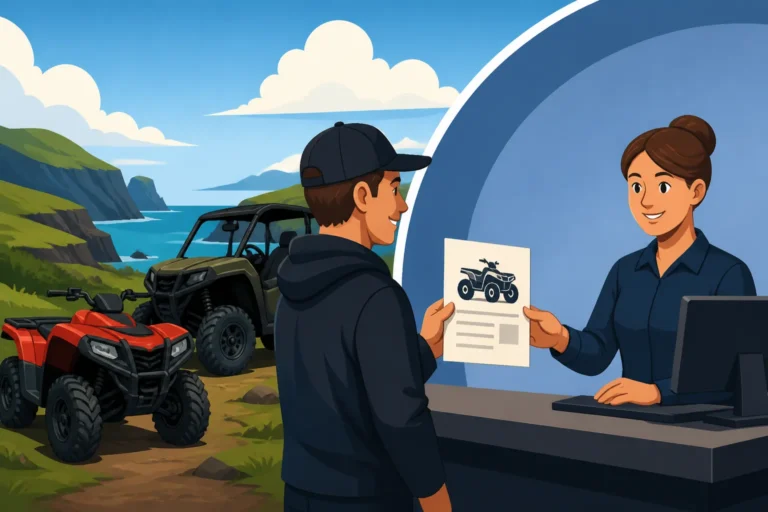
This is often where many riders imagine the process starts and ends, but it’s just the first stage. When you arrive at a Motor Registration office, either with a [Newfoundland Registration by Appointment] or as a walk-in, you’ll be presenting all your carefully gathered documents and your payment. The staff behind the counter aren't just taking your papers; they're performing an initial, crucial review. They'll quickly check for completeness: Are all the required fields filled in on your forms? Do you have your bill of sale, or a New Vehicle Information Statement (NVIS) if it's a brand new machine? Is your identification in order?
Imagine bringing in a stack of papers, eager to get your new quad on the trail. The clerk will usually give everything a once-over right then and there. If a signature is missing on the bill of sale, or if the VIN on your NVIS doesn't quite match the one on your insurance slip, they'll point it out. This immediate check is absolutely vital because any missing piece of the puzzle means your application hits a roadblock right away. If everything looks good, your payment is processed, and you'll often leave with a temporary permit or receipt, sometimes even the physical plate or decal, right on the spot. However, that doesn't mean the entire process is complete.
Behind the Scenes – What the Registry Does Next
Even if you walk out with a plate, there's still work happening behind the scenes. Your application isn't just filed away; it's formally entered into the provincial database. This involves data entry, verifying information against existing records, and sometimes even cross-referencing details with other departments or systems. For instance, the Vehicle Identification Number (VIN) from your machine will be checked against provincial and national databases to ensure there are no red flags, like the vehicle being reported stolen or having outstanding liens.
This internal verification is a critical part of maintaining accurate records and ensuring the legitimacy of every registered off-road vehicle in the province. Sometimes, if there are any discrepancies that weren't immediately obvious at the counter—maybe a subtle typo on an older bill of sale that only becomes apparent during a deeper system check—the registry might need to follow up with you. While most straightforward applications sail through this stage fairly quickly, more complex cases, such as those involving [Newfoundland Registration for an Auction Buy] or a long chain of ownership, can require more in-depth manual review and might extend the processing time for the final, official record to be settled.
When You Can Expect Your Papers and Plate
For most standard registrations – think a straightforward transfer of ownership with a complete bill of sale, or a brand-new machine with a valid NVIS – you can often expect to receive your physical identification plate (or decal, depending on the machine type) and your temporary registration permit right there at the counter. The full, official registration permit card, which is the document you're meant to carry with you when riding, might be mailed to you within a few business days, or sometimes even given to you immediately.
The key here is "straightforward." If all your [Newfoundland Registration Paperwork Explained] is in order, accurately filled out, and your payment clears, the initial steps are usually quite swift. However, if the registry encounters any issues during their internal checks, that's when you might experience a delay. They might call you to clarify a detail, or ask you to provide additional documentation. In these less common scenarios, the full processing time could extend from a few days to a couple of weeks, depending on how quickly you can resolve the outstanding issues. It’s always best to assume a few business days for everything to be fully settled in the system, even if you leave the office with your plate in hand.
Factors That Influence Your Wait Time
Nobody likes waiting, especially when you're itching to hit the trails. Understanding the various elements that can speed up or slow down your ATV or UTV registration process in Newfoundland can help you manage your expectations and potentially even shave some time off your wait.
Completeness and Accuracy of Your Paperwork
Let's be blunt: this is probably the biggest factor in how quickly your registration gets processed. Imagine going to the grocery store, only to find you've left your wallet at home. You can't complete the transaction. The same principle applies here. If you arrive at Motor Registration with incomplete forms, missing signatures, an illegible VIN, or an unsigned bill of sale, your application will be delayed, plain and simple.
Common errors we see include:
- Missing Signatures: Perhaps the seller didn't sign the bill of sale, or you forgot to sign one of the declaration forms.
- Incorrect or Mismatched VINs: The Vehicle Identification Number on your bill of sale must exactly match the one on your NVIS (for new machines) and, most importantly, the one physically stamped on the machine itself. Even one wrong digit can cause a significant holdup.
- Incomplete Information: Fields left blank on application forms, or missing details about the machine's make, model, or year.
- Lack of Required Supporting Documents: For instance, if you're registering a machine inherited after a death, you'll need specific documentation like a will or letters of probate, not just a standard bill of sale.
- Issues with proof of ownership: Cases like [Newfoundland Registration Without a Bill of Sale] require additional steps, such as sworn affidavits and indemnity forms, which naturally extend the process.
Each error means your application gets flagged. It might be put aside while the clerk deals with other customers, or you might be sent home to get the missing information, effectively restarting your wait time. To minimize this, consider using reliable templates for documents like a bill of sale. Services like LawDepot can provide standardized forms that ensure all the necessary fields are present, helping you and the seller complete everything accurately before you even step foot in the registry office.
The Volume of Applications and Staff Availability
Just like any government service, Motor Registration offices experience busy periods. Springtime, when everyone is eager to get their machines ready for the warmer weather, and before hunting season in the fall, often see a surge in applications. During these peak times, even perfectly prepared applications might take a little longer to process due to the sheer volume of people waiting.
Staff availability also plays a role. If an office is short-staffed due to holidays, illness, or training, the processing queue can grow. While the province strives for efficient service, there are practical limits to how many applications can be handled in a day. This is where [Booking an Appointment at Motor Registration Before You Go] can be a lifesaver. An appointment often means a shorter wait in line, and dedicated time with a clerk who is expecting you, which can definitely help your paperwork move through more smoothly compared to a busy walk-in period.
Specific Types of Registration (New, Transfer, Duplicate)
Not all registration types are created equal in terms of processing time.
- New Machine Registration: If you've just bought a brand-new ATV or side-by-side from a dealer, and you have your NVIS and a dealer bill of sale, these are generally the quickest to process. Dealers usually provide impeccable paperwork, and the NVIS is the gold standard for proving a machine's first-time registration. [Newfoundland Requires an NVIS for a New Machine] is a crucial piece here.
- Transfer of Ownership: Buying a used machine from a private seller requires a valid bill of sale from the previous owner. If there have been multiple owners, and you don't have a clean chain of bills of sale, this can complicate things. A clear, properly filled out bill of sale, perhaps using a template from LawDepot to ensure all legal requirements are met, will make this a much smoother process. Cases like [Newfoundland Transfer of Ownership Explained] can vary.
- Duplicate Registrations or Replacement Plates: These are typically the fastest. If you've simply lost your original registration permit and need a copy, or your identification plate has gone missing, getting a replacement is usually a quick transaction. [Newfoundland Duplicate Registrations at $25] or [Newfoundland Replacement Plates at $30] are often processed very quickly, sometimes on the spot, as the machine's primary information is already in the system.
Navigating Common Delays and Expediting the Process
It's natural to feel frustrated when delays pop up, especially when you've done your best to get everything right. However, there are proactive steps you can take to minimize potential snags and strategies for dealing with issues if they do arise.
Proactive Steps Before Your Appointment
The best offense is a good defense, and nowhere is this truer than with government paperwork. Taking the time to prepare thoroughly before you even leave your house can significantly reduce your Newfoundland Registration Processing Time.
First and foremost, create a checklist. Don't rely on memory. For a new registration or transfer, you'll generally need:
- Your valid photo identification (driver's license or government ID).
- Proof of residence (utility bill, lease agreement, etc., if your ID doesn't show your current address).
- The original New Vehicle Information Statement (NVIS) for a new machine, or a complete bill of sale for a used machine. Remember, if you're buying used, it's best to have a bill of sale from each owner in the chain, if possible, or a sworn affidavit if a previous one is missing.
- Proof of insurance for the off-road vehicle.
- The correct registration fee.
Gather all these documents and double-check every single piece of information. Are the VINs identical across all documents? Are all names spelled correctly? Are there any blank fields? This is where a reliable resource for legal forms, like LawDepot, can be incredibly helpful. You can often find templates for bills of sale or affidavits that ensure all legally required information is included, making it harder to forget a crucial detail. Printing these out and filling them in carefully at home reduces the chance of rushed errors at the counter.
Another excellent proactive step is to contact Motor Registration directly with any specific questions you have about your unique situation. [Newfoundland Registration Questions Staff Hear] can give you insights into common pitfalls. A quick phone call before you go can clarify what specific documents you need, especially if your situation is a bit unusual (e.g., registering an antique machine, or one without a clear paper trail).
Addressing Issues After Submission
Sometimes, despite your best efforts, an issue might surface after you've already submitted your application. Perhaps the registry contacts you a few days later, stating that a piece of information needs clarification, or a document wasn't acceptable. Don't panic, but act swiftly.
If the registry reaches out, respond as quickly and clearly as possible. If they ask for additional documents, provide them promptly. If they ask you to return to the office, make an appointment if possible, or be prepared for potential wait times during walk-in hours. The longer you take to address their queries, the longer your registration will remain in limbo.
It's important to keep copies of everything you submit, as well as any temporary permits or receipts you receive. This way, if there's ever a question about what you provided, you have your own records to refer to. If you haven't heard back within the expected timeframe and are concerned, politely follow up. Keep notes of who you spoke with, when, and what was discussed.
Temporary Solutions While You Wait
Unfortunately, unlike some jurisdictions that offer temporary operating permits while your full registration is processed, Newfoundland's system generally expects you to have your machine registered and plated before you operate it. This means that if your registration is delayed, you'll likely need to wait until the process is complete and you have your official plate and permit in hand.
Riding an unregistered off-road vehicle on public land or designated trails can lead to significant penalties. [Newfoundland Penalties for Riding Illegally] can include fines and potentially even the seizure of your machine. It's simply not worth the risk.
So, while frustrating, the best "temporary solution" is usually patience. Use the waiting time to get your other preparations in order: check your helmet, make sure your insurance is completely up to date, and plan your first trip. Once that permit and plate arrive, you'll be ready to hit the trails legally and safely.
| Application Type | Typical Processing Time (Upon Complete Submission) | Factors That May Increase Time | Factors That May Decrease Time |
|---|---|---|---|
| New Machine (Dealer Buy) | Immediate to 1-2 business days | Incomplete NVIS, VIN discrepancy, busy periods | Dealer handles paperwork, pre-booked appointment |
| Used Machine (Transfer) | Immediate to 3-5 business days | Missing or incomplete bill(s) of sale, unclear ownership chain, VIN mismatch | Complete and accurate bill of sale, prior owner's registration, pre-booked appointment |
| Duplicate/Replacement | Immediate (often same day) | System issues, specific verification needed | No changes to ownership, pre-booked appointment |
| Complex Cases | 1-3 weeks or more | Sworn affidavits required, out-of-province transfer, customs issues, missing records | Proactive preparation of all necessary affidavits/forms (e.g., from LawDepot) |
Special Circumstances Affecting Processing
While many registrations are straightforward, some situations inherently come with a bit more complexity, which can, in turn, affect the processing time. Understanding these special circumstances can help you prepare even more thoroughly.
Out-of-Province or Imported Machines
Bringing an off-road vehicle into Newfoundland from another province or, even more so, from another country, often adds layers to the registration process.
- Out-of-Province: If your machine was previously registered in, say, Nova Scotia or Ontario, the Newfoundland Motor Registration will need to verify its status in that previous jurisdiction. They'll want to ensure there are no outstanding liens or issues that would prevent a clean transfer of ownership. While generally not a massive delay, it's an extra step.
- Imported Machines: This is where things can get truly detailed. [Newfoundland Registration for an Imported Machine] means you'll need to provide customs documentation proving the machine was legally imported into Canada, and that all duties and taxes were paid. The VIN verification process might also be more rigorous, as the machine's history won't be in Canadian provincial databases. This could involve an inspection or additional paperwork to confirm its identity and compliance.
In both these scenarios, having all your documentation meticulously organized – including import papers, previous registration certificates, and any inspection reports – is absolutely crucial to prevent significant delays.
Machines with Complex Ownership Histories
Sometimes, you might acquire a machine that has passed through many hands, or perhaps one where the paper trail has become a bit murky over time. This is particularly common with older machines, or those purchased from estate sales or auctions.
- Missing Bills of Sale: If you don't have a complete chain of bills of sale going back to the last registered owner, the registry won't simply take your word for it. They'll require additional steps, such as a sworn affidavit explaining how you acquired the machine and why certain paperwork is missing. This often needs to be signed in front of a Commissioner of Oaths or a Notary Public.
- Indemnity Forms: In some cases, especially when the ownership history is particularly vague, you might be asked to sign an indemnity form. This essentially states that you take full responsibility for the machine's ownership and history, indemnifying the province from any future claims. [Newfoundland Sworn Affidavits and Indemnity Forms] are designed to protect both you and the registry, but they add time and extra steps to the process.
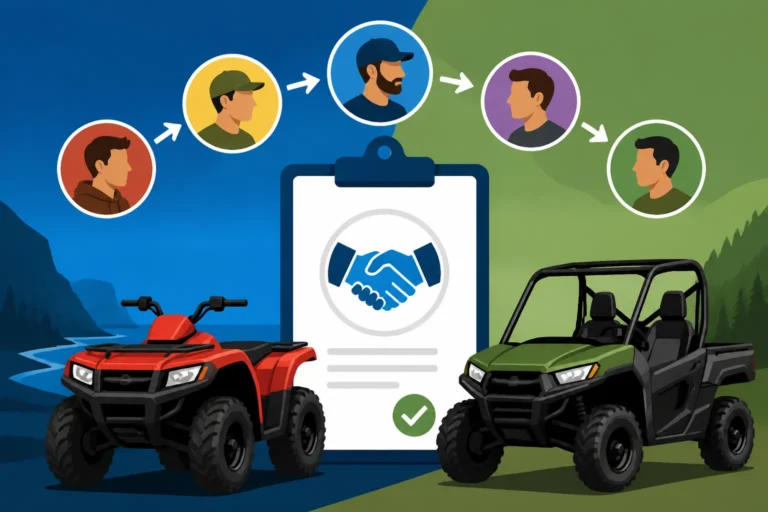
- Auction Buys: [Newfoundland Registration for an Auction Buy] can be tricky if the auction house isn't able to provide a clear bill of sale directly from the last registered owner, or if the machine came from a jurisdiction with different rules. You might again find yourself needing to provide affidavits or other supporting documentation to establish clear title.
In these situations, it's really about proving legitimate ownership to the satisfaction of the registrar. These cases almost always take longer than a straightforward transaction, as they require more manual review and potentially more back-and-forth communication.
Registration for Businesses or Rental Fleets
If you're registering multiple machines for a business, such as a guiding outfit, a rental company, or for commercial use like forestry, there can be additional requirements compared to a single private registration.
- Business Information: You'll need to provide your business registration number, tax information, and possibly proof of corporate standing.
- Bulk Processing: While you might be registering several machines at once, the registry will likely process each one individually, ensuring all unique VINs and details are correctly recorded. This might mean the overall time for your entire fleet is longer, even if individual machine processing is efficient.
- Specific Usage Declarations: Depending on the nature of your business, there might be specific declarations or permits required regarding how the machines will be used. [Newfoundland Registration for a Business Machine] can sometimes involve a different set of eyes or a specialized department within Motor Registration, which can mean a slightly longer queue or review process.
Regardless of the scenario, meticulous preparation of all required documents, understanding the specific forms needed (which can often be prepared using reliable resources like LawDepot), and patience are your best tools for navigating these more complex registration processes.
Disclaimer
This article is for general informational purposes only and does not constitute professional advice. Laws, prices and regulations vary by location and change over time. Consult a qualified professional for guidance on your specific situation.