Collecting a Bill of Sale From Every Prior Owner
One of the most common headaches when you buy a used ATV or side-by-side in Newfoundland, especially from a private seller, is tracking down all the necessary paperwork. You've found your dream machine, but then the Motor Registration Division asks for a complete chain of ownership documents, and suddenly you're scrambling to prove who owned it before your seller. This guide will walk you through why collecting a bill of sale from every prior owner is crucial for a smooth registration in Newfoundland and how to navigate the process, even when the trail goes cold.
Why a Complete Chain of Bills of Sale is Non-Negotiable in Newfoundland
When you're ready to hit the trails, the last thing you want is a bureaucratic roadblock. Newfoundland's Motor Registration Division is quite particular about the paper trail for off-road vehicles (ORVs), and for good reason. Understanding why they need every bill of sale isn't just about compliance; it's about protecting your interests as well.
The Registry's Need for a Clear Ownership Line
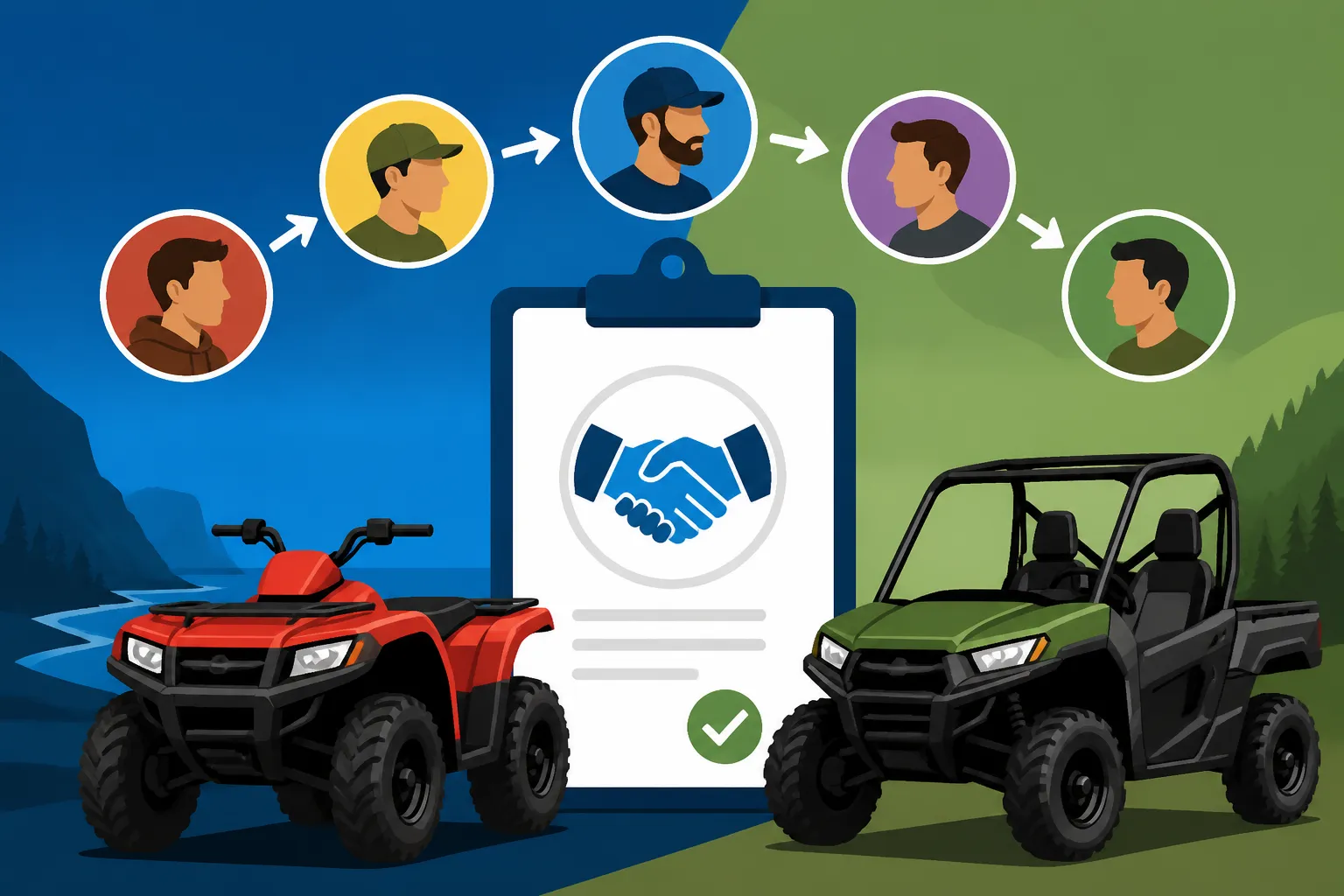
Imagine the situation: you've just bought a used quad, and your seller hands you a bill of sale. Great! But then the Registry asks for the previous owner's bill of sale, and the one before that. This isn't just them being difficult; they're trying to establish a clear and unbroken chain of legal ownership, tracing the machine from its initial sale right up to you. Each bill of sale acts like a link in a chain, showing a clear transfer of title.
Gaps in this chain immediately raise red flags. Was the machine stolen at some point? Was it legally imported? Are there outstanding liens against it that the current seller isn't disclosing? Without a clear line of ownership, the Registry can't be sure that the person selling you the machine actually had the legal right to do so. This scrutiny is part of their due diligence to prevent fraud and ensure that only legitimate owners register vehicles. A complete chain of ownership confirms that your machine has a legitimate history, giving both you and the province peace of mind.
Ensuring Proper Tax Collection and Avoiding Surprises
Another major reason the province demands every bill of sale is to ensure that provincial sales tax (HST) has been properly assessed and collected at each taxable transfer of ownership. In Newfoundland, HST is generally applicable to the sale of used vehicles between private parties, unless specific exemptions apply. Each bill of sale helps the government track this.
If a bill of sale is missing from a prior transaction, the Registry might assume that tax was never paid on that specific transfer. This can lead to complications for you, as they may expect you to account for the missing tax, even if it wasn't your transaction. It's not uncommon for new owners to face unexpected tax bills because a previous owner neglected to properly document or pay tax on their purchase. By providing a complete record, you're helping the province verify that all necessary taxes have been paid, or at least understand where any outstanding obligations lie. This transparency helps avoid unwelcome surprises for you down the road. You'll need to provide [Newfoundland Tax Registrant Details at Registration] for your own sale.
Protecting Your Investment and Legal Ownership
Beyond the government's reasons, a complete paper trail of bills of sale is your best friend. When you're spending your hard-earned money on an ORV, you want to be absolutely sure that you own it free and clear. A full chain of documentation acts as your shield against future legal challenges. Imagine buying a machine, registering it, and then months later, someone shows up claiming it was stolen from them two owners ago. Without a full chain of bills of sale, proving your legitimate ownership can become an uphill battle.
This comprehensive record also helps safeguard against machines with undisclosed issues, such as financial liens. If a previous owner financed the machine and failed to pay off the loan, a bank or credit union could still have a claim on it. While the province might have some lien search capabilities, having the full history yourself adds another layer of protection. It gives you the confidence that your machine is truly yours, free from the burdens of past owners. For more on this, check out [Newfoundland Registration and Lien Records].
Navigating the Process of Acquiring Every Bill of Sale
So, you understand why you need all those bills of sale. Now, for the how. This can sometimes feel like detective work, but knowing the right steps and what to expect can make it a lot less daunting.
Securing the Bill of Sale from Your Immediate Seller
Your first and most straightforward step is getting a proper bill of sale from the person you're buying the ATV or UTV from. This document is the cornerstone of your ownership claim and the starting point for the Registry's review. Don't underestimate its importance; a poorly filled-out or incomplete bill of sale here can cause delays later.
A valid bill of sale should clearly identify both the buyer and the seller, including their full names, addresses, and contact information. Crucially, it needs a detailed description of the machine, including the make, model, year, and its unique Vehicle Identification Number (VIN). The purchase price and the date of sale are also essential. For private sales, the seller’s Newfoundland tax number (HST number) is required on the bill of sale for the transaction to be properly recorded by the province. If your seller doesn't have a specific form, reputable online platforms like LawDepot offer customizable bill of sale templates that ensure all the necessary fields are covered, making the process much smoother. Always make sure both parties sign and date the document, and ideally, have a witness if possible, although not strictly required by the Registry. This initial bill of sale is your direct proof of purchase and vital for [Newfoundland Transfer of Ownership Explained].
Reaching Back to Previous Owners for Their Documentation
This is where things can get a bit more challenging. Ideally, your immediate seller will have not only their own bill of sale but also the one from when they bought the machine. Sometimes, they'll have a whole stack! However, it's very common for people to misplace these documents over the years. If your seller only has their bill of sale and not the prior one, you'll need to ask them if they remember who they bought it from.
If the previous owner was a licensed dealer, this can actually simplify things. Dealers are typically much better at record-keeping and often easier to contact. They might be able to provide a duplicate bill of sale or at least confirm the sale details. If the previous owner was another private individual, your current seller might be able to give you their name and contact information. You would then need to politely reach out to that individual, explain your situation, and ask if they would be willing to provide a copy of their bill of sale or a new one made out to your immediate seller. Be prepared for some owners to be less enthusiastic about this "homework" for a machine they no longer own. This detective work can be time-consuming, but persistence is key for [Newfoundland Bills of Sale From Each Owner].
What to Do When a Bill of Sale is Impossible to Get
Despite your best efforts, there will be times when a prior bill of sale is simply impossible to obtain. Perhaps a previous owner has moved, passed away, or simply can't find their old paperwork and isn't willing to help. This isn't an automatic dead end, but it does mean you'll need to take an alternative route, and it usually involves a bit more paperwork and a trip to the Registry office.
When you can't get a complete chain, the Motor Registration Division often requires a sworn affidavit. This is a legal document where you (or potentially your seller, if they're the one with the missing link) swear under oath that you are the rightful owner of the machine and explain the circumstances surrounding the missing documentation. You'll need to sign this in front of a Commissioner for Oaths or a Notary Public. In addition to the affidavit, the Registry may also require an indemnity form. This form essentially protects the provincial government from any future claims against the machine's ownership. By signing it, you're taking on the full legal responsibility and liability should any issues arise regarding prior ownership. This can feel like a big step, but it's a standard procedure to cover the gaps. LawDepot also offers templates for these types of affidavits, which can be a huge help in drafting them correctly. For more details on these forms, see [Newfoundland Sworn Affidavits and Indemnity Forms].
Crafting and Presenting Your Ownership Documents for Registration
Once you've done the hard work of collecting or preparing your documents, the next step is to ensure they are complete and correctly formatted for the Registry. Attention to detail here can save you a return trip!
Key Information a Valid Bill of Sale Must Contain
When preparing or reviewing any bill of sale, whether it's for your purchase or a previous one, accuracy is absolutely paramount. Even small errors or omissions can cause delays or outright rejection at the Motor Registration counter. A valid Newfoundland bill of sale must be comprehensive and clear.
It should start with the full legal names, current addresses, and contact numbers for both the buyer and the seller. The date of the sale must be precise. The machine itself needs to be identified unequivocally: include the make (e.g., Polaris, Can-Am), model (e.g., Sportsman 570, Defender HD8), year, and most critically, the Vehicle Identification Number (VIN). The VIN is like the machine's fingerprint; it must match perfectly across all documents and on the machine itself. The purchase price, even if it's "zero" for a gift or inheritance, needs to be explicitly stated. Finally, both the buyer and the seller must sign and date the bill of sale. For private sales in Newfoundland, don't forget the seller's provincial tax number, which enables the province to track HST. Using a template, such as those available on LawDepot, can help ensure you don't miss any critical details and helps keep your documentation consistent, especially if you're dealing with multiple prior bills of sale.
Special Scenarios: Dealer Sales, Estates, and Auction Buys
While private sales often require the most legwork, other acquisition methods have their own specific requirements for the chain of ownership. Understanding these nuances can help you prepare the right paperwork from the outset.
- Dealer Sales: When you buy a new or used ORV from a licensed dealer in Newfoundland, they typically handle a lot of the registration paperwork for you. Their bill of sale will usually be sufficient as the first link in the chain, as they are accountable for providing clear title. However, if you are buying a used machine from a dealer, and they did not acquire it new, they should still be able to provide you with their acquisition documents to prove their legal ownership before selling it to you. This often makes things much smoother, as dealers are required to keep meticulous records. You can usually find more information on [Newfoundland Dealer Paperwork at Delivery].
- Estates: If you inherit an ORV, the process differs slightly. Instead of a bill of sale from a prior owner, you'll need documents proving the owner's passing and your legal right to the machine. This typically includes the death certificate, the will (if one exists), and possibly a letter from the executor or a court order granting you ownership. The Registry will assess these documents to establish the transfer of ownership from the deceased's estate to you. [Newfoundland Registration After the Owner Dies] provides more context on this.
- Auction Buys: Machines purchased at auction can present unique challenges, especially if the auction house doesn't provide a comprehensive history. The auction receipt or bill of sale is your primary document. However, the Registry may still require you to demonstrate the chain of ownership leading up to the auction. If that's not possible, you'll likely need to resort to the affidavit and indemnity form process, similar to when private paperwork is missing. It's always wise to clarify what documentation the auction house can provide before you bid. This can be complex, and you can learn more under [Newfoundland Registration for an Auction Buy].
Preparing Your Complete Document Package for the Registry
Once you've gathered all the bills of sale, affidavits, and any other supporting documents, the final step before your registration appointment is to organize everything into a clear, concise package. Think of it as presenting your case to the Registry.
Arrange the documents chronologically, starting with the oldest bill of sale and ending with your most recent one. If you have an affidavit or indemnity form, place it logically where the missing link would have been. Make sure all signatures are present and legible. It's a really good idea to make a complete photocopy or scan of everything for your own records before you go to the Registry. This way, if anything gets misplaced or if they need to keep a document, you have your own backup. When you arrive for your appointment, having everything neatly organized will demonstrate your preparedness and can help expedite the process. The Registry staff appreciate it when you make their job easier! Also, remember to bring your personal identification and any other documents required, as outlined in [Newfoundland Registration Paperwork Explained].
Avoiding Common Pitfalls and Ensuring a Smooth Registration
Even with all your ducks in a row, the registration process can sometimes throw a curveball. Being aware of common issues and how to approach them can save you time and frustration.
Verifying the VIN and Machine Details on All Documents
This might seem basic, but it's a pitfall that catches many people off guard. Before you even head to the Motor Registration Division, meticulously cross-reference the Vehicle Identification Number (VIN) on every single bill of sale, affidavit, or any other ownership document you have. Then, physically check that VIN against the one stamped on the actual ATV or UTV. They must all match perfectly.
Any discrepancy, even a single digit or letter, will be a problem. If the VIN doesn't match across all documents or with the machine itself, the Registry will likely refuse the registration until the inconsistency is resolved. This could mean tracking down a previous owner to correct an error on an old bill of sale, which can be incredibly difficult. It's also a critical step in verifying the machine's identity and ensuring it isn't stolen. While you're at it, confirm that the make, model, and year listed on the documents are consistent. Sometimes, an older machine might have been misidentified in a casual handwritten bill of sale. Catching these errors before your appointment is crucial and will save you immense hassle.
Understanding the Registrar's Requirements for Missing Documents
Despite your best efforts, sometimes a piece of the ownership puzzle is truly lost to time. The good news is that a missing bill of sale isn't always a deal-breaker, but it does mean you need to proactively address the situation with the Registrar. They have specific procedures for handling these scenarios, primarily through the use of affidavits and indemnity forms.
When you present your incomplete chain of ownership, be prepared to clearly explain why a particular bill of sale is missing. You'll then likely be directed to complete a sworn affidavit, detailing the circumstances of the missing document and attesting to your legitimate ownership. Additionally, an indemnity form will almost certainly be required. This form ensures that the provincial government is indemnified, or protected, from any future claims or liabilities that might arise due to the incomplete ownership record. While it's an extra step, these forms are the Registrar's way of mitigating risk when the ideal documentation isn't available. It's always a good idea to book a [Newfoundland Registration by Appointment] if you anticipate complex paperwork, as this allows you dedicated time to discuss your specific situation with a Registry official. This proactive approach shows you're taking the process seriously.
The Importance of Timely Action After Purchase
You've successfully secured all your bills of sale, prepared your affidavits, and confirmed every VIN. Now, don't sit on your hands! Newfoundland has a specific regulation stating that you must notify the Registrar of a transfer of ownership within [Ten Days to Tell the Registry] of the sale. This isn't just a guideline; it's a legal requirement.
Delaying your registration can lead to several complications. First, it can create questions about the effective date of the transaction, especially concerning tax assessment. If too much time passes, the Registry might scrutinize the sale more closely. Second, until the machine is registered in your name, you're not its legal owner in the eyes of the province, which could complicate insurance claims or even law enforcement interactions if you're pulled over while riding. And third, if you wait too long, tracking down previous owners for missing documents can become even harder as time goes on and memories fade or contact information changes. Prompt registration ensures that your ownership is legally recognized, your machine is properly documented, and you avoid any unnecessary administrative headaches or potential fines down the road. You'll also want to understand [What It Costs to Transfer Ownership of a Quad] so you're prepared for the fees.
| Acquisition Method | Immediate Seller's Bill of Sale | Prior Owner's Bill(s) of Sale | Sworn Affidavit Required | Indemnity Form Required | Notes |
|---|---|---|---|---|---|
| Private Sale (Complete) | Yes | Yes | No | No | Ideal scenario, complete chain. |
| Private Sale (Missing) | Yes | No (from prior owner) | Yes | Yes | For the missing link in the chain. |
| Dealer Purchase (Used) | Yes | Yes (from dealer's acquisition) | No | No | Dealer should provide full history. |
| Dealer Purchase (New) | Yes | N/A | No | No | Dealer handles registration directly. |
| Inherited (Estate) | N/A | N/A | Yes (from executor/heir) | Yes | Requires death cert, will, or executor letter. |
| Auction Purchase (Missing) | Yes (auction receipt) | No (prior owner's) | Yes | Yes | High likelihood of needing affidavit/indemnity. |
Disclaimer
This article is for general informational purposes only and does not constitute professional advice. Laws, prices and regulations vary by location and change over time. Consult a qualified professional for guidance on your specific situation.