Newfoundland Rules for Riding a Woods Road
Riding an ATV or UTV on Newfoundland's vast network of woods roads can feel like a fantastic escape, but it also comes with a lot of confusion and a fair share of unspoken rules. It's frustrating when you just want to enjoy the trails, only to wonder if you're actually allowed to be there or what dangers might be around the next blind corner. This guide is here to clear up the mystery, helping you understand the regulations, navigate the unique challenges, and ride responsibly on these sometimes ambiguous, often beautiful, back-country routes.
Understanding Woods Roads in Newfoundland
When we talk about "woods roads" in Newfoundland, it's not always as clear-cut as a designated trail. These aren't always government-maintained public thoroughfares. They can be old logging roads, access routes for cabins, paths to remote hunting grounds, or even private property lines. The sheer variety is part of what makes them so appealing, but also so complex from a legal standpoint. It’s important to understand the different types you might encounter and the nuances that come with each.
What Exactly Constitutes a "Woods Road"?
A "woods road" often refers to any unpaved, typically non-publicly maintained road or track that winds through forested or undeveloped land. These can range from well-graded gravel roads used by heavy logging trucks to barely discernible tracks leading to a remote fishing hole. Unlike the T'Railway, which has specific regulations, woods roads often operate in a grey area. Many were built for resource extraction – timber, mining, or hydro – and while some have fallen into disuse and become de facto trails, others are still very much active industrial corridors. This distinction is crucial, because an active logging road has very different rules and dangers than an old, forgotten track. For many of us, these roads are the gateway to the cabin or the best berry picking spot, but their origins mean they're not always designed for recreational use.
Public vs. Private Access: The Big Grey Area
This is where things get really tricky for riders. Just because a road looks open doesn't mean it's public. Many woods roads are on privately owned land, or they're Crown land access roads that are leased or managed by private companies (like forestry operations). The provincial Off-Road Vehicles Act gives peace officers the authority to enforce rules on these roads, but it doesn't automatically grant you permission to ride. You might find yourself on land owned by a pulp and paper company, a mining operation, or even a private individual.
The general rule of thumb, and it’s a big one, is that you must have permission to ride on private land. If there are gates, signs, or any indication of private ownership, you need to seek permission. Ignoring these signs can lead to charges of trespassing, and trust me, that's not how you want your day in the woods to end. It's not uncommon to find [Newfoundland Rules for Riding Private Land] confusing, but a simple "no trespassing" sign should always be respected. Even on Crown land, there are designated [Newfoundland Crown Land Riding Rules] that restrict where and how you can ride, especially in protected areas or during certain seasons. Always assume you need to verify access before venturing onto unfamiliar woods roads.
Essential Rules for ATV/UTV Riding on Woods Roads
Even when you're sure you have permission or are on an approved trail, riding on woods roads isn't a free-for-all. The same basic rules that apply on the T'Railway or designated trails largely apply here, too. It's all about safety, responsibility, and ensuring you and your machine are legally compliant. Ignoring these can not only put you at risk but also lead to significant fines and penalties.
Registration and Identification: You Can't Just Hop On
Every ATV or UTV operating on a woods road, just like anywhere else off private property, must be properly registered with the provincial Motor Registration Division. This isn't just a suggestion; it's the law. This process, often referred to as [Newfoundland ORV Registration You Pay Once], means your machine is on record, and you have an identification plate to display. It's one of the first things an officer will ask for if they stop you. The registration proves your ownership and confirms that your machine meets basic provincial standards for identification.
Without proper registration, your machine is essentially invisible to the authorities, and that's a big red flag. It also means you won't have an official identification plate, which is mandatory and must be displayed clearly. Imagine getting pulled over deep in the woods and not being able to produce valid paperwork; it's a headache you definitely want to avoid. If you're wondering, [Do You Need to Register an ATV in Newfoundland?], the answer is almost always a resounding yes for riding on any public or shared access roads, including most woods roads.
Insurance and Licensing: The Basics That Protect Everyone
Beyond registration, having valid insurance is non-negotiable. The province mandates a [Newfoundland Minimum Insurance Requirement] for all off-road vehicles. This isn't just for your protection; it's for everyone else on the trail. Accidents happen, even on remote woods roads, and having liability insurance means you're covered if you accidentally cause damage to property or injury to another person. It's a small cost for a huge peace of mind. Without it, you could be facing not only hefty fines but also significant personal financial liability if something goes wrong.
Furthermore, if you're riding an ATV or UTV, especially if you ever need to cross or ride briefly on a highway, you'll need a valid driver's licence. The question, [Do You Need a Licence for an ATV in Newfoundland?], gets a little nuanced here. While you don't necessarily need a full car licence just for trail riding, if you're over 16, you do need some form of licence or permit depending on your age. For any situation where you might interface with public roads, a full driver's licence is essential. Even off-road, carrying proof of your licence and insurance is just good practice, as it's something an officer can legally ask you to produce.
Helmets and Safety Gear: Non-Negotiable, Even Off the Main Drag
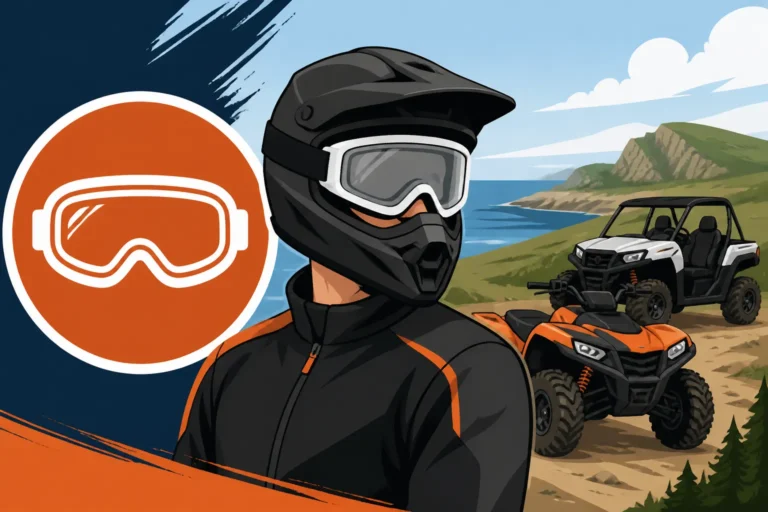
This is one of the clearest and most consistently enforced rules across Newfoundland, whether you're on a highway, a designated trail, or a remote woods road: wear your helmet. [Newfoundland Helmet Law for Every Rider] is strict, and it applies to both operators and passengers. It's not about looking cool; it's about protecting your head. Bumps, hidden rocks, sudden turns, and encounters with wildlife are all real possibilities on woods roads, and a helmet is your first line of defense against serious injury.
Beyond the helmet, proper [Newfoundland Eye Protection Requirements] are also crucial. Goggles or a helmet with a face shield protect your eyes from dust, branches, insects, and flying debris. You'll also want sturdy boots, gloves, and appropriate clothing to protect yourself from abrasions and the elements. These are not just suggestions; they are vital safety precautions. Imagine a branch snapping back into your face at speed because you skipped the goggles. It's simply not worth the risk. Proper gear can make the difference between a minor incident and a trip to the hospital.
Navigating Woods Roads: Safety, Etiquette, and Environmental Responsibility
Woods roads present a unique set of challenges compared to managed trails. They are often multi-use, shared with industrial traffic, and can be less maintained. This means extra vigilance, a strong sense of trail etiquette, and a deep respect for the environment are absolutely essential. Riding smart and riding safely goes a long way to preserving access for everyone.
Sharing the Road: Logging Trucks, Industrial Traffic, and Other Users
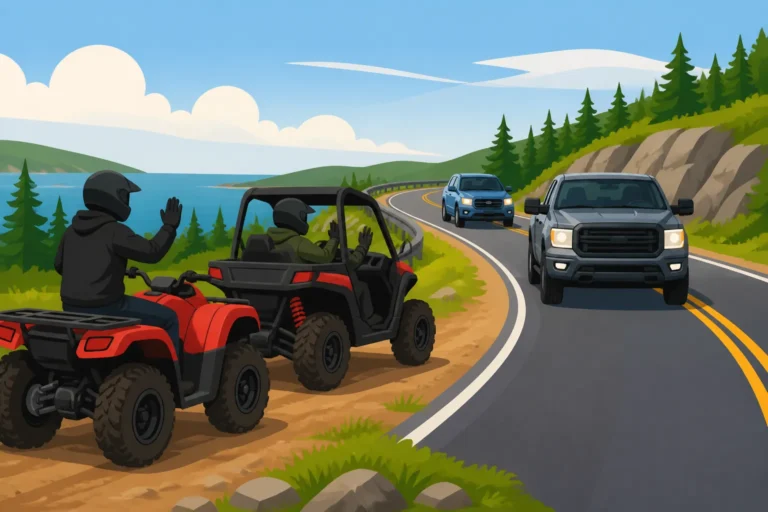
One of the biggest differences on woods roads, especially active ones, is the presence of heavy industrial traffic. Logging trucks, excavators, and other large vehicles operate on these roads, and they are not expecting recreational riders. These vehicles are often massive, noisy, and travel at speeds that might surprise you on an unpaved road. They also have huge blind spots. The golden rule here is simple: yield to all industrial traffic. Always. Pull over, give them ample room, and make sure they see you. A fully loaded logging truck takes a long time to stop and cannot swerve easily.
It's not just big trucks. You might encounter other users like hikers, mountain bikers, hunters, or even other off-road vehicle operators. Patience and courtesy are paramount. A dusty woods road can obscure visibility, so slow down when approaching blind corners or crests. [Riding Behind Traffic on a Dusty Gravel Road] can be incredibly unpleasant and dangerous, so maintain a safe following distance. Always assume there's something coming around the next bend or just over that hill.
Gates and Access Points: When 'Closed' Means Closed
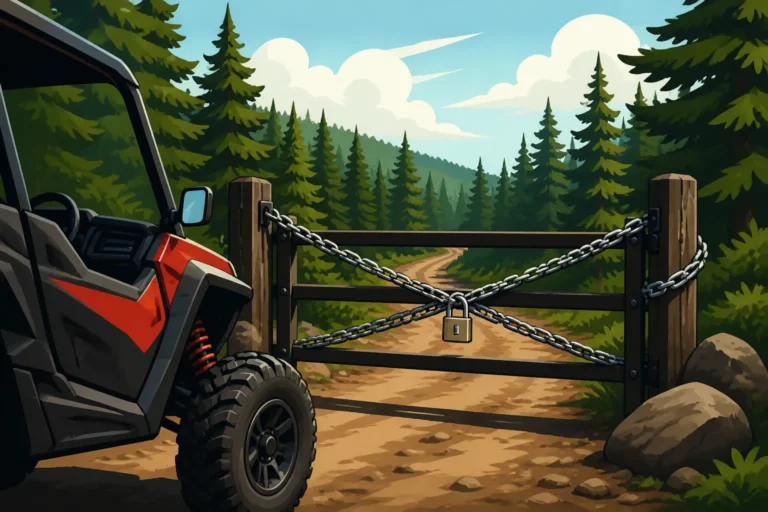
You'll often find gates across woods roads. These aren't just for decoration. [Gates and Chains Across a Woods Road] typically mean one of two things: either the road is closed to public access, or it's a controlled access point for a private operation. Never, ever, try to go around a closed gate, cut a chain, or force your way through. This is trespassing, pure and simple, and it can lead to legal trouble, fines, and potentially even machine seizure. These gates are there for a reason, whether it's active logging, environmental protection, or simply to prevent unauthorized access to private property.
It's always a good idea to research your intended route beforehand if possible. Local ATV clubs or forestry companies might have information on access restrictions. If a gate is locked, turn around and find an alternative route. Disregarding these closures not only makes you liable but can also jeopardize future access for all responsible riders. It paints a bad picture for the entire riding community.
Environmental Impact: Leave No Trace
Newfoundland's wilderness is precious, and we, as riders, have a responsibility to protect it. Woods roads often traverse sensitive ecosystems, including wetlands, bogs, and areas vital for wildlife. Stick to established roads and trails. Do not create new paths, especially through fragile areas. Mud bogging off-trail, while sometimes tempting, can cause significant damage to delicate soil structures and vegetation, leading to erosion and habitat destruction. The provincial [Newfoundland Wetland Protection Rules] are in place for a reason, and fines for damaging these areas can be steep.
Beyond environmental damage, practicing "Leave No Trace" principles is crucial. Pack out everything you pack in – and if you see litter, pick it up. Your machine should also be well-maintained to prevent fluid leaks. Many riders also use durable aftermarket parts, like those from SuperATV, to ensure their machines can handle tough terrain without falling apart and leaving debris. Being a responsible rider means respecting the land, its wildlife, and other users.
Speed and Visibility: Dust, Blind Corners, and Limited Sightlines
Woods roads are inherently less predictable than paved roads or well-groomed trails. You'll encounter potholes, loose gravel, deep ruts, and washouts. Dust can reduce visibility to almost zero, especially on dry days or when following other vehicles. Combine this with blind corners, crests, and thick tree cover, and you have a recipe for potential accidents if you're not careful. This is particularly true when you're going around a bend and encounter a large vehicle or another machine unexpectedly.
Always ride at a speed that allows you to stop safely within your line of sight. On many woods roads, this means slowing down considerably. Using your headlights, even during the day, can help you be seen by others. Some riders enhance their machine's visibility with additional lighting or flag whips, particularly for side-by-sides, and look to brands like SuperATV for robust lighting solutions. Remember that the woods often mean limited cell service, so a breakdown or accident can leave you stranded. Ride within your abilities and the capabilities of your machine.
Maintenance and Equipment: Preparing Your Machine for the Challenge
Riding woods roads can be tough on your machine. The rough terrain, hidden obstacles, and potential for deep mud or water crossings demand a robust setup. Before heading out, always conduct a thorough pre-ride inspection. Check your tires, brakes, lights, fluid levels, and ensure everything is in good working order. Carrying a basic toolkit, spare belt, tire repair kit, and a winch (if your machine doesn't have one integrated) can turn a potential disaster into a minor inconvenience. Investing in protective accessories like skid plates and A-arm guards, perhaps heavy-duty ones from SuperATV, can save you from costly damage.
Additionally, be sure your machine meets general [Newfoundland Equipment Requirements] like working head and tail lamps for riding after dark, and a proper muffler system. A noisy exhaust can disturb wildlife and other users, drawing unwanted attention. Ensure your tires are appropriate for the conditions, offering good traction without causing excessive damage to the terrain. Having the right gear, both for you and your machine, enhances safety and enjoyment, and gives you confidence to tackle whatever the woods road throws at you.
Enforcement and Penalties on Woods Roads
It's a common misconception that enforcement doesn't happen on remote woods roads. That couldn't be further from the truth. Peace officers, including the RCMP, provincial park rangers, and wildlife officers, have the authority to patrol these areas and will issue citations for non-compliance. Understanding what they can ask for and the consequences of breaking the rules is essential.
What an Officer Can Ask: Proof of Papers
If you're stopped on a woods road, a peace officer is well within their rights to ask for your documentation. This typically includes your off-road vehicle registration, proof of insurance, and your driver's licence. Just like on a highway, you need to be able to produce these documents. If you can't, it could lead to fines or further investigation. Remember, [What an Officer Can Ask You to Produce] goes beyond just your ID; it covers your machine's legitimacy too.
It’s always a good idea to keep your essential papers in a waterproof bag or pouch on your machine, accessible but protected from the elements. Don't rely on cell service to pull up digital copies; physical copies are often preferred. Cooperation and politeness go a long way in these interactions.
Trespassing and Fines: Ignorance Isn't an Excuse
As discussed, riding on private land without permission is trespassing. The province's [Newfoundland Trespass Law for Riders] applies equally whether you're in a car or on an ATV. Fines for trespassing can range significantly, and repeated offenses can lead to more severe penalties. The "I didn't know it was private" excuse generally won't hold up, especially if there were gates or signs. It's your responsibility as the operator to know where you're riding.
Fines aren't limited to trespassing. Violations like not wearing a helmet, operating an unregistered machine, riding without insurance, or causing environmental damage can all result in substantial monetary penalties. These fines are designed to deter unsafe and irresponsible riding and can quickly add up, turning a fun day into a very expensive regret.
Machine Seizure: The Ultimate Consequence
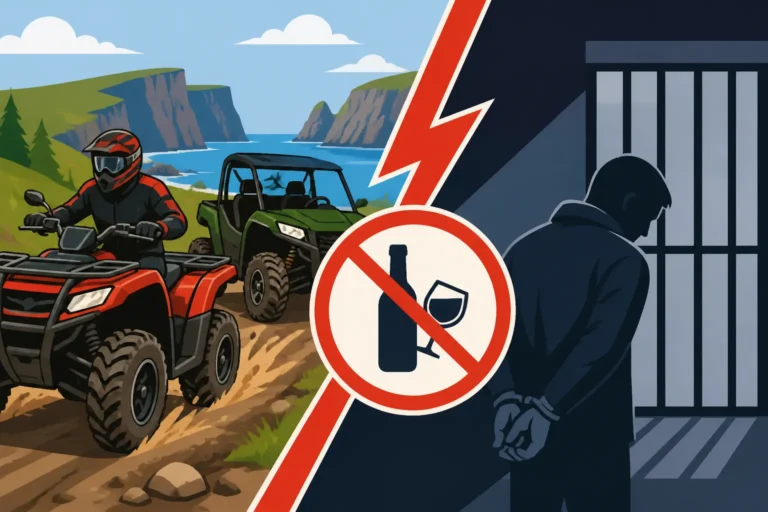
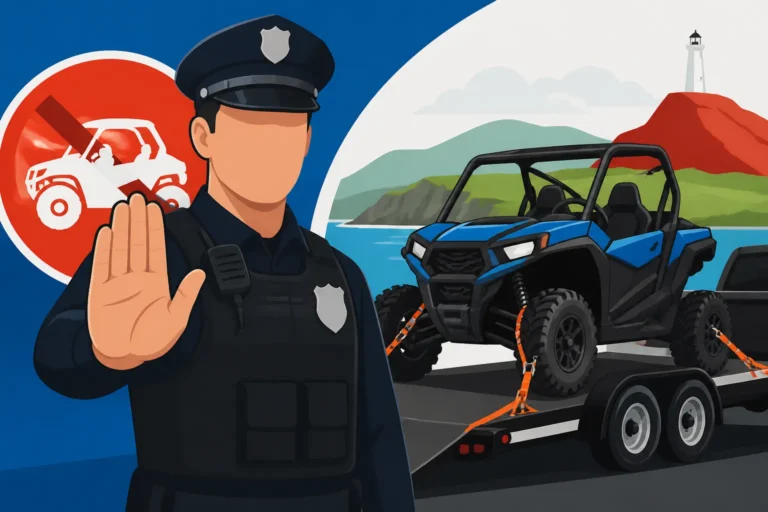
Perhaps the most severe penalty for serious infractions is [Newfoundland Machine Seizure Rules]. In cases of repeat offenses, impaired operation, or other significant violations of the Off-Road Vehicles Act, an officer has the authority to seize your machine. This means your ATV or UTV could be impounded, and getting it back can be a lengthy, expensive, and frustrating process, often involving impound fees, storage charges, and potential court costs. In some extreme cases, a seized machine might even be forfeited.
The province takes compliance with off-road vehicle laws very seriously, both for public safety and environmental protection. Riding on woods roads offers incredible freedom and access to Newfoundland's stunning backcountry, but that privilege comes with significant responsibilities. By understanding and adhering to these rules, you not only protect yourself and others but also help ensure that these valuable riding areas remain open for generations of riders to come.
| Rule Category | Key Considerations for Woods Roads | Potential Consequences of Non-Compliance |
|---|---|---|
| Access & Land Use | Verify public or private access; respect gates & signs | Trespassing charges, fines, loss of future access |
| Registration | Machine must be registered and plate displayed | Fines for unregistered vehicle, potential seizure |
| Insurance | Minimum liability insurance is mandatory | Fines, personal liability for damages |
| Licensing | Valid driver's licence required, especially near highways | Fines, driving without a licence charges |
| Safety Gear | Helmet, eye protection (goggles), appropriate clothing are essential | Fines for helmet violations, serious injury risk |
| Shared Use | Yield to industrial traffic; respect other users (hikers, hunters) | Accidents with heavy machinery, conflicts with other users |
| Environmental | Stick to existing trails; no off-trail mud bogging; pack out trash | Environmental fines, habitat damage, access restrictions |
| Machine Readiness | Maintain machine, carry repair kit, consider protective upgrades | Breakdowns in remote areas, costly repairs, safety hazards |
Disclaimer
This article is for general informational purposes only and does not constitute professional advice. Laws, prices and regulations vary by location and change over time. Consult a qualified professional for guidance on your specific situation.