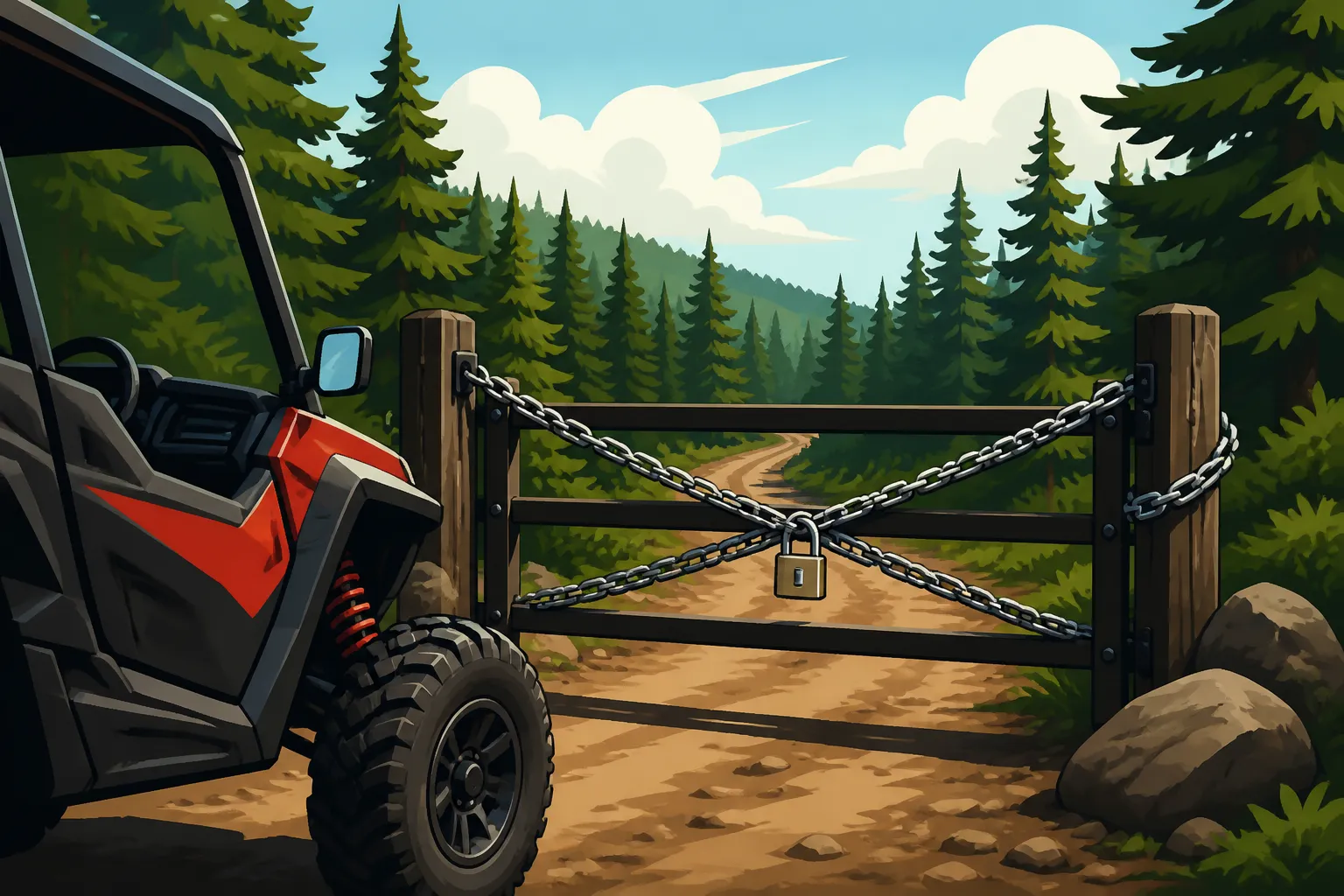
Gates and Chains Across a Woods Road
There’s nothing quite like the excitement of loading up your ATV or side-by-side, checking the weather, and heading out for a day of adventure on Newfoundland’s vast network of woods roads. But that excitement can quickly turn to frustration when you round a bend only to find your path blocked by an unexpected gate or a heavy chain strung across the road. This guide is here to help you understand why these obstacles exist, how to navigate them legally and safely, and how to maintain access for all responsible riders.
Understanding Woods Roads and Their Barriers in Newfoundland
Woods roads in Newfoundland are a lifeline for many, whether they're used by logging companies, cabin owners, hunters, or, of course, ATV and UTV enthusiasts like us. They crisscross the province, offering unparalleled access to the backcountry. However, these aren't always public thoroughfares, and the gates and chains you encounter are often there for very legitimate reasons.
Who Owns and Manages These Roads?
It’s easy to assume that any dirt track weaving through the trees is fair game, but that's a common misconception. Woods roads fall under a few different categories of ownership and management, and knowing the difference is key to avoiding trouble.
First, you have roads on Crown Land. A significant portion of Newfoundland is Crown Land, managed by the provincial government. While many of these roads are generally open for recreational use, they can still be subject to specific regulations, and sometimes, even these roads will have gates. These gates might be installed by the Department of Fisheries, Forestry and Agriculture to manage timber harvesting areas, protect sensitive wildlife habitats, or control access during fire season. Just because it's Crown Land doesn't automatically mean open season; always remember that [Newfoundland Crown Land Riding Rules] apply, and these rules can include restrictions on where and when you can go.
Then there are privately owned woods roads. These are often built and maintained by forestry companies, such as Corner Brook Pulp and Paper, to access their timber limits. They are essentially private property, and just like someone's driveway, they are not open for public use without explicit permission. Other private roads might lead to private cabins, fishing camps, or even mining operations. Landowners have every right to control access to these roads, and that's where gates and chains come in. A local example might be a road off the Trans-Canada Highway near Gander, leading deep into a timber concession. While it looks like a perfect riding trail, if it's marked as private or gated, it’s not for public use.
Why Are Gates and Chains There?
Gates and chains aren't usually put up to annoy riders. They serve several critical purposes, primarily related to safety, property protection, and environmental stewardship.
Safety is a huge one, especially on active logging roads. Imagine cruising around a blind corner on your side-by-side only to come face-to-face with a massive logging truck rumbling out with a full load of timber. These trucks are heavy, often travelling faster than you'd expect, and they have the right of way on their active work roads. Gates and chains prevent unauthorized vehicles from entering these dangerous zones, protecting both recreational riders and forestry workers. [Sharing a Woods Road With Loaded Logging Trucks] is a serious matter, and restricting access is a primary way to prevent tragic accidents.
Property protection is another major reason. Private landowners, whether they’re forestry companies or cabin owners, invest significant money in building and maintaining these roads. They also want to protect their equipment, timber, and personal property from theft or vandalism. A gate acts as a deterrent and a clear demarcation of private land. It sends a message: "This is private, and unauthorized entry is prohibited."
Environmental protection also plays a role. In certain sensitive areas, gates might be used to prevent vehicle access during specific times of the year, like spring thaws when roads are easily damaged, or during wildlife migration seasons. Overuse or improper use of these roads can lead to erosion, habitat destruction, and contamination of water sources. For instance, some areas might be gated to protect critical caribou calving grounds, even on Crown land, ensuring wildlife is undisturbed.
The Legalities of Accessing Gated Roads
Ignoring a gate or chain on a woods road isn't just rude; it can have serious legal consequences. In Newfoundland, accessing private property without permission, especially when it's clearly marked or physically blocked, is considered trespass.
The Off-Road Vehicles Act outlines rules regarding where you can and cannot operate your machine, and while it doesn't specifically detail every private woods road, the general principles of property law and trespass still apply. If you cut a chain, climb over a gate, or bypass it by driving off the established road, you are trespassing. Landowners can call the RCMP or provincial enforcement officers, and you could face significant fines. The act of damaging property, like cutting a chain or fence, can lead to even more severe charges. [Newfoundland Trespass Law for Riders] is clear: you need permission.
Furthermore, if you are found trespassing, officers have the authority to ticket you, and in some cases, even seize your machine. [Newfoundland Machine Seizure Rules] can be invoked for various offences, and operating illegally on private land is certainly one of them. This can mean a hefty financial penalty to get your machine back, not to mention court costs and legal fees. It's a risk simply not worth taking, especially when the frustration of a blocked path can be easily avoided with a bit of planning and respect.
Navigating Gated and Chained Woods Roads Safely and Legally
Encountering a gate or chain doesn’t necessarily mean your ride is over, but it does mean you need to pause, assess, and act responsibly. Your actions at this point can make all the difference between a minor detour and a major headache.
What to Do When You Encounter a Gate or Chain
First and foremost, never, ever cut a chain or force open a gate. This is illegal, dangerous, and ruins access for everyone. It also makes you liable for property damage. When you see a gate or chain, your first step should be to assess the situation. Is there signage? Does it indicate private property, active operations, or contact information for the landowner?
If there’s contact information, take it down. This is your best route. You can try to reach out to the landowner or company responsible to inquire about access. Sometimes, permission is granted for recreational use, especially for non-motorized activities or during off-seasons. For instance, some logging companies might allow access during weekends when no operations are underway, provided you've called ahead and received explicit permission. Always remember that [Asking a Landowner for Written Permission to Ride] is the safest and most respectful approach. Written permission is always better than verbal, as it provides a clear record.
If there's no contact information, or if you can't get through, it's safer to assume that access is denied. Look for alternative routes on your map. Maybe there's another trail nearby that bypasses the private section, or a different public woods road that leads to your intended destination. It's frustrating, I know, but turning around is far better than risking a fine or a confrontation. Sometimes, the gate means that specific area is simply off-limits for your machine. You might have to adjust your plans and explore another section of the vast Newfoundland backcountry.
Tools and Techniques for Respectful Passage
When I talk about tools and techniques here, I'm absolutely not talking about bolt cutters or crowbars! I'm referring to the tools for safe and respectful riding in general, and the mental "techniques" for navigating these situations.
One crucial tool for any rider is a good, up-to-date map and a GPS device. Before you even head out, spend some time planning your route, identifying potential access points, and noting any areas that might be private or restricted. Many local ATV clubs maintain maps that can highlight known access issues or provide alternative routes. Having your machine equipped with storage solutions, perhaps from a brand like SuperATV, can help you carry detailed paper maps alongside your GPS, ensuring you're never completely reliant on electronic devices that can fail in remote areas.
Another "technique" is good communication within your riding group. If you're riding with friends, discuss beforehand what you'll do if you encounter a locked gate. Agree that the rule is always to turn back or seek permission, never to force entry. This prevents anyone in the group from making a rash decision that could get everyone into trouble. Pack recovery gear like a winch – perhaps a durable SuperATV winch – not for pulling down gates, but for safely extricating yourself if you find another, legitimate route that turns out to be trickier than expected. It’s all about being prepared for safe challenges, not illegal ones.
Finally, carrying an actual copy of the [What an Officer Can Ask You to Produce] – your registration, insurance, and safety certificate – is important. While these don't grant you access to private land, they demonstrate you're a responsible rider should you encounter an officer while figuring out a legal alternative.
Consequences of Illegal Access
Let's not sugarcoat it: the consequences of illegally accessing a gated or chained woods road can be significant and far-reaching. It’s not just a slap on the wrist.
Financially, you could be looking at substantial fines for trespassing, property damage, or operating an ORV in a prohibited area. [Newfoundland Fine Ranges by Offence] show that these aren't minor amounts; they can easily climb into hundreds or even thousands of dollars. Add to that potential court costs, and you're quickly looking at a very expensive day out.
Beyond the fines, there's the risk of your machine being seized. As mentioned earlier, peace officers have the authority to impound machines used in contravention of the Off-Road Vehicles Act or other provincial statutes. Getting your machine back from impound can involve towing fees, storage fees, and an administrative release fee, all before you even pay the actual fines. This means you could be without your machine for an extended period, and the cost to retrieve it can be astronomical.
Perhaps less tangible but equally important are the social consequences. Illegally forcing access not only damages property but also erodes trust between landowners, forestry operators, and the recreational riding community. Every time a rider acts irresponsibly, it makes it harder for everyone else to gain legitimate access. Landowners become more wary, and previously open areas might be gated or closed off permanently. This is a real concern for the future of riding in Newfoundland. We need to be ambassadors for our sport, not its detractors.
Building Positive Relationships with Landowners and Forest Operators
The key to continued access to Newfoundland's beautiful backcountry lies in mutual respect and open communication. Riders, landowners, and forestry operators share these vast spaces, and by working together, we can ensure everyone's needs are met responsibly.
The Importance of Communication and Respect
Building bridges starts with simply asking. If you see a gate on a road that looks like a great trail, try to find out who owns it. The local council, provincial government departments (like Fisheries, Forestry and Agriculture), or even local businesses might have information. Once you identify the landowner or operator, a polite phone call or email asking for permission can go a long way. Explain what you want to do (e.g., "We're a small group of responsible riders looking to explore the area during the off-season") and reassure them that you understand their concerns about safety and property.
Be prepared to follow any conditions they set. This might mean riding only on specific days, sticking to designated routes, avoiding certain areas, or ensuring you leave absolutely no trace. Remember, they are granting you a privilege, not a right. Many landowners are reasonable and understanding, especially if they see that riders are serious about being respectful.
Consider joining a local ATV or snowmobile club. These organizations often have established relationships with landowners and forest operators. They can act as a liaison, negotiating access agreements and helping to communicate rider concerns and responsibilities. These clubs are vital advocates for our sport.
Becoming a Responsible Rider
Responsible riding goes beyond just following the rules; it's about adopting a mindset of stewardship. This includes always carrying out what you carry in, and perhaps even picking up any litter you find. It means sticking to established trails and not creating new ones, which can lead to erosion and habitat damage. It's about ensuring your machine is in good working order, with a properly functioning muffler to minimize noise disturbance, and that you have appropriate [Newfoundland Low Pressure Tire Rules] for the terrain to minimize impact.
Educate yourself on the local environment and wildlife. Understand when and where wildlife might be sensitive to disturbance, such as during nesting seasons or around crucial feeding grounds. Knowledge is power, and being aware of these factors allows you to make informed decisions that protect the environment we all love to ride in.
Another aspect of responsible riding is preparedness. Always let someone know where you're going and when you expect to return. Carry a well-stocked first-aid kit, emergency supplies, and a means of communication (like a satellite messenger, as cell service is often spotty in the backcountry). Installing heavy-duty skid plates from SuperATV on your UTV or ATV can protect your machine from unexpected obstacles, ensuring you don't break down in a remote area and contribute to environmental damage or require a costly rescue.
How Riders Can Help Maintain Access
The future of off-road riding in Newfoundland depends heavily on the actions of individual riders. By actively contributing to positive relationships, we can help maintain and even expand access.
One significant way to help is by volunteering for trail maintenance. Many local clubs organize work bees to clear debris, maintain signage, and repair damaged sections of trails. Getting involved shows landowners and the wider community that riders are invested in the responsible use and care of the land. It’s a tangible way to give back and prove that we’re not just users, but caretakers.
Reporting issues is another critical contribution. If you notice illegal dumping, vandalism, or other irresponsible behavior by any user of the land, report it to the authorities or the relevant landowner. Don't be afraid to speak up when you see something wrong; silence can be interpreted as complicity. Protecting the integrity of our trails and natural spaces is everyone's responsibility.
Finally, simply being a good neighbour helps. Slow down when passing cabins or homes, especially on a dusty gravel road. A friendly wave to hikers, cabin owners, or other trail users goes a long way. These small gestures demonstrate respect and help to foster a sense of community, ensuring that all users can continue to enjoy the incredible wilderness that Newfoundland has to offer.
| Type of Woods Road | Common Purpose | Typical Access Rules for ORVs | Recommended Rider Action |
|---|---|---|---|
| Active Logging Road | Timber harvesting, heavy equipment transport | Strictly restricted. Often gated/chained for safety. Public entry highly dangerous and usually illegal. | Do NOT enter. Seek alternate routes. Contact company for specific off-hours permission (unlikely). |
| Inactive Logging Road | Historical timber access, some recreational use | May be open or gated. Gates often signify private ownership or long-term closure. | Assume closed if gated. Seek permission. Check local club maps for known open sections. |
| Private Cabin Access | Access to private residences/camps | Restricted. Gated/chained to protect property. Entry is trespass without explicit permission. | Do NOT enter. If seeking specific cabin access, find owner and request permission. |
| Crown Land Road | General public access, resource management | Generally open, but can be seasonally closed or gated for conservation/management reasons. | Check for signage/seasonal closures. If gated, research reasons before assuming access. |
| Utility Access Road | Maintenance of power lines, pipelines | Often restricted. May have gates/chains for security or to protect infrastructure. | Do NOT enter without permission. Utility companies have strict access protocols. |
Disclaimer
This article is for general informational purposes only and does not constitute professional advice. Laws, prices and regulations vary by location and change over time. Consult a qualified professional for guidance on your specific situation.