Newfoundland Licence Requirements on a Highway
One of the trickiest parts about enjoying your ATV or side-by-side in Newfoundland and Labrador is figuring out where you can actually ride, especially when it comes to paved roads and highways. It's not uncommon for riders to feel a mix of excitement to explore new trails, coupled with a real headache trying to understand the often-confusing rules about highway access and what kind of licence you need to even touch a public road. This guide is going to clear up all that confusion, breaking down exactly what kind of licence you need when your off-road vehicle briefly ventures onto a highway or shoulder.
The Core Question: Can You Even Ride a Highway?
Before we even get to licences, we need to tackle the fundamental question: are ATVs and UTVs allowed on highways in Newfoundland and Labrador at all? It’s a point of contention and confusion for so many riders, and for good reason. The rules aren't always intuitive, especially when you're just trying to get from your cabin to a trail a few kilometres away.
The General Rule: Off-Highway, Not On-Highway
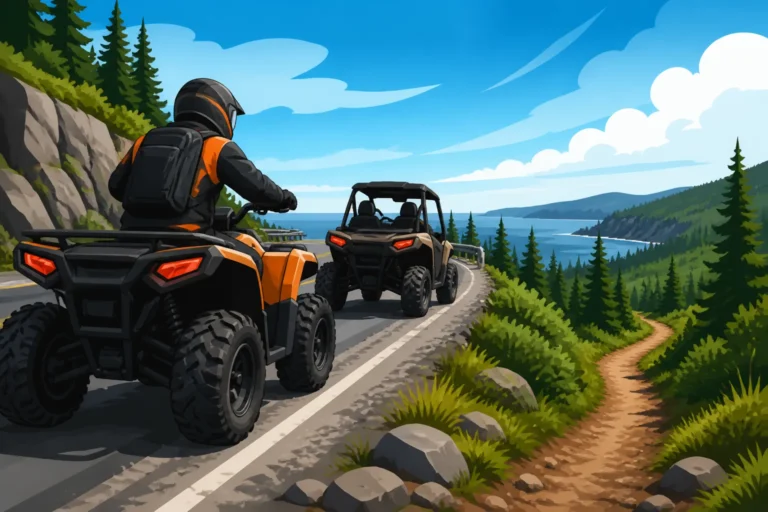
Let's be blunt: off-road vehicles (ORVs) like ATVs and UTVs are, by their very nature, designed and intended for off-road use. This means trails, barrens, woods roads, and private land. The provincial legislation, specifically the Off-Road Vehicles Act, is pretty clear on this. Generally, these machines are not considered "highway vehicles" in the same way your car or truck is. You can't just cruise down the Trans-Canada Highway on your quad.
This general prohibition is often a source of frustration. You've got a fantastic machine, maybe even decked out with accessories from a brand like SuperATV, ready for adventure, but there's a paved road standing between you and the next stretch of wilderness. It feels counter-intuitive, doesn't it? Many riders live in areas where the closest trail network requires a short jaunt on a secondary road, and the idea of having to trailer your machine for just a few hundred metres can be a real pain. The province recognizes this practical dilemma, which is why there are specific, albeit limited, exceptions.
Specific Exceptions for Road Use
While cruising on a highway is a definite no-go, the Off-Road Vehicles Act does carve out very specific situations where an ORV can legally operate on or across a public road. These exceptions are critical for connecting trail networks and allowing access for things like hunting or fishing. However, they come with a laundry list of conditions that must be met, and failure to comply can lead to fines and even machine seizure.
The two main scenarios are:
- Crossing a Highway: This allows you to cross a paved road at a right angle to get from one side to the other, usually to connect to a trail on the opposite side. It's not a shortcut for travelling down the highway, but a very brief transit across it.
- Riding the Shoulder: In certain circumstances, you can ride on the shoulder of a highway, but this is extremely limited in distance and purpose. It's almost exclusively for accessing a trail or private property that borders the highway, not for general travel.
Both of these exceptions are regulated tightly, requiring things like proper visibility, yielding to highway traffic, specific speeds, and, crucially for this discussion, the correct type of operator's licence. Without understanding these nuances, you could easily find yourself on the wrong side of the law.
Understanding Newfoundland's Licence Requirements for ORVs
The question of what licence you need often depends on where you're riding. It's not a one-size-fits-all answer, and this is where a lot of the confusion stems from. Let's break it down by riding environment.
For Off-Highway Riding Trails, Barrens, Woods Roads
When you're out on the vast barrens, navigating through the woods, or exploring designated trails, the rules around driver's licences are a bit different from when you're on a paved road. For the most part, a formal, government-issued driver's licence isn't strictly mandated for operating an ORV exclusively on off-highway terrain.
However, this doesn't mean it's a free-for-all, particularly for younger riders. The province places a strong emphasis on competency and safety. For instance, while an adult might not technically need their Class 5 to ride a trail, they are still expected to be a competent operator. For minors, the situation is much more structured. There are strict age limits for operating machines of certain engine sizes, and riders under 16 absolutely need to be supervised by a licensed adult. More importantly, [Newfoundland Safety Training Is Mandatory] for anyone registering an ORV for the first time, or for youth riders. This training ensures that operators, especially new ones, understand the safety protocols and responsible riding practices, even if they don't hold a traditional driver's licence. The focus here is on safe operation, not necessarily on holding a particular class of driving licence.
For On-Highway Exceptions Crossing, Shoulder Riding
Now, this is where your driver's licence becomes absolutely essential. The moment your ORV touches a designated "highway" – even if it's just for a quick crossing or a short stint on the shoulder – you are subject to the rules of the road for motor vehicles. And guess what? Your ATV or UTV, when on a highway, is considered a motor vehicle under the Highway Traffic Act for these specific purposes.
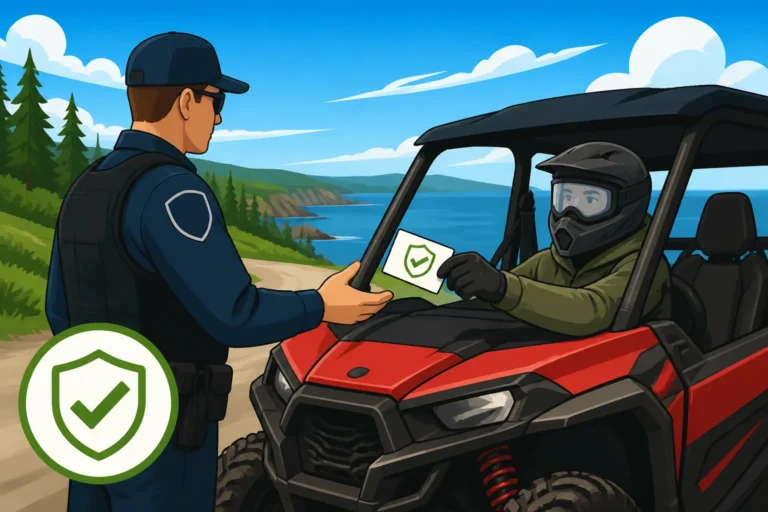
What does this mean for your licence? It means that you must possess a valid driver's licence that permits you to operate a motor vehicle on a highway. This isn't just a suggestion; it's a legal requirement. If you're planning to use those brief highway crossing or shoulder-riding exemptions, you better have your wallet ready with your current, unexpired, and unsuspended driver's licence. This applies whether you're driving a quad, a side-by-side, or any other ORV that falls under the Off-Road Vehicles Act and attempts to use a highway exception. The rationale is simple: when you interact with highway traffic, you need to demonstrate the same level of competency and legal authorization as any other driver on that road.
What Kind of Driver's Licence Do You Need?
So, you understand that you need a licence for those brief highway stints. But which one? Do you need a special motorcycle licence, or will your standard car licence suffice? This is a common question, and thankfully, the answer is generally straightforward for most riders.
The Standard Class 5 Passenger Vehicle Licence
For the vast majority of ATV and UTV riders in Newfoundland and Labrador, your everyday Class 5 driver's licence (the one that lets you drive your car or light truck) is perfectly acceptable for operating your ORV during the permitted highway exceptions. This is fantastic news because most adults already hold a Class 5 licence.
The reasoning here is that when you're crossing a highway or riding a shoulder under the Act's provisions, you're operating a "motor vehicle" in a highway context. Your Class 5 licence proves you have demonstrated competence in operating a motor vehicle safely and understand the rules of the road. You're not expected to be a licensed commercial truck driver, nor do you typically need a motorcycle endorsement, as ATVs and UTVs are classified differently from motorcycles in this context. Just make sure your Class 5 is current, valid, and not under any suspension or restriction that would prevent you from operating a motor vehicle. Pulling out an expired licence or one that has been suspended is just as bad as not having one at all when a peace officer stops you.
Motorcycle Class 6 and Commercial Licences
While a Class 5 is generally what's needed, it's worth noting that other higher classes of driver's licences are also perfectly valid for operating an ORV under the highway exceptions.
- Class 6 (Motorcycle) Licence: If you happen to hold a Class 6 licence in addition to, or instead of, a Class 5, you are still good to go. A motorcycle licence demonstrates a valid driving privilege, and therefore, you meet the requirement. You don't need a motorcycle licence specifically for an ATV or UTV to use the highway exceptions, but if you have one, it works.
- Commercial Licences (Class 1-4): Similarly, individuals holding commercial driver's licences (Class 1, 2, 3, or 4) are also covered. These licences indicate a higher level of driving privilege and proficiency, so they naturally satisfy the requirement to operate a motor vehicle (your ORV) on a highway for the limited purposes allowed.
The key takeaway is that any valid, full-privilege driver's licence from Newfoundland and Labrador (or an equivalent from another jurisdiction, as we'll discuss later) that allows you to operate a regular motor vehicle is what you need.
Learner's Permits and Provisional Licences
This is where things can get a little trickier, especially for younger riders or those new to driving. Generally, a learner's permit (Class 5L or 6L) or a provisional licence (Class 5R or 6R) comes with significant restrictions. These restrictions are designed to ensure safety while a new driver gains experience.
For example, a learner's permit typically requires a licensed supervisor to be present and may prohibit carrying passengers. Given the strict conditions already placed on ORV highway exceptions (like yielding to traffic and maintaining very low speeds), adding learner's permit restrictions on top of that can become complex. It's generally advised that if you only hold a learner's permit, you should avoid using your ORV on any highway section, even for crossings or shoulder riding. The presence of a supervisor might be an issue depending on the ORV type (e.g., no passenger seat on some ATVs), and the intent of the highway rules is that the operator is fully competent and licensed for independent operation.
Similarly, provisional licences (often with reduced demerit point thresholds or restrictions on alcohol consumption) are generally considered valid driving privileges, but it's always best to err on the side of caution. If you're a young rider under a provisional licence, you'll still be subject to the general [Newfoundland Supervision Rules for Young Riders] if you are under a certain age, and it’s always safest to have a full, unrestricted licence when navigating any highway interaction, no matter how brief. Always review the specific conditions of your learner's or provisional licence and understand how they might interact with ORV regulations.
Beyond the Licence: Other Highway Riding Rules
Having the right licence is crucial, but it's only one piece of the puzzle. When your ATV or UTV is operating under one of the highway exceptions, it also needs to adhere to a specific set of rules that govern how you operate the machine in these scenarios. These rules are designed to keep you safe, as well as highway traffic, and ignoring them can lead to serious consequences, even if your licence is perfectly in order.
Crossing a Highway: The 150-Metre Rule
This is one of the most common ways ORVs interact with highways. You're on a trail, and another section of the trail is directly across the road. The Off-Road Vehicles Act allows you to cross, but only under very specific conditions:
- 90-Degree Angle: You must cross the highway at as close to a 90-degree angle as possible. This minimizes your time in the travel lanes.
- Shortest Route: Take the most direct path across the highway. No meandering.
- Yield to Highway Traffic: This is non-negotiable. You must yield the right-of-way to all highway traffic. This means coming to a complete stop and ensuring the way is clear before proceeding.
- Visibility: You must have a clear, unobstructed view of at least 150 metres in both directions along the highway before and during your crossing. This is where the [Crossing a Newfoundland Highway Needs 150 Metres of Visibility] rule comes into play. If there's a blind curve, a hill crest, or heavy fog, you cannot cross. It's about safety first.
- Designated Crossing Points: Ideally, use designated crossing points if they exist. Even if not, the general rule is to pick the safest spot possible.
Remember, this is not an excuse to travel along the highway; it's strictly for traversing it from one side to the other.
Riding the Shoulder: The 1-Kilometre and 20 km/h Limits
This exception is even more restrictive than crossing. You can use the shoulder of a highway, but only under very strict terms:
- Purpose-Driven: You can only ride the shoulder to get to an approved trail or to access land where you have permission to ride your ORV. It's not for general transportation.
- Distance Limit: You can only ride the shoulder for a maximum of one kilometre. That's a hard limit. You can't ride five kilometres down the shoulder to your buddy's cabin. This is why [Riding the Shoulder 1 Kilometre to Reach a Trail] is such a critical regulation to remember.
- Speed Limit: Your speed on the shoulder is capped at a maximum of 20 kilometres per hour. This is very slow, often slower than typical bicycle speeds, and it's enforced. The specific rule is [20 km/h on a Shoulder]. The intent is to minimize speed differences between your ORV and highway traffic.
- Far Right as Practicable: You must keep as far to the right side of the road shoulder as safely possible.
- Yielding: Just like crossing, you must yield to all highway traffic.
This is a very specific, limited privilege, and it's strictly for connecting points, not for travel. The goal is to provide minimal necessary access while prioritizing the safety of highway users. When riding the shoulder, remember your machine should be visible and not hidden by cargo; [Newfoundland Plates Unobstructed by Cargo] is an important consideration.
Essential Equipment for Road Sections
Even for these brief encounters with the highway, your ORV and its operator must meet certain equipment requirements, similar to other motor vehicles on the road.
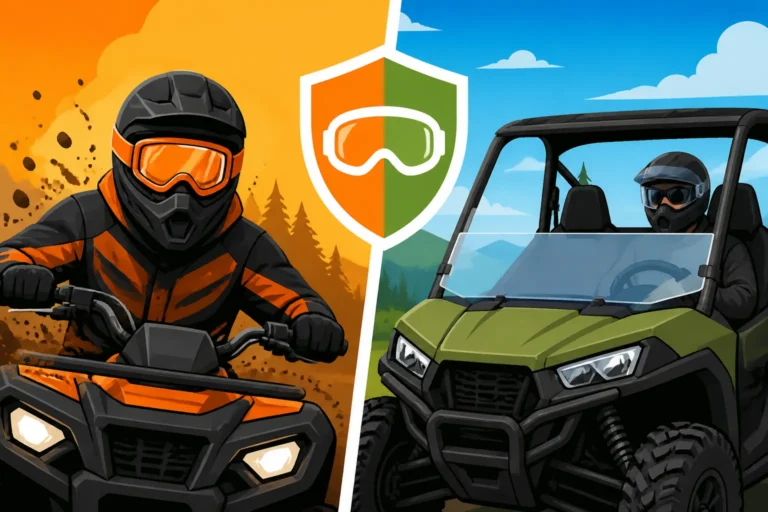
- Helmets: This is paramount. Anyone operating or riding as a passenger on an ORV in Newfoundland and Labrador must wear an approved helmet. When you're on a highway, even the shoulder, this rule is strictly enforced. The helmet must be properly fastened and meet recognized safety standards (CSA, DOT, ECE). This is reinforced by the [Newfoundland Helmet Law for Every Rider].
- Eye Protection: Goggles or a face shield are required unless your machine has an adequate windshield.
- Lighting and Reflectors: If you're operating between sunset and sunrise, or in conditions of poor visibility, your ORV needs to have an illuminated headlamp and tail lamp. You also need appropriate reflectors to ensure you are visible to other highway users. [Newfoundland Equipment Requirements] outlines these details. Aftermarket accessories, perhaps from SuperATV, that enhance visibility (like additional LED lights or reflective decals) can offer extra peace of mind, though you must ensure they comply with regulations.
- Seatbelts: For side-by-sides (UTVs) that are equipped with seatbelts by the manufacturer, these must be worn by both the operator and passengers. This is critical for safety on any terrain, but especially when near highway traffic.
- Muffler/Exhaust: Your machine must have a working muffler and not produce excessive noise. "Cut-out" exhaust systems are illegal.
Adhering to these equipment standards isn't just about avoiding a ticket; it's about making sure you're as visible and protected as possible when sharing any space with highway traffic.
What About Out-of-Province Riders?
Newfoundland and Labrador is a popular destination for ATV and UTV enthusiasts from across Canada and beyond. If you're visiting our beautiful province and plan to bring your machine, you might be wondering how your out-of-province driver's licence applies to these highway exceptions.
Visitor's Licence Recognition
Good news here! If you hold a valid driver's licence from another Canadian province or territory, or from another country, it is generally recognized as valid for operating an ORV under Newfoundland's highway exceptions, provided it's the equivalent of a full, unrestricted Class 5 licence. So, if you're visiting from Nova Scotia, New Brunswick, or Quebec, your valid home province licence will be accepted.
The key is "valid." Make sure your licence is current, not expired, and not under any suspension in your home jurisdiction. If your licence is provisional or a learner's permit, the same cautions apply as for Newfoundland residents – it's best to have a full, unrestricted licence for highway interactions.
The 30-Day Exemption and Beyond
Newfoundland has a helpful rule for visitors: if your ORV is registered in another jurisdiction (e.g., Nova Scotia, Ontario, Maine), you can operate it in Newfoundland and Labrador for up to 30 consecutive days without needing to register it here. This is known as [Newfoundland's 30-Day Visitor Exemption].
However, this exemption applies only to the registration of your machine, not to the operator's licence. Even within those 30 days, if you intend to use any of the highway crossing or shoulder-riding exceptions, you still need a valid driver's licence from your home jurisdiction. After 30 days, if you're staying longer, you'll generally need to register your machine in Newfoundland and Labrador. But the licence requirement for road sections remains consistent: a valid driver's licence is always needed.
Insurance Requirements for Visitors
While your out-of-province registration might be recognized for 30 days, your insurance requirements are still very much in play. The Off-Road Vehicles Act mandates that every ORV operated in Newfoundland and Labrador must have a minimum of $200,000 in third-party liability insurance. This applies whether you're a resident or a visitor.
Before you hit the trails, especially if you anticipate using highway crossings or shoulders, confirm that your existing insurance policy provides this minimum coverage in Newfoundland and Labrador. Most standard ORV insurance policies from other Canadian provinces will cover you, but it's always wise to check with your insurance provider. Carrying proof of this insurance is also mandatory. An officer can ask you to produce it at any time, and you generally have [Newfoundland Insurance Proof Within Two Days] to present it if you don't have it on hand. This is a critical safety net, not just a legal formality, ensuring that if an accident occurs on or near a highway, there's coverage for damages or injuries to third parties. Understanding [Newfoundland Insurance Requirements for Riders] is key for every rider.
| Scenario | Driver's Licence Required? | Type of Licence | Additional Rules/Notes |
|---|---|---|---|
| Off-Highway Use (Trails, Barrens) | Generally No (for adults) | N/A (Safety Training Recommended/Required for some) | Minors need supervision & safety training; Adults still need to be competent operators. |
| Highway Crossing | YES | Valid Class 5 (or higher) | Must cross at 90 degrees, yield to traffic, 150m visibility. |
| Highway Shoulder Riding | YES | Valid Class 5 (or higher) | Max 1km, 20 km/h, far right, yield to traffic, only for trail access. |
| Private Land (Owner's Land) | Generally No | N/A | Still responsible for safe operation; local bylaws may apply. |
| Out-of-Province Visitor (within 30 days) | YES (from home jurisdiction) | Valid equivalent to NL Class 5 | Machine registration exempt for 30 days, but NL insurance minimums apply. |
| Youth Rider (under 16) on Highway Exception | Generally No, if supervised | Not applicable (Supervisor needs valid licence) | Unlikely to be permitted due to supervisor/passenger rules; generally not advisable. |
The Consequences of Riding Without the Right Licence
Ignoring the licensing requirements for operating your ATV or UTV on Newfoundland's highways, even briefly, isn't just a minor oversight. It can lead to serious legal and financial repercussions that can quickly turn a fun day of riding into a very expensive headache.
Fines and Penalties
Operating any motor vehicle on a highway without a valid driver's licence is a serious offence under the Highway Traffic Act, and by extension, for ORVs using highway exceptions under the Off-Road Vehicles Act. If you are caught, you can expect a significant fine. These aren't just minor infractions; they are often treated with the same severity as driving your car without a licence.
Beyond the initial fine, you could also face demerit points on your driving record, which can affect your insurance rates or even lead to licence suspension if you accumulate too many. In more serious cases, especially repeat offences or if combined with other infractions (like reckless driving), the penalties can escalate. Understanding [Newfoundland Penalties for Riding Illegally] makes it clear that the province takes these rules seriously. Don't risk it for a quick hop across the road.
Insurance Implications
This is perhaps one of the most financially damaging consequences. If you are involved in an accident while operating your ATV or UTV on a highway section without a valid driver's licence, your insurance company can, and likely will, deny coverage.
Think about that for a moment. You might have paid for comprehensive insurance, but if you weren't legally licensed to operate the machine at the time of the incident, your policy's terms regarding "lawful operation" could be breached. This means you would be personally responsible for all damages, including repairs to your own machine, damage to public property (like guardrails), and, most critically, any injuries or damages to other vehicles or people involved in the collision. The minimum third-party liability coverage of $200,000 exists for a reason, and if your insurer voids it, you're on the hook for potentially hundreds of thousands of dollars. Always check [Newfoundland Liability Limits Explained] with your provider to fully understand your coverage, especially in light of licensing requirements.
Machine Seizure
In some cases, especially for repeat offenders or particularly egregious violations (like operating without a licence and without registration, or operating impaired), a peace officer has the authority to seize your ATV or UTV. This means your machine can be impounded, and you'll incur towing and storage fees on top of any fines. Getting your machine back can be a lengthy and expensive process.
It’s a harsh reality, but the province has these measures in place to deter illegal and unsafe operation. The prospect of having your valuable machine towed away is a strong motivator to ensure you're always operating within the bounds of the law, including possessing the correct licence when engaging with highway sections.
Navigating the rules for ATVs and UTVs in Newfoundland can feel like a maze, but when it comes to highway access, the message is clear: when your machine touches a public road, a valid driver's licence is not optional, it's mandatory. So, before you head out on your next adventure, confirm your licence is current and valid. Stay safe out there!
Disclaimer
This article is for general informational purposes only and does not constitute professional advice. Laws, prices and regulations vary by location and change over time. Consult a qualified professional for guidance on your specific situation.