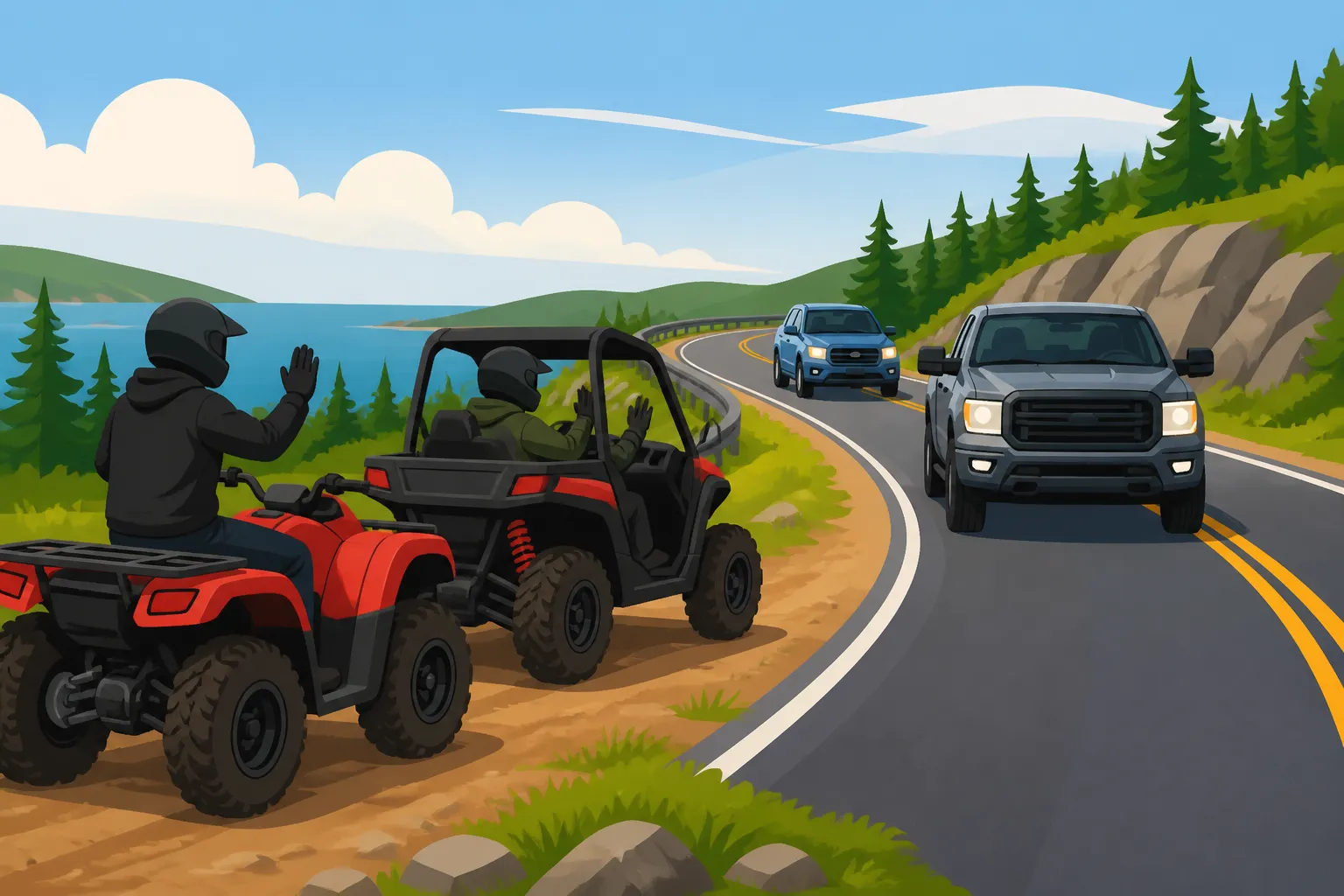
Newfoundland Riders Yield to Highway Traffic
Riding an ATV or UTV in Newfoundland and Labrador offers an incredible sense of freedom and access to breathtaking landscapes, but the rules for how these machines interact with public roads can often feel like a tangled mess. It’s easy to get confused about when you can cross a highway, ride a shoulder, or even just legally get from one trail section to another without running afoul of the law. This guide aims to demystify these regulations, helping you understand exactly what the province expects when your off-road vehicle approaches, crosses, or briefly travels on public roadways.
Understanding the Rules of the Road for ORVs in Newfoundland
It’s no secret that many riders dream of a completely "street legal" ATV or UTV, capable of cruising down Main Street just like any car. However, in Newfoundland and Labrador, the reality is a bit different. Off-road vehicles (ORVs) are primarily designed for off-road use, and their interaction with public highways is strictly limited and regulated. The provincial government has clear guidelines, but they can be tricky to interpret if you're not used to digging through legislative documents. The core principle you need to engrave in your mind is that ORVs are guests on public roads, and this dictates every rule you'll encounter.
The Fundamental Principle: Yielding to Highway Traffic
The most crucial rule, the bedrock upon which all other road-related ORV regulations are built, is that Newfoundland Riders Yield to Highway Traffic at all times. This isn't just a polite suggestion; it's a legal requirement designed to ensure safety on roads where cars, trucks, and motorcycles operate at higher speeds and often have much larger blind spots. When you're on your quad or side-by-side, you are inherently less visible and less protected than someone in a passenger vehicle. This means if you're at a crossing, waiting to enter a shoulder, or even just observing traffic, the onus is always on you to ensure it's safe to proceed and that you're not impeding or surprising any highway users. This constant need to yield should influence every decision you make when near a paved or public gravel road.
Think of it this way: your ORV is powerful and fun on the trail, but it's an anomaly on the highway. Drivers of conventional vehicles aren't necessarily expecting to see an ATV pop out from a trail or be riding on the shoulder. Therefore, acting predictably and giving way to established highway traffic isn't just about following the law; it's about self-preservation and preventing potentially dangerous situations. You might feel a bit put out having to wait for a long line of cars to pass, but that moment of patience is far better than an incident that could ruin your day, or worse.
When ORVs Can Interact with Public Roads
While ORVs aren't generally "street legal" in the same way a car is, there are specific, limited circumstances where they are legally permitted to be on or near public roads. These exceptions are typically for the purpose of getting to or from a trail, crossing a road to access another trail section, or traversing a short distance where no alternative route exists. It's not about joyriding down a highway; it's about practical necessity for trail access.
These interactions are always conditional. For instance, you might be allowed to ride the shoulder for a very short distance, or cross a highway at a specific type of intersection. The key is that these are not open invitations. The rules are designed to facilitate access without compromising public safety. You can't just decide to take the highway instead of the trail because it's faster. Every interaction must serve a legitimate purpose related to your off-road journey. Understanding these specific allowances is critical, as violating them can lead to significant fines and even machine seizure. It's a fine line, and knowing the difference between a legal maneuver and an illegal shortcut is paramount.
The Importance of Local Bylaws and Municipal Zones
Here's where things can get a little more complicated, and frankly, a bit frustrating for riders. While the province sets the overarching [Newfoundland's Off-Road Vehicles Act], individual municipalities in Newfoundland and Labrador also have the authority to create their own bylaws regarding ORV use within their boundaries. This means that what's permissible in one town might be strictly prohibited just a few kilometres down the road in another. Some towns might allow ORVs on certain streets or within specific zones, often with speed restrictions, to connect to trail networks, while others might ban them entirely from all municipal roads.
It’s like a patchwork quilt of rules. Before you ride into any community, especially if you're unfamiliar with the area, it's your responsibility to check the local bylaws. Many communities, particularly those with strong tourism ties to trail riding, will have this information readily available on their municipal websites or at their town offices. Ignoring these local rules, even unknowingly, won't save you from a ticket. A quick call to the town office or a check of their online resources can save you a lot of grief. Remember that enforcement by local police or municipal enforcement officers can be just as strict as provincial enforcement, and fines can be substantial. [Newfoundland Municipal Road Bylaws] are a critical piece of the puzzle for any rider venturing into populated areas.
Navigating Highway Crossings and Shoulder Riding
The moments when your ORV intersects with a public highway are often the most nerve-wracking for riders, and for good reason. These are high-risk situations if not handled correctly. The province has put very specific rules in place to minimize this risk, focusing on visibility, distance, and speed. These aren't arbitrary numbers; they're calculated to give you and other drivers the best chance to react safely.
The 150-Metre Visibility Rule for Crossings
If you need to cross a highway—say, to get from one section of a trail to another—you can't just pop out from behind a stand of trees. The law states that you must only cross a highway where you have an unobstructed view of at least 150 metres in both directions. This is the Newfoundland's 150-Metre Crossing Visibility Rule, and it's absolutely critical. One hundred and fifty metres is a substantial distance, roughly equivalent to one and a half Canadian football fields or three full tractor-trailer lengths. It's designed to give you ample time to see approaching traffic and, equally important, for approaching drivers to see you.
Imagine you're at a blind corner or a crest of a hill. Even if you don't see anyone, traffic could appear suddenly. Crossing there is not just illegal, it's incredibly dangerous. You must position your machine so that you can clearly see down the road in both directions for that full 150 metres. If you can't, you need to find a different crossing point. This rule often means you might have to walk your machine a little way to a safer, more open area, or even scout ahead on foot. It’s a proactive safety measure that demands your full attention and patience. Don't rush it; waiting for clear visibility is non-negotiable for your safety and the safety of others.
The 1-Kilometre Limit for Shoulder Riding
Sometimes, crossing isn't enough; you might need to use the shoulder of a highway to connect two trail sections. Newfoundland allows this under very specific conditions, but it's not a free pass. The rule is clear: you can only ride the shoulder of a highway for a maximum distance of one kilometre. This is the Newfoundland's 1-Kilometre Shoulder Rule. One kilometre might seem like a decent stretch, but it's meant for short connections, not for extended travel.
This limitation prevents ORVs from becoming a regular fixture on highway shoulders, which are primarily for emergency stops and short-term use by conventional vehicles. It's about minimizing the time your less-visible machine is in close proximity to high-speed traffic. If your trail connection requires more than a kilometre of shoulder riding, you need to find an alternative route, even if it means taking a detour on a less direct path. Exceeding this limit is a clear violation and an easy way to attract the attention of law enforcement. Always have a clear understanding of your route and measure your distances, perhaps by using a GPS or odometer, to ensure you stay within this critical boundary.
Adhering to the 20 km/h Shoulder Speed Limit
When you are legally permitted to ride on the shoulder for that one kilometre, you are not allowed to match the highway speed. Far from it. The Newfoundland's 20 km/h Shoulder Limit is strictly enforced. Twenty kilometres per hour is roughly equivalent to 12 miles per hour, which is quite slow. It’s a deliberate crawl designed for safety. This slow speed allows you to react to unexpected obstacles on the shoulder, such as debris or pedestrians, and it gives highway traffic ample time to see and safely pass your machine.
Riding at 20 km/h also signals to other drivers that you are not attempting to merge into traffic or travel at highway speeds. It reinforces your status as an ORV temporarily using the shoulder for access, not as a conventional vehicle. Trying to push this limit, even slightly, increases the risk of an accident and makes you an immediate target for fines. Furthermore, this slow speed helps minimize wear and tear on your tires, which are not designed for sustained pavement use. Treat this speed limit with the utmost seriousness; it's a key component of safe and legal ORV operation on or near public roads.
Essential Equipment and Rider Requirements for Road Interaction
Whenever an ORV approaches a public road, even for a brief crossing or a short stint on the shoulder, the stakes immediately go up. The provincial government recognizes this and mandates certain equipment and rider qualifications to mitigate the risks. These aren't optional suggestions; they are legal requirements designed to protect you, your passengers, and other road users. Ensuring your machine and your riding practices meet these standards is fundamental to responsible ORV operation.
Mandatory Helmet and Eye Protection Standards
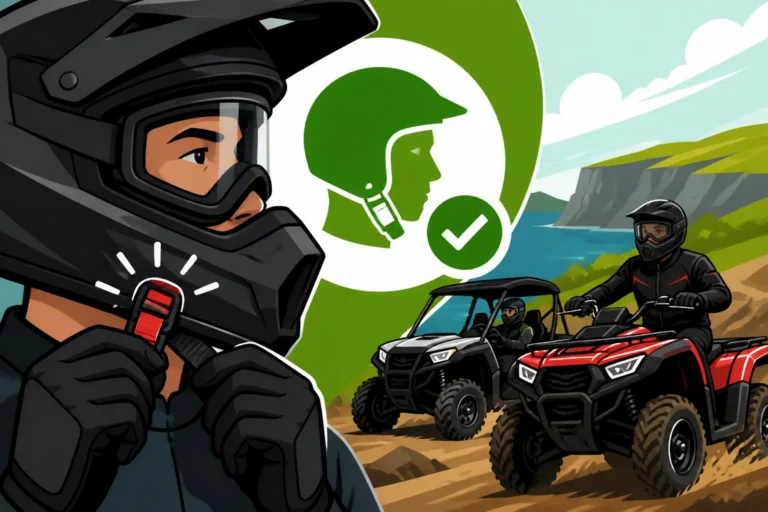
This is non-negotiable, and honestly, it should be a given even on the trails. If you're anywhere near a public road, and certainly when crossing or riding a shoulder, Newfoundland Helmet Law for Every Rider is clear: you and any passengers must wear an approved helmet. And it’s not just any helmet; it must meet specific safety standards. Helmets carrying the Canadian Standards Association (CSA) approval marking are always accepted, but so are those approved by the US Department of Transportation (DOT) or the European Economic Commission (ECE). The key is the certification, which assures a certain level of impact protection.
Beyond the helmet, proper eye protection is also mandatory. This usually means goggles, especially if your machine doesn't have a full windshield. Flying debris, dust, or even insects can cause significant eye injury, which can lead to losing control of your machine. Goggles, or even an integrated visor on your helmet, are crucial. And it’s not enough to just wear the helmet; the chin strap must be securely fastened. A helmet sitting loose on your head offers little protection in a tumble. Think of your gear as your first line of defense; skimping here is a direct threat to your well-being. Companies like SuperATV offer excellent choices for helmets and goggles designed to withstand the rigours of off-road riding while meeting safety standards.
Lighting, Reflectors, and Other Machine Requirements
Your machine needs to be visible to others, especially when interacting with road traffic. This means proper lighting is a must, particularly from sunset to sunrise. Your ORV must have a functional headlamp that emits a white or amber light to the front and a tail lamp that emits a red light to the rear. These lights aren't just for you to see; they're for others to see you. Beyond lamps, your ORV also needs reflectors. Amber reflectors should be visible from the side and front, and red reflectors from the side and rear. These enhance your visibility even when your lights aren't actively on, such as during dusk or dawn.
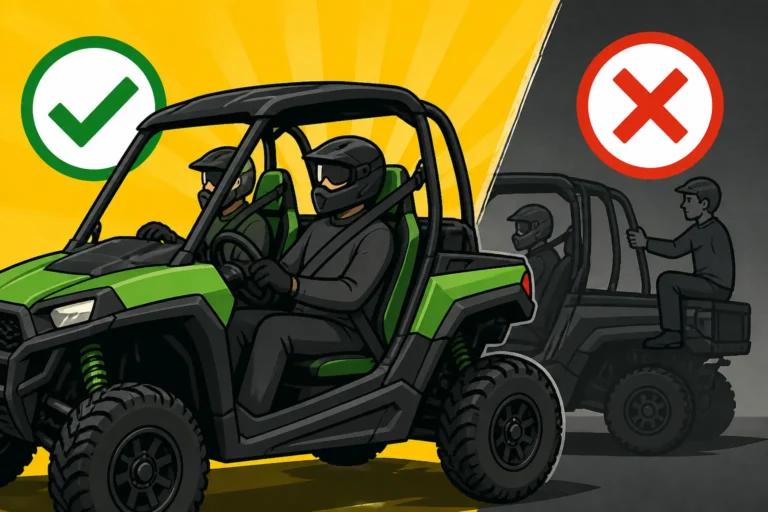
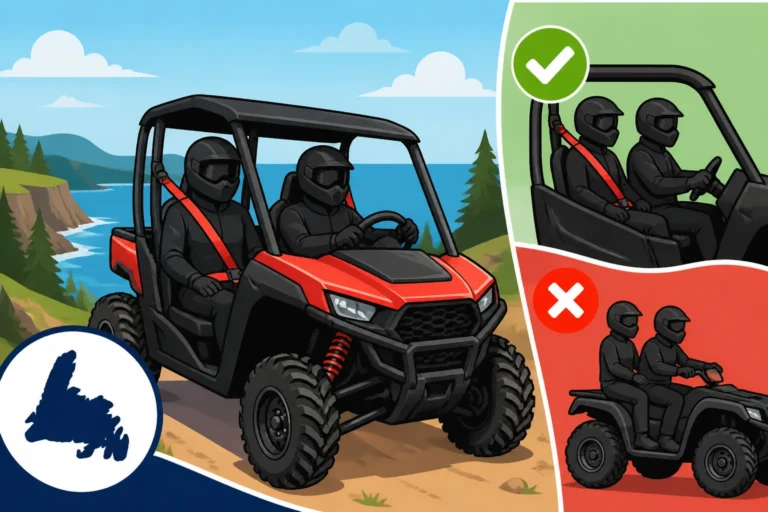
Beyond lighting, other machine requirements are in place to ensure safe operation. Your tires, for example, must be low-pressure tires specifically designed for off-road use; you can’t just swap on highway tires. Your exhaust system must be in good working order, meaning no modifications that make it excessively loud or bypass the muffler—cut-out exhausts are strictly forbidden and will draw a fine. If your ORV is a side-by-side with factory-installed seat belts, everyone in the machine must be buckled up. These aren't just details; they are critical safety features that minimize risk when your ORV is anywhere near the public eye.
Driver's Licence and Insurance Expectations
While you don't typically need a full driver's licence to operate an ORV on a trail, the moment you touch a public highway, even for a crossing or shoulder ride, the rules shift. If you are operating an ORV on a highway (which includes the shoulder or crossing), you must possess a valid driver's licence. This could be any class of licence that permits you to operate a motor vehicle. This is the [Newfoundland Licence Requirements on a Highway] rule and it's there because you are, for that brief moment, interacting with licensed highway drivers.
Additionally, while Newfoundland does not mandate insurance for off-road use, it does require a minimum level of liability insurance if you are operating an ORV on a highway. This is often the point of confusion for many riders. The Newfoundland's Minimum Insurance Requirement is typically set at a certain liability limit, which you should verify with an insurance provider, but it’s crucial to have this in place. You must also be able to produce proof of this insurance within two business days if requested by an enforcement officer. This means carrying your insurance details or having quick access to them. Without a valid licence and proof of insurance for highway interaction, you're not just risking a ticket; you're risking being uninsured and unlicensed in a potentially high-risk scenario.
Consequences of Non-Compliance and Enforcement
Breaking the rules of ORV interaction with public roads in Newfoundland isn't just a slap on the wrist. The province takes these regulations seriously, and enforcement officers—whether RNC, RCMP, or municipal enforcement—are empowered to issue significant penalties. Ignorance of the law is no excuse, and the consequences can range from hefty fines to the outright seizure of your machine. Understanding these potential outcomes can be a strong motivator for compliance.
Fines and Penalties for Road Violations
The immediate consequence of violating ORV rules on or near highways is a fine. These fines are not trivial; they are designed to deter non-compliance. For a first offense, fines can start at a couple of hundred dollars and escalate significantly depending on the severity and nature of the infraction. For example, failing to yield to highway traffic or exceeding the speed limit on a shoulder can lead to substantial financial penalties. [Newfoundland Fine Ranges by Offence] are published, and they clearly show that repeat offenses can lead to even higher fines, sometimes reaching into the thousands of dollars.
Beyond the monetary cost, you could also face other penalties. For instance, operating an ORV on a highway without a valid driver's licence could lead to points on your driving record or even a suspension of your existing licence, impacting your ability to drive conventional vehicles. These penalties are designed to emphasize that ORV operation on or near roads is not to be taken lightly. It's not just about a quick way to lose some cash; it's about a stain on your record and potential limitations on your future driving privileges. Always remember that enforcement officers are out there, and they are well-versed in the specifics of the Off-Road Vehicles Act.
Machine Seizure and Early Release Fees
This is perhaps one of the most impactful consequences, and it's a very real possibility for serious or repeat offenders. If an enforcement officer deems your ORV operation on a highway to be particularly reckless, illegal, or if you're a repeat offender, they have the power to seize your machine on the spot. This means your ATV or UTV will be impounded, and you'll be left without it. Getting your machine back isn't a simple process, nor is it cheap.
You'll typically face impoundment fees, storage fees, and an "early release fee" if you want to get your machine back before a court date or a specified release period. The Newfoundland Early Release Fees can be significant, often adding hundreds of dollars to the cost of your offense. These fees cover the cost of towing and storing your machine, and they accumulate daily. In some cases, if the fines and fees aren't paid, your machine could even be sold at auction to cover the costs. Imagine your pride and joy sitting in an impound lot, racking up fees, all because you decided to bend the rules for a short ride on the pavement. It’s a harsh but effective deterrent.
The Impact of Impaired Operation on Public Roads
While impaired driving is always serious, operating an ORV while impaired on or near a public highway carries exceptionally severe penalties. The law treats impaired operation of an ORV on a highway with the same gravity as impaired driving of a conventional vehicle. This means you could face criminal charges, not just provincial fines. The consequences include significant fines, mandatory licence suspensions, and even jail time, particularly for repeat offenses.
The Newfoundland Impaired Riding Penalties are designed to send a clear message: alcohol or drugs and ORVs do not mix, especially where they interact with the public road system. A conviction for impaired ORV operation can have long-lasting effects on your criminal record, your ability to obtain insurance, and your overall freedom. It’s not just about losing your ORV privileges; it's about losing your driver's licence for all vehicle types and potentially facing serious legal repercussions that affect every aspect of your life. The message is simple: if you've been drinking or using drugs, do not get on your ORV, especially if you plan on going anywhere near a highway.
Practical Tips for Safe Road-Adjacent Riding in Newfoundland
Riding an ORV in Newfoundland is an exhilarating experience, but when those trails bring you close to public roads, a different kind of vigilance is required. It's not just about following the letter of the law; it's about adopting safe practices that minimize risk for everyone. A little planning and a lot of common sense can go a long way in ensuring your ride remains enjoyable and trouble-free, especially when highway traffic is involved.
Pre-Ride Checks and Planning Your Route
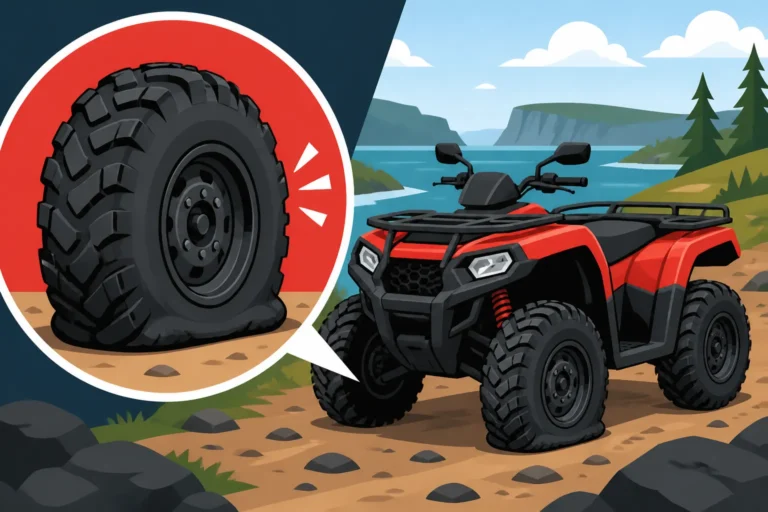
Before you even turn the key, a thorough pre-ride check is essential, particularly if your route involves road crossings or shoulder riding. This isn't just about making sure your machine is running well for the trail; it's about ensuring it's legally compliant for road interaction. Check all your lights – headlights, tail lights, and any auxiliary lights – to ensure they are fully functional. Verify that your reflectors are clean and visible. If your side-by-side has seatbelts, make sure they are in good working order. Also, check your tires for proper inflation and ensure they meet the low-pressure requirements for off-road vehicles. For specialized applications or rugged terrain, some riders might even consider heavy-duty axles or suspension components from manufacturers like SuperATV to enhance their machine's durability and handling on varied surfaces, ensuring peak performance whether on a trail or briefly traversing a paved shoulder.
Crucially, Newfoundland Registration Before Your First Ride is a requirement, and you should always carry proof of registration and, if you plan to touch a highway, proof of your liability insurance. Furthermore, plan your route meticulously. Use maps, GPS, or even local knowledge to identify exactly where you'll need to cross a highway or use a shoulder. Knowing the exact crossing points and their visibility, as well as the length of any shoulder-riding sections, helps you anticipate and prepare, rather than reacting on the fly. This proactive planning reduces stress and significantly lowers the chance of making a critical mistake.
Being Visible and Predictable to Other Drivers
When you're operating an ORV near or on a highway, your primary goal, after safety, should be to be as visible and predictable as possible to other drivers. Your machine is smaller and often quieter than conventional vehicles, making it easy to overlook. Wear bright, high-contrast clothing, ideally with reflective elements, even during the day. Consider adding reflective tape to your helmet and machine, especially for evening or low-light conditions.
When approaching a crossing or preparing to enter a shoulder, slow down significantly and make eye contact with drivers whenever possible. Use clear hand signals in addition to your machine's signals to indicate your intentions. Don't make sudden movements or swerve. When riding on a shoulder, maintain a consistent speed (the 20 km/h limit!) and stay as far to the right as safely possible. Avoid weaving or riding too close to the edge of the paved surface where debris might be present. Remember, highway drivers are often travelling at high speeds, and they need time and clear signals to react to your presence. Being predictable and highly visible is your best defence against a misunderstanding.
Respecting the Law and Other Road Users
Ultimately, safe and responsible ORV operation, especially around public roads, boils down to respect. Respect for the law, for your own safety, and for the safety and convenience of other road users. The regulations are in place for a reason: to prevent accidents and maintain order. Flouting these rules not only puts you at risk but also contributes to a negative perception of ORV riders as a whole, which can lead to stricter regulations and reduced access in the future.
This means never trying to "beat" traffic at a crossing, never pushing the 1-kilometre shoulder limit, and always adhering to the 20 km/h speed restriction. It also means showing courtesy to conventional drivers. If you're on a shoulder and traffic is heavy, consider pulling off completely if safe to do so, allowing vehicles to pass without feeling impeded. A simple nod or wave to an appreciative driver can go a long way in fostering good relations. Remember, we share these spaces, and demonstrating respect goes a long way towards ensuring we can continue to enjoy the incredible riding opportunities Newfoundland has to offer without jeopardizing safety or access.
| ORV Road Interaction Rule | Description | Key Requirement | Penalty for Violation (Example) |
|---|---|---|---|
| Yield to Highway Traffic | Fundamental principle: ORVs must always give way to conventional highway traffic. | Always yield. Do not impede or surprise traffic. | Fines for failing to yield. |
| 150-Metre Crossing Visibility | You must have an unobstructed view of at least 150 metres in both directions before crossing a highway. | Clear visibility for you and oncoming traffic. | Fines for unsafe crossing. |
| 1-Kilometre Shoulder Limit | You can only ride the shoulder of a highway for a maximum distance of one kilometre. | Strictly for short trail connections. | Fines for exceeding distance. |
| 20 km/h Shoulder Speed Limit | When riding the shoulder, your speed must not exceed 20 kilometres per hour. | Slow and controlled movement. | Fines for speeding on shoulder. |
| Mandatory Helmet & Eye Protection | All riders and passengers must wear an approved helmet (CSA, DOT, ECE) and appropriate eye protection. | Certified helmet with fastened strap, goggles/visor. | Fines for not wearing gear. |
| Functional Lighting & Reflectors | Headlamp (white/amber front), tail lamp (red rear), and side reflectors (amber front, red rear) are required. | Visible lighting from dusk till dawn, active reflectors. | Fines for defective equipment. |
| Valid Driver's Licence | If operating on a highway (including shoulder/crossing), a valid driver's licence is required. | Any class of motor vehicle licence. | Fines, points, licence suspension. |
| Liability Insurance | If operating on a highway, minimum liability insurance is required, with proof available. | Specific liability limits. | Fines, machine seizure, uninsured operation. |
| Local Bylaws | Municipalities can have specific bylaws regarding ORV use on roads within their boundaries. | Check local rules before entering a community. | Fines according to local bylaws. |
Disclaimer
This article is for general informational purposes only and does not constitute professional advice. Laws, prices and regulations vary by location and change over time. Consult a qualified professional for guidance on your specific situation.