Newfoundland Helmet Straps Must Be Fastened
It's incredibly frustrating when you're just trying to enjoy a ride on your ATV or UTV, but the rules around safety gear feel like a tangled mess of regulations. You know a helmet is important, but what about the little details, like how the strap has to be worn? It's easy to dismiss these things until an officer stops you or, worse, an accident happens. This guide is here to clear up the confusion around helmet requirements in Newfoundland, especially that crucial, often-overlooked detail about fastening your chin strap, ensuring you're not just compliant, but genuinely safe.
Newfoundland's Helmet Law: The Foundation for Rider Safety
When you're out exploring Newfoundland's rugged terrain or simply making your way to a trail, the rules around helmets are foundational to your safety and legal compliance. It’s not just a suggestion; it’s a strict requirement designed to protect you from serious injury. The province has put these rules in place because they understand the inherent risks of off-road vehicle operation, whether you're navigating a rocky path or crossing a quiet road. Many riders think just having the helmet on their head is enough, but as we’ll see, the law goes a step further to ensure real protection.
Who Must Wear a Helmet
The law in Newfoundland is very clear: virtually everyone operating or riding as a passenger on an off-road vehicle (ORV) must wear an approved helmet. This isn't just for the person driving the quad or side-by-side; it applies equally to any passenger, regardless of their age. Imagine a family outing: if your teenager is riding along on the back of your ATV, or your young child is in a passenger seat of your side-by-side, they each need their own properly fitting and fastened helmet. There are strict [Newfoundland Supervision Rules for Young Riders] that often go hand-in-hand with helmet requirements, reinforcing the importance of safety from the youngest age. It’s about creating a culture of safety from the ground up, ensuring that every person on the machine is afforded the same level of protection.
This requirement doesn't discriminate based on where you're riding either. Whether you're deep in the barrens, on a logging road, or briefly on the shoulder of a highway, the helmet rule applies. This broad application can sometimes catch riders off guard, especially if they’re just moving their machine a short distance on their own property or a familiar cabin road. However, the law sees no difference in the potential for injury just because you’re close to home. It's a consistent mandate for safety across all operational scenarios.
When a Helmet is Required
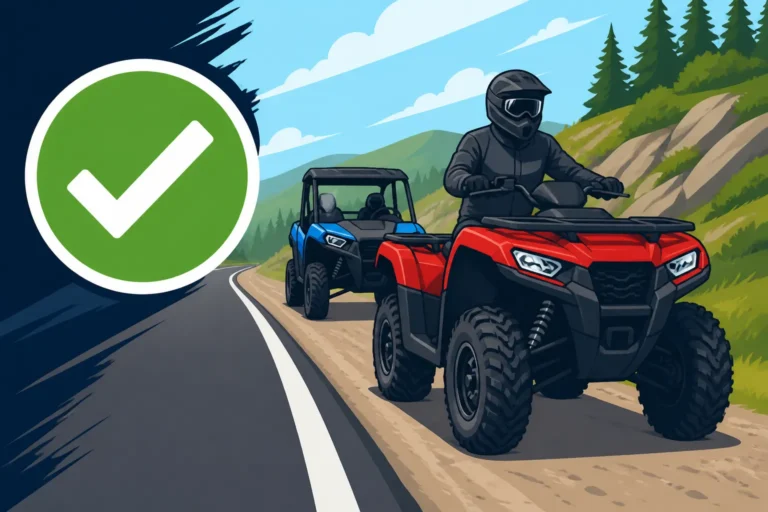
A helmet is required anytime an off-road vehicle is in operation, with very limited exceptions. This includes riding on trails, across private land (unless specific exemptions apply, which are rare and narrow), on managed trail systems, and particularly when interacting with public roads. For instance, if you need to perform a [Newfoundland Rules for Crossing a Highway], or temporarily ride on the [Newfoundland Rules for Riding a Shoulder] to connect to another trail, that helmet absolutely must be on your head and properly secured. The moment you power up your machine and begin to move, the helmet rule kicks in.
The spirit of this law is proactive protection. It's not about waiting for an incident to occur; it's about minimizing the risk of head injury should one happen. Even short, low-speed trips carry risks, whether from uneven terrain, unexpected obstacles, or other vehicles. So, before you even turn the key or pull the start cord, making sure everyone has their helmet on and fastened should be as routine as checking your fuel level. This consistent application of the rule aims to make helmet use a natural, instinctual part of every ride.
The Legal Basis for the Rule
The requirement for helmets, along with other critical safety equipment, is enshrined in Newfoundland and Labrador’s Off-Road Vehicles Act and its associated regulations. This legislation was updated to reflect modern safety standards and the increasing popularity of diverse ORV types, like side-by-sides. The Act specifies not just that helmets must be worn, but also details the standards they must meet. It's comprehensive, ensuring that the gear you choose provides actual protection, not just the appearance of it.
This legal framework provides the provincial enforcement authorities with the tools to ensure compliance. When a peace officer or a conservation officer stops you, they’re checking for more than just registration; they’re assessing your adherence to personal safety equipment mandates, including your helmet. Understanding that these rules are backed by provincial law should underscore their importance. It's not just an advisory; it's a legal obligation that comes with consequences for non-compliance.
Beyond Just Wearing It: Fastening the Chin Strap
It might sound overly specific, but the difference between a helmet that's just "on your head" and one that's "properly fastened" can be life-saving. Newfoundland's regulations are very clear on this point, making it a critical aspect of being legal and, more importantly, truly safe. It's a detail that many riders overlook, thinking that a quick clip or even just having the strap dangle is sufficient, but that simply isn't the case.
The "Fastened" Requirement Defined
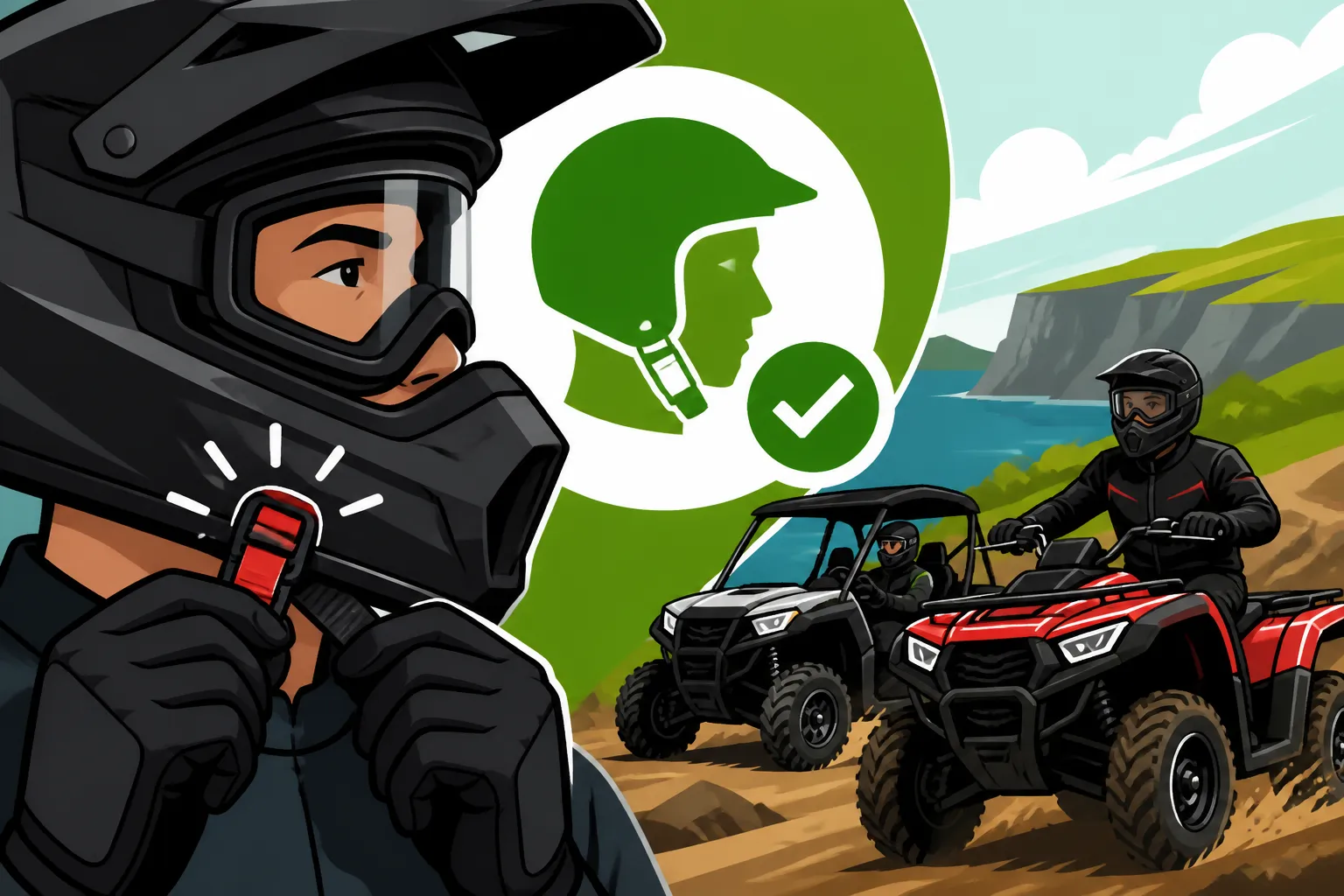
When the regulation says [Newfoundland Helmet Straps Must Be Fastened], it means exactly that: the chin strap must be securely fastened under your chin. It should be snug enough that the helmet cannot easily rock forward, backward, or side-to-side, and certainly not come off your head in the event of an impact. It's not enough for the buckle to be clicked; the strap should be adjusted to minimize slack. Think of it like a seatbelt in a car – it needs to be tight against your body to do its job effectively.
Many modern helmets, including those from manufacturers who supply accessories like SuperATV, feature quick-release buckles or D-ring systems. While these are convenient, the ease of use doesn't negate the need for proper tensioning. If you can slip your whole hand easily between your chin and the strap, it's too loose. The goal is to make the helmet an extension of your head, ensuring it stays in place during dynamic movements or, worst-case scenario, during a rollover or collision.
Why a Loose Strap is a Risk
A helmet with an unfastened or loosely fastened strap offers significantly reduced protection, if any at all. In the event of an accident, a loose helmet can easily fly off your head before impact, leaving you completely vulnerable. Even if it stays on, a loose helmet can shift, obscuring your vision or causing secondary injuries as it slides around. Imagine hitting a sudden bump or having to swerve quickly; a loose helmet might twist, blocking your line of sight when you need it most.
Furthermore, the impact energy from a fall is not dissipated effectively by a helmet that isn't snug. The force might be transferred unevenly, leading to neck strain or more severe head injuries. It's a common misconception that the hard shell alone provides all the protection. In reality, the entire system – the shell, the liner, and crucially, the retention system (the strap) – works together to absorb and distribute forces. Compromise one part, and the whole system's effectiveness is diminished.
Checking Your Fit Every Time
Making a proper fit a routine part of your pre-ride checklist is simple and takes only a few seconds. After putting your helmet on and fastening the strap, try to pull the helmet off your head from the back. If it comes off easily, it's too loose. Similarly, try to rotate it from side to side or front to back; there should be minimal movement, and it should pull your skin slightly, indicating a good contact. This quick check ensures your [Newfoundland Helmet Law for Every Rider] is actually going to protect you.
For riders, especially those with multiple helmets or sharing machines, this check is paramount. Different helmets fit differently, and straps can loosen over time or with adjustments for various headwear (like balaclavas in winter). Getting into the habit of this simple fit check ensures that every time you head out, you're wearing your helmet as intended by the manufacturers and required by law, giving you the best chance of staying safe.
Acceptable Helmet Standards: What to Look For
It's not enough to just throw on any helmet; it needs to meet specific safety standards to be considered legal in Newfoundland. These standards are developed by rigorous testing bodies and ensure that the helmet can withstand the kinds of impacts and abrasions that might occur during an ORV incident. Knowing what markings to look for can save you a headache with enforcement and, more importantly, ensure your brain is properly protected.
Canadian CSA Approval Marking
For helmets sold and used in Canada, the primary standard you'll typically see is the Canadian Standards Association (CSA) approval. A helmet that is [Helmets Carrying the Canadian CSA Approval Marking] signifies it has passed tests for impact absorption, penetration resistance, and retention system strength, among others. When you purchase a helmet from a reputable dealer in Newfoundland, it's highly likely to bear this certification.
Look for a sticker or marking, usually on the back or inside of the helmet, clearly stating "CSA" followed by a standard number (e.g., CSA D230). This is your assurance that the helmet meets the federal and provincial requirements for safety. Relying on a properly certified helmet is a cornerstone of safe riding, distinguishing legitimate protective gear from novelty items that offer little actual protection.
US-Approved Helmets Are Accepted on Provincial Trails
Many riders travel between Canada and the United States, or simply find a wider selection of helmets available from American retailers. Newfoundland's regulations recognize this reality and, thankfully, also accept helmets that meet certain US safety standards. Specifically, [US-Approved Helmets Are Accepted on Provincial Trails] and roads, which typically means helmets certified by the Department of Transportation (DOT).
The DOT standard is another widely recognized certification that ensures a helmet meets a minimum level of protection. You'll find a "DOT" sticker, often on the back of the helmet, indicating compliance. This flexibility means that if you brought your machine and gear over from the US, or purchased a helmet from an American online retailer, you're likely still covered, provided it has this essential marking. Just double-check to make sure it's clearly visible and hasn't worn off.
European ECE Helmets and What the Marking Means
Beyond North American standards, European safety standards are also globally recognized for their stringent testing. Helmets certified by the Economic Commission for Europe (ECE) are also generally accepted in Newfoundland. If your helmet has an [European ECE Helmets and What the Marking Means] sticker, it signifies it meets the ECE 22.05 or ECE 22.06 standard, which are robust and comprehensive.
These international standards mean that a quality helmet, regardless of its country of origin, provides comparable levels of protection. The key takeaway is to always verify the presence of some recognized safety certification on your helmet. Avoid novelty helmets or those without any visible safety standard markings, as these will not only fail to protect you but also leave you vulnerable to fines if stopped by authorities. Many accessory providers, including those found at SuperATV, will clearly list the certifications of their helmets and protective gear.
Here's a quick comparison of common helmet certifications:
| Certification | Country/Region | Typical Marking | Key Focus |
|---|---|---|---|
| CSA D230 | Canada | CSA D230 | Impact, Penetration, Retention |
| DOT FMVSS 218 | United States | DOT | Impact, Penetration, Retention |
| ECE 22.05/06 | Europe | ECE R22.05/06 | Impact, Penetration, Retention, Shear |
Eye Protection and Other Essential Gear
While the helmet is paramount, riding an ATV or UTV safely, especially on or near public roads, requires more than just head protection. Your eyes are equally vulnerable, and other gear plays a crucial role in overall safety. Newfoundland’s regulations extend beyond just helmets to encompass these additional layers of protection, recognizing that a holistic approach to safety minimizes risk.
Goggles Unless There Is a Windshield
Protecting your eyes from dust, debris, insects, branches, and even the occasional splash of mud is non-negotiable. The province's rules state that you must wear appropriate eye protection. For most ATV riders, this means [Goggles Unless There Is a Windshield]. These aren't just for comfort; they prevent foreign objects from impairing your vision or causing serious eye injury, which could lead to a loss of control. Whether it’s clear or tinted, make sure your goggles are well-maintained and free of scratches that could obstruct your view.
It's common to see riders without goggles on seemingly clear days, but even a small pebble kicked up by another machine or a sudden gust of wind can send debris into your eyes. If you’re riding a side-by-side that is equipped with a factory-installed or aftermarket windshield (like those often offered by SuperATV), this can serve as your primary eye protection, provided it's kept clean and clear. However, always consider carrying a pair of goggles as a backup, especially if you venture off into truly dusty or muddy conditions where a windshield might get quickly obscured.
When an Enclosed Cab Replaces Eye Protection
For those who operate UTVs or side-by-sides with a full, enclosed cab system, the need for separate eye protection like goggles can be waived. If your machine's cab provides adequate enclosure to shield your eyes from the elements and debris, then you meet the spirit and letter of the law. This usually applies to vehicles with rigid doors, a roof, and a proper windshield with wipers, simulating the protection of a passenger vehicle.
However, many side-by-sides are designed with partial enclosures or removable windshields. In these cases, when the cab isn't fully enclosed, or the windshield doesn't offer comprehensive protection from all angles, goggles become a necessity. Always assess your specific machine and the conditions you'll be riding in. It's about practical safety: if your eyes are exposed to potential hazards, they need direct protection.
Other Key Safety Equipment
Beyond helmets and eye protection, there are other pieces of gear that, while not always explicitly mandated by law, are highly recommended and contribute significantly to your safety, especially when you consider you might be sharing roads or shoulders. Sturdy, over-the-ankle boots can protect your feet and ankles from impacts and burns from hot engine parts. Long pants and a long-sleeved shirt, preferably made of durable material, guard against scrapes, abrasions, and sun exposure. Gloves protect your hands from blisters, impacts, and cold.
Consider the diverse conditions you might face in Newfoundland – from chilly coastal breezes to muddy bogs. Proper clothing, like waterproof layers, can prevent hypothermia or discomfort that leads to distraction. Carrying a small first-aid kit, a repair kit for minor issues, and a communication device (especially in areas with cell service) are also smart practices. While the law might focus on the basics, a truly safe rider considers the full spectrum of potential challenges and prepares accordingly.
Why These Rules Matter: Safety and Enforcement
The regulations surrounding helmets and other safety gear aren't just bureaucratic hurdles; they are critically important for preventing serious injuries and ensuring a safer riding environment for everyone. Ignoring these rules can lead to devastating personal consequences and significant legal penalties. Understanding the "why" behind the rules often helps riders appreciate their value and commit to compliance.
Consequences of Non-Compliance
Failing to adhere to Newfoundland's safety equipment rules, particularly the helmet and chin strap requirements, can result in fines and other penalties. An officer who observes you riding without a properly fastened, approved helmet has every right to issue a ticket. The [Newfoundland Fine Ranges by Offence] for such infractions are not insignificant and are designed to deter non-compliance. Beyond the financial hit, repeated offences could lead to more severe consequences, like machine seizure in extreme cases.
But the most severe consequence is, of course, the risk to your own health and safety. A head injury can be life-altering, leading to permanent disability or worse. The cost of medical treatment and long-term care for such injuries far outweighs the cost of a good helmet or the minor inconvenience of fastening a strap. The law's intent is to prevent these tragedies from occurring, making compliance an act of self-preservation.
Producing Proof of Safety Equipment
When a peace officer conducts a stop, whether on a trail, a public road, or a shoulder, they are authorized to ask for proof of compliance with the Off-Road Vehicles Act. This includes not just your registration and insurance, but also your personal safety gear. They will be looking to see that your helmet bears an approved certification mark (CSA, DOT, ECE) and that it is properly fastened. They might also check for eye protection, depending on the machine and conditions.
It’s crucial to cooperate with officers and to ensure your equipment is visibly compliant. Don't assume that because you're "just a minute from the cabin" or "on my own land" that the rules don't apply. Enforcement is consistent to ensure a level playing field of safety across all riding environments. Having your documents readily available and your gear correctly worn makes any interaction smooth and confirms you're a responsible rider.
The Role of Road and Shoulder Riding
The emphasis on stringent safety rules, particularly regarding helmets, becomes even more critical when ORVs interact with public roads. Whether you're using a [Newfoundland Rules for Crossing a Highway] or navigating the [Newfoundland Rules for Riding a Shoulder] to connect trails, you are entering an environment shared with much larger, faster-moving vehicles. The risks are amplified, and the need for maximum protection is paramount.
In these situations, the "street legal" aspect of your machine, including its lights and signals, combined with your personal safety gear, is your primary defense. A properly fastened helmet isn't just a legal formality; it's a vital piece of equipment that could mean the difference between walking away from an incident and suffering catastrophic injury. Every time you approach a road, remember that these regulations are there to bridge the safety gap between the wild trails and the paved highways, protecting you in all scenarios.
Disclaimer
This article is for general informational purposes only and does not constitute professional advice. Laws, prices and regulations vary by location and change over time. Consult a qualified professional for guidance on your specific situation.