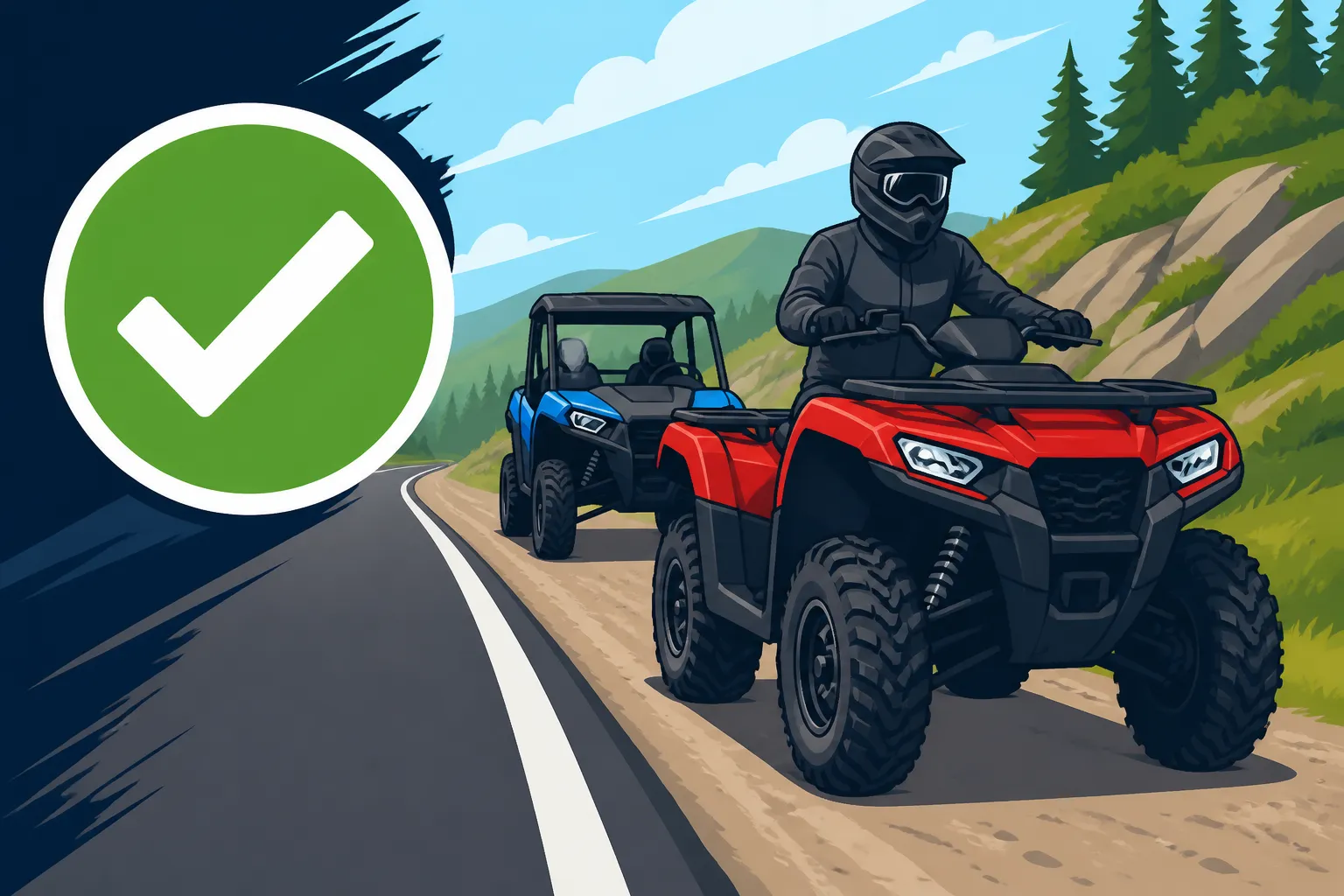
20 km/h on a Shoulder
It's a common scenario for many ATV and UTV riders in Newfoundland: you're just trying to get from one section of trail to another, or perhaps from your cabin down to the main road to fetch supplies, and suddenly you find yourself needing to use the shoulder of a public highway. It feels like a quick hop, but the rules are very clear, and often misunderstood. This guide will walk you through the essential regulations, safety considerations, and practical advice for legally and safely operating your off-road vehicle (ORV) on highway shoulders in Newfoundland, specifically focusing on the critical 20 km/h speed limit.
Understanding Newfoundland's Off-Road Vehicle Act and Shoulder Riding
Navigating the roads and trails of Newfoundland with an ATV or UTV requires a solid understanding of the rules, especially when it comes to riding on highway shoulders. The province's Off-Road Vehicles Act is designed to keep everyone safe, from ORV operators to motorists and pedestrians. It’s not just about knowing that you can ride on a shoulder, but how and when you can do it legally and without putting yourself or others at risk. The Act, in force since May 2022, brought in some significant updates to clarify these very points. It's easy to assume a brief stretch on the shoulder is no big deal, but the regulations are quite specific for a reason: safety is paramount.
The Specifics of the 20 km/h Rule
That 20 km/h speed limit isn't just an arbitrary number; it's a carefully considered safety measure. On the shoulder of a highway, you're sharing space with vehicles that might be travelling at 80 km/h or even faster. A significant speed differential between your ORV and passing traffic creates a huge risk. Going 20 km/h allows you sufficient time to react to unexpected hazards like debris, potholes, or even a sudden gust of wind from a passing transport truck. It also gives highway drivers more time to see you and adjust their speed or lane position if needed. Many riders, in a hurry to get off the pavement and back to the trails, might be tempted to push past this limit, thinking "what's a little faster?" However, the consequences, both legal and safety-related, are severe. Exceeding this limit can result in substantial fines and puts you directly in harm's way. The law is designed to reduce the risk of collisions in these high-traffic, high-speed environments.
Imagine you're on a long stretch of highway shoulder, and the trail entrance is still a kilometre away. It's a beautiful day, and the shoulder looks clear. You might think, "I can easily do 40 km/h here, I'm not in anyone's way." But that thought is precisely what the 20 km/h rule aims to prevent. At higher speeds, your ability to stop quickly, or swerve safely if a car suddenly pulls over or debris appears, is dramatically reduced. Furthermore, the noise and wind from highway traffic can be disorienting, and maintaining full control of your ORV at higher speeds on an uneven shoulder can be challenging. An officer observing you at 40 km/h on a 20 km/h stretch isn't just seeing a minor infraction; they're seeing a significant safety hazard, and they'll act accordingly to enforce the rules laid out in [Newfoundland's Off-Road Vehicles Act].
The 1-Kilometre Shoulder Limit: What It Means
Beyond the speed, there’s also a distance restriction for how far you can ride on a highway shoulder. The rule states that you can only operate your ORV on a highway shoulder for a maximum of one kilometre to get to or from a trail. This isn't an invitation to commute along the shoulder for miles. Its purpose is very specific: to bridge short gaps between approved riding areas or to access immediate services like a gas station, and then only if no other safe and legal route is available. This limit is crucial because shoulders are not designed for continuous ORV travel. They are often narrower, less maintained, and expose riders to high-speed traffic for longer periods than is safe.
Think of it this way: the one-kilometre rule is a concession, not a privilege. It acknowledges that sometimes, riders need to briefly use public infrastructure to connect their journey, but it severely limits that exposure. For instance, if you're leaving a cabin that's just off a highway and the nearest trail is 500 metres down the road, you can legally use the shoulder for that short distance. However, if the trail is two kilometres away, you'll need to find an alternative method of transport, such as trailering your machine, rather than breaking the one-kilometre rule. This restriction ensures that ORVs remain primarily off-road vehicles, minimizing their interaction with high-speed road traffic and upholding the spirit of the legislation. This balance is key to responsible riding and minimizing conflicts with other road users.
Identifying the Shoulder: It's Not the Whole Road
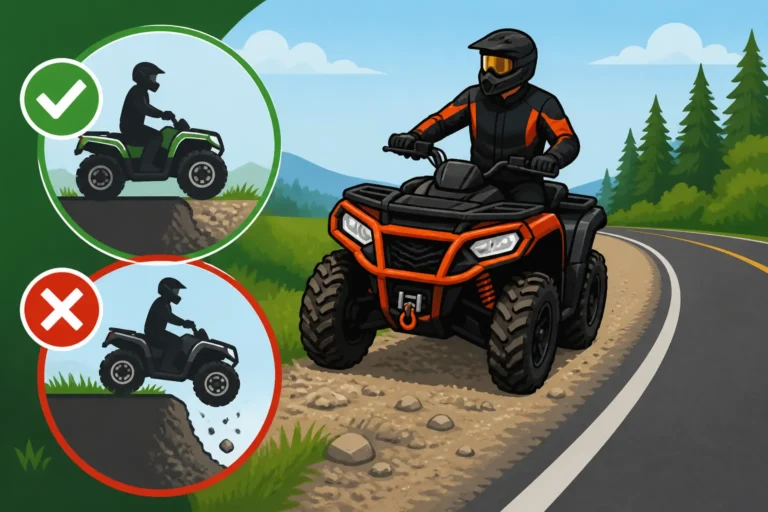
It might sound obvious, but distinguishing the "shoulder" from other parts of the road can be trickier than you think, especially on older or less-maintained routes. The shoulder is specifically the paved or unpaved strip immediately adjacent to the travel lanes, generally marked by a white line or a clear change in road material, designed for emergency stops or to provide lateral support for the pavement. It is not the ditch, the median, or the main traffic lane. Riding in the ditch might seem safer because you're further from traffic, but it's often illegal, fraught with hidden hazards like culverts, deep ruts, and sharp obstacles, and could still be considered operating illegally on highway property.
Many rural roads in Newfoundland might not have a clearly defined paved shoulder, or the shoulder might be rough gravel. In these cases, the "shoulder" is generally interpreted as the area to the right of the fog line (the solid white line that delineates the edge of the travel lane) or, if no line exists, the unpaved area immediately next to the hard surface of the road. It's imperative that your machine stays entirely on this shoulder and does not encroach into the active vehicle lane, even momentarily. Drivers expect the travel lanes to be clear of slow-moving traffic. Straying into the main lane, even for a moment to avoid a pothole on the shoulder, can put you in extreme danger, especially given the speed of highway traffic. Always be vigilant about where your tires are tracking to ensure you remain compliant and safe, understanding that the rules about [Newfoundland Riders Yield to Highway Traffic] are absolute.
The Practicalities and Dangers of Riding on Highway Shoulders
Riding on a highway shoulder might seem like a straightforward solution to connect trails, but it introduces a host of practical challenges and significant dangers that ORV operators must be acutely aware of. Unlike a trail designed for off-road use, a highway shoulder is part of a complex transportation network where high-speed traffic, road design, and sudden environmental changes can create perilous conditions. It’s a very different environment from the rugged paths most ATVs and UTVs are built for, requiring a different mindset and extreme caution.
Why Slower Speeds Are Crucial for Safety
The emphasis on 20 km/h isn't just about legal compliance; it's a fundamental safety principle. The primary danger stems from the vast speed differential between your ORV and highway vehicles. At 20 km/h, a car travelling at 80 km/h approaches you at a closing speed of 60 km/h, covering a significant distance very quickly. This high closing speed leaves little room for error for both you and the driver. When you operate at a reduced speed, you maximize your reaction time to potential hazards. These hazards aren't just limited to other vehicles; shoulders are notorious for collecting debris like tire fragments, broken glass, construction materials, and even discarded car parts. Hitting one of these at higher speeds could lead to a loss of control, a flat tire, or even a serious accident.
Furthermore, the surface of a highway shoulder is often less predictable than a main road. It can transition from smooth asphalt to rough gravel, or have sudden drops, erosion, and unkempt vegetation. An ORV's suspension and tires, while excellent for off-road terrain, might react unpredictably to these variable surfaces at higher speeds, making steering and braking less effective. Add to this the wind turbulence created by passing trucks, which can easily destabilize a lighter ORV. Slower speeds allow you to maintain better control, scan further ahead for potential issues, and adjust your course smoothly without sudden movements that could catch highway drivers off guard. It is a necessary compromise for safety when operating in such a vulnerable position, acknowledging that you are essentially a slow-moving obstacle in a fast-moving environment.
Navigating Intersections and Driveways While on the Shoulder
Riding on a highway shoulder becomes particularly complex and dangerous when you encounter intersections, highway off-ramps, or private driveways. At 20 km/h, you're moving much slower than the vehicles that might be turning into or out of these access points. Drivers turning right off the highway might not expect to see an ORV on the shoulder and could cut across your path. Similarly, vehicles merging onto the highway or pulling out of driveways may be focused on oncoming highway traffic and overlook a slow-moving ORV on the shoulder. This often happens because their line of sight is focused on faster-moving threats, making you almost invisible in their periphery.
When approaching any intersection or driveway, it's vital to assume that other drivers haven't seen you. Slow down even further if necessary, make eye contact if possible, and be prepared to stop. Signal your intentions clearly, even if you're just continuing straight along the shoulder. For UTVs with turn signals, use them. For ATVs, clear hand signals are crucial. If you need to cross an intersection, the rule regarding [Crossing a Newfoundland Highway Needs 150 Metres of Visibility] also applies, emphasizing the need for a clear line of sight in all directions. It is paramount to prioritize defensive riding in these scenarios, as the consequences of a collision with a highway vehicle at an intersection are almost always catastrophic for the ORV operator.
Vehicle Requirements for Shoulder Riding
Operating an ORV on a highway shoulder isn't just about riding cautiously; it also requires your machine to meet certain equipment standards to enhance visibility and safety. Given that you're sharing space with high-speed vehicles, being seen is arguably as important as your own control. This starts with proper lighting. Your ORV must have working headlamps and tail lamps, especially from sunset to sunrise or during periods of reduced visibility. Amber lights in front and red lights behind are standard requirements. Many riders will also opt for additional auxiliary lighting or reflective tape on their machines, perhaps from a brand like SuperATV, to further boost their visibility to other motorists. The brighter and more conspicuous your machine is, the better your chances of being seen.
Beyond lighting, consider your tires. While knobby, aggressive tires are fantastic for mud and trails, they can offer less grip and stability on paved or even hard-packed gravel shoulders. Ensure your tires are in good condition and properly inflated for the mixed terrain you might encounter. Furthermore, the mandatory helmet law applies at all times. [Newfoundland Helmet Law for Every Rider] is strictly enforced, and your helmet must be properly fastened. Eye protection, whether through a helmet visor or goggles, is also critical to protect against wind, dust, and debris kicked up by passing vehicles. Even if your machine is technically capable of speeds well beyond 20 km/h, it must also be equipped for safe operation in a road-adjacent environment to be legally on the shoulder.
Enforcement, Penalties, and Legal Considerations
Riding an ORV on a highway shoulder in Newfoundland isn't just about common sense safety; it's about adhering to specific legal mandates. Peace officers and the Royal Newfoundland Constabulary are well-versed in the Off-Road Vehicles Act, and they regularly patrol areas where ORVs might interact with public roads. Thinking you can sneak by or that the rules won't be enforced is a risky gamble that can lead to significant financial penalties, impoundment of your machine, and even more serious legal repercussions. The law is there to govern every aspect of ORV operation, including these brief transitions on public shoulders.
What an Officer Looks For
When an officer spots an ORV on a highway shoulder, their immediate assessment will focus on several key compliance points. First and foremost, they'll be looking at your speed. Exceeding 20 km/h is a very clear and easily identifiable violation. They'll also observe how far you've been riding on the shoulder, quickly determining if you've gone beyond the one-kilometre limit. Your position on the shoulder—whether you're safely to the right, or encroaching on the travel lane—is another critical factor. Officers are also trained to spot common safety infractions. Is your helmet on and fastened? Are your lights working, especially if visibility is poor or it's nearing dusk? Is your machine properly registered and plated?
Many riders make the mistake of assuming that because they're "just quickly getting across," the rules are less strict. This couldn't be further from the truth. An officer isn't going to differentiate between someone trying to get to a nearby trail and someone joyriding on the shoulder; the infraction is the same. They are observing for erratic behaviour, sudden lane changes (even if only within the shoulder area), and any sign that the operator is not fully in control or is unaware of the traffic around them. Being prepared means your machine is compliant, you're visibly wearing your safety gear, and you are actively and demonstrably obeying the 20 km/h and one-kilometre rules. Any deviation flags you as a potential hazard.
Fines and Consequences for Exceeding 20 km/h
The financial penalties for violating ORV regulations on highway shoulders can be substantial. Exceeding the 20 km/h speed limit or the one-kilometre distance restriction will result in fines. These aren't minor parking tickets; they can run into hundreds of dollars for a single offence. The exact amount will depend on the specific infraction and any aggravating circumstances, but it's designed to be a significant deterrent. Beyond the immediate fine, there are other severe consequences to consider.
One of the most impactful penalties is the potential for your machine to be seized and impounded. If an officer deems your operation unsafe or illegal enough, they have the authority to have your ATV or UTV towed away. Retrieving it isn't a simple matter; you'll be on the hook for towing fees, daily storage fees, and potentially administrative release fees. These costs can quickly add up, often surpassing the original fine amount. We've seen riders face total costs reaching into the thousands of dollars just to get their machine back. On top of that, such an infraction could impact your insurance rates, as it signals a higher risk. For repeat offenders, the penalties escalate, potentially leading to driving prohibitions or even further machine seizures, as outlined in [Newfoundland Machine Seizure Rules]. It's a costly lesson to learn, and easily avoidable by simply adhering to the prescribed limits.
The Importance of Proof of Insurance
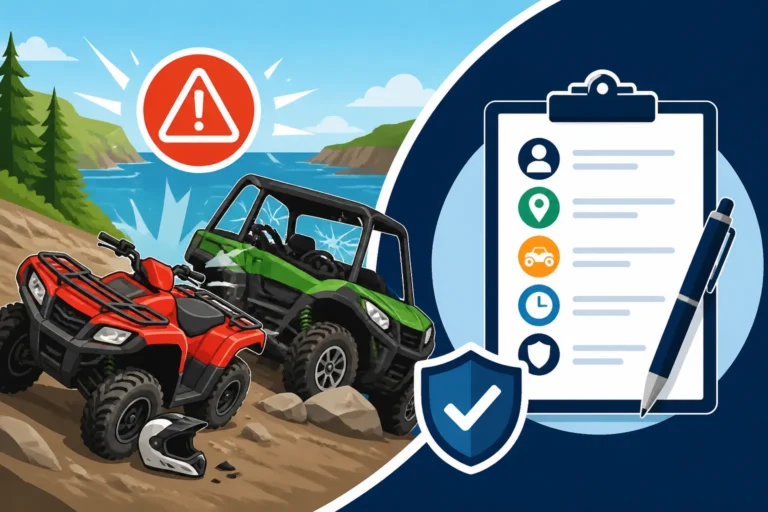
Beyond proper operation and safety gear, carrying proof of valid insurance is a non-negotiable legal requirement for operating an ORV, especially on a highway shoulder. Just as with a car, liability insurance is mandatory. This protects you financially in the event of an accident where you are at fault, covering damages or injuries to other parties. Without it, you could face immense out-of-pocket expenses should a collision occur, not to mention additional fines for driving uninsured.
Peace officers have the right to ask you to produce proof of insurance at any time while operating your ORV, including on a highway shoulder. If you cannot provide it on the spot, you generally have a short window, often two business days, to present it at a designated office, as specified in [Newfoundland Insurance Proof Within Two Days]. Failure to do so can result in significant fines and other penalties. It's not enough to simply have insurance; you must be able to prove you have it when asked. This means carrying your insurance card or certificate with you every time you ride. It might seem like an extra piece of paper, but it's a critical document that can save you a lot of hassle and money in an enforcement situation.
Where and When Shoulder Riding is Permitted (and When it's Not)
Understanding the "how" of shoulder riding in Newfoundland is critical, but so is understanding the "where" and "when." The provincial regulations are designed to provide clear guidance, but local bylaws and specific road conditions can add layers of complexity. It's never safe to assume that just because you're on a shoulder, you're always operating legally. Ignorance of the law is not a defence, and getting caught in a restricted area or violating specific conditions can have serious consequences.
Crossing Highways: The 150-Metre Rule
Sometimes, riding the shoulder isn't about getting along the highway, but about getting across it. Newfoundland's Off-Road Vehicles Act includes a specific rule for crossing highways, which ties directly into visibility and safety. You can only cross a highway where there is at least 150 metres of unobstructed visibility in both directions. This means you must have a clear view of oncoming traffic for at least 150 metres to your left and 150 metres to your right. If there's a blind corner, a hill crest, or dense vegetation blocking your view, you absolutely cannot cross there.
This 150-metre rule is a lifeline. It's designed to give you enough time to assess the traffic situation and safely make your crossing, and it gives drivers on the highway enough time to see you and react. Attempting to cross a highway with insufficient visibility is incredibly dangerous and a surefire way to get into an accident. Before you even contemplate moving onto the main lanes, stop completely, scan thoroughly, and if in any doubt, do not proceed. Always remember, a collision with a highway vehicle at speed is almost certainly not something an ORV operator will walk away from unharmed. Take this rule seriously, as detailed in [Crossing a Newfoundland Highway Needs 150 Metres of Visibility].
Municipal Bylaws and Local Variations
While the provincial Off-Road Vehicles Act sets the overarching framework for ORV use, municipalities in Newfoundland have the power to enact their own bylaws that can either restrict or, in some cases, regulate ORV use on local roads and within their boundaries. This means that a provincial rule allowing shoulder use might be overridden or further limited by a specific town's bylaw. What's legal in one community might be strictly prohibited just a few kilometres down the road. This patchwork of rules can be incredibly frustrating for riders who travel through multiple jurisdictions.
It is absolutely crucial to check local bylaws before you ride in any given area, especially if you plan to use municipal roads or shoulders. Many towns, especially larger ones or those with residential areas, have enacted bylaws to control noise, enhance safety, or simply limit ORV traffic within town limits. Some might designate specific streets as ORV-friendly, while others might ban them entirely from all public roads, including shoulders, except for direct property access. A quick call to the local town office or a visit to their website can save you a hefty fine and a lot of grief. Don't rely solely on the provincial rules; local regulations, such as those covered in [Newfoundland Municipal Road Bylaws], often take precedence in their specific jurisdiction.
Restricted Areas and Designated Trails vs. Shoulder Use
The concept of shoulder riding is typically a "last resort" measure, designed for short connections where no other legal or safe alternative exists. It's not a substitute for designated trails. Newfoundland boasts an extensive network of off-road trails, including the magnificent T'Railway, which are specifically designed for ORV use. These trails offer a far safer and more enjoyable riding experience, away from high-speed traffic. When a designated trail is available, it should always be your first choice over using a highway shoulder.
Furthermore, certain areas, such as national parks (e.g., Gros Morne National Park), provincial parks, and some environmentally sensitive zones, have strict prohibitions on ORV use, including on shoulders or access roads within their boundaries, unless explicitly permitted. These restrictions are in place to protect wildlife, natural habitats, and the safety of other park users like hikers and cyclists. Operating an ORV in these restricted areas, even on a shoulder, can lead to severe fines and even machine confiscation. Always verify the regulations for any specific area you plan to ride in. Many managed trails require a special sticker to operate on them, highlighting the distinction between regulated trail systems and incidental shoulder use. These stickers, often discussed in [Newfoundland Managed Trail Stickers], ensure funds for trail maintenance and support responsible riding.
Essential Safety Gear and Machine Maintenance for Road Use
While much of the focus on shoulder riding is on speed and distance, the condition of your machine and the gear you wear are equally critical. Operating an ORV, even at 20 km/h, on a highway shoulder puts you in a vulnerable position. Ensuring maximum visibility for yourself and optimal functioning of your machine are non-negotiable aspects of safe and legal operation. Skimping on these details is an open invitation to danger.
Visibility Gear: Making Yourself Seen
On a highway shoulder, you're competing for attention with large, fast-moving vehicles. Your ORV is relatively small, and its profile can easily be lost against the background or in a driver's blind spot. Therefore, maximizing your visibility is paramount. This starts with your clothing: bright, high-contrast colours are best. Fluorescent colours like neon green, orange, or yellow are excellent choices, especially when paired with reflective materials for riding during dawn, dusk, or in low-light conditions.
Your machine's lighting system is equally vital. Ensure your headlamps and tail lamps are fully functional, clean, and properly aimed. Even in broad daylight, having your lights on can significantly increase your visibility. For those looking to enhance their lighting beyond factory standards, aftermarket solutions like brighter LED headlights or additional amber marker lights from reputable brands such as SuperATV can make a substantial difference. These enhancements are not just for aesthetics; they are a critical safety upgrade for any ORV that will be used, even briefly, near public roads. Remember that [Newfoundland Head and Tail Lamp Rules] specifically mandate their use from sunset to sunrise and during periods of low visibility, but using them always is a smart choice.
Helmets, Eye Protection, and Seatbelts
These aren't suggestions; they are legal requirements and absolute lifesavers. A properly fitted and fastened helmet is mandatory for all ORV operators and passengers in Newfoundland, regardless of age or skill level. The helmet must meet recognized safety standards, such as those from the Canadian Standards Association (CSA), US DOT, or European ECE, as highlighted in [Newfoundland Helmet Standards Accepted]. A helmet provides critical protection in the event of a fall or collision, dramatically reducing the risk of head injuries. It's important to choose a helmet designed for powersports, not just a bicycle helmet, and to ensure the chin strap is always securely fastened.
Eye protection is another essential. Whether it's a full-face helmet visor or a pair of goggles, your eyes must be shielded from wind, dust, debris, and insects. Flying gravel from a passing truck or even a small bug at 20 km/h can impair your vision, causing a sudden swerve or loss of control. The rule of thumb is [Goggles Unless There Is a Windshield] that provides adequate protection. For side-by-sides, factory-installed seatbelts must be worn by all occupants. [Newfoundland Seat Belt Requirements] are in place because side-by-sides, while offering more protection than an open ATV, still expose occupants to significant risks in a rollover or collision. These pieces of gear are your primary defence against serious injury, and no rider should ever venture onto a highway shoulder without them properly in place.
Machine Condition: Tires, Brakes, and Exhaust
Before you even think about putting a wheel on a highway shoulder, conduct a thorough pre-ride inspection of your machine. This is especially important for parts that are critical for road use. Your tires, while designed for off-road punishment, need to be in good condition for the varied surfaces of a shoulder. Check tire pressure, look for any signs of damage, cuts, or excessive wear. While knobby tires are great in the mud, they can feel unstable and wear quickly on pavement. Ensure the lug nuts are tight and there are no visible issues with your wheels. If you're frequently riding on mixed terrain, considering a less aggressive tire pattern for more predictable handling on hard surfaces might be beneficial, with many options available from performance suppliers like SuperATV.
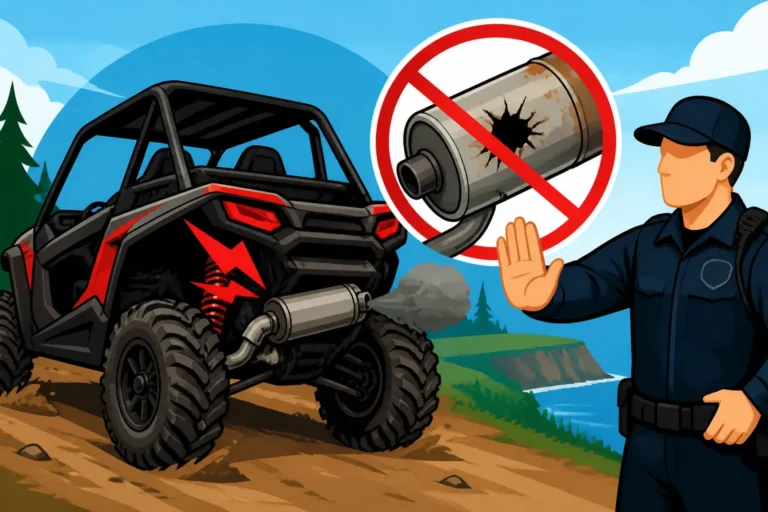
Brakes are another non-negotiable item. Test both front and rear brakes before you leave your yard. They must be responsive and capable of bringing your machine to a quick, controlled stop. On a shoulder, you might need to stop suddenly due to unexpected debris or a turning vehicle, and compromised brakes are a recipe for disaster. Finally, your exhaust system needs to be in good working order and comply with noise regulations. Excessive noise from a modified or defective muffler can lead to fines and complaints from nearby residents or other road users. [Newfoundland Muffler and Noise Rules] are in place to ensure ORVs don't create undue disturbance. A loud, rumbling exhaust might sound cool on the trail, but it can be perceived as aggressive and disruptive on a public road, drawing unwanted attention from law enforcement.
Newfoundland ORV Shoulder Use at a Glance
To summarize the key points for operating an ORV on a highway shoulder in Newfoundland, here's a quick reference table. Remember, these are provincial minimums, and local bylaws may add further restrictions. Always prioritize safety and legal compliance.
| Rule Category | Specifics | Details & Compliance |
|---|---|---|
| Speed Limit | 20 km/h | Maximum speed when operating an ORV on a highway shoulder. Exceeding this limit is a serious offence. |
| Distance Limit | 1 Kilometre | Maximum distance an ORV can be operated on a highway shoulder to access or exit a trail, or for immediate services. Not for extended travel. |
| Visibility for Crossings | 150 Metres | Required unobstructed visibility in both directions when crossing a highway. Must be able to see and be seen. |
| Helmet Requirement | Mandatory, fastened, approved standards | All operators and passengers must wear a helmet meeting CSA, DOT, or ECE standards, with the chin strap securely fastened. |
| Eye Protection | Goggles or Windshield | Required to protect eyes from debris, wind, and insects. A helmet visor or separate goggles suffice. |
| Seatbelts (UTVs) | Mandatory for all occupants | All occupants in a UTV must use the factory-installed seatbelts. |
| Lighting | Headlamps & Tail lamps (Amber front, Red rear) | Must be fully functional, especially from sunset to sunrise or in low visibility. Recommended to use at all times on shoulders for increased visibility. |
| Insurance Proof | Must be carried | Valid liability insurance proof must be carried at all times and produced upon request. Failure to do so can result in fines and further action. |
| Bylaw Awareness | Check local municipal rules | Provincial rules are minimums; local towns and cities may have additional restrictions or prohibitions on ORV use on their roads and shoulders. Always verify before riding. |
| Plate Placement | Visible, unobstructed | Your ORV registration plate must be clearly visible and free of mud or cargo that might obscure it. |
Disclaimer
This article is for general informational purposes only and does not constitute professional advice. Laws, prices and regulations vary by location and change over time. Consult a qualified professional for guidance on your specific situation.