Yielding Every Single Time
Navigating the roads and shoulders of Newfoundland with your ATV or side-by-side can feel like walking a tightrope, especially when you encounter highway traffic. Many riders find themselves confused or frustrated by the expectation that they must always yield to larger vehicles, leading to dangerous situations and potential legal trouble. This comprehensive guide will break down exactly what "yielding every single time" means for off-road vehicle operators in Newfoundland, helping you understand your responsibilities and stay safe on the province's roads.
The Unwavering Expectation to Yield: Understanding the Core Principle
It's a common refrain among seasoned riders and law enforcement alike: when you're on a highway, or even just crossing one, your off-road vehicle is essentially a guest in someone else's house. The rules of the road are designed primarily for highway-licensed vehicles, and that means ORVs operate under a very specific set of conditions. This isn't about unfairness; it's about safety and the legal framework that governs these powerful machines in mixed traffic environments. The expectation to yield isn't just a suggestion; it's the bedrock of safe and legal ORV operation on or near public roads.
The Highway Traffic Act vs. Off-Road Vehicles Act
In Newfoundland, the rules that dictate how you can interact with public roads come from a blend of two key pieces of legislation: the Highway Traffic Act and the Off-Road Vehicles Act. While the Off-Road Vehicles Act specifically outlines where and how you can operate your ATV or side-by-side, it doesn't override the fundamental principles of the Highway Traffic Act when you're interacting with a highway. This means that any time your machine's tires touch a paved or gravel highway surface, or even the immediate shoulder, you are subject to the paramount rules of highway safety.
Think of it this way: your ORV registration allows you to ride on approved trails and, under strict conditions, to cross or use highway shoulders. But the moment you enter that highway environment, the heavy burden of responsibility falls squarely on the ORV operator to avoid interfering with regular traffic. You are always the one who must adapt, slow down, and stop if necessary to allow cars, trucks, and other highway vehicles to pass unimpeded.
Why ORVs Are the "Visitors" on Roads
It can feel a bit unfair, can't it? You've got a powerful machine, you're just trying to get from one trail section to another, and suddenly you're expected to defer to every passing car. But consider the inherent differences: highway vehicles are typically heavier, faster, and have dedicated lanes of travel. They also operate with drivers who aren't expecting a quad or side-by-side to suddenly appear or stop in their path. The speed differential, the size difference, and the sheer volume of highway traffic make ORVs significantly more vulnerable.
The "visitor" mentality is rooted in this vulnerability and the need to maintain a predictable, safe flow for primary road users. It’s about minimizing risk for everyone involved. If every ORV operator understood and embraced this principle, many of the frustrating close calls and angry horn honks could be avoided. It’s not about being less important; it’s about acknowledging your role in a shared, but primarily road-vehicle-focused, space.
Specific Scenarios: When and How to Yield
The "yielding every single time" mantra isn't just a blanket statement; it applies to several very specific situations you'll encounter on Newfoundland's diverse landscape. From quick highway crossings to short stretches of shoulder riding, understanding the nuances of these rules is crucial for avoiding accidents and fines. Every interaction with a public road demands your utmost attention and a clear understanding of your right-of-way obligations.
Crossing Highways: The 150-Metre Visibility Rule
One of the most common reasons ORV operators find themselves on a highway is to cross it to access a trail on the other side. This isn't a free-for-all; there are very specific requirements. The law states you must have an unobstructed view of at least [Crossing a Newfoundland Highway Needs 150 Metres of Visibility] in both directions before you even begin to cross. If you can't see that far, you cannot cross there.
And even with that clear view, you must still yield to all oncoming traffic. This means coming to a complete stop, looking both ways, and waiting until the road is clear. It's not about trying to "beat" a car; it's about waiting until there's absolutely no potential for conflict. Don't assume a driver saw you or will slow down. Make eye contact if possible, but ultimately, the responsibility to ensure a safe crossing rests entirely with you. A moment's impatience here can have catastrophic consequences.
Riding the Shoulder: The 1-Kilometre Limit and 20 km/h Limit
Sometimes, you need to use the shoulder of a highway to connect two trail sections. The Off-Road Vehicles Act allows for this, but under incredibly strict conditions. You can only ride the shoulder for a maximum distance of [Riding the Shoulder 1 Kilometre to Reach a Trail] to get to or from an approved trail. Furthermore, your speed on that shoulder cannot exceed [20 km/h on a Shoulder]. This slow speed is deliberate, giving you more time to react and yield.
While riding the shoulder, you must always yield to any vehicle entering or exiting the highway, and any pedestrian using the shoulder. Your machine should be operated as far to the right as possible, staying well clear of the travelled lane. This isn't an invitation to cruise the shoulder; it's a short, controlled transit to your next trail segment. Any moment you are on that shoulder, you are yielding to every other road user, whether they are a car, a truck, or even someone walking their dog.
Intersections and Driveways: Less Obvious Yielding Points
It's easy to focus on main highway crossings, but yielding applies to other, less obvious situations too. When you’re riding on a designated ORV trail that crosses a less-travelled road, or even a private driveway, the same principle applies. You must still yield to any vehicle or person using that road or driveway. Even if it feels like you're on the "main" trail, the moment you intersect with any form of public or private access way, you must assume the yielding position.
Think about a woods road that serves both ORVs and logging trucks, or a trail that briefly touches a rural public road. The ORV is still the one expected to yield. This is especially true for unmarked intersections where visibility might be poor. Always approach these areas with caution, at a reduced speed, and be prepared to stop. Don't assume that because a road is less used, you have the right-of-way. You simply don't.
Enhancing Visibility and Safety Beyond Just Yielding
While yielding is paramount, it's just one piece of the larger puzzle of safe ORV operation on or near public roads. Being seen and being prepared are equally critical. Many accidents involving ORVs and highway vehicles occur because the ORV was simply not visible enough, or the operator wasn't expecting an encounter. Taking proactive steps to improve your machine's visibility and your own situational awareness can make all the difference, especially when you know you'll be interacting with road traffic.
Visibility Matters: Ensuring You're Seen
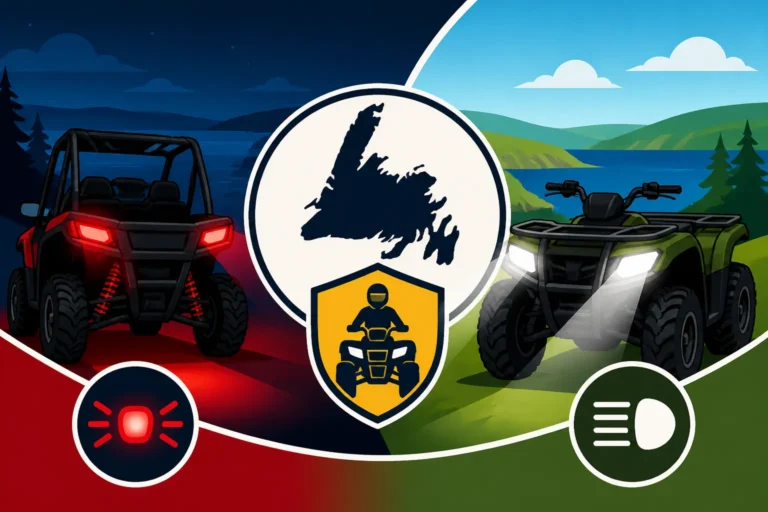
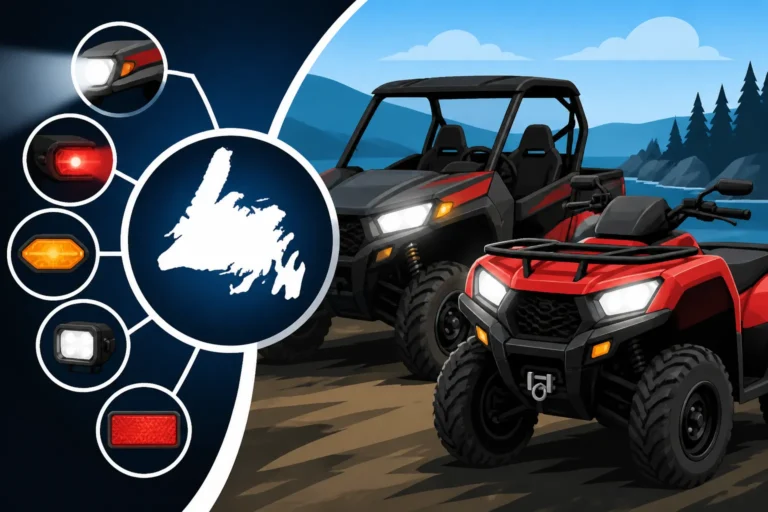
One of the biggest challenges for ORVs on roads is their relatively small size compared to cars and trucks. This means you need to do everything in your power to make yourself as conspicuous as possible. Your machine should be equipped with proper lighting, including working head and tail lamps, particularly if there's any chance you'll be riding from [Newfoundland Head and Tail Lamp Rules] or in low-light conditions like fog or heavy rain. Beyond the legal requirements, consider aftermarket upgrades.
Bright, reflective clothing for yourself and any passengers is a must. Don't rely solely on your machine's lights. Many riders also add additional reflectors or reflective tape to their helmets and the machine itself. For side-by-sides, ensuring your brake lights are clean and functional, and that your turn signals (if equipped) are clearly visible, is vital. Some riders even add a tall, brightly colored whip flag, especially when operating in dusty conditions or areas with varied terrain that might obscure their machine. Products from brands like SuperATV offer a range of aftermarket lighting options, from bright LED light bars that can improve your visibility to others, to whip lights that stand tall and get noticed in open areas or when coming over a rise. Investing in these small upgrades can literally be a lifesaver.
Defensive Riding: Anticipating Others
Defensive riding is about assuming the worst-case scenario and being prepared for it. When you're near a highway, this means always assuming that the car approaching you hasn't seen you, or that the driver exiting a driveway isn't paying attention. Scan your surroundings constantly, not just for other vehicles, but for potential hazards, blind spots, and escape routes.
Keep a safe distance from highway traffic, even when you're just on the shoulder. Avoid sudden movements or erratic driving. Signal your intentions clearly if your machine has turn signals, and always take an extra moment to confirm the path is clear before proceeding. If you're riding with a group, maintain proper spacing and communicate about upcoming road crossings or shoulder sections. Teach young riders the importance of looking both ways multiple times, even when you've told them it's clear.
Passenger Safety and Machine Readiness
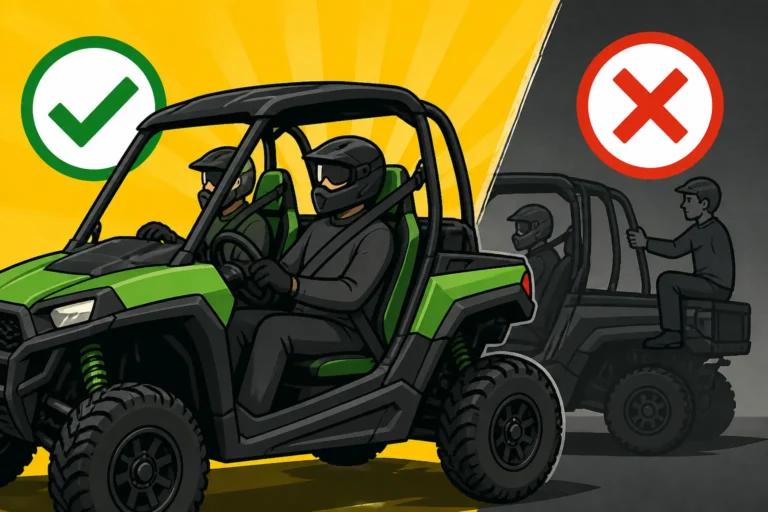
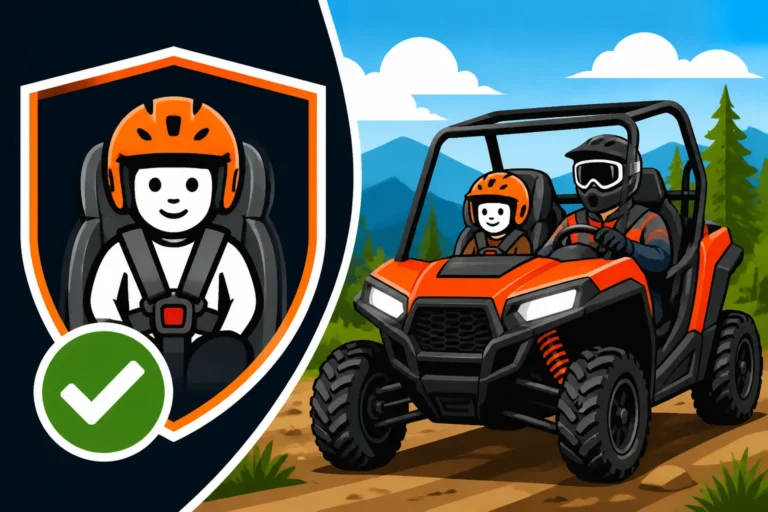
Your responsibility extends to any passengers you carry. Ensure they are properly seated on a factory-installed passenger seat and are also wearing appropriate safety gear, including a helmet. The rules for [Newfoundland Passenger Seat Requirements] are very specific, emphasizing that passengers must sit on seats designed for that purpose, not on cargo racks.
Beyond passengers, your machine itself needs to be in top condition for any interaction with roads. Regularly check your brakes, tires, and steering. Worn tires, especially if you've been riding on aggressive terrain, can behave unpredictably on paved surfaces. Your machine should have adequate mirrors to allow you to see traffic approaching from behind, a crucial element when riding on a shoulder. [Newfoundland Low Pressure Tire Rules] apply to how you maintain your tires, but the overall condition of your tires is critical for safe road interaction. A machine that is well-maintained gives you the best chance to react quickly and safely when yielding is required.
Common Misconceptions and Costly Mistakes
Despite the clear rules, many ORV operators in Newfoundland still fall prey to common misconceptions or make costly mistakes when interacting with public roads. These errors often stem from a misunderstanding of the law, overconfidence, or simply a moment of distraction. Understanding these pitfalls can help you avoid becoming another statistic or receiving an expensive fine.
Assuming Right-of-Way: When You Definitely Don't Have It
This is perhaps the biggest and most dangerous misconception. Many riders, especially those who primarily ride on trails, begin to feel a sense of ownership over the landscape. However, the moment an ORV enters a highway environment, that sense of right-of-way evaporates. Whether you're crossing, riding the shoulder, or just briefly touching a paved surface, you never have the right-of-way over highway traffic. This includes vehicles exiting driveways onto the highway, or even pedestrians legally walking on the shoulder.
Any assumption that a driver "should" see you or "should" slow down is a recipe for disaster. Always defer, always wait, and always assume the other vehicle has priority. This applies even if you feel you were there first, or if the other driver seems to be breaking a rule. Your primary goal is to avoid a collision, and yielding is the most effective way to ensure that.
The "Quick Dash" Mentality: Why It's Dangerous
We've all been there: you see a gap in traffic that looks just big enough for a "quick dash" across the highway. It's tempting, especially if you've been waiting for a while. But this "quick dash" mentality is incredibly dangerous. ORVs, while powerful, don't accelerate as quickly as many highway vehicles, and judging the speed and distance of approaching traffic, especially large trucks, can be deceptive. What looks like a safe gap might close much faster than you anticipate.
The law requires you to yield, not to attempt a risky maneuver. A "quick dash" also gives other drivers less time to react if they suddenly spot you. Stick to the rule: wait until the road is truly clear, with ample time and space to cross safely without causing any highway traffic to slow down or swerve. Your life is not worth saving a few seconds.
Ignoring Municipal Bylaws: Local Variations
While the provincial Off-Road Vehicles Act sets the baseline, it's crucial to remember that municipalities in Newfoundland can also enact their own bylaws governing ORV use within their boundaries. [Newfoundland Municipal Road Bylaws] can add additional restrictions, for example, prohibiting ORV access to certain roads or setting stricter conditions for crossings in busy town areas. What might be legal on a remote stretch of highway could be strictly forbidden within town limits.
Forgetting to check these local rules can lead to fines and, more importantly, put you at odds with local residents and law enforcement. Before you ride in or through any specific community, take a moment to inquire about their local ORV bylaws. The provincial rules always require yielding, but local bylaws might prevent you from even being in a position to yield on certain roads.
Preparing Your Machine and Yourself for Road Interactions
Safe interaction with roads in Newfoundland isn't just about knowing the rules; it's about making sure both you and your machine are ready for the challenge. This means pre-trip checks, ensuring proper equipment, and having the right mindset. Being fully prepared minimizes risks and ensures you can execute your yielding responsibilities effectively and confidently.
Machine Readiness: Lights, Brakes, and Mirrors
Before you even think about approaching a public road, give your ORV a thorough once-over. Are your [Newfoundland Head and Tail Lamp Rules] fully functional and free of mud or obstructions? Are your brake lights working? Can you clearly see behind you with your mirrors? If your machine doesn't have mirrors, consider adding them, especially if you plan to use road shoulders, as they significantly aid in checking for oncoming traffic from behind before merging or crossing.
Ensure your brakes are responsive and well-maintained. You might need to stop quickly and firmly when yielding to fast-moving highway traffic. Check your tires for proper inflation and wear; uneven wear or low pressure can affect stability on paved surfaces. Imagine having to make an emergency stop for a passing car, only to find your brakes are sluggish or your tires slip. Regular maintenance, including an inspection of crucial components from reliable manufacturers like SuperATV, can give you peace of mind that your machine will perform when it matters most.
Rider Readiness: Training and Awareness
Beyond the machine, you need to be ready. This includes proper training. While [Newfoundland Safety Training Is Mandatory] for new registrants and minors, it’s a good idea for all riders to periodically refresh their knowledge. Knowing how to react in various traffic scenarios and practicing defensive riding techniques is invaluable.
Rider readiness also means mental preparedness. Avoid distractions like cell phones. Don't ride while fatigued or under the influence of anything that impairs your judgment. Be aware of your surroundings, anticipate potential conflicts, and always be ready to react. This heightened sense of awareness is particularly critical when transitioning from a quiet trail to a busy road.
Documentation and Insurance: What to Carry
It's not strictly about yielding, but it's vital for any roadside interaction: always carry your essential documentation. This includes your ORV registration permit and proof of insurance. Newfoundland mandates [Newfoundland Insurance Requirements for Riders], with a minimum liability coverage. If stopped by law enforcement, you must be able to produce proof of insurance within [Newfoundland Insurance Proof Within Two Days].
Having your papers easily accessible, perhaps in a waterproof bag, ensures that if an officer stops you for any reason, including an observed failure to yield, you have everything in order. This can make a quick stop much smoother and less stressful. Don't give an officer a reason to prolong a roadside check or issue additional citations.
Consequences of Non-Compliance: When Yielding Fails
Ignoring the call to yield, or failing to do so effectively, carries serious consequences in Newfoundland. These aren't just minor infractions; they can range from significant financial penalties and points on your driver's license to severe personal injury, legal liability, and even the permanent loss of your machine. Understanding the gravity of these outcomes should reinforce the importance of "yielding every single time."
Immediate Penalties: Fines and Tickets
If a peace officer observes you failing to yield appropriately or operating your ORV on a highway in a manner inconsistent with the Off-Road Vehicles Act, you can expect a fine. The [Newfoundland Penalties for Riding Illegally] can be substantial, and these aren't just slaps on the wrist. Fines for various infractions, including improper road use, can easily run into the hundreds of dollars.
Beyond the immediate financial hit, such infractions can also lead to points on your driver's license, affecting your insurance rates for your primary vehicle. Repeat offenses can escalate the penalties significantly. It’s far cheaper and less stressful to simply wait for that gap in traffic than to risk a ticket that could follow you for years.
Serious Incidents: Accidents and Liability
The most dire consequence of failing to yield is, of course, a collision. An accident involving an ORV and a highway vehicle can result in severe injuries or fatalities, given the disparity in protection and speed. If you are deemed at fault for an accident due to failing to yield, you will face significant legal liability. This means you could be responsible for property damage to the other vehicle, medical expenses for injured parties, and pain and suffering claims.
Even with insurance, the legal battle and emotional toll of an accident can be devastating. Your minimum [Newfoundland Insurance Requirements for Riders] might not cover all costs in a serious collision, leaving you personally responsible for the remainder. No amount of time saved by not yielding is worth the risk of causing a life-altering accident.
Long-Term Impact: Reputation and Access
Beyond individual legal and financial consequences, persistent non-compliance by a few riders can have a detrimental effect on the entire ORV community. When incidents occur due to reckless road use or failure to yield, it fuels negative public perception of off-road vehicle operators. This can lead to increased calls for tighter regulations, restricted trail access, and even outright bans in certain areas.
Every time you operate your machine safely and responsibly, particularly when interacting with roads, you are contributing positively to the reputation of the ORV community. Conversely, every time you cut corners or ignore the rules, you jeopardize access for everyone. The long-term impact of individual actions on the ability to enjoy riding in Newfoundland cannot be overstated.
Here's a quick summary of common yielding scenarios:
| Scenario | Your Action (ORV Operator) | Highway Traffic Action | Legal Requirement |
|---|---|---|---|
| Crossing a Highway | Come to a complete stop. Look both ways for 150m visibility. Wait until road is clear. Proceed quickly and directly. | Has uninterrupted right-of-way. | [Crossing a Newfoundland Highway Needs 150 Metres of Visibility] |
| Riding a Shoulder | Maintain 20 km/h or less. Stay as far right as possible. Yield to all vehicles entering/exiting highway and pedestrians. | Has uninterrupted right-of-way. | [20 km/h on a Shoulder], [Riding the Shoulder 1 Kilometre to Reach a Trail] |
| Intersecting Private Driveway | Slow down, be prepared to stop. Look for vehicles or pedestrians. Yield to anyone using the driveway. | Has right-of-way when entering/exiting their property. | General yielding principles. |
| Intersecting Trail/Road | Slow down significantly. Assume road traffic has right-of-way, even on less-used roads. Yield to all vehicular and pedestrian traffic. | Road traffic generally has right-of-way. | General yielding principles. |
| Entering a Road from Trail | Come to a complete stop. Look both ways. Wait for a clear path. Yield to all traffic on the road. | Has uninterrupted right-of-way. | General yielding principles. |
Disclaimer
This article is for general informational purposes only and does not constitute professional advice. Laws, prices and regulations vary by location and change over time. Consult a qualified professional for guidance on your specific situation.