Newfoundland Lighting Requirements on a Machine
Riding an ATV or UTV in Newfoundland and Labrador offers incredible freedom, but there's often a lot of confusion about what your machine actually needs to be considered legal, especially when you venture onto or near public roads. Many riders find themselves scratching their heads, wondering if that fancy light bar is okay, or if their stock headlamps are enough. This guide will shine a light (pun intended!) on the specific lighting requirements for off-road vehicles in our province, helping you stay safe and compliant on every adventure.
The Basics of Lighting for Off-Road Vehicles in Newfoundland
When you're out on the trails or even just crossing a paved road, your machine's lighting isn't just a convenience; it's a critical safety feature and a non-negotiable legal requirement. Navigating the diverse terrains of Newfoundland, from dense forests to wide-open barrens, demands that you and your machine are visible, whether it's broad daylight or the dead of night.
Why Lights Matter on the Trail and Near Roads
Imagine the scenario: you're heading out for an evening ride, or perhaps the coastal fog has rolled in unexpectedly, turning a bright afternoon into a low-visibility challenge. In these moments, your lights become your best friend. They're not just there so you can see, but equally, if not more importantly, so others can see you. On the trail, this means other riders, hikers, or even wildlife. Near roads, it's about making sure drivers in cars and trucks can spot your machine well in advance, reducing the risk of a dangerous encounter. There's nothing more frustrating than getting pulled over and ticketed for something as simple as a burned-out bulb, especially when you know you could have prevented it. The provincial rules are in place for everyone's safety, and functional lighting is a cornerstone of that.
Beyond the legal aspect, consider the practicalities. A well-lit machine makes navigating tricky terrain safer, helping you spot obstacles like hidden rocks, deep ruts, or fallen branches before they cause a mishap. It helps you assess conditions on a [Newfoundland Cabin Road] more accurately, or even just keep track of your riding buddies in a dusty convoy. Ignoring these requirements isn't just a risk to your wallet with potential fines; it's a risk to your well-being and the safety of those around you.
Head and Tail Lamps: The Essential Requirements
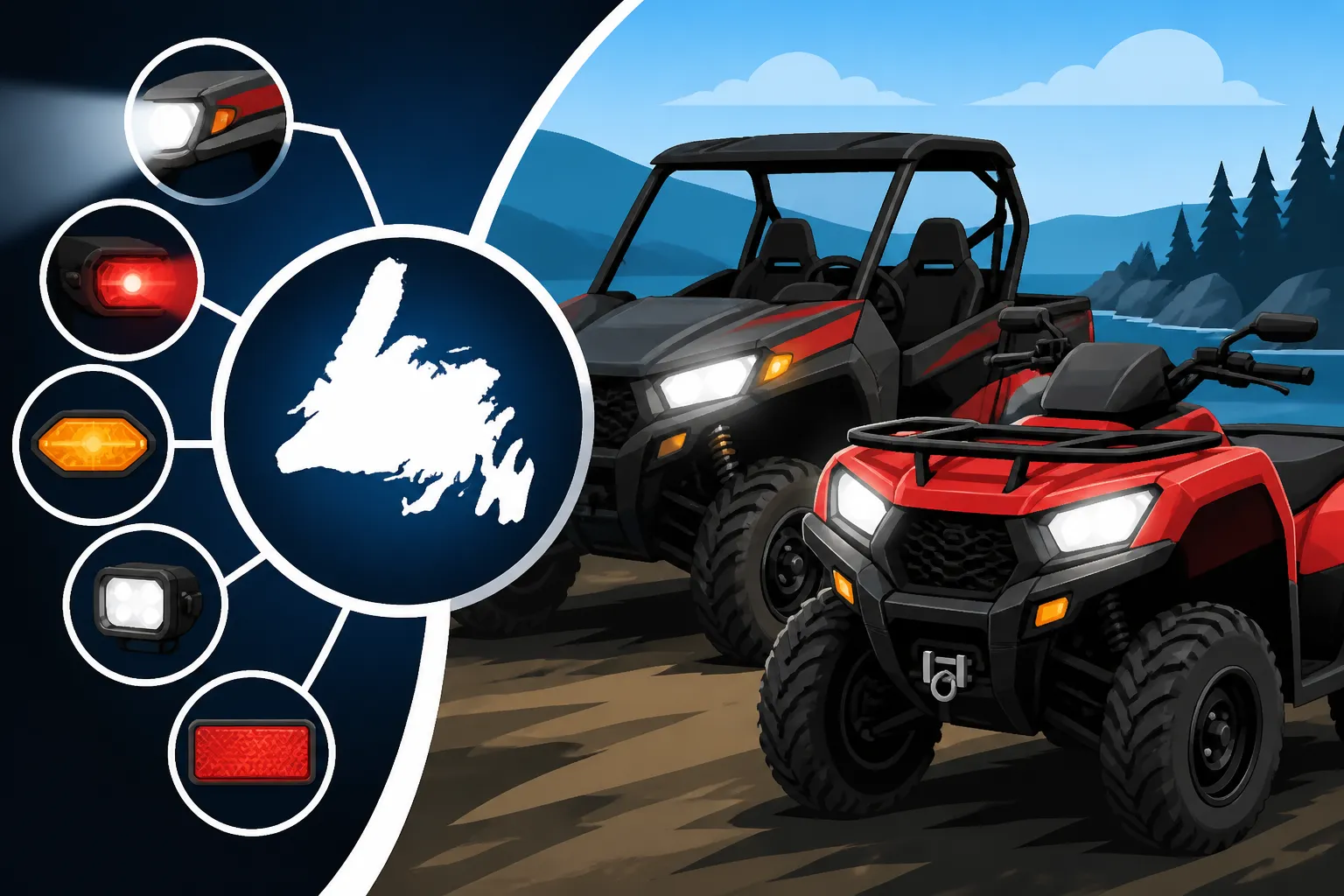
When it comes to the legal essentials, Newfoundland's Off-Road Vehicles Act is quite clear: if you're operating your machine from "sunset to sunrise," or during periods of reduced visibility, you absolutely need functional headlamps and tail lamps. This isn't optional; it's mandatory. Your headlamp must emit a white or amber light, strong enough to illuminate the path ahead effectively, allowing you to see objects and hazards. Think about the distance you'd need to stop safely if something suddenly appeared in your path; your headlamp needs to project that far.
For the rear, a red tail lamp is required. This light needs to be clearly visible from a significant distance behind your machine, signaling your presence to anyone approaching. Many modern ATVs and UTVs come with integrated brake lights that illuminate brighter when you apply the brakes, which is an excellent safety feature. While the Act specifically mentions a tail lamp, a functioning brake light system that incorporates the tail lamp is certainly compliant and highly recommended for enhanced safety. The key is that these lights must be reliably working every time you venture out, especially if there's any chance you'll be riding in low-light conditions.
Reflectors: Passive Visibility for Added Safety
Even with active headlamps and tail lamps, passive visibility elements like reflectors play a crucial role in your machine's safety profile. Reflectors don't require power; they simply bounce back light from other sources, making your machine noticeable even if your active lights are off or fail. Imagine your machine parked on the shoulder of a road in low light, or perhaps at the edge of a trail after sunset. Without power, your active lights won't help, but properly placed reflectors will catch the headlights of an approaching vehicle or another rider's machine.
Typically, off-road vehicles are required to have amber reflectors visible from the sides and red reflectors visible from the rear. These are often integrated into the design of your machine, sometimes on the fenders or rear bodywork. It's a small detail, but it makes a big difference in ensuring your machine is seen from all angles, especially in situations where it might be stationary or partially obscured. Always make sure these aren't cracked, covered in mud, or missing. They are a backup system that could prevent an accident.
Specific Scenarios: When and Where Your Lights Are Crucial
Understanding the basic lighting requirements is one thing, but knowing when and where those lights become absolutely critical is another. Newfoundland's diverse riding environment, from its vast wilderness to its winding public roads, presents numerous situations where your lighting setup can mean the difference between a safe journey and a risky encounter.
Riding After Dark: Headlamps, Tail Lamps, and More
The provincial legislation explicitly states that during the period from sunset to sunrise, or whenever visibility is poor due to weather conditions like fog, rain, or snow, your off-road vehicle must have its headlamps and tail lamps illuminated. This isn't just a suggestion; it's a legal mandate. On a moonless night on the barrens, or deep within a forested trail, your headlamp becomes your only window into the path ahead. Without sufficient illumination, you're not just risking a ticket; you're risking serious injury from unseen obstacles.
Many riders opt for auxiliary lighting, such as LED light bars or spot lamps, to enhance their visibility on unlit trails. Brands like SuperATV offer a wide range of these aftermarket lighting solutions that can dramatically improve your ability to see and be seen in the wilderness. While these extra lights are fantastic for off-road use, it's vital to remember that they are generally not street-legal for use on public roads. Their intense brightness can blind oncoming drivers, creating a hazardous situation. Always use your auxiliary lighting responsibly and know when to switch to your standard, compliant headlamps when operating near or on public ways.
Crossing Highways and Using Shoulders: Beyond Basic Lights
Newfoundland's ORV Act allows for specific instances where off-road vehicles can interact with public highways, such as [Crossing a Newfoundland Highway Needs 150 Metres of Visibility] or [Riding the Shoulder 1 Kilometre to Reach a Trail]. In these scenarios, having fully functional and visible lighting is absolutely paramount. Imagine trying to cross a busy highway at dusk with a dim headlamp; it's an accident waiting to happen. Your lights must be bright enough to clearly signal your presence and intentions to fast-moving vehicle traffic.
When you're riding the shoulder, even at the regulated speed of [20 km/h on a Shoulder], your red tail lamp must be clearly visible to any vehicle approaching from behind. The amber headlamp should be distinct to drivers facing you. Mud, snow, or debris can quickly obscure lights, rendering them ineffective. It's not enough to have the lights; they must be clean and operational. An officer performing a spot check will be looking for this, and an obscured light is as good as a non-existent one in their eyes. Ensure your lights are clear of obstructions, just as you'd ensure your [Newfoundland Plates Kept Free of Mud].
When Weather Turns Nasty: Fog, Rain, and Snow
Newfoundland's weather is famously unpredictable. A clear, sunny morning can quickly give way to thick fog rolling in from the coast, a sudden downpour, or an unexpected snow squall, even in spring or fall. These conditions drastically reduce visibility for everyone, making your machine's lighting even more critical. In such scenarios, your lights aren't just about legal compliance; they're your primary tool for navigating safely and preventing collisions.
Driving through a pea-soup fog on a forest track, your headlamp cuts through the haze, illuminating just enough of the path to guide you. From behind, your tail lamp acts as a beacon, ensuring following riders or drivers can maintain a safe distance. In heavy rain, water spray and reflections can make it incredibly difficult to see and be seen; bright, functional lights help you cut through the visual clutter. Always make it a habit to switch your lights on whenever the weather takes a turn for the worse, even in the middle of the day. It’s a proactive step that protects you and others on the trail or near the road.
Maintenance, Upgrades, and Staying Compliant
Maintaining your off-road vehicle's lighting system is just as important as maintaining its engine or brakes. Over time, bulbs burn out, wiring can fray, and lenses get cracked or dirty. Staying on top of these small details ensures you're always ready for your next adventure and, more importantly, always compliant with provincial regulations.
Keeping Your Lights in Top Working Order
Regular inspections of your machine's lighting system should be a fundamental part of your pre-ride routine. Before you even fire up the engine, take a moment to walk around your ATV or UTV and visually check all your lights. Are the headlamps shining brightly? Is the tail lamp (and brake light, if applicable) working? Are all reflectors clean and intact? You'd be surprised how often a bulb burns out without you noticing, or how quickly mud can cake over a tail light after a spirited ride.
Beyond visual checks, occasionally give your light lenses a good clean. Mud, dust, and even road grime can significantly dim the output of your lights, reducing their effectiveness. A quick wipe with a damp cloth can make a world of difference. Check wiring harnesses for any signs of wear, chafing, or corrosion, especially in areas exposed to the elements. Loose connections can lead to intermittent light failures, which are not only annoying but potentially dangerous. Proactive maintenance prevents those frustrating moments when [What an Officer Can Ask You to Produce] includes proof of functional lights, and yours aren't cooperating.
Aftermarket Lighting and Compliance Considerations
The world of aftermarket off-road lighting is vast and exciting, offering everything from powerful LED light bars to subtle accent lighting. Companies like SuperATV specialize in these kinds of accessories, providing solutions for nearly every riding need, from illuminating the darkest trails to simply making your machine stand out. However, while these upgrades can dramatically enhance your off-road experience, it's crucial to understand the distinction between trail-specific lighting and road-legal lighting.
Many high-intensity light bars, rock lights, and auxiliary floodlights are designed exclusively for off-road use. They project incredibly bright and often wide beams of light, perfect for illuminating a vast area when you're far from civilization. Using these on public roads or even when crossing a highway can be extremely dangerous and is almost certainly illegal, as they can temporarily blind other drivers, creating a severe hazard. Always ensure that any aftermarket lighting you install has a clear on/off switch, allowing you to easily switch to your standard, compliant headlamps when operating anywhere near public roads or other road users. It’s about being responsible and respecting other drivers' safety.
Penalties for Non-Compliance and Enforcement
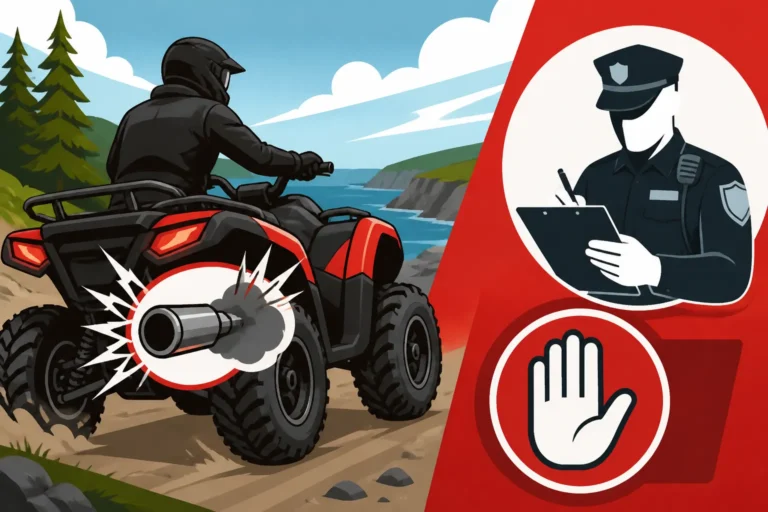
Ignoring the lighting requirements outlined in the Off-Road Vehicles Act can lead to more than just a stern talking-to. Peace officers, including the RCMP and RNC, are authorized to enforce these regulations, and non-compliance can result in fines and other penalties. Riding a machine with defective or absent lights during periods when they are required falls under the umbrella of [Newfoundland Penalties for Riding Illegally]. A fine can quickly put a damper on your riding day, especially for something that's so easy to check and maintain.
| Lighting Element | Requirement | Primary Use | Road Legal (Direct Use) | Penalty for Non-Compliance (Example) |
|---|---|---|---|---|
| Headlamp | White/Amber light, visible far ahead, "sunset to sunrise" | Seeing the path, being seen | Yes, required | Fine for defective equipment |
| Tail Lamp | Red light, visible from rear, "sunset to sunrise" | Being seen from behind | Yes, required | Fine for defective equipment |
| Brake Light | Brighter red when braking (often integrated) | Signalling braking to others | Yes, recommended | Fine for defective equipment |
| Reflectors | Amber (sides), Red (rear), clean | Passive visibility | Yes, often stock | Fine if missing/obscured |
| Auxiliary Light Bar | High intensity, wide beam | Off-road trail illumination | No, for trail only | Fine for dazzling others (if used on road) |
| Turn Signals | Flashing amber (front & rear) | Signalling turns | Not explicitly required for ORV off-road, but essential if registered as street legal | N/A (unless registered as street-legal) |
Remember, enforcement officers are trained to conduct equipment checks. If your lights aren't up to standard, they have the authority to issue a ticket. Beyond the financial penalty, there's the risk of having your machine deemed unsafe for operation until the issue is rectified. It’s always best to be prepared and ensure your machine is in perfect working order before you head out. A little attention to your lights goes a long way in ensuring a trouble-free and enjoyable riding experience throughout Newfoundland.
Disclaimer
This article is for general informational purposes only and does not constitute professional advice. Laws, prices and regulations vary by location and change over time. Consult a qualified professional for guidance on your specific situation.