The $100 Application to Get a Seized Machine Back
There's nothing quite like the knot in your stomach when you realize your beloved ATV or side-by-side has been seized by a peace officer. It’s an immediate punch to the gut, leaving you wondering what went wrong and, more importantly, how on earth you're going to get your machine back. This guide is here to walk you through the often confusing and frustrating process of reclaiming your seized off-road vehicle in Newfoundland, focusing specifically on the $100 application that gets the ball rolling.
Understanding Why Your Machine Was Seized in the First Place
Before you can even think about getting your machine back, you first need to understand why it was taken in the first place. This isn't just about accepting blame; it's about knowing the specific violation so you can address it and prevent it from happening again. Many riders feel blindsided, but often, the reasons for seizure are rooted in the province's Off-Road Vehicles Act.
Common Violations Leading to Impoundment
It’s easy to think of a seizure as something that only happens in extreme cases, but unfortunately, many common violations can lead to your machine being impounded. Often, it's a mix of not knowing the rules or simply making a poor judgment call.
One of the most frequent reasons for seizure involves illegal road riding. This can mean operating your machine on a highway without the proper registration, not having adequate insurance, or operating it without the correct driver's licence. We often see riders, especially those new to the province or coming from areas with different rules, getting caught out by specific nuances of the law. For instance, while some sections of roads might seem harmless, the law can be very strict about where and how you can operate an ORV. A peace officer might pull you over, find your machine isn't properly registered for highway travel – which is very limited in Newfoundland – or that you lack the necessary insurance coverage, and then, boom, your quad is on a tow truck.
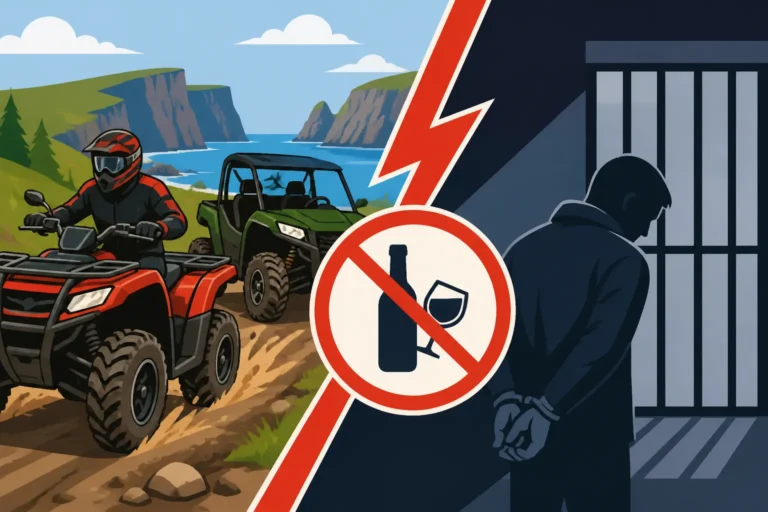
Another serious violation that leads to immediate impoundment is impaired operation. This isn't just about alcohol; it includes any substance that impairs your ability to operate your machine safely. The consequences for impaired riding are severe, not just for your driving record, but also for the immediate seizure of your vehicle. The authorities take this very seriously, and rightfully so, as it poses a significant risk to yourself and others.
Operating in restricted areas is another big one. This includes riding in provincial or national parks where ORVs are prohibited, or trespassing on private land without explicit permission from the landowner. While those open barrens might look inviting, not all land is open to riding. Some areas are protected for wildlife, or simply off-limits. Imagine you’re enjoying a ride through what you think is Crown land, only to discover you've strayed into a restricted zone or private property. A landowner or park warden can call it in, and you could find yourself watching your machine being loaded up.
Finally, major safety violations can also lead to impoundment. This could involve defective equipment that makes your machine unsafe, or a complete lack of required safety gear. While [Newfoundland Has No Spark Arrestor Rule], other rules like [Newfoundland Muffler and Noise Rules] are still enforced. If your muffler is illegally modified and excessively loud, or if your brakes are completely shot, you might be deemed a danger on the trail. A peace officer can decide the machine is too hazardous to be on public or shared land and have it seized for public safety.
The Role of the Peace Officer and the Off-Road Vehicles Act
It’s crucial to understand that peace officers in Newfoundland have significant powers when it comes to enforcing the [Newfoundland's Off-Road Vehicles Act]. They aren't just there to hand out tickets; they're empowered to ensure public safety and the responsible use of off-road vehicles across the province.
When an officer determines that a violation is serious enough to warrant it, they can order the immediate seizure of your machine. This isn't a decision they take lightly, but it’s a tool they have to address violations that pose a risk or are in clear defiance of the law. The Act provides the framework for these actions, outlining everything from registration requirements to operating rules and, yes, penalties for non-compliance, including machine seizure. For instance, if you're found operating your machine while impaired, the Act explicitly grants officers the authority to seize your vehicle on the spot, in addition to charging you with a criminal offence. The same goes for operating a machine that is unregistered, uninsured, or being driven by an unlicensed operator on a highway.
The immediate impact of seizure is, of course, the loss of your machine. This can be devastating, not only financially but also in terms of your recreation or livelihood if you rely on your ORV for work. Beyond the immediate loss, you're also facing potential fines and court appearances. It's a double-whammy: you lose access to your machine, and you're now on the hook for various charges and the costs associated with getting it back. It’s a stark reminder that ignorance of the law isn’t an excuse, and adhering to the rules is paramount for any rider in Newfoundland.
The Immediate Aftermath: What Happens After a Seizure
The moment a peace officer tells you your machine is being seized, it feels like the world stops. Your head starts spinning with questions: Where is it going? How much will this cost? What do I do next? Understanding the immediate aftermath can help you navigate these first, stressful steps with a clearer head.
Where Your Machine Goes and the Initial Costs
Once your ATV or side-by-side is seized, it's typically transported to a designated impoundment lot. This isn't just a friendly holding area; it's a secure facility, and every day your machine sits there, costs are accumulating.
The first major cost you'll face is the towing charge. This can vary depending on the distance your machine needs to be transported from the point of seizure to the impound lot. Whether you were pulled over just down the road from your cabin or way out on a trail miles from civilization, that tow truck isn't operating for free. Then, once it's at the lot, daily storage fees kick in. These fees can add up incredibly quickly, turning an initial infraction into a significant financial burden within a matter of days or weeks. I’ve heard countless stories from riders who were shocked by the final bill, with storage fees sometimes dwarfing the actual fines for the original offence. It’s like a ticking clock, adding to your stress every day your machine isn’t back in your shed. This accumulation of charges is why swift action to reclaim your machine is so important.
Notification of Seizure and Your Rights
While the seizure itself might feel chaotic, there is a formal process that follows. You should receive official documentation confirming the seizure, detailing the reason, and providing information about where your machine has been taken. This document is crucial, as it’s your primary record of the event.
It’s incredibly important to carefully review this documentation. It will lay out the charges against you and often explain the steps you need to take. This isn't just bureaucratic paperwork; it’s your roadmap. Understanding the specific charges is vital, as it dictates the nature of the fines and any other legal consequences you might face. For instance, a charge under [Newfoundland Impaired Riding Penalties] will have vastly different implications than a charge for a minor equipment violation. You have rights in this process, including the right to challenge the seizure or the associated fines in court. If you believe the seizure was unjust or based on a misunderstanding, you can pursue this legal avenue. However, be prepared for a potentially lengthy and costly legal battle. Many riders choose to focus on resolving the situation as quickly and efficiently as possible to minimize escalating costs, especially those daily impoundment fees.
The Early Release Application: Your Path to Recovery
After the initial shock wears off, your main goal is likely to get your machine back. In Newfoundland, the formal way to start this process for a seized ORV is through an early release application, which comes with a specific administrative fee. It's not a fine, but a necessary step to engage with the system.
The Purpose and Process of the $100 Application
The $100 application is a critical piece of the puzzle when your machine has been seized under the Off-Road Vehicles Act. It's important to understand that this fee is not a fine for your violation. Instead, it’s an administrative charge to initiate the early release process from impoundment. Think of it as a processing fee, a formal request to the provincial authority (often Motor Registration or the relevant department) to begin reviewing your case for release.
This application signals your intent to reclaim your machine and acknowledges that you're ready to address the underlying issues that led to the seizure. Without this application and its associated fee, your machine will simply continue to sit in the impound lot, racking up those daily storage charges indefinitely. The application essentially opens a file for your specific seizure. You'll typically need to obtain the correct form from a provincial registry office or sometimes online. Once you have it, you fill it out with all the requested details about your machine, the date and reason for seizure, and your personal information as the owner. Submitting this form, along with the $100 payment, is the formal way to say, "I want my machine back, and I'm ready to comply." This is where you really start moving forward. For more details on the specific costs involved, you might want to look at [Newfoundland Early Release Fees].
Eligibility and Conditions for Early Release
Just paying the $100 application fee doesn’t automatically guarantee immediate release. There are specific eligibility criteria and conditions that must be met before your machine is returned to you. The province wants to ensure that the reasons for the original seizure have been addressed and that you’re prepared to comply with the rules going forward.
Common eligibility factors often include whether it’s a first-time offence for seizure, or if the machine wasn't stolen. If the machine was seized as part of a more serious criminal investigation, or if it was found to be stolen, the process becomes much more complex and may involve law enforcement for a longer period. Beyond eligibility, you'll almost certainly need to meet certain conditions. This usually means paying off any outstanding fines related to the seizure. For example, if your machine was seized because you were riding without proper registration, you might need to pay the fine for that specific violation before your machine can be released. You'll also need to prove ownership of the machine, which means having your registration documents in order. In some cases, if the seizure was due to a correctable defect – say, a faulty brake light – you might be required to demonstrate that the issue has been fixed before the machine leaves impound.
Consider a hypothetical situation: Sarah, a passionate rider, had her SuperATV side-by-side seized because she was caught riding on a municipal road that prohibited ORVs, a common mistake often due to a lack of awareness about local bylaws. After the initial charge and seizure, she pays her $100 early release application fee. The conditions for her release would likely include paying the municipal fine for the road use violation, and perhaps attending an information session on [Newfoundland Municipal Road Bylaws] if offered. If her machine also had an expired registration, she would need to get that updated as well. Only once all these conditions are met will the provincial authority authorize the release of her SuperATV. It's a comprehensive process designed to ensure compliance and promote responsible riding.
Navigating the Legal and Financial Hurdles
Getting your machine seized isn't just about the physical loss; it's also about the legal and financial maze you suddenly find yourself in. Understanding the various costs and requirements is key to a smooth, albeit frustrating, recovery process.
Understanding Fines, Court Costs, and Default Periods
When your off-road vehicle is seized, it’s highly probable that you’ll also be facing one or more fines for the infraction that led to the seizure. These fines are separate from the $100 early release application fee and the towing/storage costs. They represent the penalty for breaking a specific rule under the Off-Road Vehicles Act or related municipal bylaws. [Newfoundland Fine Ranges by Offence] can vary wildly, from a few hundred dollars for minor infractions to thousands for more serious violations like impaired operation. It's a good idea to research the specific fine associated with your charge so you're not hit with an unexpected bill.
Once you receive a ticket, you typically have options: you can pay the fine, which usually implies a guilty plea, or you can choose to contest it in court. Contesting a ticket can be a lengthy process and may involve additional court costs, even if you win. If you plead guilty or are found guilty, you'll be given a due date for payment. It's absolutely critical to meet this deadline. The province has strict rules about default periods. Failing to pay a fine can lead to escalating penalties, such as a driver's licence suspension or even further legal action. For example, if you miss the payment deadline by [Two Days in Default], you might face one set of consequences, but if it drags on for [Fourteen Days in Default], the repercussions can become much more severe, often resulting in steep late fees or the inability to renew other provincial permits until the fine is settled. I’ve seen riders who let a small fine balloon into a huge problem simply by ignoring it. Don't let that happen to you. Even fines for seemingly minor issues, like [Newfoundland Fines for a Defective Muffler], can escalate quickly.
Proving Ownership and Addressing Lien Records
A fundamental requirement for getting your seized machine back is unequivocally proving that you are its rightful owner. This might seem obvious, but if your paperwork isn't in order, it can become a major headache. The primary document you'll need is your current registration permit, along with a valid bill of sale if you recently purchased the machine. The registry needs to see a clear paper trail connecting you to the ATV or side-by-side. If you can’t readily access these documents, you might face delays, and those impoundment fees will keep adding up. For a comprehensive list of what to expect, refer to [Newfoundland Registration Paperwork Explained].
Things get a bit more complicated if your machine is financed. If you still owe money on your ATV or side-by-side, the financial institution that holds the loan has a lien on the vehicle. This means they legally have an interest in it. When a machine is seized, the authorities will often check for such liens. You may need to involve your lender in the release process, as they might have specific requirements or paperwork they need to provide before the machine can be released to you. They'll want to ensure their asset is protected. In situations where ownership is unclear, perhaps you bought it privately and lost the original bill of sale, or you never properly transferred the registration, the path becomes much trickier. The article [Newfoundland Registration Without a Bill of Sale] outlines some options for these complex scenarios, but it often involves sworn affidavits and can significantly delay the release of your machine. Having all your ownership documents up-to-date and easily accessible is truly non-negotiable for a smoother process.
Preparing for Pickup and Preventing Future Seizures
Once you’ve navigated the bureaucracy, paid the fees, and proven ownership, the day finally comes when you can reclaim your machine. But it's not quite as simple as showing up and driving off. There are final steps to ensure a smooth pickup and, more importantly, strategies to ensure you never have to go through this ordeal again.
The Final Steps to Reclaiming Your Machine
Before you head to the impound lot, make sure you have all your ducks in a row. You'll need absolute confirmation from the provincial authority that all fines, application fees (including the $100 early release application), and accumulated towing and storage costs have been paid in full. There’s nothing more frustrating than showing up, eager to get your quad back, only to be told there's an outstanding balance. Get a written or emailed confirmation if possible, detailing that your machine is cleared for release.
Next, you need to arrange for transportation. Unless the original violation was something minor and the machine is road-legal at the point of pickup (which is highly unlikely for most seized ORVs), you cannot simply ride it home. You'll need a truck and trailer to safely transport it from the impound lot. Confirm the operating hours of the impound facility and be punctual; they often have strict pickup schedules. When you finally get to lay eyes on your machine, it's crucial to thoroughly inspect it. Check for any damage that might have occurred during towing or while it was stored in the lot. Document everything with photos, and if you notice significant damage that wasn't present at the time of seizure, discuss it with the impound lot staff immediately. While it's rare, machines can sometimes sustain minor bumps or scrapes, and you want to be aware of the condition before you sign anything saying you've received it back in good order. This final check is your last chance to address any issues before it leaves their care.
Best Practices to Avoid Future Seizures
Getting a machine seized is an expensive, stressful, and time-consuming lesson. The best way to deal with it is to ensure it never happens again. This means taking proactive steps to understand and comply with all off-road vehicle regulations in Newfoundland.
First and foremost, make it a habit to regularly review [Newfoundland ORV Road Rules Explained] and any relevant [Newfoundland Municipal Road Bylaws]. These rules can change, and what's permissible in one town might be strictly forbidden in another. Ignorance is not a defence. A quick call to a local town office or checking their website can save you a world of trouble. Always ensure your machine is properly registered with the province, and that you have current and sufficient [Newfoundland Insurance Requirements for Riders]. Proof of insurance is often checked during roadside stops, and lacking it is a surefire way to get into trouble.
Beyond administrative compliance, regularly perform maintenance and equipment checks on your machine. Ensure your brakes are working, lights are functional (especially if riding at dusk or dawn), and your muffler is compliant with noise regulations, as discussed in [Newfoundland Muffler and Noise Rules]. Upgrading parts from reputable brands like SuperATV can enhance your machine's performance and durability, but always ensure any modifications meet provincial safety standards. Finally, if you haven’t already, strongly consider completing official off-road safety training. [Newfoundland Safety Training Is Mandatory] for new registrants and younger riders, but it's beneficial for everyone. These courses teach not only safe riding techniques but also crucial information about the laws and responsible environmental practices. By staying informed, keeping your paperwork in order, maintaining your machine, and riding responsibly, you can ensure your next ride is about enjoyment, not impoundment.
Dealing with a seized ATV or side-by-side in Newfoundland is a tough experience, but it’s one you can get through with the right information and a methodical approach. From understanding the reasons behind the seizure to navigating the $100 early release application and the subsequent financial and legal hurdles, each step requires attention and diligence. By taking the time to understand the rules and making a commitment to responsible riding, you can reclaim your machine and ensure your future adventures are free from the headache of impoundment.
Disclaimer
This article is for general informational purposes only and does not constitute professional advice. Laws, prices and regulations vary by location and change over time. Consult a qualified professional for guidance on your specific situation.