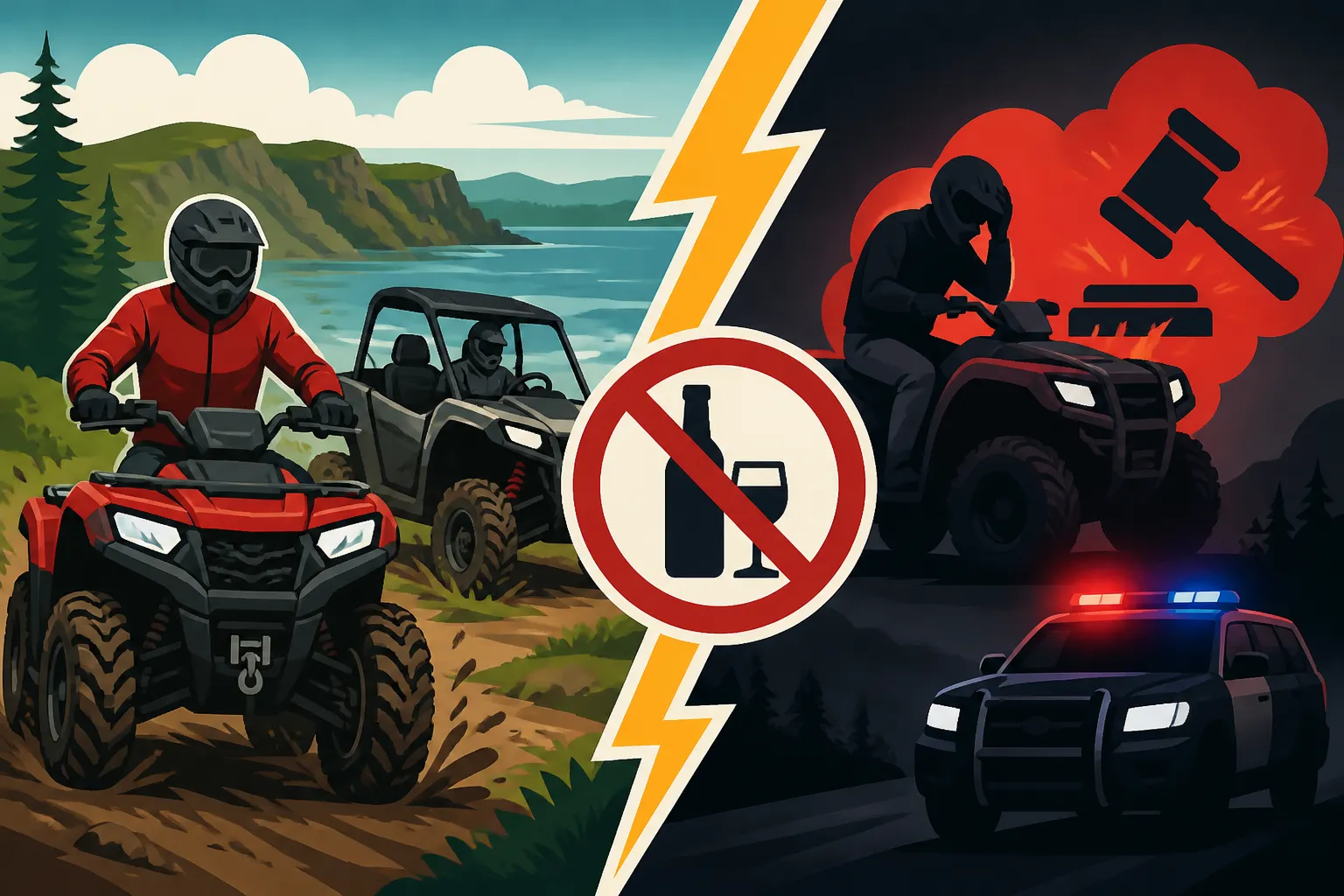
Newfoundland Impaired Riding Consequences
It's a tough pill to swallow, but sometimes we see folks out on their ATVs or UTVs around Newfoundland who clearly shouldn't be operating a machine. Impaired riding isn't just a simple mistake; it's a serious offence with far-reaching consequences that can derail your life, cost you a fortune, and put others at grave risk. This guide is here to lay out exactly what happens when you're caught operating an off-road vehicle under the influence in our beautiful province, helping you understand the legal landscape and the lasting repercussions.
The Serious Ramifications of Impaired ORV Operation in Newfoundland
Riding an ATV or UTV in Newfoundland is a cherished pastime for many, a way to connect with the incredible landscapes, from the T'Railway to remote cabin country. But with that freedom comes immense responsibility, especially when it comes to operating these powerful machines safely. When someone chooses to ride impaired, they're not just risking their own neck; they're endangering everyone else on the trail, the road, and even those just enjoying the outdoors nearby. The laws in Newfoundland are stringent because the potential for tragedy is so high.
Defining "Impaired" on the Trail and Road
When we talk about impaired riding, most people immediately think of alcohol, and they're right to. Operating an off-road vehicle with too much alcohol in your system is a clear violation of the law. However, impairment isn't limited to just alcohol. The law broadly covers any substance that affects your ability to safely operate your machine. This includes illicit drugs, of course, but it also extends to prescription medications that might make you drowsy or affect your coordination. Even some over-the-counter remedies can have side effects that make you a hazard behind the handlebars or wheel.
Imagine you've had a long day of fishing, and you decide to have "just a couple" beers at the cabin before heading back to the truck on your quad. Your reaction time is dulled, your judgment is off, and that familiar trail suddenly becomes a gauntlet of unseen dangers. Or perhaps you've taken a strong painkiller for an old injury, thinking it'll help you enjoy the ride, but it leaves you feeling sluggish and unfocused. The law doesn't care about your intentions; it focuses on your capacity to operate the machine safely. If that capacity is diminished by any substance, you are impaired.
Why Newfoundland Takes Impaired Riding So Seriously
Newfoundland and Labrador is a province where off-road vehicles are deeply ingrained in the culture. From hunting and fishing trips to simply enjoying the vast wilderness, ORVs are tools and toys alike. This widespread use, however, necessitates strict rules, especially regarding safety. The [Newfoundland's Off-Road Vehicles Act] explicitly outlines the responsibilities of operators, and impaired riding is at the very top of the list of serious offences. The province understands that an impaired operator poses a significant threat not only to themselves but to hikers, cyclists, other riders, and even wildlife.
Consider the shared nature of our trails. The T'Railway, for instance, welcomes not just ATVs and UTVs but also walkers, joggers, and cyclists. A moment of impaired judgment on an ATV can lead to a devastating collision with a pedestrian. On rural roads or woods roads, an impaired operator might veer into oncoming traffic or lose control on a tricky turn. The potential for severe injury or even fatality is real, and the provincial government, along with law enforcement, is committed to preventing such tragedies through robust enforcement and significant penalties. It's about protecting the safety and well-being of every single person who enjoys our outdoors.
The Immediate Aftermath: Roadside Stops and Investigations
Being stopped by a peace officer while operating an ORV can be a nerve-wracking experience, even when you've done nothing wrong. If an officer suspects you're impaired, the situation immediately escalates. This isn't just a quick chat; it's a formal investigation into your sobriety and your ability to operate your machine safely. Officers are trained to observe signs of impairment, such as slurred speech, unsteady gait, bloodshot eyes, or the smell of alcohol. They might ask you to perform standardized field sobriety tests, like walking a straight line or standing on one leg.
If these tests indicate impairment, or if there's reasonable suspicion, you'll likely be asked to provide a breath sample using an approved screening device. Refusing to comply with a demand for a breath or blood sample carries the same severe penalties as being found guilty of impaired operation itself. This is a critical point that many riders misunderstand; you cannot simply refuse to cooperate and expect to avoid consequences. The process can feel intrusive and daunting, but it's designed to ensure public safety, and any attempt to obstruct it will only add to your legal woes. You should always carry your [Newfoundland Proof Carried While Riding] to avoid other issues during a stop.
Legal and Financial Penalties Under Provincial Law
The Newfoundland and Labrador Off-Road Vehicles Act carries significant penalties for impaired riding, designed to act as a strong deterrent. These aren't minor slaps on the wrist; they are substantial fines, the loss of your machine, and restrictions on your driving privileges that will impact your day-to-day life. It's a clear signal that the province has zero tolerance for anyone who chooses to put others at risk by operating an ORV while impaired.
Significant Fines and Their Escalation
If you're found guilty of impaired operation under the provincial Act, you'll be facing a substantial fine. These aren't small ticket amounts; they start at a considerable sum and can quickly escalate, especially for repeat offenders. Imagine facing a fine that could easily cover several months of your ORV loan payments or a significant portion of your annual income. This initial fine is just the beginning of the financial burden. The provincial government has set these amounts to reflect the seriousness of the offence, aiming to hit your wallet hard enough to make you think twice about ever riding impaired again.
Beyond the initial fine, there are often additional surcharges and fees that pile on. This means the actual cost to you will be even higher than the base fine amount. If you're unlucky enough to be a repeat offender, the fines increase dramatically, showing a clear pattern of non-compliance that the courts take very seriously. For example, while a first offence might incur a hefty fine, a second or third offence will see that amount skyrocket, alongside other, even more severe penalties. It's a progressive system designed to punish repeated dangerous behaviour severely. You can get a general idea of [Newfoundland Fine Ranges by Offence] for a variety of violations.
The Costly Reality of Machine Seizure and Impoundment
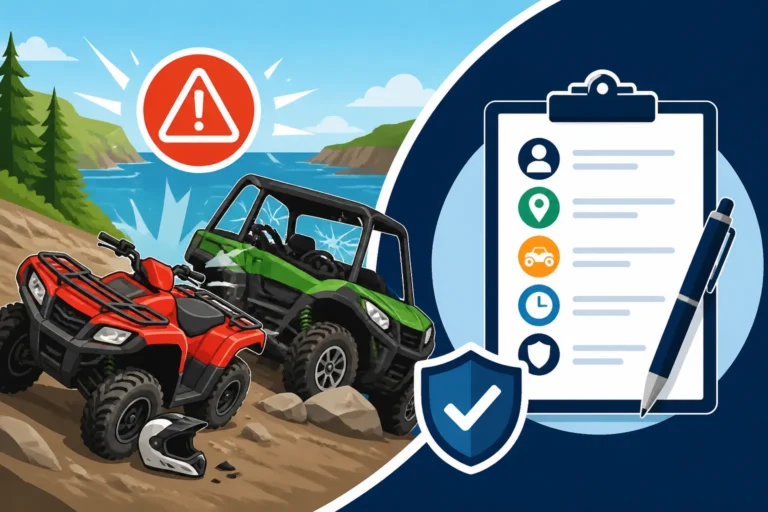
One of the most immediate and impactful consequences of impaired riding in Newfoundland is the seizure and impoundment of your off-road vehicle. When an officer determines you've been operating impaired, your machine is impounded on the spot. This means it's towed away to a secure facility, and you're left to find your own way home, often from a remote trail or woods road. The cost of this seizure alone is significant, and it's all on your dime. You won't be getting your quad or side-by-side back quickly, or cheaply.
The fees associated with impoundment quickly add up. You'll be charged for the towing of your machine, daily storage fees at the impound lot, and a release fee before you can even think about getting it back. These daily charges can accumulate rapidly, especially if your case takes time to resolve through the courts. Imagine paying hundreds, if not thousands, of dollars, just to retrieve your own machine, which has been sitting idle. It's a stark reminder of the financial burden, a direct consequence of your choices. For more details, look up [Newfoundland Machine Seizure Rules] and [Newfoundland Early Release Fees].
Broader Impacts: License Suspension and Driving Restrictions
Being caught impaired on an ORV doesn't just affect your ability to ride that specific machine. In Newfoundland, a conviction for impaired driving under the Off-Road Vehicles Act can, and often does, lead to a suspension of your provincial driver's license for all classes of vehicles. This means you might lose your ability to drive your car, truck, or motorcycle, impacting your daily commute, your job, and your personal freedom. This isn't a temporary inconvenience; it's a significant disruption that can last for an extended period, making simple tasks incredibly complicated.
The length of the suspension can vary depending on the severity of the offence and whether it's a repeat incident. A first offence might lead to a shorter suspension, but subsequent offences will result in much longer bans from driving. This loss of your driving privileges extends far beyond the trails, making it difficult to get to work, run errands, or even pick up groceries. It's a consequence that truly underscores the seriousness with which impaired operation is viewed by the legal system, reinforcing the idea that safe driving habits apply across all vehicle types.
When Things Get Worse: Criminal Code Charges and Long-Term Fallout
While the provincial Off-Road Vehicles Act has its own severe penalties, impaired driving can also trigger charges under the Criminal Code of Canada. This elevates the situation from a provincial offence to a federal crime, bringing with it a whole new level of legal gravity and potentially life-altering consequences. This is where the true weight of impaired riding becomes apparent, as it can affect your freedom, your future employment, and your ability to travel.
Stepping Beyond Provincial Offences: Federal Criminal Charges
When you're found to be operating an ORV while impaired, peace officers in Newfoundland often have the discretion to lay charges under the Criminal Code of Canada, in addition to or instead of, provincial offences. This is a crucial distinction. A provincial offence might result in fines and license suspension, but a Criminal Code conviction comes with a criminal record, which is a far more serious matter. These charges might include impaired operation, operating a vehicle with a blood alcohol concentration (BAC) over the legal limit, or refusal to comply with a demand for a breath sample.
The threshold for a Criminal Code charge is often a BAC of 0.08% or higher, or evidence of impairment by drugs. However, impairment can be proven even if you're below the 0.08% mark, depending on how your driving ability is affected. The implications are profound. You're no longer just dealing with provincial bureaucracy; you're now facing the full force of the federal justice system. This involves court appearances, potential legal battles, and a much higher level of stress and uncertainty, all for a choice that could have been easily avoided.
The Shadow of a Criminal Record and Potential Jail Time
Perhaps the most devastating consequence of an impaired riding conviction under the Criminal Code is the creation of a permanent criminal record. This isn't something that just goes away; it follows you for life and can have a profound impact on various aspects of your future. A criminal record can affect your employment opportunities, as many jobs, especially those requiring security clearances or working with vulnerable populations, will be off-limits. It can also complicate international travel, making it difficult or impossible to enter certain countries, including the United States.
Furthermore, Criminal Code convictions for impaired driving often carry the possibility of jail time, especially for repeat offenders or in cases where there was an accident resulting in injury or death. Even a first offence can result in a mandatory minimum fine and a driving prohibition, but repeat offences see increasing minimum jail sentences. [Newfoundland Impaired Riding and Jail] is a very real possibility. Imagine facing weeks or months behind bars, away from your family and your job. The legal costs alone for defending against such charges can be astronomical, adding to the financial burden on top of any fines or lost income.
Lasting Repercussions on Your Life and Livelihood
Beyond the immediate legal and financial penalties, a conviction for impaired riding can have a ripple effect on your personal and professional life. Your car insurance premiums, already a significant expense in Newfoundland, will almost certainly skyrocket, making it even more costly to drive any vehicle. Some insurance companies may even refuse to cover you, leaving you in a difficult position. Your social standing in your community might suffer, and relationships with friends and family could be strained.
Consider the impact on your job. If your employment requires driving, a license suspension could mean losing your livelihood. If your job requires travel, a criminal record could make that impossible. The stress, anxiety, and depression that can accompany such legal troubles are also significant, affecting your mental health and overall well-being. It's not just a fine or a temporary inconvenience; it's a decision that can cast a long shadow over your future, impacting your financial stability, your career, and your personal relationships for years to come.
Avoiding the Consequences: Responsible Riding Choices
The good news is that all these severe consequences are entirely avoidable. Responsible riding is not just a suggestion; it's a necessity for enjoying our beautiful province safely and legally. Taking a few proactive steps and making smart choices can ensure your day on the trails remains enjoyable and free of legal headaches.
Planning for Sober Operators Every Time
The simplest and most effective way to avoid impaired riding consequences is to ensure that if you're going to consume alcohol or any impairing substance, you have a designated sober operator. Just like you would for a car trip, plan who will be riding the ORV and ensure they remain completely sober. This means no alcohol, no recreational drugs, and careful consideration of any prescription or over-the-counter medications that might affect their abilities.
If you're heading to a cabin for the weekend, and you know there will be celebratory drinks, make arrangements to leave the machines parked until everyone is completely sober the next day. Better yet, assign a rotating designated driver for the ORV if multiple people plan to operate. This proactive approach removes any temptation or last-minute poor decisions. Always remember that [Newfoundland Safety Training Is Mandatory] for new registrants and minors, emphasizing the importance of responsible operation.
Making Smart Choices and Avoiding Peer Pressure
It's easy to get caught up in the moment, especially during social gatherings or after a successful hunt. However, personal responsibility is paramount. Make the conscious decision before you even start drinking or using any substance that you will not operate your ORV. This clear boundary can help you resist peer pressure when friends might suggest "just one more run" or "it's only a short distance." Remember, even a short distance can lead to disaster.
Carry plenty of non-alcoholic beverages with you on your rides, and make sure food is readily available if you're having a longer outing. If you feel yourself being pressured, politely but firmly decline. Your safety, and the safety of others, is not worth risking for a momentary lapse in judgment. It's about respecting the law, your machine, and everyone who shares the trails.
Knowing the Law: Your Best Defense
Education is your best tool for prevention. Take the time to familiarize yourself with [Newfoundland Penalties for Riding Illegally] and specific regulations concerning impaired operation. Understand what constitutes impairment, the legal blood alcohol limits, and the penalties for refusal to comply with demands from a peace officer. Knowing these facts upfront can reinforce your commitment to sober riding and help you make informed decisions.
A good rule of thumb is: if you wouldn't drive your car after consuming a substance, you absolutely should not operate an ORV. While the environment is different, the cognitive and physical demands of operating an ATV or UTV are just as significant, if not more so, given the varied terrain and potential hazards. Ensure you have proper [Newfoundland Insurance Requirements for Riders] in place, and always wear a [Newfoundland Helmet Law for Every Rider] — these are basic safety measures that complement sober riding.
Here's a quick overview of potential consequences:
| Offence Type | Legal Impact | Financial Impact | Personal Impact |
|---|---|---|---|
| Provincial Offence | Fines, License Suspension, Machine Seizure | Significant Fines, Towing Fees, Daily Storage Fees, Legal Costs | Loss of Driving Privileges, Inconvenience, Stress |
| Criminal Code | Fines, Jail Time, Criminal Record, Driving Prohibition | Substantial Fines, Court Costs, Legal Defense Fees, Lost Income | Permanent Criminal Record, Travel Restrictions, Employment Barriers, Imprisonment |
Disclaimer
This article is for general informational purposes only and does not constitute professional advice. Laws, prices and regulations vary by location and change over time. Consult a qualified professional for guidance on your specific situation.