Newfoundland Stickers From a Trail Operator
A Newfoundland trail sticker can be easy to confuse with a vehicle plate, registration permit, or safety certificate. If you are planning to ride a managed trail, the key is knowing which trail operator issues the sticker, how to get it, and what it does—and does not—authorize.
What a Newfoundland trail operator sticker is for
A trail sticker is tied to access on managed trails. It is not the same thing as registering your ATV or side-by-side, and it does not by itself make every trail, road, or piece of Crown land open to you. Think of these as separate requirements: each answers a different question about your ride.
| Item | What it generally addresses | What it does not replace |
|---|---|---|
| Vehicle registration and plate | Whether the machine is registered under the applicable rules | A managed-trail sticker or permission to use restricted land |
| Trail sticker | The sticker requirement for riding on a managed trail | Registration, safety training, insurance, or local access rules |
| Safety training proof | Whether a rider has the required training proof | A registration permit or trail sticker |
| Land access permission | Whether a particular area or route is open to you | Any other required document or equipment |
For managed trails, check the current requirement before setting out. Managed Trails Require a Sticker on Your Machine explains the basic rule, while [Newfoundland Managed Trail Rules] gives the broader context for using these routes.
The practical point is that obtaining one sticker is not a blanket permission slip. A sticker does not automatically authorize riding on a closed route, a restricted area, private land, or a municipal road. It also does not remove the need to meet requirements that apply to the machine and rider. Review [Newfoundland Crown Land Access Rules] if your route includes Crown land, and check any posted signs or trail notices along the way.
A sticker is different from a plate or permit
A machine’s registration plate and permit relate to registration. A trail operator’s sticker relates to a managed trail. They may both be relevant on the same ride, but one does not stand in for the other. If you are unsure whether your machine is registered correctly, start with Newfoundland Permits, Plates and Decals.
This distinction matters when buying a sticker. A trail operator may ask for information to identify the machine or confirm eligibility, but buying a sticker is not the same as registering a new or used ATV. Riders should arrange registration separately where required, and carry the documents needed to show it.
A sticker does not override closures or restrictions
Trail access can depend on where you are, the route you plan to use, and any restrictions that apply at the time. A sticker does not open a trail that is closed, permit travel outside the managed route, or substitute for permission from a landowner. Seasonal conditions and other restrictions can affect a planned trip, so check the route rather than relying on the sticker alone.
If your ride crosses different land types or connects to local roads, verify each part of the route. A valid sticker can be one necessary part of preparation without being sufficient for the whole journey.
Which trail operator can issue the sticker
The sticker should come from an operator authorized to issue it for the managed trail you intend to use. The first task is therefore not simply to find a sticker for sale, but to identify who manages the route. Operators may handle different trail networks or sections, so a sticker from one source should not be assumed to cover every managed trail.
For a route you have not ridden before, check the trail’s official information or ask the operator directly. Which Operators Can Issue a Trail Sticker is a useful starting point for understanding who can issue one. If the operator is unclear, do not assume that a general retailer, a private seller, or a sticker from another area is accepted.
Confirm the route and operator before travelling
Before leaving home, write down the trailhead or section you plan to ride and ask the operator:
- Whether the planned route is a managed trail.
- Whether a sticker is required for that route.
- Which operator issues the sticker for that section.
- How the sticker is currently supplied and what proof, if any, you should carry.
- Whether there are closures, temporary restrictions, or other access conditions.
This simple check can prevent a common problem: arriving at a trailhead with a sticker that is not valid for the route, or discovering that the sticker must be arranged through a different operator. Trail arrangements can differ, and availability or pickup procedures can change. Confirm the details directly rather than relying on an old post, an informal recommendation, or an assumption that every operator works the same way.
If a trail crosses between managed sections, ask whether one sticker covers the full route or whether you need to check with more than one operator. Do not infer coverage from the sticker’s appearance alone. The operator is the appropriate place to clarify the sticker’s scope.
Do not assume every seller is an issuing operator
A seller may be able to direct you to an operator without being authorized to issue the sticker. If you are offered a sticker through a shop, club, event, or online listing, confirm that it is issued or recognized by the relevant operator. Ask who is responsible for issuing it and which trail or network it applies to.
Buying from an unverified source can leave you with a sticker that does not meet the requirement. It can also make it difficult to resolve questions about dates, placement, or proof. When in doubt, use the operator’s own instructions or contact details.
How to get the sticker before your ride
Once you know the correct operator, follow its current process. The exact steps can vary, so avoid assuming there is one province-wide counter, online form, or pickup arrangement. Some operators may provide instructions in advance; others may explain how to arrange a sticker locally. Confirm the process before travelling, especially if you are arriving outside normal business hours or going directly to a remote trailhead.
Get the right details ready
When you contact the operator, be ready to describe the route and the machine you intend to use. Ask what information they need and whether you must show anything when collecting or receiving the sticker. Do not send sensitive personal information through an unverified channel. Use the operator’s official contact method and provide only what is requested.
If you are riding more than one machine, clarify whether each machine needs its own sticker or whether the operator has a different process. Do not assume one sticker can be moved between vehicles or shared among a group. Ask how the sticker is associated with the machine and whether it can be transferred if you change vehicles.
For riders bringing a machine from another province, the sticker requirement is separate from the rules about visiting vehicles. Check Newfoundland Visitor Rules and the 30-Day Limit for the registration issue, and confirm trail access requirements with the operator. An out-of-province plate does not automatically remove a managed-trail sticker requirement.
Ask about timing, placement, and proof
Confirm when the sticker can be issued and whether you need to arrange it before arriving. Also ask where it must be placed, whether it may instead be carried, and what proof you should keep with you. These details matter because getting the sticker is only part of the job: you need to be able to meet the requirement while riding.
Keep any receipt, confirmation, or written instructions the operator provides until you have verified that the sticker is correctly issued and displayed or carried as required. If an operator tells you to carry the sticker rather than attach it, follow that instruction and keep it accessible during the ride. For more on that distinction, see Attach the Sticker or Carry It in Your Pocket.
Do not rely on a photo of a sticker as a substitute unless the operator or applicable rule specifically accepts that form. A photo may be useful as a backup record, but it does not necessarily meet a requirement to display or carry the actual sticker.
Keep the process separate from registration and training
A trail operator generally handles the trail sticker, not every legal requirement connected with an ATV ride. Registration is handled through the relevant registration process, while safety training requirements are separate. Riders should not assume the operator sticker means the machine is registered or that the rider has met training obligations.
Check Newfoundland Safety Training Is Mandatory if you need to confirm the training requirement. Keep relevant proof available in the form required. In the same way, carry the registration information and other documents that may be required for your machine and circumstances. Newfoundland Proof of Ownership on the Trail covers why ownership information can matter when riding.
Displaying or carrying the sticker
The operator’s instructions and the applicable rules determine whether the sticker should be attached to the machine or carried while riding. Do not decide based on convenience alone. Confirm the method when you arrange the sticker, then follow it consistently.
If the sticker must be attached, place it where the operator specifies and where it can be seen. Avoid putting it where mud, cargo, bodywork, or routine contact will quickly cover or damage it. Clean the surface before applying it, and make sure it is secure before leaving. If the machine has limited flat surfaces, ask the operator for guidance instead of guessing.
If carrying the sticker is permitted, keep it somewhere accessible and protected from water, dirt, and loss. A sealed pocket or document pouch can help keep it readable. Do not bury it under equipment or leave it in a vehicle parked far from the trail. If a check occurs, you should be able to produce it without delaying the group or rummaging through unsecured gear.
Check it before each ride
A sticker that was properly attached or carried on a previous trip may be missing or unreadable later. Include it in your pre-ride check, especially after cleaning the machine, replacing body panels, moving luggage, or switching vehicles. Confirm that the sticker is still intact, visible if required, and associated with the machine you plan to ride.
If a sticker is damaged, lost, or detached, contact the issuing operator before using the managed trail. Ask whether it can be replaced and whether any proof of purchase or other information is needed. Do not assume that a damaged sticker is acceptable or that a photo will resolve the issue.
If you sell or replace the machine, ask the operator whether the sticker can transfer. Do not move it to a different vehicle without confirmation. A sticker may be linked to a particular machine or issued under particular terms, so the operator’s answer matters.
Carry the rest of your ride documents separately
A sticker is only one part of a prepared ride. Keep registration documents, required training proof, and any insurance information or other documents applicable to your ride in an organized, protected place. Documents should be accessible if requested, but protected against rain, mud, and accidental loss.
For a group ride, each rider should check their own machine and paperwork rather than relying on one person to hold everything. If someone is riding a borrowed or rented machine, confirm in advance who is responsible for the sticker and what paperwork the operator or owner provides. Never assume a companion’s sticker or documents cover your machine.
Visitors, exemptions, and common mistakes
Visitors often have a few requirements to check at once. A machine registered outside Newfoundland may be subject to visitor rules, and a managed trail may have its own sticker requirement. These are separate questions. Check the visitor registration rules and ask the relevant trail operator about the route rather than treating one answer as a substitute for the other.
A visitor planning to ride only briefly should still confirm whether the route is managed and what sticker is required. A visitor exemption related to registration does not necessarily mean the rider is exempt from trail access rules, safety requirements, or insurance requirements. See Newfoundland’s 30-Day Visitor Exemption for the registration topic, then verify trail-specific rules separately.
Check the exact exemption, not just the general idea
Some exemptions may apply to particular people, land, or circumstances. Do not assume that an exemption from one requirement applies to another. For example, an exemption connected with riding on family land is not automatically an exemption for riding a managed trail. Likewise, a visitor’s registration status does not by itself answer whether a trail sticker is needed.
If you believe you qualify for an exemption, confirm its scope with the appropriate official source or operator before riding. Be ready to explain the specific circumstance, such as where the land is, who owns it, and which route you plan to use. If the ride includes a managed trail, ask the operator directly whether that exemption changes the sticker requirement for that trail.
Mistakes that can cause trouble at the trailhead
The most common problems are avoidable:
- Treating the sticker like registration. A trail sticker does not register the vehicle or replace its plate and permit.
- Getting it from the wrong source. Confirm that the issuer is authorized for the particular managed trail.
- Assuming one sticker covers every route. Ask whether it applies to the sections you plan to ride.
- Waiting until the trailhead to arrange it. Check timing and availability before travelling.
- Guessing about placement. Follow the operator’s instructions on attaching or carrying it.
- Moving it between machines. Confirm transfer rules rather than reusing a sticker.
- Assuming visitors are exempt. Visitor registration rules and managed-trail rules are not interchangeable.
- Ignoring route restrictions. A sticker does not open closed or restricted areas.
- Leaving supporting documents behind. Carry the registration and proof required for your situation, not just the sticker.
- Relying on outdated information. Ask the operator for current instructions and check notices before setting out.
A simple pre-ride checklist
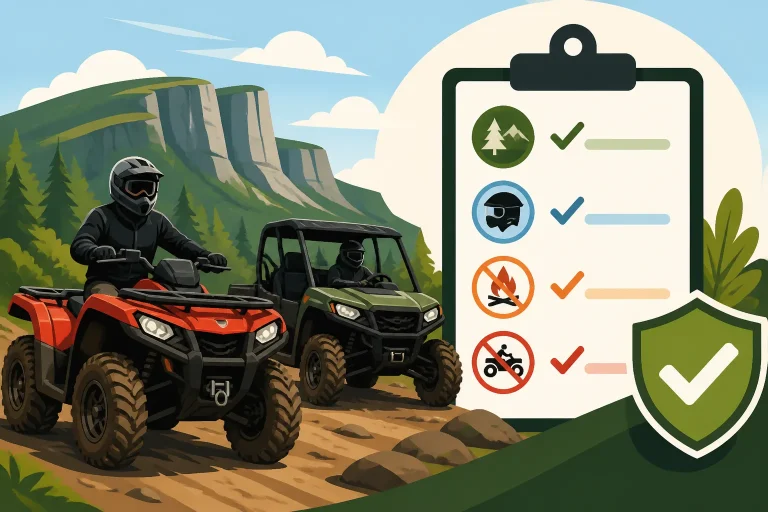
Use this checklist when planning a managed-trail ride:
- Identify the exact route and whether it is managed.
- Find the operator responsible for that section.
- Confirm whether a sticker is required and how to obtain it.
- Ask whether it applies to every planned trail section and machine.
- Confirm whether to attach or carry it.
- Check the machine’s registration and plate requirements separately.
- Confirm the rider’s training, insurance, and other obligations.
- Review access notices, closures, and restrictions.
- Pack the sticker and documents so they remain accessible and protected.
- Recheck the sticker before departing for the trail.
If any answer is unclear, pause and ask the operator or relevant authority before riding. A quick confirmation is simpler than reaching a trailhead and discovering that the sticker is unavailable, wrong for the route, or being used in place of another requirement.
Frequently Asked Questions
Can I buy a Newfoundland trail sticker from any shop?
Do not assume so. Confirm that the seller is an authorized issuing operator for the managed trail you plan to use. A shop may provide directions or assistance without being the operator that issues the sticker.
Does a trail sticker replace my ATV registration?
No. Registration and the trail sticker address separate requirements. Keep the machine’s registration current where required and follow the operator’s sticker instructions for managed trails.
Can I use one sticker on two machines?
Do not assume that you can. Ask the issuing operator whether the sticker is associated with a particular machine and whether transfer or shared use is allowed.
Do visitors with an out-of-province machine need a sticker?
If the planned route is a managed trail, check the sticker requirement with its operator. Visitor rules for registration are separate and do not automatically settle managed-trail access.
Is a photo of the sticker enough?
Not unless the operator or applicable rule says that a photo is accepted. Ask whether the sticker must be attached or whether the actual sticker may be carried, and follow that instruction.
Disclaimer
This article is for general informational purposes only and does not constitute professional advice. Laws, prices and regulations vary by location and change over time. Consult a qualified professional for guidance on your specific situation.