Printing Your Certificate the Moment You Pass
Passing Newfoundland and Labrador’s off-road vehicle safety test is only useful if you can show proof when it is needed. If you are unsure how to print the certificate, whether to carry it, or how it fits into registering an ATV or UTV, the key is to save a usable copy immediately and keep it separate from your vehicle registration papers.
What the certificate proves and who needs training
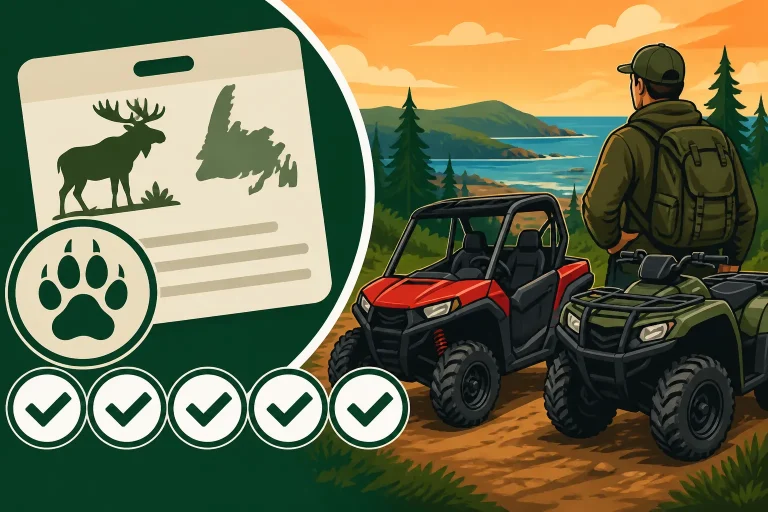
The safety certificate is proof that you completed an accepted off-road vehicle training program. It is not a registration document, and passing the test does not register your machine. Keep the two requirements separate: training proof shows you completed the course; registration papers identify your vehicle and show that it is registered.
According to the Government of Newfoundland and Labrador, safety training is required for anyone under 16, anyone registering an off-road vehicle for the first time, and anyone directed by the Registrar of Motor Vehicles to complete training after an offence led to a registration suspension or cancellation. The exact reason you need training can affect when you must complete it, so confirm your situation with Motor Registration if you are uncertain.
The free online program is available through MyGovNL. Digital Government and Service NL advises users to review the Off-Road Vehicles Handbook before completing it. Other courses approved by the Registrar of Motor Vehicles, including in-person training, are also accepted.
| Your situation | What to keep in mind |
|---|---|
| You are registering an off-road vehicle for the first time | Training is required, so plan to complete it before your registration appointment. |
| You are under 16 | Training is required, and a supervisor must make sure it has been completed. |
| Your registration was suspended or cancelled after an offence | The Registrar may require training as a condition of reinstatement. |
| You completed an accepted course | Print the certificate and carry it while using the vehicle. |
If you are taking the online test, Taking the Free Safety Test on MyGovNL can help you understand the process. For the broader training requirement, see Newfoundland Safety Training Is Mandatory and Newfoundland Training for First-Time Registrants.
How to print your certificate after passing
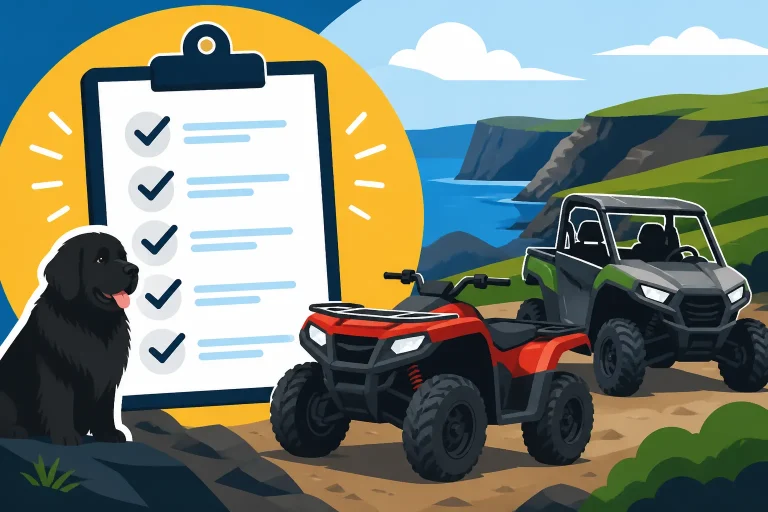
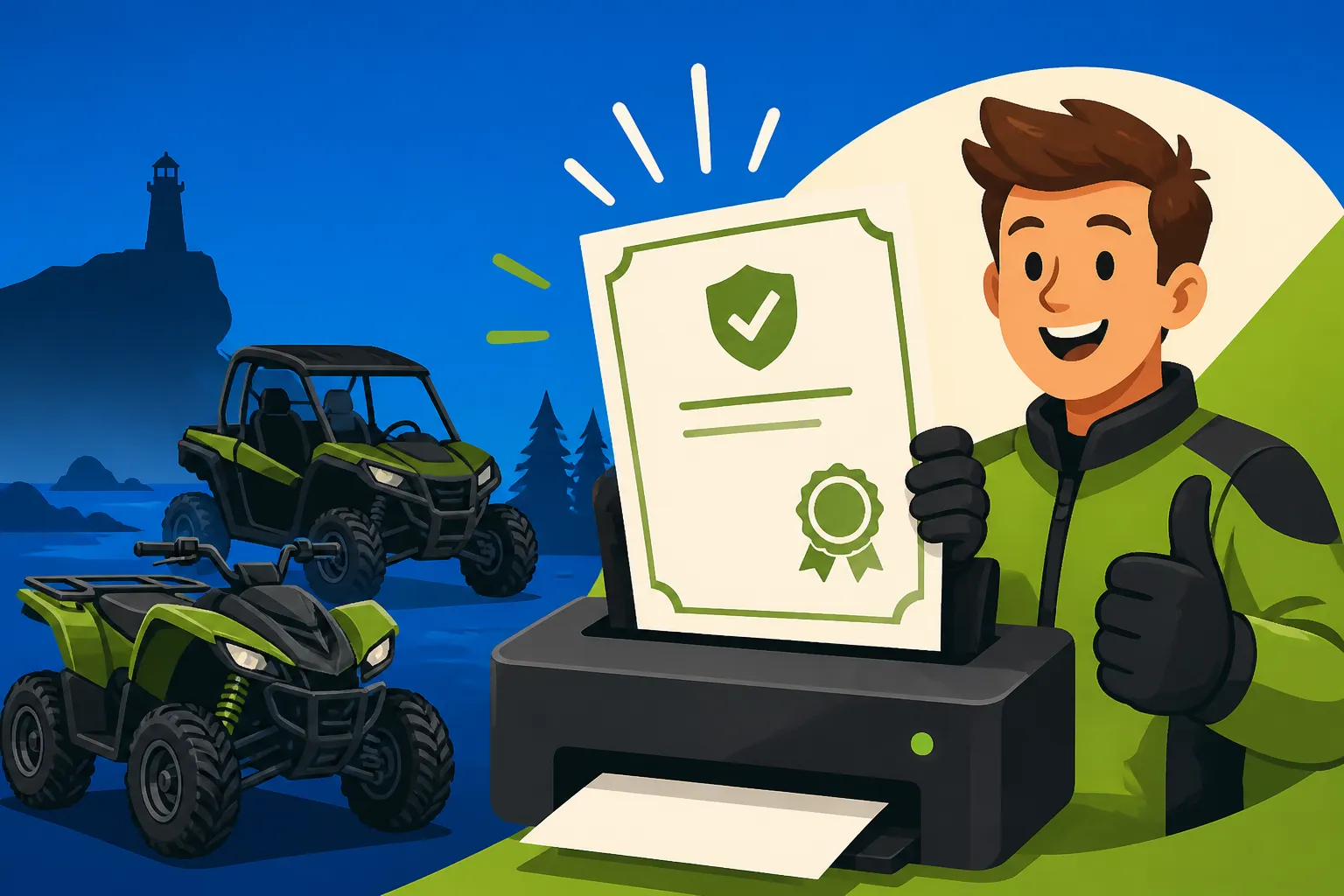
Digital Government and Service NL says that once you complete the training, you can print a certificate to carry while using an off-road vehicle. The most practical time to do that is as soon as the certificate becomes available after you finish. That avoids having to find your way back to the result later, especially if you are preparing for a registration appointment or a ride.
The official information confirms that the certificate can be printed after training, but it does not set out a guaranteed button-by-button sequence for every screen or device. Follow the completion instructions shown in MyGovNL, and look for the certificate or print option provided after successful completion. If the page offers a print command, use it to send the certificate to a connected printer or to save a printable copy, if that option is available.
A dependable process is:
- Finish the required training and confirm that the program shows it as completed.
- Open the certificate made available after completion.
- Print a legible paper copy while the certificate is on screen.
- Check that the printed page clearly shows the information identifying you and your completion.
- Put the certificate somewhere you will take it whenever you ride.
- If you can save a digital copy, keep it as a backup, but do not assume that a phone image replaces the printed certificate the official guidance tells users to carry.
If you cannot print at home, the online training may also be completed by visiting a local Employment Support Centre or public library, according to Digital Government and Service NL. Ask the location about available printing arrangements rather than assuming a printer will be available or that printing is included.
For a certificate that will be carried on rides, legibility matters more than appearance. Make sure the text is not cut off, faded, or too small to read. If the original print is unclear, print another copy from the certificate rather than relying on a blurry photograph. A basic sleeve or document holder can help protect the page from moisture and dirt; it does not need to be an expensive accessory.
After printing, check the name and completion information against your own records. If the certificate is missing, incomplete, or appears to show an error, do not alter it or treat a test-result screen as a substitute. Return to the training service for the available certificate or ask the appropriate support service how to correct the record.
Carrying proof while you ride
Digital Government and Service NL says users can print the certificate to carry while using an off-road vehicle. Make carrying it part of your regular pre-ride check, just as you check that the vehicle is registered and that required safety equipment is available. Keeping the certificate at home may leave you unable to produce the proof when asked.
The certificate should be easy to retrieve without being exposed to water, mud, or damage. A protected pocket in your riding gear or a secure document compartment can work, provided you can access it when needed. Keep it distinct from your registration document so you do not confuse proof of training with proof of registration.
If you ride with a child or another person who must complete training, check that person’s certificate as well. According to the Government of Newfoundland and Labrador, anyone supervising an operator under 16 must ensure the young operator has completed a training program. The supervisor should not assume that the young rider’s certificate is automatically covered by the supervisor’s own training.
For more on carrying a certificate, see Carrying Your Safety Certificate on Every Ride. If you are organizing a ride with young operators, Newfoundland Supervisors and Training Duties can help you review the supervision requirement.
A printed copy is also useful if your phone battery runs down, the device gets wet, or you are riding where you cannot rely on connectivity. Keep a backup copy at home if you like, but bring the ride copy with you. If it becomes damaged or unreadable, print a replacement from the certificate record when you can.
Keep training proof separate from registration and ride rules
Training is one part of being ready to operate an off-road vehicle. Off-road vehicles, including ATVs, UTVs, and snowmobiles, must be registered with the Motor Registration Division, according to Digital Government and Service NL. Government Services says a registration appointment is required to register a new or used off-road vehicle, and an application must be brought to the appointment. A completed safety certificate does not replace that paperwork.
The registration process has its own supporting documents. For a new vehicle, Government Services requires a New Vehicle Information Statement issued by the manufacturer. For a used vehicle, it requires a bill of sale signed by the previous owner. If a used vehicle’s ownership history cannot be traced, the purchaser must provide a sworn affidavit and an Indemnity Form. Review Newfoundland Registration Paperwork Explained and What to Bring to Your Registration Appointment before you go.
According to Government Services, off-road vehicle registration is a one-time payment for the duration of ownership and does not expire while you own the vehicle. If you sell the machine, the Government of Newfoundland and Labrador requires a notice of transfer or sale to be submitted within 10 days. For the paperwork and timing involved, see Newfoundland Registration Processing Time and Newfoundland Transfer of Ownership Steps.
Training proof also does not replace the rules that apply while riding. The Government of Newfoundland and Labrador requires helmets for riders, passengers, and anyone being towed in a trailer, subject to the stated hunting and trapping exception. Seatbelts must be worn when installed by the manufacturer. Operators must also follow applicable supervision, passenger, and operating rules. Use Newfoundland ORV Road Rules Explained as a starting point for checking the rules that apply to the route you plan to ride.
Before you leave, use a simple check:
- The vehicle is registered, and its plate is affixed and clearly visible.
- You have your printed training certificate if you are required to complete training.
- The operator and any passengers have the safety equipment required for the machine.
- A young operator has the required supervision and is using a vehicle suitable for their age and weight.
- You have checked whether the route requires a trail permit. Digital Government and Service NL says off-road vehicles are not permitted on managed trails without trail permits.
Treat the certificate as part of your riding documents, not as a substitute for them. Printing it immediately after passing, checking that it is readable, and carrying it with your other papers makes it much easier to show proof when needed.
Sources
- Government Services — Off-Road Vehicles Safety – Government Services (checked November 3, 2026)
- Government of Newfoundland and Labrador — Off-Road-Vehicle-Training-Manual-24173.pdf (checked November 3, 2026)
- Digital Government and Service NL — Public Advisory: Off-Road Vehicle Training Now Available on MyGovNL – News Releases (checked November 3, 2026)
- Digital Government and Service NL — Public Advisory: Residents Reminded to Practice Off-road Vehicle Safety – News Releases (checked November 3, 2026)
- Digital Government and Service NL — New Legislation Increases Safety for Off-Road Vehicle Users – News Releases (checked November 3, 2026)
- Government of Newfoundland and Labrador — Offroadsafety-summer.pdf (checked November 3, 2026)
- Government of Newfoundland and Labrador — Offroadsafety-winter.pdf (checked November 3, 2026)
Disclaimer
This article is for general informational purposes only and does not constitute professional advice. Laws, prices and regulations vary by location and change over time. Consult a qualified professional for guidance on your specific situation.