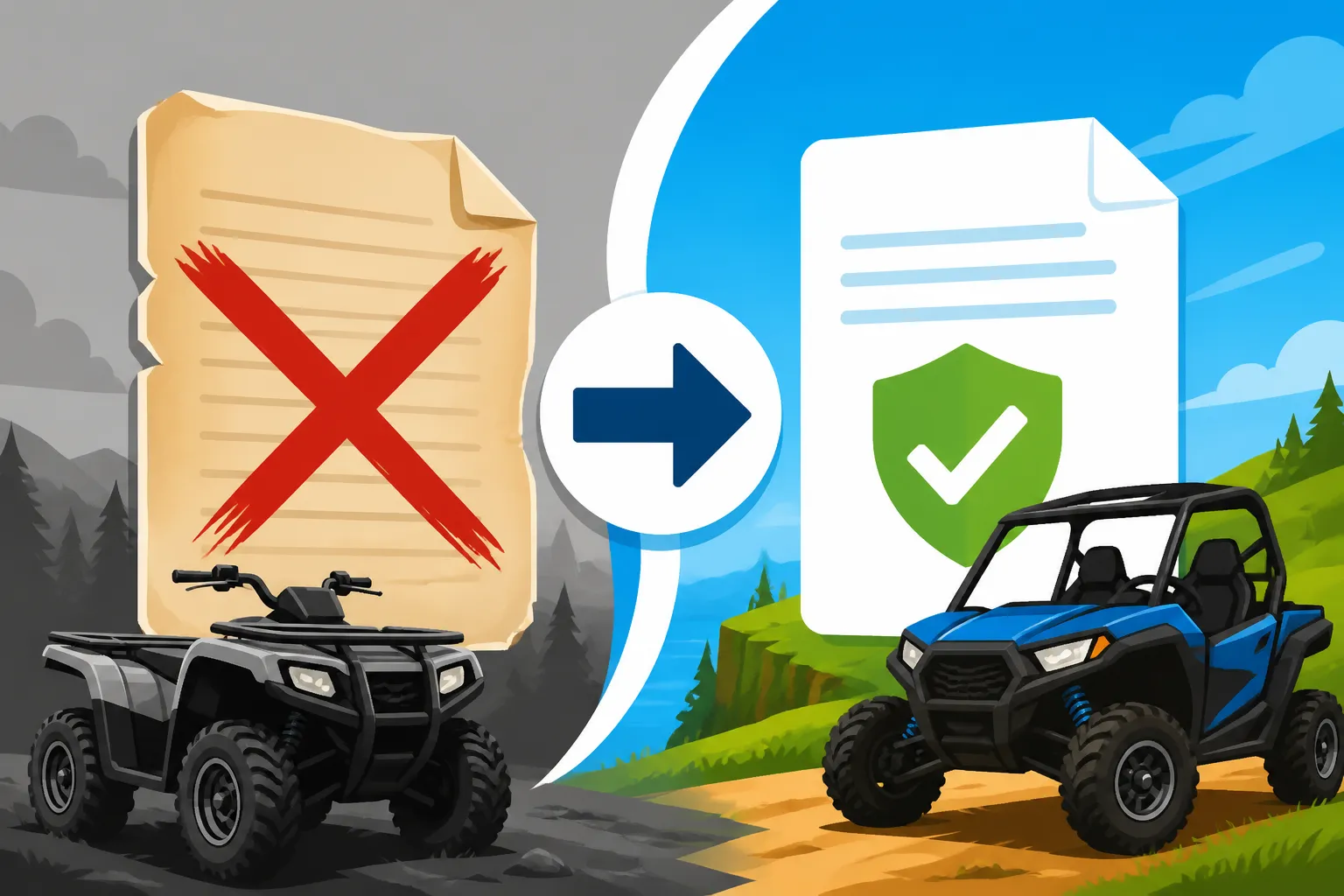
Newfoundland’s 2022 Statute Replaced an Older Act
It can feel like the ground is constantly shifting beneath your tires when it comes to off-road vehicle regulations, especially here in Newfoundland and Labrador. Just when you think you’ve got a handle on what you need to do, the rules change, leaving many riders scratching their helmets trying to figure out the latest requirements. This guide is here to cut through that confusion, specifically diving deep into the significant update to our province's off-road vehicle laws with the introduction of the 2022 statute, explaining what it replaced and what it means for every rider.
Understanding the Legislative Shift: Why the Old Act Needed an Update
For years, the rules governing off-road vehicles in Newfoundland and Labrador were rooted in older legislation that, while effective for its time, started to show its age. The world of ATVs, snowmobiles, and other off-road machines evolved rapidly, with new types of vehicles emerging, changes in how and where people ride, and a growing emphasis on safety and environmental responsibility. It’s no secret that riders often felt caught between regulations that didn't quite fit their machines or their riding habits, leading to a lot of guesswork and sometimes, unintended non-compliance.
The Prior Legislative Landscape
Before the major overhaul, our province's off-road vehicle regulations were primarily governed by earlier versions of the Off-Road Vehicles Act. While this previous act laid down fundamental rules for registration, operation, and safety, it hadn't kept pace with the diverse range of machines hitting the trails or the changing expectations around their use. Many riders remember a time when the categories for machines felt a little blurry, or when certain types of off-road vehicles weren't explicitly addressed, leading to ambiguities. It could be frustrating trying to figure out if your specific machine fit neatly into the existing boxes, especially with the rise of newer, more specialized vehicles. The focus tended to be more on traditional ATVs and snowmobiles, sometimes leaving other users wondering where they stood.
Why the Change Was Necessary
The need for a new, updated act wasn't just about adding new vehicle types; it was about creating a more comprehensive, clear, and modern framework that reflected the current reality of off-road riding. As the popularity of machines like side-by-sides surged, the older act struggled to classify them adequately or impose appropriate regulations for their unique characteristics. There was a clear need to enhance public safety, protect our natural environment, and ensure that enforcement officers had clear guidelines to apply. Riders, too, deserved rules that were unambiguous and easy to understand, reducing the chance of accidental infractions. The goal was to provide a robust legal structure that supported both responsible recreation and conservation.
The Transition Period for Riders
Whenever a significant piece of legislation like this changes, there's always a period of adjustment for the riding community. Many experienced riders who had been following the rules for decades suddenly found themselves needing to learn a whole new set of specifics. It could feel daunting, like going back to square one. The transition wasn't always seamless, and there was a natural learning curve for everyone – from the individual rider in a remote cabin area to the staff at Motor Registration. Thankfully, the new act aimed for clarity, but understanding those changes required effort and engagement from the riding community. It’s important to remember that these changes, while sometimes inconvenient, are designed to make riding safer and more sustainable for everyone in the long run.
Key Provisions of the Newfoundland Off-Road Vehicles Act (2022)
The [Newfoundland's Off-Road Vehicles Act] of 2022 marked a significant step forward in how off-road vehicles are regulated in our province. It wasn't just a tweak; it was a fundamental re-imagining of the rules, bringing them firmly into the 21st century. For riders, this meant clearer guidelines, more specific definitions, and a strong emphasis on safety and responsible operation. This act, which is [A Statute in Force Since May 2022], really reshaped the landscape for everyone who loves to explore our rugged terrain.
Expanded Definitions of Off-Road Vehicles
One of the most crucial updates in the 2022 Act was the expansion and clarification of what constitutes an "off-road vehicle." Previously, some machines might have fallen into grey areas, leading to confusion about whether they needed to be registered or how they should be operated. The new act explicitly defined a wider range of vehicles, ensuring that everything from traditional ATVs and snowmobiles to the increasingly popular side-by-sides, dirt bikes, and even amphibious machines are clearly covered. This clarity is a huge benefit, as it removes much of the ambiguity riders faced when trying to identify if their particular machine was subject to provincial regulations. It means fewer surprises at a roadside check and a better understanding of your responsibilities as an owner and operator. This explicit categorization ensures that all operators know exactly where their machine stands under the law.
Updated Safety and Equipment Standards
The 2022 Act placed a renewed focus on rider safety and specific equipment standards, which is always a welcome change when it aims to protect us out on the trails. This included clarifying requirements for things like helmets, which are now mandatory for virtually all operators and passengers, eye protection, and seat belt usage in vehicles where they are installed. The act also addressed lighting requirements for riding after dark, muffler standards to control excessive noise, and even the types of tires allowed. For instance, it now clarifies that tire chains are permitted, which wasn't always explicitly clear before. These updates are vital because they standardize safety across the province, reducing risks for everyone. It means that while you're out enjoying the beautiful [Newfoundland Crown Land Riding Rules], you know there’s a consistent expectation for safety gear and machine condition, making for a more predictable and secure riding environment.
Changes to Operating Regulations
Beyond the machines themselves, the new act brought in significant changes to how and where off-road vehicles can be operated. This includes clearer rules regarding highway crossings, riding on highway shoulders, and limitations on where machines can access certain types of land. For example, the rules around crossing a highway now specify a minimum visibility distance of 150 metres in both directions, making those tricky maneuvers much safer. The act also detailed speed limits when operating on shoulders and established clearer guidelines for things like carrying passengers, especially children. These operating regulations are designed to minimize conflicts with other road users and pedestrians, enhance safety, and protect environmentally sensitive areas. Riders need to be particularly mindful of these operational updates, as they directly impact how they enjoy their machines and navigate public spaces. Understanding [Newfoundland ORV Road Rules Explained] is critical to avoiding fines and ensuring a safe journey.
Impact on Registration and Ownership Under the New Act
The 2022 Act wasn't just about how you ride; it also had a profound effect on the administrative side of things – specifically, how off-road vehicles are registered and how ownership is tracked. Many long-time residents were used to a system that sometimes felt a bit piecemeal, but the new legislation aimed to streamline and clarify these processes, making them more consistent and robust. This means a clearer path for new owners and more accountability throughout the ownership lifecycle.
New Requirements for First-Time Registrants
If you're buying a new off-road vehicle or registering one for the first time in Newfoundland and Labrador, the 2022 Act introduced more specific requirements. Now, for new machines, you’ll definitely need to bring the New Vehicle Information Statement (NVIS) to Motor Registration. This document, provided by the dealer, is crucial for proving the machine's origin and ensuring it hasn't been previously registered. For used machines, the paperwork trail needs to be meticulously clear. If you’re buying from a private seller, having a comprehensive bill of sale is more important than ever. Companies like LawDepot offer templates for these kinds of documents, which can be incredibly helpful in ensuring all necessary details are included and legally sound. This increased formality around initial registration is designed to combat theft and ensure a clean title for every owner. It's all part of making sure that when you get your [Newfoundland ORV Registration You Pay Once], the foundation is solid.
Clarifications on Transfer of Ownership
The process of transferring ownership when a machine is bought or sold was also refined under the new act. Gone are some of the ambiguities that might have existed previously, especially when dealing with older machines or those changing hands multiple times. The act emphasizes the importance of a clear chain of ownership, requiring a bill of sale from each previous owner if there's any gap in the records. This is where proper documentation really shines. If you’re ever in a situation where the original bill of sale is lost or unclear, you might need a sworn affidavit or an indemnity form, which again, resources like LawDepot can help you prepare. The goal is to prevent disputes and ensure that the new owner legally possesses the machine. Knowing [Newfoundland Transfer of Ownership Explained] is crucial to avoid headaches down the line, whether you're buying or selling.
The Perpetuity of Newfoundland Registrations
One of the unique and most appreciated aspects of Newfoundland and Labrador's ORV registration system, which carried over and was affirmed by the 2022 Act, is that [Newfoundland Registrations Never Expire]. Unlike many other jurisdictions where you have to renew your registration annually or every few years, here, once your machine is registered, it remains so for as long as you own it. You pay a one-time fee, and that's it. This fantastic perk means you won't receive annual renewal notices, nor do you need to worry about missing a payment and facing fines for an unregistered machine. This "lifetime" registration helps reduce administrative burden for riders and the provincial government alike. It’s a testament to the forward-thinking approach that makes ORV ownership here a little bit simpler in the long run.
Understanding Off-Road Vehicle Classes Under the New Legislation
The 2022 Act brought much-needed clarity to the different types of off-road vehicles operating on our trails and barrens. Before this update, some machines might have been shoehorned into categories that didn't quite fit, leading to confusion for both owners and enforcement. Now, there are distinct classes that acknowledge the unique characteristics and operational requirements of each type of machine. This specificity is a major improvement, ensuring that regulations are applied appropriately across the board. The act truly clarified [Newfoundland Classes the Act Covers].
Specifics for ATVs and Dirt Bikes
Traditional ATVs (All-Terrain Vehicles) and dirt bikes have long been mainstays of off-road recreation in Newfoundland and Labrador, and the 2022 Act provides clear definitions and regulations for these popular machines. For ATVs, the act solidifies rules around engine size for young riders, helmet use, and general operating standards. A key thing to remember is that [Newfoundland Charges $95 for an ATV] for its initial registration, a one-time fee that covers the lifetime of your ownership of that specific machine. Dirt bikes, often used by younger riders or for competitive purposes, also received specific attention. The act outlines rules regarding their use on trails and establishes minimum age requirements, often tied to engine displacement, to ensure safety. The clarity here helps riders understand what's expected, whether they're on a powerful quad or a nimble dirt bike.
The New Recognition for Side-by-Sides
Perhaps one of the most significant updates in the 2022 Act was the explicit inclusion and classification of side-by-sides (SxS or UTVs) as their own category. Previously, these multi-passenger machines sometimes existed in a regulatory grey area, often being treated similarly to ATVs despite their distinct differences in size, weight, and operational characteristics. The new act officially recognized side-by-sides, laying out specific rules that pertain to them. This includes regulations for seat belts, passenger capacities, and potentially different road access rules than single-rider ATVs. It's a huge step for the side-by-side community, finally giving these popular vehicles their proper place in the legislation. As the act clearly states, [Newfoundland Side-by-Sides Added in 2022] to the regulated classes, which means clearer guidelines for owners and a safer environment for everyone sharing the trails.
Handling Unique Machines like Amphibious Vehicles
Beyond the common ATVs, dirt bikes, and side-by-sides, the 2022 Act also made provisions for more unique off-road vehicles, such as amphibious machines and even dune buggies. While these vehicles might be less common on our local trails, their inclusion demonstrates the comprehensive nature of the new legislation. For an amphibious machine, for example, the act clarifies that it still falls under the definition of an off-road vehicle when operating on land and is subject to registration and operating rules. This ensures that even specialized vehicles are brought into the regulatory fold, preventing potential loopholes and maintaining a consistent standard for safety and environmental responsibility across the entire spectrum of off-road recreation. The detail provided for these less common machines reflects a genuine effort to cover all bases, ensuring clarity for any type of ORV enthusiast.
Navigating Rider Responsibilities and Compliance Post-2022
With the implementation of [The Act Newfoundland Replaced in 2022], riders across the province gained a much clearer picture of their legal responsibilities. It’s no longer about guessing or relying on outdated information; the new act provides a comprehensive guide for safe and lawful off-road vehicle operation. Understanding these responsibilities is not just about avoiding fines; it’s about contributing to a safer, more enjoyable riding experience for everyone and preserving our beautiful natural environment.
Staying Up-to-Date with Registration Paperwork
One of the most immediate responsibilities for any off-road vehicle owner is ensuring their registration paperwork is in order. As we discussed, [Newfoundland Registration Valid While You Own It], meaning no annual renewals, but it’s still critical to have your initial registration documents accurate and accessible. This includes your official registration permit and, crucially, a valid identification plate or decal affixed to your machine. Should your permit ever be lost or damaged, you can obtain a [Newfoundland Duplicate Registrations at $25] from Motor Registration. Similarly, if your identification plate is lost, stolen, or damaged, getting a [Newfoundland Replacement Plates at $30] is a straightforward process. It's also vital to ensure that if you've moved, your address with Motor Registration is updated promptly. Keeping these documents current is your primary proof of legal ownership and registration, and enforcement officers can ask to see them at any time.
Adhering to Equipment and Safety Regulations
The 2022 Act significantly strengthened equipment and safety regulations, placing a clear responsibility on riders to ensure their machines are up to standard and that they are using appropriate safety gear. This includes mandatory helmet use for operators and passengers, ensuring your head and tail lamps are functional for riding during low-light conditions, and confirming your muffler is compliant to keep noise levels reasonable. For side-by-sides, seat belt usage is now clearly mandated for all occupants. It’s not just about having the equipment; it’s about maintaining it and using it correctly. For instance, a helmet won't do its job if the chin strap isn't fastened properly. Making pre-ride checks a habit—checking lights, brakes, tires, and ensuring all safety gear is present and correctly worn—is a simple yet crucial part of responsible riding under the new act.
Understanding Operational Rules and Restrictions
Beyond machine specifics, the act clearly delineates where and how off-road vehicles can be operated. This includes restrictions on riding within protected areas, proximity to residential zones, and specific rules for crossing or riding on public highways. For example, knowing the [Newfoundland's 1-Kilometre Shoulder Rule] and the [Newfoundland's 20 km/h Shoulder Limit] when you absolutely must use a highway shoulder to access a trail is fundamental. Ignorance of these rules isn't a valid excuse, and enforcement can be strict. Riders must also be aware of specific bylaws that municipalities might have in place, which can add another layer of regulation to local riding areas. Always checking local regulations and signage, especially when exploring new areas or Crown land, is a critical habit for every responsible rider.
Ensuring Proper Paperwork for Transfers and New Machines
Navigating the paperwork for off-road vehicles can sometimes feel like a treasure hunt, especially when you're buying a used machine or dealing with the exciting process of bringing home a brand-new one. The 2022 Act aimed to standardize this, making it clearer what documents you need to prove ownership and complete registration. Being prepared with the right forms not only speeds up the process at Motor Registration but also protects you as a buyer or seller. This is where attention to detail really pays off, ensuring a smooth transition of ownership for your ATV, UTV, or snowmobile.
The Importance of a Complete Bill of Sale Chain
For any used off-road vehicle, the bill of sale is your absolute cornerstone of ownership. Under the new act, Motor Registration emphasizes the need for a clear and complete chain of ownership. This means that if you’re buying a used machine, you ideally want a bill of sale from the person you’re buying it from, and if possible, a record of the previous sale, and so on, back to the original owner. While this isn't always feasible for very old machines, the more complete your documentation, the smoother your transfer will be. A good bill of sale should include the full names and addresses of both the buyer and seller, the date of sale, the purchase price, and crucial details about the machine like its make, model, year, and most importantly, the Vehicle Identification Number (VIN). Using a template from a service like LawDepot can ensure you don't miss any critical information when drafting or reviewing a bill of sale, making sure you fully comply with [Newfoundland Bills of Sale From Each Owner].
What to Bring for a New Machine Registration
If you've just purchased a sparkling new off-road vehicle from a dealer, your paperwork requirements are slightly different, but just as critical. The primary document you'll need to bring to Motor Registration is the New Vehicle Information Statement (NVIS). This is a manufacturer-issued document that certifies the vehicle is new and has never been registered before. The dealer will typically provide this to you. Along with the NVIS, you'll need proof of purchase, such as a sales agreement, and your personal identification. Ensuring the VIN on your NVIS matches the VIN on the machine is absolutely paramount. Without an NVIS for a brand-new machine, you simply won't be able to register it. It's a foundational piece of paperwork, highlighting why [Newfoundland Requires an NVIS for a New Machine] before you hit the trails.
Dealing with Missing Paperwork: Affidavits and Indemnity Forms
Sometimes, despite best intentions, the paperwork isn't perfect. Maybe you inherited an ATV, bought it from an auction, or a private seller simply lost the original bill of sale from a few owners back. In these situations, the 2022 Act, along with Motor Registration's policies, has provisions for alternative documentation. You might be required to submit a sworn affidavit, essentially a legal statement confirming your ownership and how you acquired the machine. In some cases, especially if there's any ambiguity about the machine's history, you may also need to sign an indemnity form. This form essentially protects the Registrar from future claims if an issue with ownership arises. These documents are legal instruments, and drafting them correctly is important. Services like LawDepot can provide templates and guidance for creating legally sound affidavits or indemnity forms, ensuring that even with missing historical paperwork, you can still complete your [Newfoundland Registration Paperwork Explained] and get your machine properly registered. It's all about providing confidence in the ownership chain, even when the past records are a bit spotty.
Table: Key Changes Under Newfoundland's 2022 Off-Road Vehicles Act
To help visualize some of the significant updates from the older legislation to the current 2022 Act, here's a quick comparison of a few key areas. This table highlights how the new legislation brought clarity and modern standards to off-road vehicle operation in Newfoundland and Labrador.
| Feature / Area | Prior Legislation (General Tendencies) | 2022 Off-Road Vehicles Act (Specifics) |
|---|---|---|
| Side-by-Sides | Often treated as ATVs, leading to regulatory ambiguity. | Explicitly recognized as their own class; specific rules for seat belts, passengers. |
| Registration Validity | One-time registration, but sometimes misunderstood. | Explicitly affirmed as a one-time fee; registration never expires while owned. |
| NVIS for New Machines | Generally required, but sometimes less strictly enforced or clear. | Mandatory New Vehicle Information Statement (NVIS) for all new registrations. |
| Chain of Ownership | Bill of sale usually sufficient; less emphasis on full chain. | Strong emphasis on complete bill of sale chain; affidavits for gaps. |
| Highway Shoulder Use | Rules existed but could be vague regarding distance and speed. | Clear limits: 1 km maximum, 20 km/h speed limit. |
| Helmet Requirement | Generally required, but with some potential exceptions or grey areas. | Mandatory for almost all operators and passengers, with few exceptions. |
| Amphibious Machines | Often fell outside clear classification. | Explicitly included as off-road vehicles, subject to registration. |
Conclusion: Riding Forward with Confidence in Newfoundland
The introduction of Newfoundland's 2022 Statute Replaced an Older Act truly marked a pivotal moment for off-road vehicle enthusiasts in our province. It transitioned us from a set of rules that sometimes struggled to keep up with modern machines and riding practices to a clear, comprehensive, and forward-thinking legislative framework. We've seen how these changes have brought much-needed clarity to everything from vehicle classification, especially for side-by-sides, to the finer points of registration and ownership transfers.
While any legislative overhaul can present a learning curve, the intent behind the 2022 Act was to enhance safety, ensure responsible environmental stewardship, and provide a stable regulatory environment for all riders. Knowing the specifics of what was updated, what paperwork is now unequivocally required, and how various machines are classified means you can ride with greater confidence. Whether you’re a seasoned veteran or just getting started, understanding these new realities is your ticket to enjoying Newfoundland and Labrador’s incredible off-road opportunities legally and safely for years to come.
Disclaimer
This article is for general informational purposes only and does not constitute professional advice. Laws, prices and regulations vary by location and change over time. Consult a qualified professional for guidance on your specific situation.