Registering a Machine in Two People’s Names
It's a common scenario across Newfoundland and Labrador: you and a partner, a sibling, or even a close friend decide to share the joy and utility of an ATV or UTV. But when it comes time to register that machine, the question often pops up: can we put it in both our names? This guide will walk you through the ins and outs of registering an off-road vehicle (ORV) jointly in Newfoundland, helping you understand the process, the paperwork, and the crucial steps to ensure a smooth co-ownership experience.
Why Register an ORV in More Than One Name?
For many riders, an ATV or UTV isn't just a solo adventure machine; it's a shared asset, a tool for the cabin, or a vehicle for family outings. Registering an ORV in more than one name might seem like an extra step, but it often reflects the reality of how the machine will be used and managed. It’s about ensuring that everyone who genuinely shares ownership has their interest officially recognized, which can simplify things in the long run, provided you've got your ducks in a row.
Shared Ownership for Couples and Families
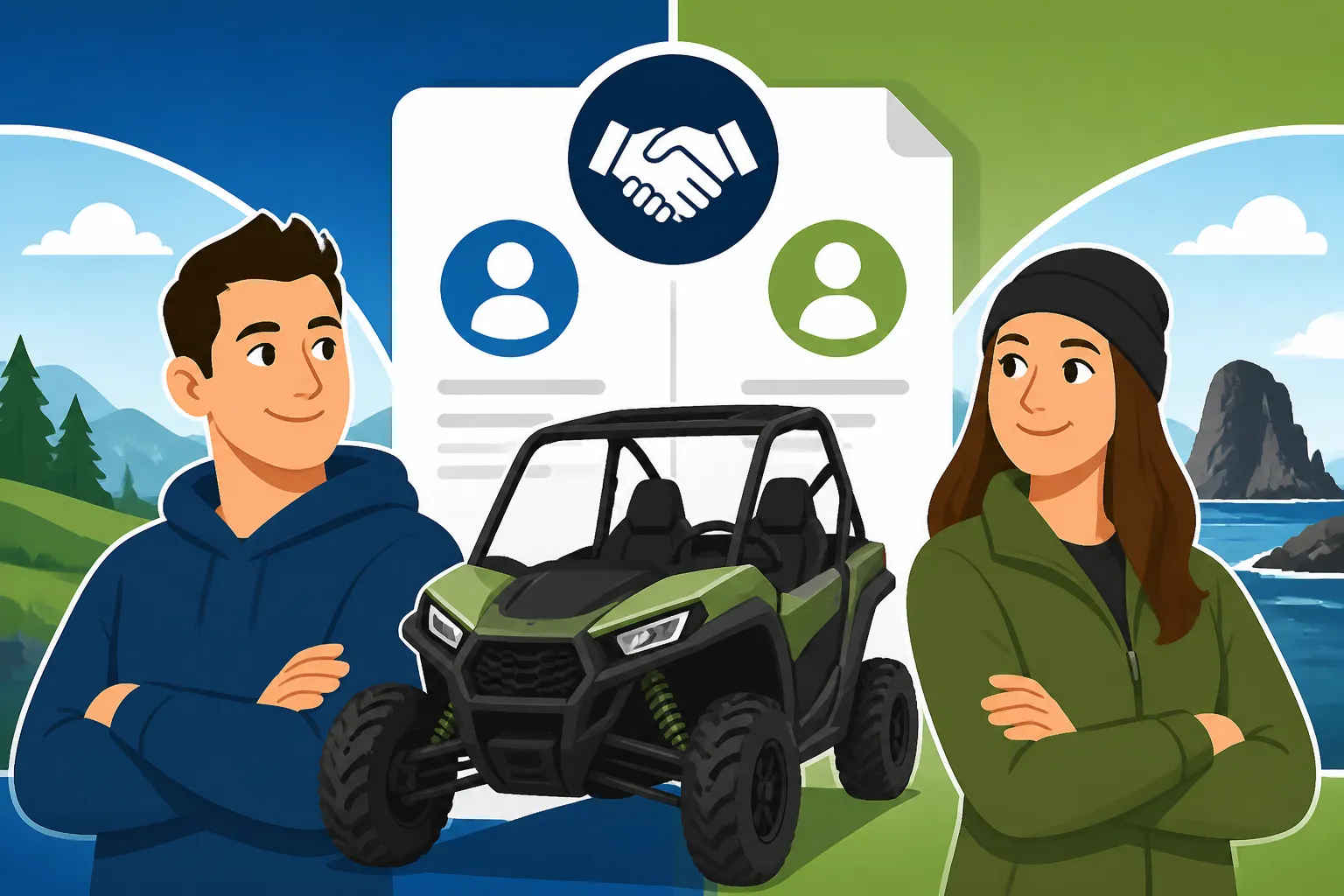
Imagine a couple who bought a side-by-side to explore the [Newfoundland ATV Trails: The T'Railway and Beyond] together, or a father and son who jointly invested in an ATV for hunting trips and cabin runs. In these situations, putting both names on the registration simply formalizes what is already happening in practice: shared possession and shared enjoyment. It ensures both parties have an equal legal claim to the machine. Without joint registration, if the machine is only in one person's name, the other technically has no legal ownership, which can lead to uncomfortable situations if relationships change or disagreements arise. This is especially true for significant purchases, where both individuals are contributing financially.
Beyond couples and family, sometimes friends go in on a machine together for shared adventures or to maintain a remote cabin. Officially recognizing both parties as owners on the registration helps prevent misunderstandings down the road about who has the right to use, store, or make decisions about the ORV. It's a clear declaration of mutual investment and responsibility from the outset.
Liability and Financial Responsibilities
While the [Newfoundland Off-Road Vehicles Act] outlines requirements for operators, registering a machine in two names primarily impacts ownership, not necessarily how liability is determined on the trail. However, it can influence how financial responsibilities are viewed. For instance, if a machine is jointly owned, both parties are typically seen as equally responsible for its purchase and ongoing costs, like maintenance, repairs, and especially insurance.
When you jointly register an ORV, you're essentially telling the province that two (or more) individuals legally own this asset. This can be important for insurance purposes, as insurance providers will want to know all registered owners to assess risk and ensure proper coverage. While the operator involved in an incident is usually primarily liable, the registered owners can also face certain responsibilities. Therefore, having clear joint ownership can make discussions about insurance policies and claims more transparent, as both parties are explicitly recognized as having a vested interest in the machine's well-being and legal operation.
The Process for Joint Registration in Newfoundland
Registering an off-road vehicle in Newfoundland, whether it's an ATV, UTV, or snowmobile, is generally a straightforward process. Adding a second name to that registration, however, requires careful attention to detail and ensuring all parties are present or properly represented. The Motor Registration Division is particular about who signs what, and for good reason—they want to establish clear lines of ownership.
Essential Documents for Co-Owners
To register an ORV in two names, you'll need the same foundational documents as for a single owner, but duplicated for each co-owner where applicable. This includes valid photo identification for each person, like a driver's licence or Newfoundland and Labrador Photo ID Card, and proof of their Newfoundland and Labrador address. Crucially, the bill of sale must clearly list both individuals as purchasers. If the ORV is brand new from a dealer, you'll also need the New Vehicle Information Statement (NVIS).
It's paramount that all required documents are complete and accurate for every co-owner. For example, if two friends are registering a quad, both must have their IDs ready, and the bill of sale should explicitly state both their names. Any discrepancies or missing information for even one co-owner can halt the entire registration process. The province is quite strict on this to prevent fraudulent registrations and ensure clear legal ownership. You can find more details on what to bring with you in the [Newfoundland Registration Paperwork Explained] guide.
The Role of the Bill of Sale
The bill of sale is arguably the most critical document for joint registration. This legally binding document must clearly show both individuals as the purchasers. If you're buying from a private seller, ensure that both your names are explicitly written as the buyers. If you're purchasing from a dealership, make sure they draft the bill of sale with both names on it before you sign anything. This is your initial proof of joint ownership.
What happens if only one name is on the bill of sale, but you intended for it to be joint? This can create a bit of a headache. The person whose name is on the bill of sale is legally considered the sole owner in the first instance. To add a second owner, you would effectively need to process a [Newfoundland Transfer of Ownership Explained] from the initial owner to both parties, which can involve additional steps and potentially another fee. It's far simpler and less costly to ensure both names are on the bill of sale from the very beginning. If you're making a private purchase, using a template from a service like LawDepot can ensure all necessary fields are included for joint purchasers.
Attending Motor Registration Division
Once you have all your documentation, the next step is to head to a Motor Registration Division office. While it's generally recommended that both co-owners attend the appointment, especially if it's your first time or if there are any complexities, one owner may be able to complete the process if they have a legally binding power of attorney for the other party. However, this isn't always straightforward, and it's best to confirm with the Motor Registration Division ahead of time.
It is highly advisable to [Booking an Appointment at Motor Registration Before You Go]. This ensures you have a dedicated slot, reducing wait times and allowing the staff to be prepared. When you arrive, both owners will likely need to present their IDs and sign various forms to finalize the registration. The staff will review your bill of sale, NVIS (if applicable), and other supporting documents. Once approved, the ORV will be registered in both names, and you'll receive your registration permit and identification plate.
Practical Considerations for Co-Owners
Sharing an off-road vehicle can be a fantastic way to enjoy the Newfoundland wilderness, but like any shared asset, it comes with responsibilities that extend beyond the initial registration. Addressing these practical considerations upfront can prevent future disagreements and ensure a harmonious riding experience for all parties involved.
Crafting a Co-Ownership Agreement
This cannot be stressed enough: a written co-ownership agreement is absolutely crucial for anyone registering an ORV in multiple names. While the provincial registration recognizes joint legal ownership, it doesn't dictate how you manage the day-to-day use, maintenance, or eventual sale of the machine. Think of it as a prenuptial agreement for your ATV or UTV. What should it cover?
- Usage Schedule: Who gets to use the machine when? Are there blackout dates?
- Maintenance and Repairs: How will costs be split? Who is responsible for scheduling service?
- Storage: Where will the machine be kept? Who pays for storage if needed?
- Modifications: Can one owner make changes without the other's consent?
- Selling the Machine: What's the process if one owner wants to sell their share, or if both agree to sell the entire machine? How is the sale price determined and split?
- Insurance Costs: How will premiums be divided?
- Dispute Resolution: What happens if you disagree? Mediation? Buyout clauses?
Having these discussions and putting them on paper before an issue arises is the best way to protect your investment and your relationship. Tools like LawDepot offer templates for co-ownership agreements that can be customized for your specific situation, making it easier to cover all the bases without having to start from scratch. This small investment of time and effort upfront can save a world of headaches later on.
Insurance Implications for Joint Ownership
When an ORV is registered in two names, insurance companies view both individuals as having an insurable interest. This means both owners should ideally be listed on the insurance policy. While the minimum [Newfoundland Insurance Requirements for Riders] typically cover third-party liability, you'll want to ensure your policy accurately reflects the joint ownership.
It's wise to discuss your joint ownership arrangement with your insurance provider. They will likely list both parties as "named insureds" or similar. This can sometimes affect premiums, as the insurance company might consider the driving records or risk profiles of both individuals. If only one owner is listed on the policy and the other has an accident, there could be complications with claims. Ensure clear communication with your insurer to prevent any nasty surprises down the line. Each owner should be fully aware of the coverage limits, deductibles, and any specific conditions of the policy.
Transferring Ownership Later On
Life happens. One co-owner might move away, decide they no longer want to ride, or unfortunately, pass away. Knowing how to transfer ownership in these scenarios is crucial. If one owner wants to sell their share to the other, or if both decide to sell the machine to a new sole owner, a standard [Newfoundland Transfer of Ownership Explained] process would apply. Both registered owners would need to sign the transfer of ownership form and the bill of sale for the new owner.
In the unfortunate event of a co-owner's death, the process becomes slightly more involved but is generally simplified in Newfoundland. The surviving co-owner typically needs to provide a death certificate to the Motor Registration Division. If the property was held in "joint tenancy" (meaning each owner has an equal right to the property, and upon one owner's death, their interest automatically passes to the surviving owner), then the process of removing the deceased's name can be fairly straightforward. The good news is that [Newfoundland Transfers on Death Cost Nothing] in terms of the provincial transfer fee, which is a small relief during a difficult time. However, legal advice may still be beneficial to ensure all aspects of the deceased's estate are handled correctly.
Common Pitfalls and How to Avoid Them
Even with the best intentions, registering and co-owning an ATV or UTV can hit snags if you're not prepared. Many of these issues stem from a lack of clear communication or a misunderstanding of the administrative requirements. Avoiding these common pitfalls can save you time, money, and potential friction with your co-owner.
Forgetting a Written Agreement
The single biggest mistake co-owners make is assuming that because they're family or close friends, they don't need a written agreement. This can lead to significant problems down the line. What if one owner uses the machine excessively and causes accelerated wear and tear? What if one owner insists on expensive modifications the other doesn't want to pay for? Or, what if one owner decides they need money and wants to sell their half, but the other isn't ready or able to buy them out?
Without a written agreement, you're relying solely on verbal promises and good faith, which can easily fray under pressure or changing circumstances. A comprehensive document, perhaps drafted using a service like LawDepot, protects both parties by clearly outlining expectations and responsibilities. It provides a framework for resolving disputes and ensures that everyone is on the same page from the beginning. Don't let your friendship or family bond be tested by ambiguity – put it in writing!
Incomplete Paperwork or Missing Owners
The Motor Registration Division in Newfoundland requires precise and complete documentation. One common issue when registering a machine in two names is having incomplete paperwork for one of the owners, or expecting one owner to handle the entire registration process without proper authorization from the other. This often results in a wasted trip to the registry. The staff has specific procedures they must follow, and if a document is missing or a signature isn't present when required, they simply cannot proceed.
To avoid this, gather all necessary documents for both owners well in advance. Double-check that names on IDs match names on the bill of sale and any other forms. Confirm whether both owners must be physically present for the registration, or if one can attend with a legally valid power of attorney. Calling ahead to the Motor Registration Division with any questions is always a good idea. They hear a lot of these [Newfoundland Registration Questions Staff Hear] and can often guide you on specific requirements, helping you avoid a frustrating second trip.
| Feature | Sole Ownership | Joint Ownership |
|---|---|---|
| Registration | One name on all documents | All co-owners' names on all documents |
| Bill of Sale | Single buyer listed | All co-buyers listed |
| Paperwork | ID and proof of address for one owner | ID and proof of address for each owner |
| Registry Visit | One owner can attend | All owners often need to attend (or power of attorney) |
| Decision Making | Sole owner makes all decisions | Joint decisions on use, maintenance, sale |
| Financial Burden | Sole owner bears all costs | Costs typically shared among owners |
| Liability | Primarily falls on registered owner/operator | Shared responsibility can influence perception |
| Agreements | Not typically needed for ownership | Highly recommended co-ownership agreement |
| Transfer on Death | Handled via estate, may require probate | Often automatically passes to surviving joint owner |
Disclaimer
This article is for general informational purposes only and does not constitute professional advice. Laws, prices and regulations vary by location and change over time. Consult a qualified professional for guidance on your specific situation.