Why Side-by-Sides Have Their Own Driver’s Course
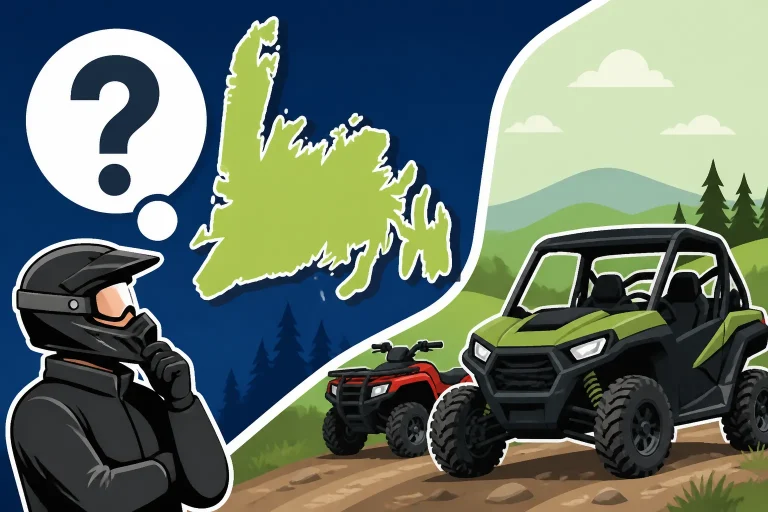
A side-by-side may look like a small car, but it is still an off-road vehicle with its own controls, handling and risks. In Newfoundland, its training is treated separately from ATV training. Knowing why the courses differ—and when a rider may need the right certificate—can help you choose suitable training and avoid assuming one course covers every machine.
Why a side-by-side needs different training
A side-by-side, also called a UTV, has a steering wheel, seats arranged side by side and often seat belts or a protective structure. Those features make it feel familiar to someone who drives a car, but they do not make it a car. Its weight, centre of gravity, tires and intended terrain all affect how it responds.
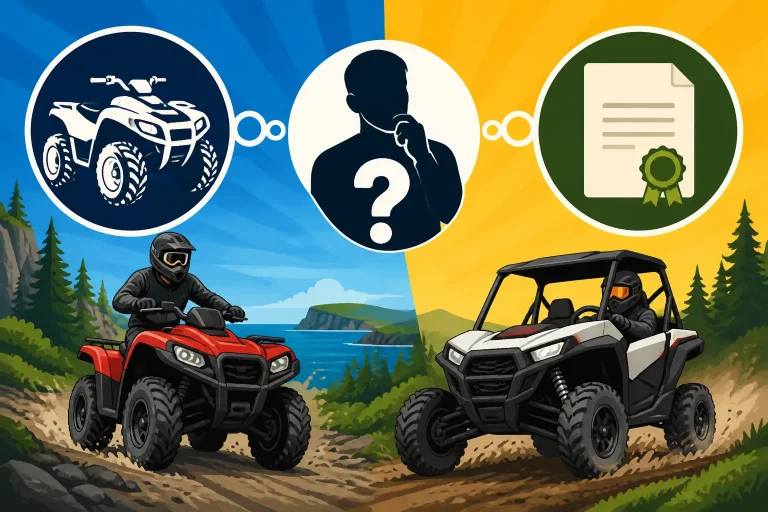
An ATV is generally steered with handlebars, and the operator sits astride the machine. A side-by-side is steered from a seated position using a wheel and pedals or other foot controls. That difference changes how an operator starts, turns, brakes, carries a passenger and reacts when the machine is on uneven ground.
The machines can also behave differently during a rollover or sudden manoeuvre. A side-by-side’s greater width and enclosed or semi-enclosed structure may give riders a sense of security, but it does not eliminate rollover risk. A high centre of gravity, a sharp turn, a slope or an abrupt change in traction can still make a machine unstable. Training needs to address how to use that particular vehicle safely, not just general trail awareness.
Newfoundland gave side-by-sides their own class in the off-road vehicle framework. The distinction matters because a course intended for an ATV may focus on controls and riding positions that do not apply to a side-by-side. The separate course helps match instruction to the machine’s layout and operating characteristics. For background on the legal classification, see Side-by-sides Became Their Own Class in 2022.
A dedicated course is not simply a different label for the same lesson. Depending on the course, instruction may cover topics such as:
- Identifying the controls and checking the machine before a ride
- Steering, braking and accelerating smoothly
- Adjusting speed for terrain, visibility and traction
- Taking turns without making sudden inputs
- Managing slopes, uneven ground and obstacles
- Keeping passengers seated and using installed restraints
- Recognizing when a trail or condition is beyond the operator’s ability
The exact curriculum and course format can vary. The key point is to select training that explicitly applies to side-by-sides, rather than relying on a certificate or lesson that only covers an ATV.
Does every side-by-side rider need to take the course?
Not necessarily. A training course, a safety certificate, permission to operate a machine and a driver’s licence are different things. It is easy to mix them up, especially because a side-by-side uses a steering wheel and may feel closer to a road vehicle than an ATV does.
Newfoundland’s requirements can depend on the operator’s age and the circumstances of the ride. Rules for young riders, supervision and training are particularly important. The course itself does not replace any applicable age, supervision, equipment, registration or access requirements. Review Newfoundland Training Required Under 16 and Newfoundland Supervisors Must Be 18 and Licensed before deciding that a young person is ready to operate.
A side-by-side course is also not a regular motor-vehicle driver education course. It does not, by itself, give someone permission to drive a car or satisfy a highway licensing requirement. Likewise, holding a regular driver’s licence does not automatically teach a person how to operate a side-by-side on a trail.
If a training certificate is required in your situation, confirm that the course is accepted for the side-by-side class. A certificate for an ATV may not be interchangeable. Start with the current provincial requirements and the course provider’s description, and ask the Registrar or the appropriate authority if the wording is unclear. The related overview Newfoundland Safety Training Is Mandatory can help you identify the rules that apply to off-road vehicle training more broadly.
| Question | What to check |
|---|---|
| Is the machine a side-by-side? | Confirm its vehicle class using its paperwork and the applicable Newfoundland definitions. |
| Is training required for this rider? | Check the current rules for the rider’s age and situation. |
| Does the course cover the machine? | Look for side-by-side or UTV training specifically, not ATV-only instruction. |
| Is the certificate accepted? | Confirm acceptance with the course provider or the relevant provincial office. |
| Does training replace other requirements? | No. Check separate rules for supervision, registration, insurance, equipment and trail access. |
Do not assume that a course is optional just because an adult has years of road-driving experience. But also do not assume everyone must take the same course in every circumstance. Establish the rider’s requirements first, then choose the training that matches the machine.
How to choose the right course
Start by checking the machine’s classification. A seller’s description or a familiar model name is not always enough to settle a regulatory question. Use the ownership and registration documents where available, and confirm the class if there is any doubt. This matters if you are buying a used machine, borrowing one or using a course certificate obtained for a different vehicle.
Next, read the course description carefully. It should make clear whether the instruction is intended for side-by-sides, ATVs, snowmobiles or another type of off-road vehicle. If a provider offers more than one course, ask whether a side-by-side operator should take a separate class and whether an ATV certificate counts for any purpose. Do not infer acceptance from a course title that only says “off-road vehicle safety.”
Newfoundland offers an online safety test, and approved alternatives may also be available. Those options do not necessarily cover every vehicle class in the same way. Before enrolling, check Newfoundland’s Online Training Test and Newfoundland Approved Alternative Courses for the current details and accepted training routes. Confirm the course’s scope directly if the information does not clearly name side-by-sides.
Useful questions to ask a course provider include:
- Is this course specifically designed for a side-by-side operator?
- Does it cover the controls and passenger-restraint features of this class?
- Is the course accepted for the purpose I need it for in Newfoundland?
- Will I receive a certificate or other proof of completion?
- How should I carry or produce that proof while riding?
- Does the course have age or parental-consent requirements?
- Is any additional training required for a young operator or supervisor?
A good provider should be able to explain what the training covers and what proof you receive. If the answer is vague, verify the requirements independently before relying on the course. The provincial process and accepted options can change, so use current instructions rather than an old certificate checklist saved from a previous season.
For a minor, involve the parent or guardian before registration. The adult should confirm the course is suitable for the machine, understand any consent requirements, and check the rules governing who may supervise the young rider. Completing a course does not mean a child can operate without the supervision or restrictions that apply to their age.
After training, keep proof accessible. If the rules require a rider to carry a certificate, a photograph stored on a phone may not necessarily meet the requirement. Check the accepted form of proof and have it available in the way the rules specify. Carrying Your Safety Certificate on Every Ride explains why it is worth sorting out proof before setting out.
Training is one part of safe and legal riding
A course can build practical understanding, but it does not make every trail suitable or every trip safe. Before riding, check that the machine is properly registered where required, that applicable insurance is in place and that the route permits that kind of vehicle. A valid training certificate does not authorize riding in a restricted area or override local access rules.
The operator and passengers should know how to use the equipment installed on the machine. Side-by-sides may have seat belts and other restraints fitted by the manufacturer. Use them as intended, and do not assume that a roll cage makes an unbelted ride safe. Passenger seating is also a separate issue: people should ride only in designated seats, and the machine must be suitable for the number of occupants.
Before leaving, take time to review the operator’s manual. It explains controls, recommended checks, passenger limits and any model-specific warnings. A short walkaround can catch a low tire, loose part, damaged restraint or other problem that training alone cannot correct. If the machine has been borrowed or rented, ask the owner or operator to explain its controls and safety features rather than relying on guesswork.
Match the ride to the least experienced person in the group. A new side-by-side operator may benefit from practising starts, stops and turns in a clear, level area before entering a busy or rough trail. Begin at a manageable speed, leave room to stop and avoid abrupt steering or braking. Carrying passengers adds responsibility: explain how to sit, keep hands and feet inside the machine, and remain restrained.
Weather and trail conditions matter too. Mud, loose gravel, steep ground, standing water and poor visibility can change how a machine handles. Do not let confidence from a car, ATV or previous trail ride turn into overconfidence in a side-by-side. If conditions exceed the operator’s ability or the machine’s intended use, turn back or choose an easier route.
For a first ride, a simple preparation list helps:
- Confirm the course and certificate apply to the side-by-side, if training is required.
- Check that the operator meets applicable age and supervision rules.
- Read the machine’s manual and identify its controls.
- Inspect tires, brakes, lights and installed restraints.
- Confirm registration, insurance and trail access requirements.
- Carry any required proof in the accepted form.
- Choose a route and pace that suit the operator and passengers.
The separate driver’s course exists because a side-by-side is not just an ATV with a steering wheel. Its controls and operating risks call for instruction suited to the class. Confirm the current Newfoundland requirements, choose a course that clearly covers side-by-sides, and treat training as one part of a broader plan for responsible riding.
Disclaimer
This article is for general informational purposes only and does not constitute professional advice. Laws, prices and regulations vary by location and change over time. Consult a qualified professional for guidance on your specific situation.