Side-by-Sides Became Their Own Class in 2022
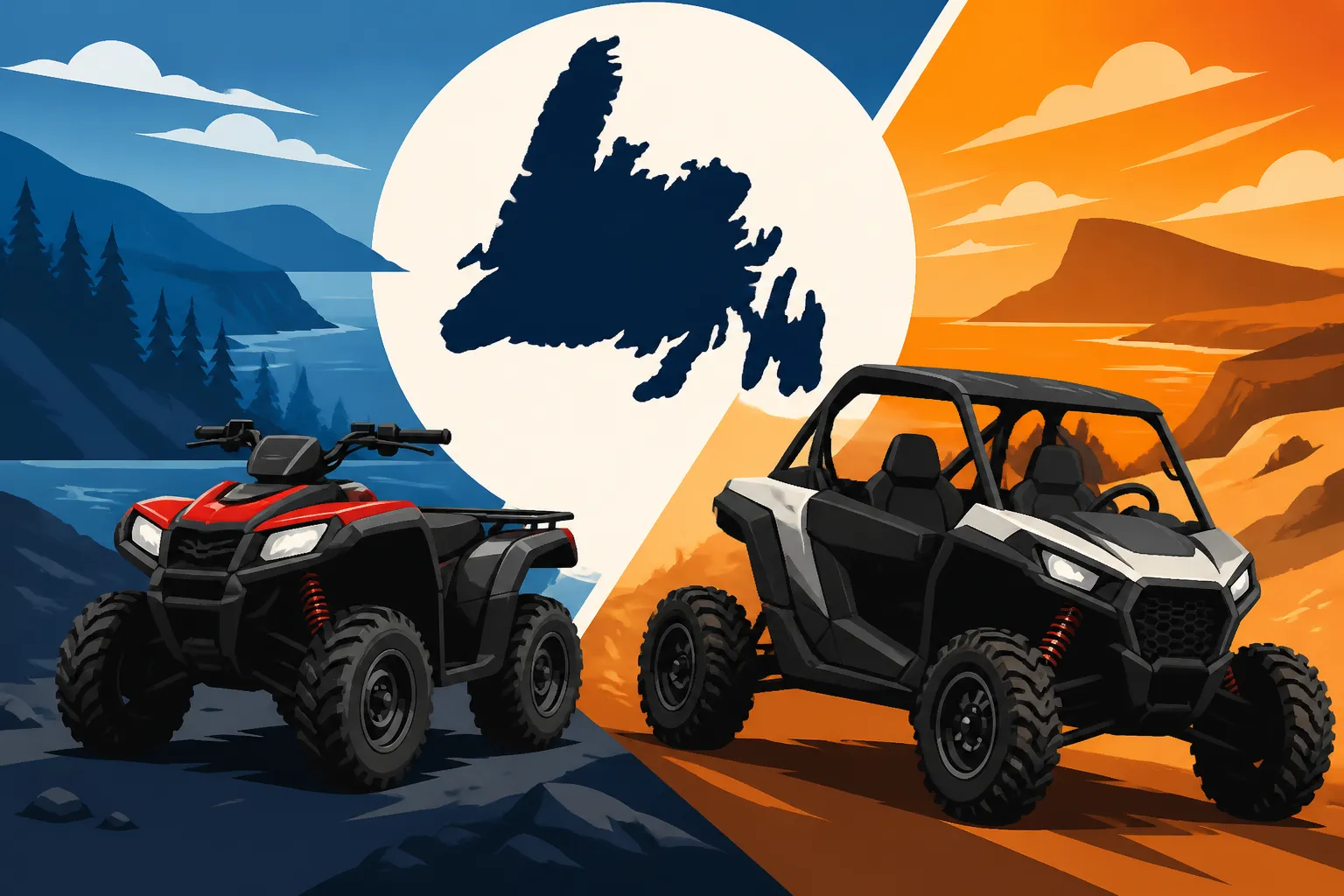
Navigating the world of off-road vehicles in Newfoundland can feel like trying to find your way through a thick fog on the barrens, especially with regulations that have evolved over time. For many side-by-side owners, or those looking to become one, a major point of confusion revolves around how these machines are classified and registered. This guide will clarify how side-by-sides officially became their own distinct class of off-road vehicle in Newfoundland in 2022, and what that means for you as a rider or owner.
The Evolution of Off-Road Vehicle Classification in Newfoundland
For years, the classification of off-road vehicles (ORVs) in Newfoundland and Labrador was perhaps a little less granular than the diverse market of machines demanded. Riders often found themselves wondering where their specific machine fit into the existing legal definitions, leading to potential confusion about registration, equipment, and even operational rules. The landscape of off-road recreation has changed dramatically over the last couple of decades, with new types of machines gaining immense popularity.
Before 2022: A Simpler, Less Granular Approach
Prior to the legislative changes that came into effect in 2022, off-road vehicles were typically grouped into broader categories under older statutes. While these categories served their purpose for many years, they didn't always neatly accommodate the nuances of newer, more specialized machines. For instance, the distinction between a traditional all-terrain vehicle (ATV) and a larger, multi-passenger side-by-side might not have been as sharply defined in the regulations as it was on the trails. This could lead to a situation where a side-by-side, with its different handling characteristics, seating capacity, and safety features, was treated identically to a quad, even though their operational realities could be quite different. This ambiguity wasn't ideal for riders seeking clear guidance, nor for enforcement officers trying to apply the rules consistently.
The old system, while functional, started to show its age as the variety of ORVs exploded. People weren't just riding traditional ATVs anymore; they were bringing in larger, more powerful machines designed for different purposes, from utility work to recreational touring with multiple passengers. The regulations simply hadn't kept pace with this innovation, creating grey areas that could be frustrating for everyone involved. Without clear distinctions, it was difficult to tailor specific safety guidelines or registration requirements that truly reflected the unique nature of each machine type.
The Off-Road Vehicles Act of 2022: A Game Changer
Enter the Off-Road Vehicles Act which came into force in May 2022. This legislation represented a significant overhaul of how off-road vehicles are regulated in Newfoundland and Labrador. It wasn't just a minor tweak; it was a comprehensive update designed to bring the rules in line with modern ORV technology and usage patterns. The provincial government recognized that the previous framework was no longer adequate to address the safety concerns, environmental impacts, and diverse operational needs of the growing ORV community. This new Act aimed to clarify existing rules, introduce new ones where necessary, and ensure a safer and more organized environment for off-road recreation.
One of the primary drivers behind this new Act was the need for clearer definitions. As mentioned, the old system struggled to categorize the diverse range of machines appearing on trails and in driveways across the province. The 2022 Act sought to remedy this by creating distinct classifications for various types of off-road vehicles, ensuring that each type was subject to rules and requirements specifically tailored to its design and intended use. This move was crucial for providing better guidance to riders and for enabling more effective enforcement, ultimately contributing to greater safety for everyone sharing the trails. You can find more details about [A Statute in Force Since May 2022] in other resources.
Why Side-by-Sides Needed Their Own Category
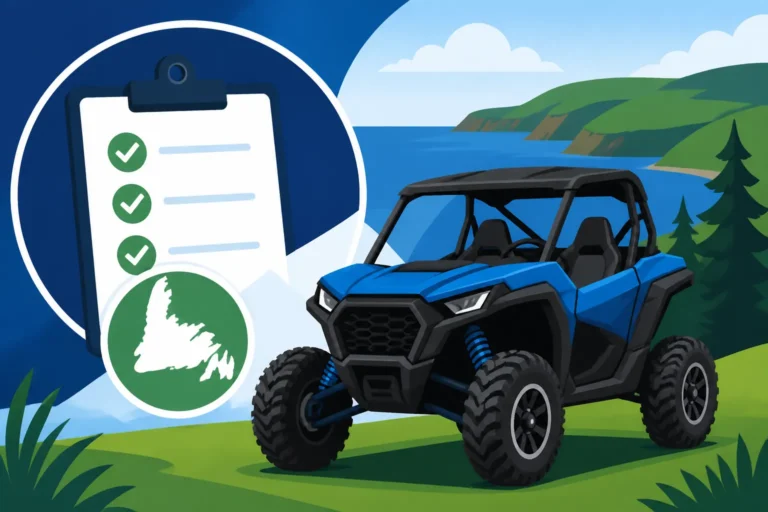
The emergence and skyrocketing popularity of side-by-side vehicles, often referred to as UTVs (Utility Terrain Vehicles), highlighted a significant gap in the previous regulatory framework. These machines are fundamentally different from traditional ATVs in several key ways. For one, side-by-sides typically feature multiple seats arranged side-by-side (hence the name), offering a car-like seating position with steering wheels and foot pedals, as opposed to the straddle-style seating and handlebar steering of an ATV. They are often larger, heavier, and more stable, with roll-over protection systems (ROPS) and sometimes even enclosed cabs.
These distinctions meant that lumping side-by-sides in with ATVs simply didn't make sense from a safety or operational perspective. A side-by-side, with its capacity to carry multiple passengers, often demands different safety protocols, such as seatbelt requirements, which might not be relevant for a single-rider ATV. Its size and weight can also impact how it interacts with trails and other users. By giving side-by-sides their own dedicated class, the Off-Road Vehicles Act of 2022 allowed for specific regulations to be developed that address these unique characteristics, promoting safer use and clearer expectations for owners and operators. This legislative decision was a direct response to the evolving reality of off-road vehicle use in the province.
What the 2022 Classification Means for Side-by-Side Owners
The formal classification of side-by-sides as their own distinct category in 2022 was a big deal for owners and prospective buyers. It wasn't just a bureaucratic change; it had real, tangible impacts on how these machines are registered, what rules apply to their operation, and even how insurance providers view them. For years, there was a feeling of "fitting a square peg into a round hole" when trying to apply older ORV rules to modern side-by-sides. Now, there's much clearer guidance.
Distinct Registration Requirements and Fees
With side-by-sides established as their own class, the registration process now specifically caters to them. This means that when you go to register your new or used side-by-side, it will be clearly identified as such in the provincial system. This often comes with distinct registration fees that reflect the vehicle's classification. While I can't give you exact numbers, understand that the cost shape for registering a side-by-side might be different from that of an ATV or a trail bike, which has a very low fee for instance. For instance, [Newfoundland Charges $95 for an ATV] but fees for other types of machines can differ. The idea is to align the registration cost and administrative process with the specific category of the machine.
This distinct classification also clarifies the necessary paperwork. While many requirements, such as a bill of sale, remain universal for ORV registration, the specific vehicle type might influence certain checks or details required on the application. For example, when bringing in a brand-new machine, you'll still need the New Vehicle Information Statement (NVIS). For a used machine, a proper [Newfoundland Bills of Sale From Each Owner] is critical. Having side-by-sides as a separate class ensures that the registry staff can quickly and accurately process your application based on well-defined parameters, leading to a smoother experience for everyone.
Operational Rules Specific to Side-by-Sides
The new classification also opened the door for specific operational rules that acknowledge the unique design of side-by-sides. For instance, given their multi-passenger capacity, rules around seatbelts often become more prominent. While helmets are broadly required for most ORV operators and passengers in Newfoundland, side-by-sides, particularly those with enclosed cabs, might have specific nuances in how those helmet rules are applied. For example, if a side-by-side has a factory-installed windshield and roof, the requirements for eye protection might differ slightly compared to an open ATV.
Another key area often affected by such classifications is passenger rules. Side-by-sides are built to carry more than one person, so the Act provides clarity on who can ride, where they must sit, and the minimum age or supervision requirements for child passengers. This level of detail helps prevent confusion on the trails and ensures that operators are aware of their responsibilities when carrying others. These specific rules are designed to enhance safety for all occupants and ensure that these powerful machines are operated responsibly, reflecting their distinct characteristics compared to other ORVs. For instance, you might want to look into [Newfoundland Rules for a Child Passenger].
The Impact on Insurance and Legal Responsibilities
The clarity provided by the 2022 classification extends beyond registration and basic operational rules; it also has a significant impact on insurance and legal responsibilities. When a machine is clearly defined, it makes it much easier for insurance providers to assess risk and offer appropriate coverage. They can tailor policies specifically for side-by-sides, taking into account their value, usage patterns, and potential liabilities, rather than trying to fit them into a generic "off-road vehicle" category that might not accurately reflect the risks involved. This often means more precise coverage options for owners.
From a legal standpoint, having a distinct class for side-by-sides removes much of the ambiguity regarding an owner's or operator's responsibilities. If an incident occurs, the legal framework is clear on which rules apply to that specific type of vehicle, making it easier to determine compliance and liability. For instance, the enforcement of seatbelt laws or passenger restrictions is much clearer when the vehicle type has its own defined set of rules. This clarity benefits both the ORV community by providing definite expectations and the authorities by allowing for consistent enforcement, ensuring everyone understands their obligations when operating these machines.
Navigating the New Registration Process for Your Side-by-Side
Even with the new classifications, the process of registering your side-by-side in Newfoundland is largely straightforward, provided you have all your ducks in a row. It might seem a bit daunting with all the paperwork and rules, but breaking it down into manageable steps makes it much easier. The key is preparation and understanding what’s expected at the Motor Registration Division.
Gathering Your Paperwork
The first and most crucial step is to gather all the required documentation. For a brand-new side-by-side, you'll need the New Vehicle Information Statement (NVIS) from the dealer, which essentially proves the machine's origin and that it hasn't been registered before. If you're buying a used side-by-side, the most critical piece of paper is a proper bill of sale. This document needs to clearly identify the machine (make, model, VIN) and the buyer and seller details. Sometimes, especially with older machines or private sales, obtaining a clear chain of ownership can be tricky. This is where resources like LawDepot can be incredibly helpful for creating legally sound [Newfoundland Bills of Sale From Each Owner] or even affidavits if the ownership history is a bit murky. Having a professional template ensures all necessary information is included, preventing delays at the registry.
Beyond the bill of sale, you'll need proof of identity and residency. This could include a valid driver's license and a utility bill or other government-issued mail showing your current address in Newfoundland. If the machine is being registered to a business, you'll need business registration documents. It's always a good idea to bring originals and copies of all documents, just in case. Don't forget, if you're taking advantage of the [Newfoundland Senior Registration Rates] for any reason, you'll need proof of age as well. Being over-prepared is always better than having to make a second trip.
The Registration Appointment
Once you have all your paperwork in order, the next step is to book an appointment at a Motor Registration Division office. While walk-ins might sometimes be accommodated, booking ahead is highly recommended to avoid long waits and ensure you get seen. You can often do this online or by phone. When you attend your appointment, bring all your original documents. The registry staff will review everything, verify the VIN on your side-by-side (if it's present and legible), and process your application. This is where clear, complete paperwork really pays off, as any missing information or discrepancies can cause delays.
During the appointment, you'll also pay the applicable registration fee. As noted earlier, side-by-sides have their own classification and associated fees. Once processed, you'll receive your registration permit and the identification plate (often referred to as an "ORV plate") for your machine. This plate must be securely attached to the rear of your side-by-side, ensuring it's visible and kept free of mud and obstructions. Remember, [Newfoundland Plates Kept Free of Mud] and [Newfoundland Plates Unobstructed by Cargo] are important rules to follow, so make sure your plate is mounted in a practical and compliant location.
Keeping Your Registration Current
Here's one of the best parts about ORV registration in Newfoundland: it's a one-time fee! Unlike many other provinces or vehicle types, your [Newfoundland Registrations Never Expire] as long as you own the machine. This means you won't receive annual renewal notices in the mail, saving you the hassle and expense of yearly renewals. The registration is valid for the lifetime of your ownership of that specific side-by-side.
However, while the registration itself doesn't expire, you still have responsibilities as an owner. If you sell your side-by-side, you are required to notify the Motor Registration Division within 10 days of the transfer of ownership. This ensures that the record is updated to the new owner, absolving you of any future liabilities associated with the machine. Similarly, if you move, it's important to update your address with the registry. This notification process is crucial for maintaining accurate records and ensuring that enforcement is fair and up-to-date. If you're preparing a sale, a comprehensive bill of sale, perhaps generated through LawDepot, can make this notification process smoother by having all buyer and seller details clearly laid out.
Common Questions and Misconceptions About Side-by-Side Registration
Even with the new Act in place, there are still some common questions and lingering misconceptions about side-by-side registration in Newfoundland. It's understandable, given how quickly the ORV market has evolved and the historical lack of clear distinctions. Let's tackle a few of these head-on.
Comparing Side-by-Sides to ATVs
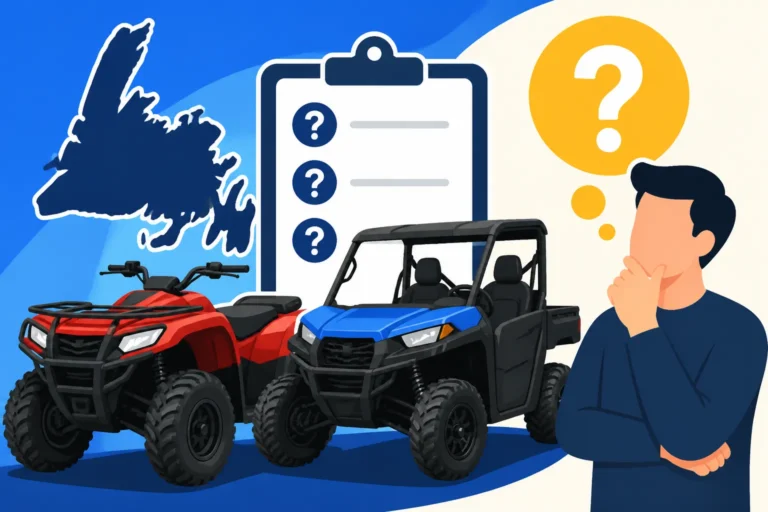
One of the most frequent points of confusion is the distinction between side-by-sides (UTVs) and ATVs (All-Terrain Vehicles), often called quads. While both are off-road vehicles, their design, function, and now, their legal classification, are quite different. ATVs are typically single-rider (though some are designed for two, often called 2-up ATVs), with straddle seating, handlebars, and foot pegs. They are generally smaller and more agile, designed for single-person exploration or utility tasks. Side-by-sides, as discussed, are larger, often multi-passenger machines with bucket or bench seating, a steering wheel, and foot pedals, resembling a small car.
The 2022 Act formally recognized these differences by giving [Newfoundland Side-by-Sides Added in 2022] their own class. This wasn't just for fun; it allowed the province to implement specific safety standards and operational rules that cater to the unique characteristics of each. So, while both are fantastic machines for enjoying the Newfoundland wilderness, they are no longer treated as interchangeable under the law. Understanding this distinction is crucial for both registration and ensuring you're complying with the correct operational rules for your specific machine.
What If My Side-by-Side Was Registered Before 2022?
This is a great question that often arises from owners who purchased and registered their side-by-side before the new Act came into force. The good news is that if your side-by-side was properly registered before the Off-Road Vehicles Act of 2022 took effect, your existing registration is generally still valid. The province typically doesn't require existing, properly registered machines to be re-registered under the new classification system immediately. Your registration permit would reflect the category it was registered under at the time, and it would remain valid as long as you own the machine.
However, it's always a good practice to ensure your documentation is up-to-date and that you understand the new operational rules that might apply to all side-by-sides, regardless of when they were registered. While your registration permit may not change, the rules for helmets, passengers, or specific equipment might now be more clearly defined for your class of machine. When in doubt, a quick call to the Motor Registration Division can confirm the status of your specific vehicle and any new operational requirements you should be aware of. This ensures you're always riding legally and safely, even with an older registration.
The Importance of a Bill of Sale for Used Purchases
Whether you're buying a side-by-side or an ATV, a proper bill of sale is non-negotiable, especially for used machines. It's the primary proof of ownership and is absolutely essential for transferring the registration into your name. Without a clear, detailed bill of sale, the Motor Registration Division simply cannot transfer the machine, and you'll be stuck with a side-by-side you can't legally ride. This is particularly important when [Buying From a Private Seller in Newfoundland], as the onus is on you to ensure the paperwork is correct.
A good bill of sale should include:
- The full names and addresses of both the buyer and seller.
- The date of the sale.
- The purchase price (or a statement if it's a gift).
- A clear description of the machine, including its make, model, year, and crucially, the Vehicle Identification Number (VIN).
- The signatures of both parties.
Sometimes, especially with private sales or older machines, sellers might not have a formal bill of sale. This is another area where tools like LawDepot can be invaluable. They offer templates for bills of sale and other legal documents, helping you create a valid, comprehensive document that will be accepted by the registry. Insisting on a proper bill of sale protects both the buyer and the seller and is the cornerstone of a smooth registration transfer process. Without it, you might find yourself facing significant hurdles at the Motor Registration Division.
| Aspect | Pre-2022 Classification | Post-2022 Classification (Off-Road Vehicles Act) |
|---|---|---|
| Side-by-Side Status | Often grouped broadly with ATVs or other ORVs. | Recognized as a distinct class of Off-Road Vehicle. |
| Registration Fees | Might have fallen under generic ORV fee structures. | Specific registration fees tailored to the "Side-by-Side" class. |
| Operational Rules | General ORV rules applied; some ambiguities for multi-passenger. | Dedicated rules for seatbelts, passengers, and other unique features. |
| Insurance Impact | Insurers might use broader ORV categories. | Clearer risk assessment for insurers, leading to tailored policies. |
| Documentation | Standard ORV documentation. | Standard ORV documentation, explicitly for "Side-by-Side" category. |
| Clarity for Riders | Potential for confusion due to lack of specific rules. | Clearer guidance and expectations for owners and operators. |
Disclaimer
This article is for general informational purposes only and does not constitute professional advice. Laws, prices and regulations vary by location and change over time. Consult a qualified professional for guidance on your specific situation.