A Regulation Numbered Thirty of 2022
Let's be honest, trying to keep up with all the regulations for your ATV or UTV can feel like navigating a bog in a white-out. Just when you think you've got it figured out, something changes, leaving you wondering if your machine is still compliant. One of those significant shifts for riders in Newfoundland was a specific piece of legislation: A Regulation Numbered Thirty of 2022. This guide is here to cut through the confusion and explain exactly what that means for you and your off-road machine, helping you stay on the right side of the law.
Understanding "A Regulation Numbered Thirty of 2022"
For many years, the rules governing off-road vehicles in Newfoundland and Labrador felt a bit like a patchwork quilt, with some parts updated more frequently than others. Riders, dealers, and even enforcement officers sometimes found themselves scratching their heads over specific definitions or operational guidelines. This uncertainty wasn't ideal, especially as the popularity and diversity of off-road machines grew.
Why This Regulation Matters to Riders
Before this regulation came into force, the existing rules, primarily stemming from the previous Off-Road Vehicles Act, were starting to show their age. The landscape of off-roading had changed dramatically with new types of machines, evolving safety concerns, and a greater demand for clarity around everything from registration to riding areas. Riders, especially those with newer types of machines like side-by-sides, often felt caught in a grey area. This new regulation, enacted under the [Newfoundland's Off-Road Vehicles Act], was a deliberate effort to modernize these rules, bringing them in line with contemporary off-road vehicle use and ensuring better safety and environmental stewardship. It's not just a dry legal document; it's the foundation of how you interact with your machine and the trails.
Key Changes Introduced by the Regulation
A Regulation Numbered Thirty of 2022 brought forth a number of crucial updates, refining many aspects that were previously vague or outdated. One of the most significant changes was the explicit inclusion and definition of "side-by-sides" as their own class of off-road vehicle. This might sound minor, but it had far-reaching implications, clarifying everything from their registration requirements to their permissible use on trails. Prior to this, side-by-sides sometimes fell into ambiguous categories, leading to confusion at the Motor Registration offices and uncertainty for owners. The regulation also tightened up definitions for other types of off-road vehicles, ensuring that every machine from an ATV to an amphibious vehicle had a clear place within the legal framework. It also addressed specific operational requirements, solidifying rules around equipment, passenger limits, and age restrictions for various machines, all designed to enhance rider safety across the province.
Impact on Registration and Titling
With these updated definitions and classifications, the regulation directly impacted how off-road vehicles are registered and titled in Newfoundland and Labrador. For new purchases, particularly side-by-sides, the path to registration became much clearer. No longer were these machines shoehorned into categories that didn't quite fit. The regulation provided a specific framework, ensuring that when you visited Motor Registration, there was a designated process and set of requirements for your particular type of machine. This helped streamline the process for everyone involved, reducing the likelihood of paperwork errors or delays. Furthermore, it underscored the importance of accurate documentation, such as the New Vehicle Information Statement (NVIS) for new machines or a clear chain of [Newfoundland Bills of Sale From Each Owner] for used ones, as the foundation for proper titling and ownership records. This meant that the information held by the registry accurately reflected the type and ownership of every ORV.
Navigating the New Landscape for ATV and UTV Owners
Understanding the regulatory changes is one thing, but knowing how to apply them to your own situation as an ATV or UTV owner is where the rubber meets the trail. This regulation wasn't just about updating legal texts; it was about defining the practical steps you need to take to ensure your machine is legally ready to ride. Whether you're a seasoned rider with multiple machines or a newcomer looking to make your first purchase, these adjustments affect you.
New Requirements for Registering Your Machine
For anyone registering a machine after the regulation came into effect, the process became more precise. Previously, there might have been some leeway or interpretation, but now the requirements are quite explicit. You'll need specific identification documents, proof of ownership such as a manufacturer's NVIS or a comprehensive bill of sale, and proof of your Newfoundland and Labrador residency. If you're a new resident moving into the province, you'll want to pay close attention to the [Newfoundland's 90-Day New Resident Rule] which provides a grace period before requiring local registration. The regulation emphasized clarity in VIN (Vehicle Identification Number) verification, requiring that the VIN be clearly legible and easily accessible for inspection. This ensures that the machine being registered truly matches its documentation, reducing the potential for fraud or registration of stolen vehicles. Be prepared to show your machine's VIN during your registration appointment, as it's a critical step in verifying ownership and compliance.
Changes to Existing Registrations and Transfers
It wasn't just new machines that were affected. The regulation also clarified how existing registrations are managed and how transfers of ownership should occur. When you sell an already registered machine, the regulation reinforces the seller's obligation to provide accurate paperwork, and the buyer's responsibility to complete the transfer promptly. The regulation states that [Ten Days to Tell the Registry] after a change of ownership. This ensures that the registry's records are always up-to-date, which is vital for everything from law enforcement to insurance purposes. For transfers, the requirement for a clear chain of ownership documents became even more stringent. If you're buying a used machine, especially one that might have changed hands multiple times, you need to ensure you have a bill of sale from every previous owner to present to Motor Registration. In cases where this isn't possible, perhaps due to a very old machine or lost paperwork, the regulation outlines a specific process involving sworn affidavits and indemnity forms to establish clear ownership, something LawDepot can help you prepare. These measures protect both buyers and sellers by establishing clear legal titles.
Special Considerations for Side-by-Sides
The formal classification of side-by-sides (SxS or UTVs) as distinct off-road vehicles was a massive win for their owners. Before A Regulation Numbered Thirty of 2022, side-by-sides often operated in a legal gray area, leading to inconsistent enforcement and confusion. Now, with [Newfoundland Side-by-Sides Added in 2022], their place is clear. This means specific fees apply to their registration, distinct from ATVs or snowmobiles. It also means that any specific equipment requirements, such as seatbelts or roll-over protection, are now firmly linked to their classification, rather than being an interpretation. For example, the regulation clarified that side-by-sides, unlike traditional ATVs, typically require passengers to use factory-installed seatbelts, aligning with their design and safety features. This formal recognition provides a stable regulatory environment for the growing number of side-by-side enthusiasts in the province, ensuring consistency in how these machines are treated across all aspects of the [Newfoundland's Off-Road Vehicles Act].
Practical Steps for Compliance and What to Expect
So, you've understood the legal jargon, but what does it all mean when you're standing at the Motor Registration counter or preparing for your next ride? Compliance isn't just about avoiding fines; it's about ensuring your safety and the longevity of your off-road adventures in Newfoundland and Labrador.
Gathering the Right Paperwork
The cornerstone of compliance is having your paperwork in order. For a new machine, you'll need the original New Vehicle Information Statement (NVIS) from the dealer. If it's a used machine, you'll absolutely need a clear, legible [Newfoundland Bills of Sale From Each Owner] that traces the machine's ownership history right back to the original retail sale, or at least to a point where clear ownership was established. Each bill of sale should include the full names and addresses of both the buyer and seller, the date of sale, the purchase price, and a detailed description of the machine, including its VIN and make/model. If you're unable to provide a complete chain of bills of sale, perhaps because a previous owner lost theirs or passed away, you might need to prepare a sworn affidavit to attest to your ownership, along with an indemnity form. This can be a bit daunting, but resources like LawDepot offer templates and guidance for drafting these kinds of legal documents, which can be invaluable in preparing for your registration appointment. Don't forget your personal identification, such as a valid driver's licence, and proof of your current Newfoundland and Labrador address.
The Registration Appointment Process
Gone are the days of just showing up hoping to be served quickly. With the volume of registrations, especially following significant regulatory changes, booking an appointment is almost always necessary. You can typically do this online or by calling Motor Registration. When you go for your [Newfoundland Registration by Appointment], ensure you have all your documents neatly organized and readily accessible. The staff will review your paperwork, verify the VIN, and process the registration. Be prepared for them to ask questions about the machine's history, its intended use, and your relationship to previous owners if it's a used purchase. They will also collect any applicable fees, such as the initial registration fee and any sales tax due. It's a fairly straightforward process if you're prepared, but any missing documents or discrepancies can lead to delays and a frustrating second trip. After successful registration, you'll be issued a registration permit and an identification plate or decal for your machine, depending on its class. This [Newfoundland Registration Valid While You Own It] and typically never expires, meaning no annual renewal fees.
Avoiding Common Pitfalls
Riders often stumble on a few common issues when trying to comply with these regulations. One significant pitfall is incomplete documentation, particularly for used machines. Always insist on a proper bill of sale when buying from a private seller, and keep it safe! If the seller can't provide one, or there's a gap in the ownership history, be prepared for the extra step of preparing an affidavit. Another common mistake is not booking an appointment or showing up unprepared, leading to wasted time. Familiarize yourself with the [Newfoundland Registration Paperwork Explained] before you even leave your house. Don't assume that because your machine was registered under the old rules, everything is still fine without review, especially if it's a side-by-side that now has specific classification. Lastly, be aware of the rules surrounding [Newfoundland Transfers of Ownership Explained]. If you sell your machine, you have a responsibility to notify Motor Registration, and the buyer has an obligation to transfer the ownership into their name within a specific timeframe. Failing to do so can leave you liable for incidents involving the machine even after you've sold it. Taking a proactive approach and double-checking everything before you head to Motor Registration can save you a lot of headaches in the long run.
Here's a quick summary of key aspects related to A Regulation Numbered Thirty of 2022:
| Aspect | Before Regulation 30/2022 | After Regulation 30/2022 | Impact on Riders |
|---|---|---|---|
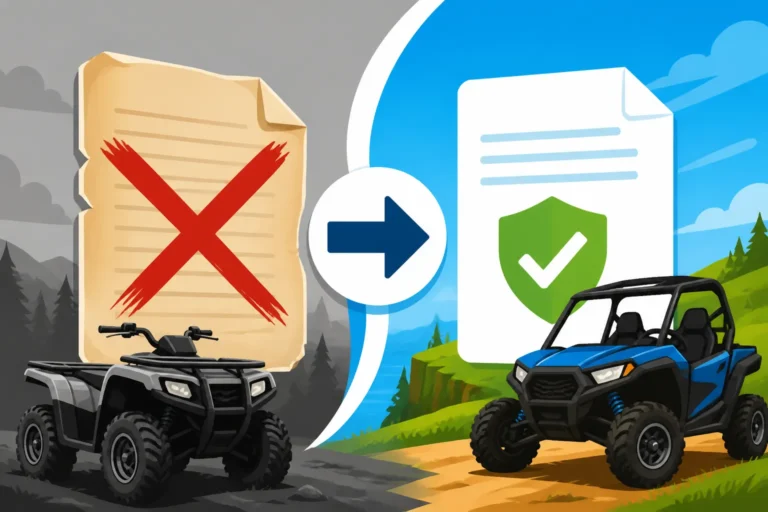
| Side-by-Side (UTV) Status | Ambiguous, often grouped with ATVs or as special machines | Distinct class with specific rules | Clearer registration, specific equipment requirements |
| Off-Road Vehicle Definitions | Potentially broad or outdated | More precise and comprehensive | Less confusion on machine type classification |
| Registration Process | Could be inconsistent based on interpretation | Standardized with clearer requirements | Smoother process if paperwork is complete |
| Transfer of Ownership | Less stringent documentation requirements | Emphasis on complete chain of ownership | Buyers need all bills of sale, or affidavits |
| Enforcement & Safety | Varied due to interpretive gaps | Stronger framework for enforcement | Improved safety standards, clearer responsibilities |
Disclaimer
This article is for general informational purposes only and does not constitute professional advice. Laws, prices and regulations vary by location and change over time. Consult a qualified professional for guidance on your specific situation.