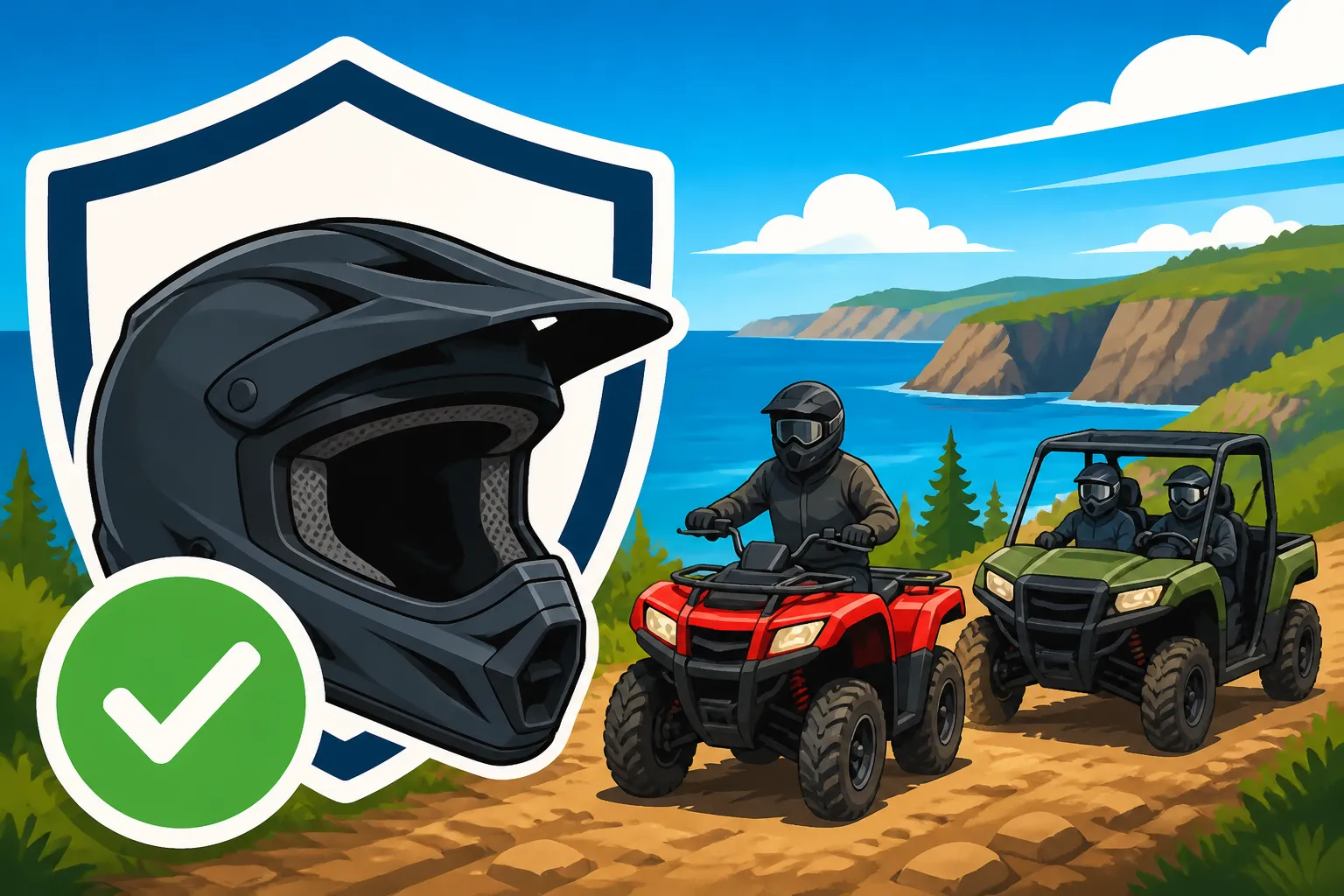
US-Approved Helmets Are Accepted on Provincial Trails
There’s a lot of chatter and frankly, a good deal of confusion out there, especially if you’re a rider from outside Canada or you’ve purchased a helmet online that adheres to international standards. Many folks worry that their perfectly good, safety-certified helmet might not cut it on Newfoundland’s vast network of trails. They picture themselves having to shell out for a brand new lid just to hit the T'Railway, and honestly, that’s a frustrating thought. This guide is here to clear up that very specific worry, walking you through exactly which helmet standards are accepted here in Newfoundland and Labrador, so you can ride with confidence and peace of mind.
Understanding Newfoundland’s Helmet Requirements for Off-Road Vehicles
When you’re gearing up for a ride through Newfoundland's stunning barrens or along a rugged coastal trail, safety is always top of mind. And rightfully so! Helmets are non-negotiable here, a critical piece of equipment that can make all the difference in an unfortunate incident. The Off-Road Vehicles Act is pretty clear that a helmet is required, but it also acknowledges that riders come with a variety of gear.
It's a common scenario: you’ve invested in a quality helmet, perhaps one you’ve used for years down in the States, or maybe one you found online from a European manufacturer known for its stellar safety ratings. Then you start looking into Newfoundland's rules and suddenly, you’re second-guessing if your trusted helmet is even legal. The good news is, Newfoundland isn't asking you to ditch perfectly good, internationally recognized safety gear. The province understands that safety standards exist beyond its borders, and it embraces those standards to ensure riders are protected, regardless of where they purchased their helmet. What truly matters is that the helmet meets a recognized safety standard, not necessarily a Canadian-exclusive one. We'll delve into the specifics of those standards, but rest assured, your DOT or ECE helmet likely has a home here.
The Canadian Standard: CSA Approval
In Canada, when we talk about safety standards for a lot of things, including helmets, the Canadian Standards Association (CSA) often comes up. A CSA-approved helmet has undergone rigorous testing to ensure it meets specific safety criteria designed for Canadian conditions and regulations. For many Canadian-made or Canadian-sold helmets, you'll find that prominent CSA sticker or marking, indicating it has passed these tests. It’s a standard that Canadians know and trust, and it’s a clear signal that your helmet is built to protect.
If you’ve walked into an ATV or powersports shop anywhere across Canada, chances are the helmets on the shelves will prominently display their CSA approval. This standard covers things like impact absorption, penetration resistance, and retention system strength – basically, how well the helmet stays on your head and protects it from various forces. For a long time, riders instinctively looked for that CSA stamp, associating it directly with legality and safety. While CSA approval certainly makes a helmet legal, it's not the only ticket to ride safely and legally in Newfoundland. This is where the flexibility of the provincial regulations truly shines, recognizing a broader spectrum of global safety efforts. [Newfoundland Helmet Standards Accepted] go beyond just the Canadian standard, which is a relief for many.
Accepting International Standards: Why the Flexibility?
This is the big question for many riders, especially those from away. Why would Newfoundland accept helmets approved by, say, the US Department of Transportation (DOT) or the European Economic Commission (ECE)? The simplest answer is common sense and a recognition of equivalent safety. A high-quality helmet that protects you in Maine or Montana is very likely to protect you on a trail in central Newfoundland. The core purpose of a helmet is universal: to absorb impact and prevent head injuries. Different certifying bodies around the world achieve this through various testing protocols, but the end goal is the same.
The provincial regulations in Newfoundland and Labrador explicitly acknowledge and accept these other internationally recognized standards. This is a huge relief for visitors bringing their own machines and gear, or for residents who have purchased specialty helmets from global brands. It means you don't have to scramble to buy a new helmet just because it wasn't originally sold in Canada or doesn't have the CSA stamp. It also reflects a realistic understanding of the global marketplace for powersports equipment. Many of the leading helmet manufacturers are international, and their products are sold worldwide, often meeting multiple certifications simultaneously. As long as your helmet clearly bears one of the accepted certification marks – CSA, DOT, or ECE – you're good to go. This flexibility reduces barriers for riders and prioritizes overall safety over bureaucratic specifics. Remember, [Newfoundland Helmet Law for Every Rider] means everyone on your ORV needs appropriate head protection, regardless of where they're from.
Deciphering US DOT and European ECE Approvals
So, you've got a helmet with a DOT sticker or an ECE label, and you're wondering if it truly passes muster in Newfoundland. Let's break down what these certifications mean and why they're perfectly acceptable here. It’s all about recognized safety engineering, and these global standards are well-respected for a reason.
The US DOT Standard: What It Means for Your Ride
The US Department of Transportation (DOT) standard, specifically Federal Motor Vehicle Safety Standard (FMVSS) 218, is the mandatory safety standard for all motorcycle and ATV helmets sold in the United States. When a helmet carries a DOT certification, it means the manufacturer has self-certified that the helmet meets these minimum performance requirements. These requirements cover impact attenuation (how well it absorbs a hit), penetration resistance (how well it prevents sharp objects from piercing the shell), and the strength of the retention system (chin strap).
You'll typically find a "DOT" sticker or engraving on the back of the helmet. This isn't just a decorative label; it's the manufacturer's statement that their product is designed to keep you safe according to a widely accepted federal safety code. For many riders coming from the US, their helmets will naturally carry this certification. It's a standard that’s been in place for decades, continuously refined to reflect current safety science. So, if your helmet proudly displays that DOT mark, you can ride the trails of Newfoundland with full confidence that you're meeting the provincial helmet requirements. This acceptance makes it much easier for our friends from south of the border to enjoy our beautiful province without extra hassle. [US-Approved Helmets Are Accepted on Provincial Trails] in Newfoundland, allowing for seamless adventures.
European ECE Helmets and What the Marking Means
If you’ve purchased a helmet that boasts an ECE certification, you’re also in good standing here in Newfoundland. The ECE standard, specifically ECE Regulation 22.05 or the newer 22.06, is a mandatory standard for helmets sold in over 50 countries, primarily across Europe. Many consider ECE certification to be one of the most stringent in the world, often going beyond the basic requirements of DOT with more extensive testing for impact, abrasion, and chin bar integrity.
The ECE marking is usually found on a label stitched into the chin strap or inside the helmet liner, often accompanied by a circled 'E' followed by a number indicating the country where the certification was granted, and then a series of numbers denoting the specific regulation and approval number. This standard is particularly popular among high-performance and premium helmet brands, which are often sold internationally. If you've got a helmet with an ECE 22.05 or 22.06 marking, you’ve invested in a helmet that meets a globally recognized, high level of safety. Newfoundland's regulations acknowledge this robust standard, ensuring that riders with these helmets are compliant. So, whether your helmet proudly displays a CSA, DOT, or ECE mark, you’re all set for safe riding on our provincial trails. [European ECE Helmets and What the Marking Means] is definitely something you'll want to check if you're unsure about your helmet's compliance.
Beyond the Approval: Practical Helmet Safety Tips
While having an approved helmet is the first step, it’s far from the only consideration for truly safe riding. A helmet is only as good as its fit, its condition, and how it's used in conjunction with other essential safety gear. Think of it as a whole system working together to protect you out on the trails.
The Importance of a Proper Fit
You could have the most expensive, multi-certified helmet on the market, but if it doesn't fit your head correctly, its protective capabilities are severely compromised. A helmet that's too loose can shift around during a fall, potentially exposing parts of your head or even coming off entirely. One that's too tight can be incredibly uncomfortable, leading to distractions and a miserable ride, which is also a safety hazard in itself.
A proper fit means the helmet should feel snug all around your head, with no pressure points that cause discomfort. When you try to move it from side to side or front to back, your skin should move with the helmet, not just the helmet sliding around on your head. The chin strap, which [Newfoundland Helmet Straps Must Be Fastened] is quite clear about, needs to be adjusted so that it’s snug but not choking you, allowing for about one finger to fit comfortably between the strap and your chin. Many riders forget that different helmet brands and models have different internal shapes – some are more round, some more oval. What fits one person perfectly might not fit another. It's worth trying on several helmets to find the one that truly conforms to your head shape for optimal safety and comfort. Don't compromise on fit, as it's just as crucial as the certification itself.
Maintaining Your Helmet and Knowing When to Replace It
Even the best helmet has a lifespan, and it’s critical to know when it’s time to retire your trusty head protector. Generally, manufacturers recommend replacing a helmet every three to five years, even if it hasn't been involved in a crash. Over time, the materials inside the helmet – particularly the EPS foam liner which is designed to absorb impact – can degrade due to exposure to sweat, UV light, chemicals (like cleaning products or bug spray), and even just general wear and tear. This degradation reduces the helmet's ability to protect you in a crash.
More importantly, if your helmet has been involved in any kind of impact, even if it looks perfectly fine on the outside, it must be replaced. The foam inside could have compressed or cracked, rendering it useless for a subsequent impact. Think of it like a crumple zone in a car – it does its job once. Never try to "inspect" a crashed helmet and assume it's still safe. Simple care like cleaning the exterior with mild soap and water, avoiding harsh chemicals, and storing it in a cool, dry place away from direct sunlight can extend its useful life. Always keep it away from petroleum products, as they can weaken the helmet shell materials. Investing in new, quality gear when needed, perhaps from a reputable supplier like SuperATV, is a small price to pay for your safety.
Eye Protection and Other Essential Safety Gear
While the helmet is paramount, it’s part of a larger safety ensemble that works to protect you from the diverse hazards encountered on Newfoundland’s trails. Don’t overlook the importance of your eyes, limbs, and even the clothes on your back.
Goggles Unless There Is a Windshield
Newfoundland’s regulations are quite specific about eye protection: [Goggles Unless There Is a Windshield] is the rule of thumb. This means that if you’re riding an ATV or snowmobile that doesn’t have a full windshield to protect your face from debris, dust, insects, branches, and the elements, then you absolutely need to wear appropriate eye protection. This isn’t just a recommendation; it's a legal requirement designed to prevent serious eye injuries.
Picture this: you're tearing down a gravel path, and the rider in front kicks up a stone, or a low-hanging branch whips back as you pass. Without goggles or a face shield, that could mean a trip to the emergency room instead of enjoying your ride. Goggles provide full coverage and can be designed with anti-fog properties, different lens tints for varying light conditions, and ventilation to keep your vision clear. For side-by-sides or other machines with enclosed cabs and substantial windshields, the windshield acts as your primary eye protection. However, even with a windshield, some riders still prefer goggles for added protection from dust that might get kicked up or for improved clarity in challenging conditions. Always assess your riding environment and err on the side of caution when it comes to protecting your vision.
The Full Safety Package: Beyond Just the Helmet
While the helmet and eye protection are critical, they are just two pieces of the complete safety puzzle. To truly protect yourself on the varied terrain Newfoundland offers, you need to consider the full range of personal protective equipment. This includes sturdy gloves to protect your hands from scrapes, blisters, and impacts, and to maintain a good grip on the handlebars. Good quality riding boots that cover your ankles are essential to protect your feet from impacts, crushing injuries, and entanglement with the machine.
Beyond these, wearing long pants and a long-sleeved shirt, even in warm weather, provides a crucial layer of abrasion resistance in case of a fall. Many riders opt for dedicated riding jackets and pants, often reinforced with padding in key areas, offering superior protection compared to everyday clothing. For more aggressive riding or for younger riders, a chest protector and knee pads can prevent significant injuries. Think about the terrain you’ll be on – rocks, stumps, mud, water. [Newfoundland Equipment Requirements] are there for a reason, but going above and beyond those minimums is always a smart move. Companies like SuperATV offer a huge range of aftermarket accessories and gear that not only enhance your machine's performance but also its safety and your personal protection, from skid plates to windshields to all sorts of protective apparel. Ensuring you have the right gear, from head to toe, can transform a potential bad day into a minor inconvenience. For riders with children, remember that [Newfoundland Supervision Rules for Young Riders] are strict, and ensuring they have all the proper gear, especially a correctly fitting, approved helmet, is paramount.
Here's a quick reference for helmet standards:
| Standard | Primary Region/Purpose | Key Identifying Mark | Acceptance in Newfoundland | General Characteristics |
|---|---|---|---|---|
| CSA | Canada | CSA sticker/marking | Fully Accepted | Canadian standard, rigorous testing for various impacts. |
| DOT | United States | "DOT FMVSS No. 218" sticker | Fully Accepted | US federal minimum standard, self-certified by manufacturers. |
| ECE | Europe & International (50+ countries) | "ECE R22.05" or "ECE R22.06" label | Fully Accepted | Often considered one of the most stringent, extensive testing. |
Disclaimer
This article is for general informational purposes only and does not constitute professional advice. Laws, prices and regulations vary by location and change over time. Consult a qualified professional for guidance on your specific situation.