Training Checked by a Supervisor
Navigating the world of off-road vehicles (ORVs) in Newfoundland and Labrador can feel like a maze, especially when you're a parent or guardian trying to introduce a younger family member to the joys of the trail. One of the biggest points of confusion and concern often revolves around ensuring that young riders not only have the necessary skills but also the officially recognized training, all under the watchful eye of a qualified supervisor. This comprehensive guide will walk you through exactly what "training checked by a supervisor" entails, helping you understand your responsibilities and ensuring your young rider is safe and compliant with provincial regulations.
Navigating Newfoundland's Rules for Young ATV/UTV Riders
For many families, getting out on the quad or side-by-side is a cherished tradition, but with that tradition comes a serious responsibility, especially when young people are involved. Newfoundland and Labrador has clear guidelines to ensure that this pastime remains safe for everyone. It's not enough to just know how to ride; there are legal age limits, machine restrictions, and mandatory training requirements that form the bedrock of youth ORV safety.
Age and Machine Restrictions: A Foundation of Safety
The province takes a tiered approach to ORV operation based on a rider's age, recognizing that younger children lack the physical strength, coordination, and judgment required for larger, more powerful machines. For instance, children under 12 years old are generally restricted from operating ATVs, except in very specific, limited circumstances on private land and under direct supervision. Once a rider reaches 12, more opportunities open up, but with stipulations. The regulations clearly state that operators between 12 and 15 years old can only operate an ORV with an engine size that matches their age and weight category, specifically under the direct supervision of an adult. This isn't just a suggestion; it's a critical safety measure designed to prevent accidents.
Imagine a parent, eager to get their 12-year-old out on the trails. They might think a small quad is fine, but it’s crucial to check the specific engine displacement limits. A machine that’s too powerful or too heavy for a young rider can quickly become uncontrollable, turning a fun outing into a dangerous situation. These rules are in place to ensure that the machine is appropriate for the operator's capabilities, making the experience safer for the child and less stressful for the supervisor. For more detailed information on specific age and machine pairings, you can look into [Newfoundland Rules for a 12-Year-Old Rider] and [Newfoundland Rules for a 15-Year-Old Rider], as well as [Newfoundland Engine Size for Age and Weight] to ensure full compliance.
The Mandate for Safety Training: Why It Matters
Beyond simply meeting age and engine size requirements, Newfoundland and Labrador mandates formal safety training for young ORV operators. This isn't about teaching someone how to start a machine or press the throttle; it’s a comprehensive program designed to instill a deep understanding of safe operating procedures, hazard identification, environmental responsibility, and adherence to the provincial Off-Road Vehicles Act. The training covers everything from proper riding posture and braking techniques to navigating different terrain and understanding trail etiquette.
Consider a scenario where a family is registering a new machine for a child. The registration process itself will often highlight the training requirement, especially for those under 16. This isn't merely a bureaucratic hurdle; it's a proactive measure to ensure that young riders develop good habits from the outset. Without this formal training, a young rider might inadvertently put themselves or others at risk, simply because they haven't been taught the nuances of safe ORV operation. The goal is to build a foundation of knowledge and skill that will serve them well for years to come. In fact, [Newfoundland Safety Training Is Mandatory] for many new registrants, particularly minors, and it’s explicitly stated in [Newfoundland Training Required Under 16]. This ensures that every young rider has a baseline understanding of safety before they even hit the trail.
The Supervisor's Essential Role: More Than Just Watching
When a young rider is on an ORV, especially one that requires training and is under age, the supervisor isn't just a passenger or a distant observer. The role of a supervisor is paramount, encompassing everything from direct oversight to verifying compliance with training mandates. It's a responsibility that carries significant weight, ensuring the safety of the young operator and everyone else on the trail.
What "Supervision" Truly Entails Under the Act
In Newfoundland and Labrador, supervision for young ORV operators goes far beyond merely being in the vicinity. The law requires "direct supervision," which means the supervisor must be capable of immediately taking control of the ORV if necessary. This implies being within sight and sound of the young rider, constantly monitoring their actions, and being ready to intervene. This also means the supervisor themselves must be at least 18 years of age and hold a valid driver's license. They are, in essence, an on-the-spot instructor and safety officer, providing continuous guidance and ensuring the rider adheres to all safety rules and regulations. [Newfoundland Supervisors Must Be 18 and Licensed] emphasizes this crucial requirement.
Think about a parent or guardian riding a separate machine a safe distance behind a supervised minor. This setup allows for observation and quick response. It's not about letting a child ride independently across a field while the supervisor is inside a cabin; it's about active, engaged oversight. A supervisor must assess trail conditions, gauge the young rider's fatigue levels, and ensure they are not attempting maneuvers beyond their skill level. This continuous assessment is vital for preventing accidents and building the child’s confidence and competence. For families, this might mean a more structured approach to rides, ensuring that the supervising adult is always focused on the young rider's experience. You can find more details about how to responsibly guide a young rider in [Newfoundland Parent Riding With a Child].
Verifying Training: The Supervisor's Due Diligence
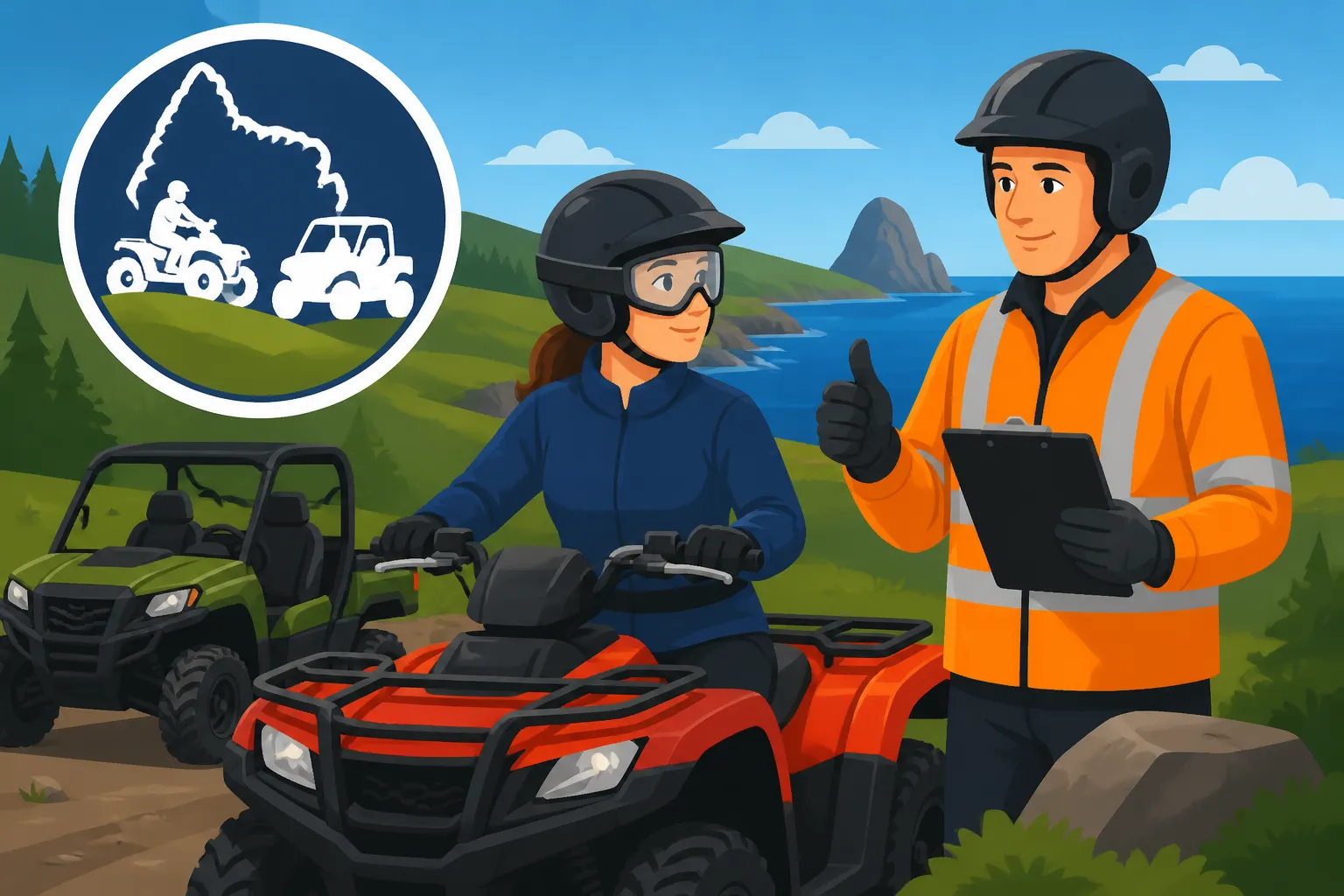
This brings us to the core of the discussion: "training checked by a supervisor." It’s not enough for a supervisor to assume a young rider has completed their mandatory safety training. The law places the responsibility on the supervisor to verify that the young operator has successfully completed an approved ORV safety course. This verification usually involves checking the official certificate of completion.
For example, before heading out on a weekend ride, a grandparent supervising their grandchild should ask to see the child's printed safety certificate. They might even call up the certificate details online if they have a physical copy to confirm its authenticity. This step is non-negotiable. If an enforcement officer stops a supervised young rider, both the rider (through their supervisor) and the supervisor themselves could be held accountable if the training proof is not readily available or was never obtained. This diligence ensures that the foundational knowledge imparted by the training is actually present, not just presumed. [Newfoundland Printable Certificates] are readily available once the online test is passed, and [Newfoundland Proof Carried While Riding] is a requirement, meaning the supervisor should ensure a copy is always on hand.
Ongoing Guidance and Reinforcement on the Trail
The supervisor's role doesn't end with a training check at the trailhead. It's an ongoing commitment throughout the ride. On the trail, the supervisor is responsible for continuously guiding and reinforcing safe riding habits. This could mean reminding the young rider about appropriate speeds, pointing out potential hazards like hidden rocks or muddy patches, or ensuring they maintain a safe following distance from other riders. It's about translating classroom knowledge into real-world application.
A skilled supervisor will use every ride as a learning opportunity. If a young rider encounters a challenging section of trail, the supervisor can talk them through it, offering tips on body positioning, throttle control, and braking. This constant feedback loop helps to solidify the training and adapt it to various riding conditions. Furthermore, ensuring the machine itself is well-maintained and equipped for safety is also part of this responsibility. Reputable brands like SuperATV offer a range of products, from durable skid plates that protect the underside of the machine to enhanced lighting options for better visibility, all of which contribute to a safer riding experience for both the young operator and their supervisor. By investing in quality components from SuperATV, supervisors can ensure the machine is as safe and reliable as possible for the young rider.
Understanding and Completing Approved Safety Training
The mandatory safety training for young ORV operators in Newfoundland and Labrador is a critical component of safe riding. It ensures that even before a young person gets on a machine, they have a solid grasp of the rules, risks, and responsibilities. Understanding how to access and complete this training is essential for both young riders and their supervisors.
Options for Newfoundland ORV Safety Training
The primary method for completing the mandatory ORV safety training in Newfoundland and Labrador is through the free online test offered via MyGovNL. This online platform provides a convenient and accessible way for individuals to learn and demonstrate their understanding of the province's Off-Road Vehicles Act and safe operating practices. The test covers a wide array of topics, from personal protective equipment and machine maintenance to environmental considerations and trail etiquette. It's designed to be comprehensive, ensuring that riders are well-versed in all aspects of responsible ORV use. [Newfoundland's Online Training Test] is the first port of call for many.
While the online test is a popular option, it’s also important to know that the Registrar may accept other approved courses. These alternative courses, often offered by third-party safety providers, might involve in-person instruction or more interactive learning modules. They can be particularly beneficial for those who prefer a more hands-on approach or have specific learning needs. Regardless of the method chosen, the content typically aligns with the same safety principles and legal requirements as the provincial online test. For details on what the test covers, you can check [What Is on the Newfoundland ATV Safety Test], and for a list of accepted alternatives, refer to [Newfoundland Approved Alternative Courses].
The Importance of a Physical Certificate
Once a young rider successfully completes the online safety test or an approved alternative course, they will receive a certificate of completion. This certificate is incredibly important because it serves as official proof that the rider has met the mandatory training requirement. Whether it's a printed document from the MyGovNL portal or a certificate issued by another recognized provider, this piece of paper (or digital equivalent) is what the supervisor will need to verify, and what an enforcement officer will ask to see if the rider is stopped on the trail.
Losing this certificate can be a hassle, so it's wise to keep a digital copy saved on a phone or email, in addition to a physical copy that can be carried on rides. If a certificate is lost, there's usually a process for looking it up or requesting a duplicate, often through the same platform where the training was completed. The key takeaway is that without verifiable proof of training, the young rider is not compliant with the law, and the supervisor could face consequences. For information on how to retrieve or confirm a certificate, you might want to review [Looking Up a Newfoundland Safety Certificate].
Equipping for Safety: Beyond Just Training
While training provides the knowledge, proper equipment and a well-maintained machine are equally vital for safety. A supervisor's role in "training checked by a supervisor" also extends to ensuring the young rider has the right gear and that their machine is in optimal condition. This includes mandatory personal protective equipment (PPE) such as an approved helmet, which must be properly fastened, and appropriate eye protection, like goggles, unless the machine has a full windshield. Long sleeves, pants, and sturdy footwear are also highly recommended to protect against scrapes, impacts, and the elements. [Newfoundland Helmet Law for Every Rider] and [Newfoundland Eye Protection Requirements] provide more specifics on these requirements.
Beyond personal gear, the machine itself needs to be safe. Regular maintenance checks on brakes, tires, lights, and steering are non-negotiable. For example, ensuring tires are properly inflated and have good tread, or that all lights are functioning correctly for rides near dusk or dawn. This is where quality aftermarket parts can play a significant role. Brands like SuperATV offer a vast selection of components designed to enhance both performance and safety, such as upgraded suspension components for a smoother, more controlled ride, or stronger axles that can withstand the rigors of the trail. By equipping a young rider’s machine with reliable SuperATV parts, supervisors can further minimize risks and ensure that the machine itself is a safe and dependable tool for learning and enjoyment.
Common Pitfalls and Best Practices for Supervisors
Even with the best intentions, supervisors can sometimes fall into traps that undermine safety or lead to non-compliance. Understanding these common pitfalls and adopting best practices is crucial for fulfilling the "training checked by a supervisor" mandate effectively and creating a truly safe riding environment for young operators.
Avoiding Assumptions About Rider Skill
One of the most dangerous pitfalls for a supervisor is to assume a young rider's skill level based on informal observation or prior experience on unregulated land. Just because a child has ridden a quad around the backyard for years doesn't mean they possess the comprehensive understanding or formal training required by law, nor does it mean they are ready for diverse trail conditions. This assumption can lead to complacency, where the supervisor might relax their vigilance or skip the crucial step of verifying formal training.
Every young rider, regardless of perceived skill, must adhere to the provincial age, machine, and training requirements. A supervisor must always operate under the assumption that these foundational requirements are paramount. The "training checked by a supervisor" rule is precisely designed to mitigate the risks associated with untrained or inadequately supervised minors. By diligently checking for the official training certificate and maintaining active supervision, you ensure that the rider is not just physically capable, but legally and knowledgeably prepared.
Legal Consequences of Inadequate Supervision
The responsibility of supervision is not taken lightly by the authorities in Newfoundland and Labrador. Failure to adequately supervise a young ORV operator, or allowing them to ride without the required training, can lead to serious legal consequences for the supervisor. These consequences can range from fines to, in more severe cases, machine seizure. Enforcement officers are empowered to issue citations for various infractions related to ORV use, and inadequate supervision or lack of verifiable training for a minor falls squarely within these enforceable areas.
Consider the potential scenario of an accident involving a young, untrained, or unsupervised rider. The legal and financial liabilities for the supervisor could be substantial, extending far beyond a simple fine. The Off-Road Vehicles Act is designed to protect riders and the public, and supervisors play a frontline role in upholding this protection. Being aware of potential penalties, such as those that might arise from situations covered in [Newfoundland Impaired Riding Penalties] (which can also relate to general non-compliance scenarios, not just impairment), or specifically [Newfoundland Penalties for No Training Proof], should underscore the importance of strict adherence to the rules.
Creating a Positive and Safe Riding Environment
Ultimately, the goal of "training checked by a supervisor" and all related ORV regulations for young riders is to create a positive, educational, and safe environment where they can learn and enjoy the sport responsibly. This means leading by example, consistently reinforcing safe habits, and conducting regular checks. A supervisor should model appropriate helmet use, responsible riding speeds, and respect for other trail users and the environment. This constant reinforcement helps ingrain safe practices into the young rider's mindset.
Before each ride, a supervisor should conduct a quick safety check of the machine, ensuring tires are properly inflated, brakes are responsive, and lights are working. They can involve the young rider in this process, teaching them the importance of pre-ride inspections. For instance, ensuring all bolts are tight, and checking fluid levels. Many SuperATV products, designed for durability and performance, are also easy to install and maintain, which can facilitate these pre-ride checks. For example, an easily accessible SuperATV cargo box allows for organized storage of safety essentials, while their robust control arms can withstand demanding use, offering peace of mind to a supervisor. By making safety a routine, positive part of the riding experience, supervisors not only meet legal requirements but also foster a lifelong appreciation for responsible ORV use.
| Age Group | Machine Type | Training Requirement | Supervision Requirement |
|---|---|---|---|
| Under 12 | Generally Prohibited | N/A (except private land with specific conditions) | Direct and constant, capable of immediate intervention |
| 12-15 Years Old | Engine size matched to age/weight | Mandatory approved ORV safety course (e.g., MyGovNL) | Direct and constant, by an 18+ licensed driver |
| 16 Years and Older | No specific engine size restriction | Mandatory approved ORV safety course (for first-time registrants) | No direct supervision required by law, but always recommended for new riders |
Disclaimer
This article is for general informational purposes only and does not constitute professional advice. Laws, prices and regulations vary by location and change over time. Consult a qualified professional for guidance on your specific situation.