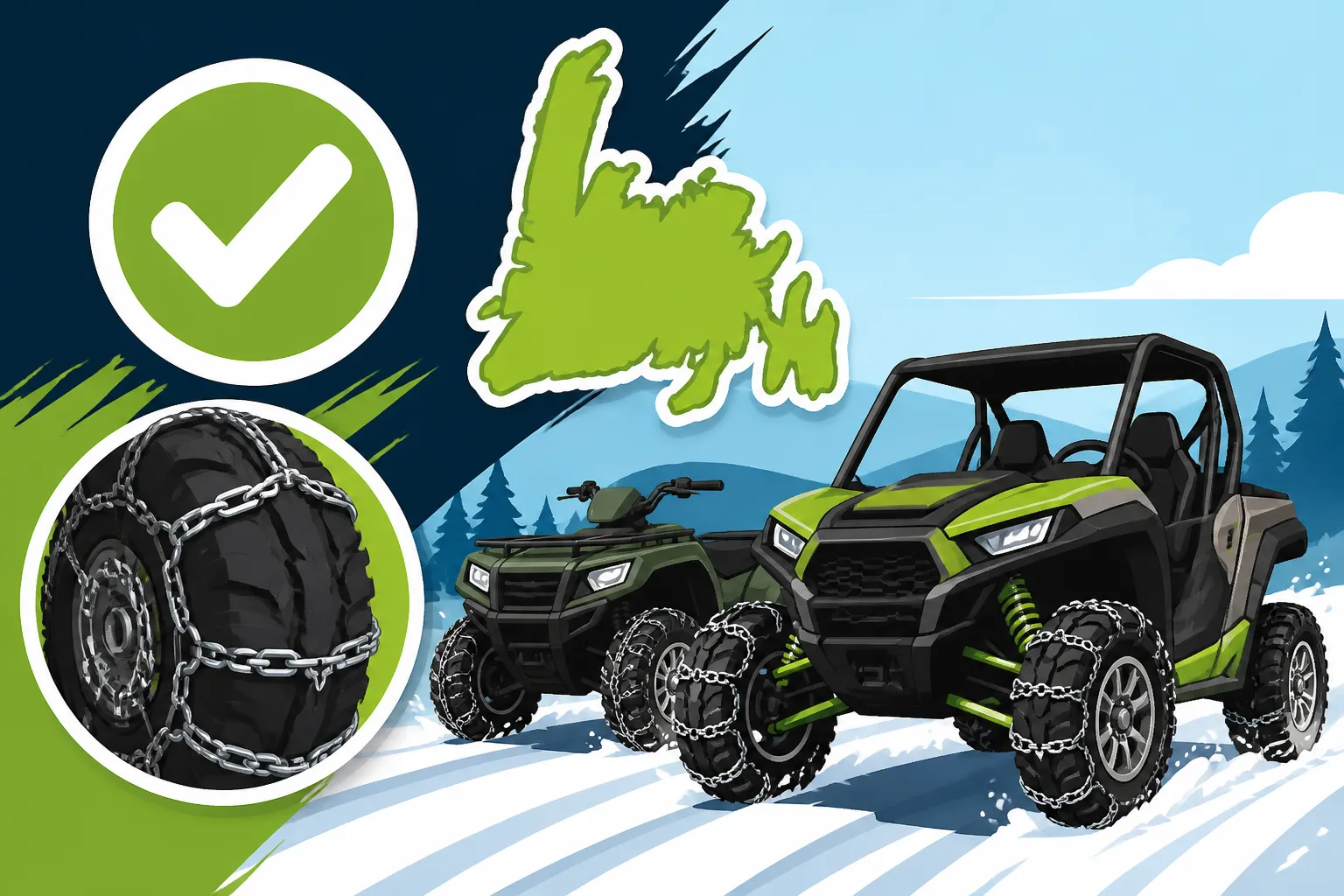
Chains Allowed Since the Rewrite
Riding your ATV or UTV in Newfoundland and Labrador often brings up a lot of questions about what's legal on our unique terrain, especially when it comes to modifications and equipment. Many riders have been frustrated in the past by unclear rules, or rules that just didn't make sense for the challenging conditions we face out on the trails and bog. This guide aims to clear up the confusion surrounding one specific, yet significant, change in the regulations: the use of tire chains on your off-road vehicle since the big legal rewrite.
Understanding the Legal Shift: Tire Chains and the 2022 Act
For years, many Newfoundland ATV and UTV riders felt like certain common-sense pieces of equipment were unfairly restricted, and tire chains were definitely high on that list. Imagine trying to navigate slick, muddy trails or icy logging roads with heavy loads, and being unsure if adding chains for critical traction was even allowed. It was a genuine headache for folks just trying to get their work done or enjoy a safe ride. Thankfully, the landscape of off-road vehicle regulations saw a significant overhaul with [Newfoundland's 2022 Statute Replaced an Older Act], specifically, a regulation numbered Thirty of 2022, which came into force in May 2022. This rewrite was a game-changer for many aspects of ORV use, and it specifically addressed the long-standing question of tire chains.
The Old Rule Versus the New Clarity
Before this significant legislative update, the rules surrounding tire chains were, shall we say, a bit grey, if not outright restrictive. The general interpretation leaned towards disallowing them, particularly on any surface that might be considered a "highway" or if there was potential for road damage. This left many riders in a bind, especially those who relied on their machines for hunting, trapping, or hauling wood, where extra traction is not just a convenience, but a necessity for safety and efficiency. It was a common source of frustration; you'd see trucks with chains, but your ATV, perfectly capable of handling rough terrain, was often denied the same critical grip.
The good news is that the new legislation explicitly clarified the use of tire chains. Gone are the days of ambiguity. The [Newfoundland Off-Road Vehicles Act] now clearly states that tire chains are allowed on off-road vehicles. This change wasn't just a minor tweak; it was a recognition of the practical realities faced by riders across the province. Whether you're pulling a heavy sled through deep snow in the winter, navigating a particularly treacherous muddy section of a cabin road, or dealing with an unexpected patch of ice, having the legal green light to equip your machine with chains provides a much-needed layer of safety and capability.
Why This Change Matters to Riders
This seemingly small amendment in the regulations has a substantial impact on rider safety and utility. For those of us who use our ATVs and UTVs as workhorses, transporting gear for hunting or fishing, or even just clearing snow around the cabin, the ability to legally use tire chains is invaluable. It means better grip, enhanced control, and a reduced risk of getting stuck or losing traction in challenging conditions. Think about those steep, rocky inclines that turn into greasy slides after a rain, or the frozen bog roads that become skating rinks in a cold snap. With chains, you gain that crucial bite, transforming a risky passage into a manageable one. It's about empowering riders to outfit their machines for maximum performance and safety in Newfoundland's diverse and often unpredictable environment.
Where and When You Can Use Tire Chains on Your ORV
Now that we know tire chains are allowed, the next logical question for any responsible rider is: where and when can I actually use them? It's not a free-for-all, and understanding the nuances is key to staying safe and compliant with [Newfoundland Equipment Requirements]. The spirit of the law change was to enable practical use, not to encourage damage to public infrastructure or unsafe riding practices.
Specific Environments for Chain Use
The primary benefit of tire chains comes into play in off-road environments where traction is severely compromised. This includes:
- Deep Snow and Ice: Our Newfoundland winters can be unforgiving. Chains are incredibly useful for snowmobiling trails that might also see ATV traffic, or for accessing remote cabins when the snow is deep and compacted or the ice is thick. They provide essential grip on frozen surfaces, making winter riding much safer, especially when pulling a sled or cargo.
- Muddy and Boggy Terrain: Anyone who's ridden in Newfoundland knows our bogs. After a heavy rain, trails can turn into a thick, mucky mess. Chains, particularly robust ones like those offered by companies such as SuperATV, can dramatically improve traction in these conditions, helping your machine pull through without getting bogged down.
- Logging Roads and Rough Gravel: These surfaces can be unpredictable. Loose gravel, coupled with inclines or declines, can cause significant traction issues. Chains can offer the stability needed, particularly when hauling heavy loads or navigating challenging gradients.
- Private Land and Cabin Access: If you're on your own property or land where you have explicit permission, chains can be used freely to improve access, clear trails, or transport materials, especially in winter or wet conditions. [Newfoundland Machines Used Only on Family Land] still benefit from these safety enhancements.
It's important to remember that while chains are now allowed, they are typically for extreme traction situations, not everyday pavement cruising. Common sense dictates that if you're riding on a well-maintained gravel road or a paved section, chains are unnecessary and could potentially cause damage or create an uncomfortable ride.
Considerations for Road and Highway Shoulders
While the Act permits chains, their use on paved or heavily trafficked public roads, even shoulders, warrants careful thought. The primary purpose of an ORV on a highway shoulder is generally for [Riding the Shoulder 1 Kilometre to Reach a Trail] or crossing a highway. In these limited scenarios, your speed is already restricted to [20 km/h on a Shoulder]. At such low speeds, and for short distances, chains are generally not needed and could even be detrimental on hard surfaces, causing excessive vibration or wear.
Using chains on paved roads can damage the road surface and the chains themselves. The intent of allowing chains is for off-road, low-traction scenarios. If you are traversing a short paved section to get to a trail, and the conditions don't demand chains, it's best to either ride without them or remove them if possible. Always prioritize safety and minimizing impact on public infrastructure. The flexibility to use chains is a tool, not a mandate for all conditions.
| Equipment Type | Before 2022 Rewrite | After 2022 Rewrite | Common Usage Scenarios |
|---|---|---|---|
| Tire Chains | Generally restricted/unclear | Explicitly Allowed | Deep snow, ice, mud, heavy hauling, steep off-road inclines |
| Head & Tail Lamps | Required for night use | Required from sunset to sunrise | Visibility for night riding, adverse weather, or low light conditions |
| Mufflers/Exhaust | Noise restrictions | Noise restrictions, specific decibel limits | Preventing excessive noise pollution, environmental compliance |
| Low-Pressure Tires | Implied for ATVs | Explicitly recognized for wheeled machines | Maximizing traction and minimizing ground impact off-road |
| Reflectors | Recommended | Required, specific placement rules | Enhancing visibility to other trail users, especially in low light |
Integrating Chains with Other ORV Equipment and Safety
The decision to use tire chains is part of a larger picture of responsible and safe off-road vehicle operation in Newfoundland. They are one tool in your arsenal, and their effectiveness is often enhanced or limited by other equipment on your machine, as well as your overall riding practices. Thinking about how chains fit into your complete setup is crucial.
Tire Types and Chain Compatibility
The type of tires you have on your ATV or UTV will significantly influence how effective tire chains are, and even how easily they can be installed. Aggressive mud tires or snow tires already offer substantial traction, and chains will only amplify that. Conversely, installing chains on heavily worn or less aggressive tires might not yield the same performance benefits. When considering chains, particularly heavy-duty options from brands like SuperATV, it's wise to ensure they are compatible with your specific tire size and tread pattern. Always check the manufacturer's recommendations for both your tires and the chains to ensure a proper fit and safe operation. An ill-fitting chain can cause damage to your tires, your machine, or even lead to an accident.
Furthermore, remember that chains change the footprint and handling characteristics of your machine. Braking distances might change, and steering could feel different. It's always a good idea to practice riding with chains on in a safe, open area before heading out on a challenging trail.
Importance of Other Safety Gear
While chains enhance traction, they don't replace other vital safety equipment. Your personal protective gear remains paramount. This includes a properly fitted helmet that meets accepted standards (like Canadian CSA or US DOT approval), appropriate eye protection (unless you have an enclosed cab), and sturdy footwear. [Newfoundland Helmet Law for Every Rider] is strict for a reason. Accidents can happen even with the best traction, and protecting yourself should always be the top priority.
Beyond personal gear, your machine itself needs to be in good working order. Regular maintenance, properly functioning [Newfoundland Head and Tail Lamp Rules] for visibility, and checking your brakes are all non-negotiable. Chains are an accessory to an already safe and well-maintained machine, not a substitute for proper care or other critical safety features. Being prepared for varying conditions, which now includes the legal use of tire chains, is what truly makes for a safe and enjoyable ride in Newfoundland.
Best Practices for Riding with Chains
Using tire chains effectively and safely involves more than just bolting them on. Here are some best practices:
- Install Correctly: Follow the chain manufacturer's instructions to the letter. Loose chains can whip around and cause serious damage. Ensure they are snug and evenly distributed on the tire.
- Check Clearance: Before riding, ensure there's adequate clearance between the chains and any parts of your machine, such as fenders, suspension components, or brake lines. This is especially critical when turning or when the suspension compresses.
- Reduced Speed: While chains significantly improve traction, they are not designed for high speeds. Always reduce your speed when riding with chains, especially on uneven terrain or when encountering obstacles.
- Trail Awareness: Be extra vigilant about trail conditions. Chains can dig in more aggressively, potentially causing more damage to soft trails if you're not careful. This is particularly important on shared trails like parts of [The T'Railway's 883 Kilometres in Newfoundland], where you might encounter hikers or cyclists.
- Remove When Not Needed: Once you're out of the slippery or low-traction conditions, remove the chains. Riding with chains on hard-packed gravel or pavement for extended periods will accelerate wear on both the chains and your tires, and can provide a jarring, uncomfortable ride.
By integrating tire chains thoughtfully into your riding practices and machine setup, you're not just complying with the updated regulations; you're actively enhancing your safety and extending the capability of your ATV or UTV across the challenging and beautiful landscapes of Newfoundland and Labrador. This change truly represents a common-sense victory for riders.
Disclaimer
This article is for general informational purposes only and does not constitute professional advice. Laws, prices and regulations vary by location and change over time. Consult a qualified professional for guidance on your specific situation.