Gros Morne Allows Machines Only on Highways
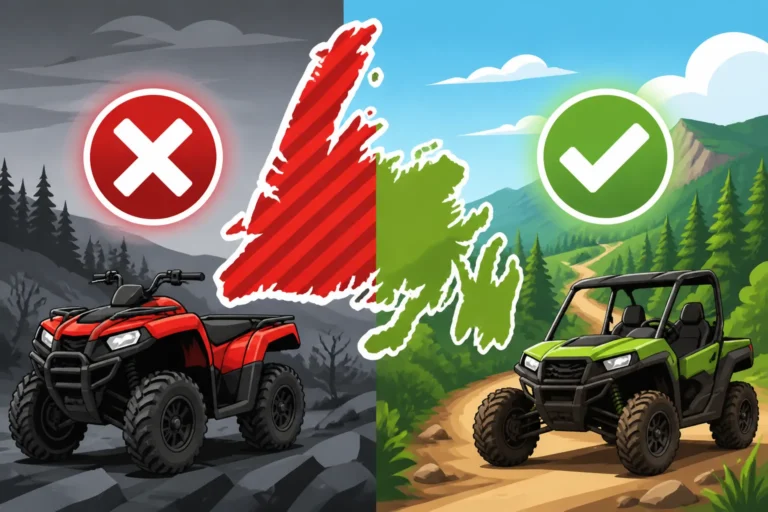
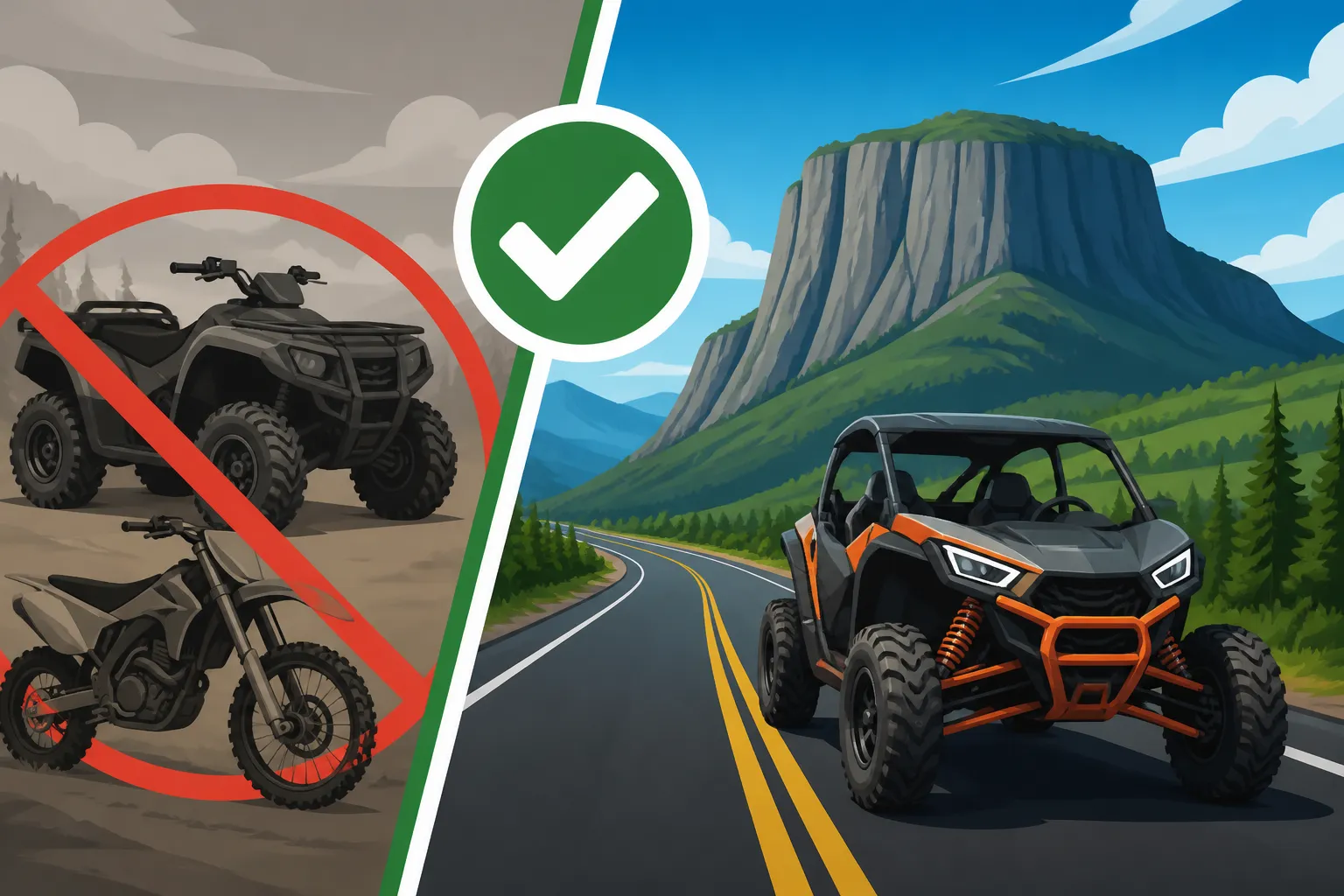
Gros Morne National Park is a spectacular place to explore, but it is not an ATV or UTV trail network: motorized off-road machines are permitted only on highways, not on hiking trails, park paths, or informal tracks. This guide explains the boundary, what to check before you ride, and how to plan a nearby trip without mistaking a visible route for legal access.
What the rule means for ATV and UTV riders
Highways are not the same as trails
The practical rule is simple: within Gros Morne National Park, an ATV or UTV may be operated only on highways. You cannot take a machine onto a hiking trail, through the backcountry, or along an unmarked track just because it looks rideable. A route’s width, tire marks, or appearance on a map does not make it an authorized motorized trail.
That distinction matters because a road shown on a map may be a park road, a service route, a private access road, or a route with restrictions. Do not assume that every road inside the park is open to off-road vehicles. Check whether your intended route qualifies as a highway and whether vehicle access is allowed there before setting out.
For a broader explanation of the park restriction, see Gros Morne Bans Machines in Newfoundland and Inside a National Park, Only Highways Are Legal. The key takeaway is not that every highway is automatically suitable for every machine; it is that riding off highway is not permitted under the park rule.
A route on a map does not prove access
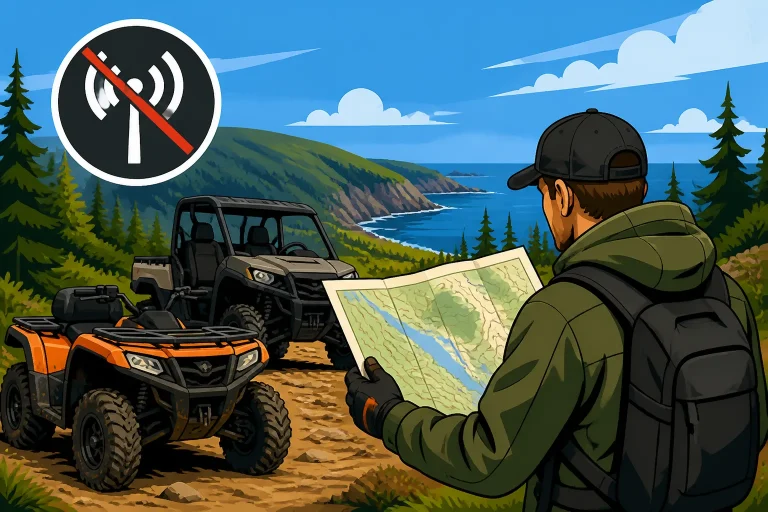
It is easy to confuse navigation information with permission. A mapping app may show a track, road, or line through the landscape without explaining whether it is open to ATVs, whether it crosses park land, or whether it has seasonal or vehicle-specific restrictions. A line on a screen is a planning clue, not a legal determination.
If you use onX Offroad or another mapping tool, use it to help understand where a route appears to go—not as proof that you can ride it. Check the route against official park information and ask the relevant authority if access is unclear. This extra check is especially important where boundaries, private property, and public roads sit close together.
For a useful overview of vehicle rules that apply in national parks, read Newfoundland National Park Vehicle Rules. If you are comparing routes beyond the park, Newfoundland Approved and Restricted Areas can also help you think about access status rather than relying on a trail name or map symbol alone.
How to plan a ride without crossing into prohibited areas
Confirm the park boundary and the route’s status
Start by identifying whether your planned ride enters Gros Morne National Park. Do not rely on a general regional map or a route description that simply says “near Gros Morne.” Look for an official park boundary map, note where the route begins and ends, and check every section that could cross into park land.
Then confirm the status of each road or trail. A route may pass near the park without entering it, but its access rules can still change along the way. It could cross private land, connect to a restricted area, or be managed under rules that differ from those inside the national park. If you cannot establish the route’s legal status, do not treat uncertainty as permission.
onX Offroad can be useful for visualizing route options and noting where a planned line approaches a boundary. Still, use it alongside authoritative access information. A route layer can help you spot a question to investigate; it cannot answer whether the park permits your machine on that specific section.
Check before towing your machine to the area
A little planning at home can prevent a frustrating day of unloading, discovering a route is closed to machines, and having to change plans on the spot. Before you tow, make a short list of the route segments you intend to use, the land or management areas they pass through, and the contact point for each unclear section. Confirm access before you commit to a trailhead or parking location.
If the planned outing includes a road within Gros Morne, ask specifically whether the road is considered a highway for the purpose of machine access and whether the type of machine you intend to ride is allowed. Avoid asking only whether “ATVs are allowed in the park,” because that broad question may not settle the status of your particular route.
The guide How to Reach Gros Morne Before You Tow can help with the logistics of getting to the area. For riding beyond the park, Newfoundland ATV Trails: The T’Railway and Beyond offers a starting point for considering other trail options, but confirm local access and conditions for the exact section you plan to ride.
| Planning question | What to verify | Why it matters |
|---|---|---|
| Does the route enter Gros Morne National Park? | Check the official boundary map and route alignment | Park rules apply once you enter park land |
| Is the road open to your machine? | Confirm the road’s status and vehicle access | A road on a map may not be open to ATVs or UTVs |
| Does the route cross other land? | Check private, restricted, or separately managed sections | Access permission can change along a route |
| Is access affected by current conditions? | Ask about closures or temporary restrictions | A normally usable route may be unavailable |
| Are your documents and equipment in order? | Check applicable registration, insurance, and operating requirements | Legal trail access does not replace rider obligations |
Permits, exceptions, and questions to ask
Do not assume a permit makes any route available
A permit should not be treated as a general pass to ride park trails. If you have heard that a permit may be possible, find out what it covers, who can issue it, and whether it applies to your specific activity and route. A permit process may be limited to particular circumstances; it does not mean that a recreational rider can request access to any trail.
The relevant question is not simply, “Can I get a permit?” It is, “Is a permit available for this purpose, and does it authorize this machine on this exact route?” If the answer is unclear, pause your plan and seek clarification from the park authority before riding.
For related guidance, see Asking Gros Morne for a Trail Permit and When a Park Superintendent May Issue a Permit. These topics are worth checking before you build an outing around an exception that may not apply to your situation.
Ask precise questions and keep the answer with your trip notes
When contacting a park office or another land manager, be specific. Give the route name or road number if you have it, describe where you plan to enter and exit, name the vehicle type, and explain whether you are asking about travel on a public road, a managed trail, or a service road. Vague descriptions can lead to vague answers.
Ask whether the route is inside the park, whether ATVs or UTVs are permitted on it, whether restrictions apply to your direction of travel, and whether a temporary closure is in effect. If someone directs you to another authority, make a note of the contact and follow up with that organization. Save the information with your route plan so everyone in your group is working from the same understanding.
Rules can also differ outside the park. A trail or road just beyond the boundary may have its own conditions, and a machine’s registration or insurance does not grant access to land where riding is prohibited. The Newfoundland Approved and Restricted Areas guide is a useful reminder to verify the status of the land itself, not only the machine’s paperwork.
Finding a suitable alternative nearby
Choose a ride outside the park and verify every segment
If your goal is a full recreational ATV or UTV ride, plan it outside Gros Morne National Park rather than trying to fit a trail ride into the park’s highway-only rule. Look for a route managed for motorized use, then confirm that the exact section is open to your machine and that you meet any applicable sticker, training, registration, insurance, and equipment requirements.
A nearby route is not automatically a legal route. It may pass through approved land, restricted land, private property, or an area with seasonal conditions. Treat the route as a series of segments to check rather than one uninterrupted trail. This is especially helpful when a ride begins near a community and continues toward more remote terrain.
You can use onX Offroad to compare possible lines and keep a rough sense of distance or route direction, but verify access through the relevant trail operator or land manager. If the app and official guidance appear to disagree, follow up before riding rather than choosing the interpretation that makes the trip easier.
Build a backup plan for weather and access changes
West coast Newfoundland conditions can shift quickly, and trail surfaces may be affected by rain, fog, or local closures. Build flexibility into the outing: choose a primary route and a backup that is also confirmed for motorized use. Make sure your group knows where the routes separate and where you will turn around if signage or conditions do not match your plan.
Before unloading, look for posted signs and barriers. A route that was open when you planned the trip may be closed by the time you arrive. Do not go around a gate, follow fresh tire tracks past a closure sign, or assume that a lack of signage grants access. If the status is uncertain, choose the verified alternative.
For practical preparation, Newfoundland Trail Conditions Before You Ride is a useful companion topic. You may also want to review Newfoundland Managed Trail Rules when your alternative route uses a managed trail. Keeping park sightseeing and ATV riding as separate parts of your trip usually makes the day smoother: enjoy Gros Morne on foot or by road where permitted, and ride only on routes confirmed for machines.
Disclaimer
This article is for general informational purposes only and does not constitute professional advice. Laws, prices and regulations vary by location and change over time. Consult a qualified professional for guidance on your specific situation.