Newfoundland Trails With Ocean Views
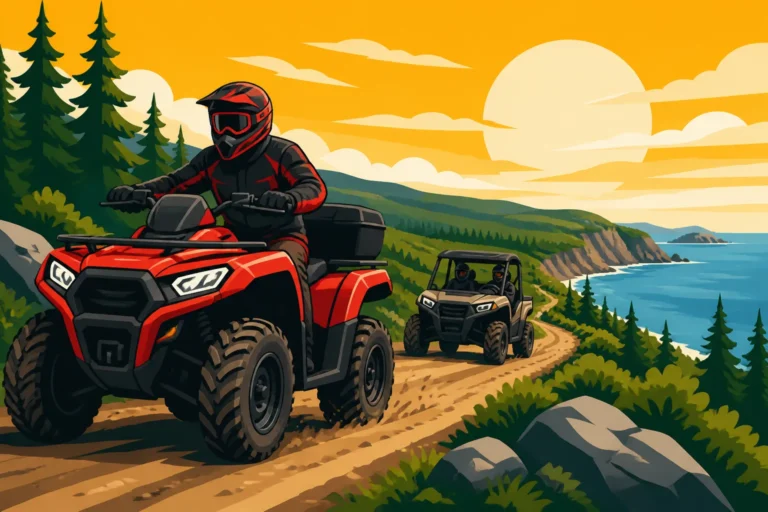
A coastal ride in Newfoundland can shift from a clear view of the Atlantic to fog, soft ground, or a route that crosses private property in a matter of minutes. This guide explains how to plan for ocean-view riding responsibly: where to look for suitable areas, how to confirm access, and what to check before you unload your ATV or side-by-side.
Where to look for Newfoundland trails with ocean views
Start with established routes, not the shoreline
The safest place to begin planning is with an established trail or route that is open to your type of off-road vehicle. Newfoundland’s long coastline can make an unmarked track look inviting, but a scenic view does not mean the land is open for riding. A route may cross private property, a protected area, wetland, or land with seasonal restrictions.
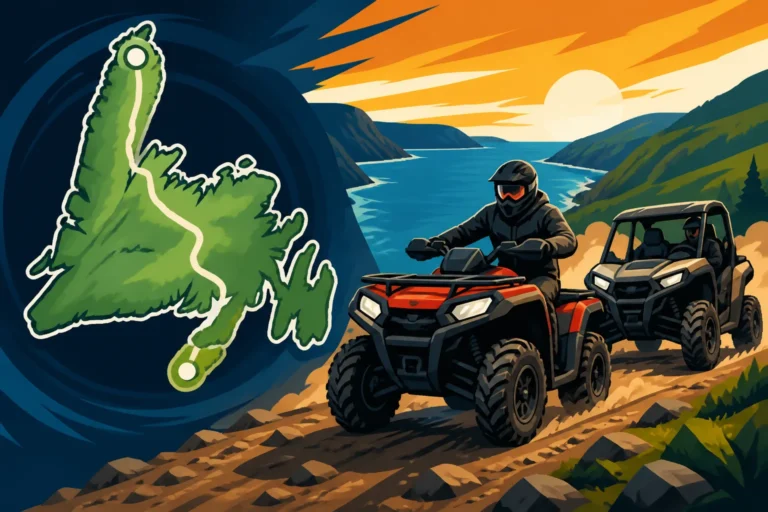
The T’Railway is a well-known example of a long, multi-use corridor that passes through communities and varied landscapes. Some sections may offer coastal scenery or glimpses of the water, but views depend on the stretch, weather, vegetation, and nearby land. Check the route and access information before setting out rather than assuming the whole corridor follows the coast or is equally suitable for every machine. For background on the route, see [Newfoundland's Old Railbed Turned Trail].
A useful starting point is to choose a broader region—such as the Avalon, Bonavista Peninsula, Burin Peninsula, or western Newfoundland—and then look for a confirmed riding route within it. Local knowledge can help you narrow the search, but it should not replace checking whether the route is currently open and appropriate for an ATV or UTV.
Treat a coastal view as a planning feature, not permission
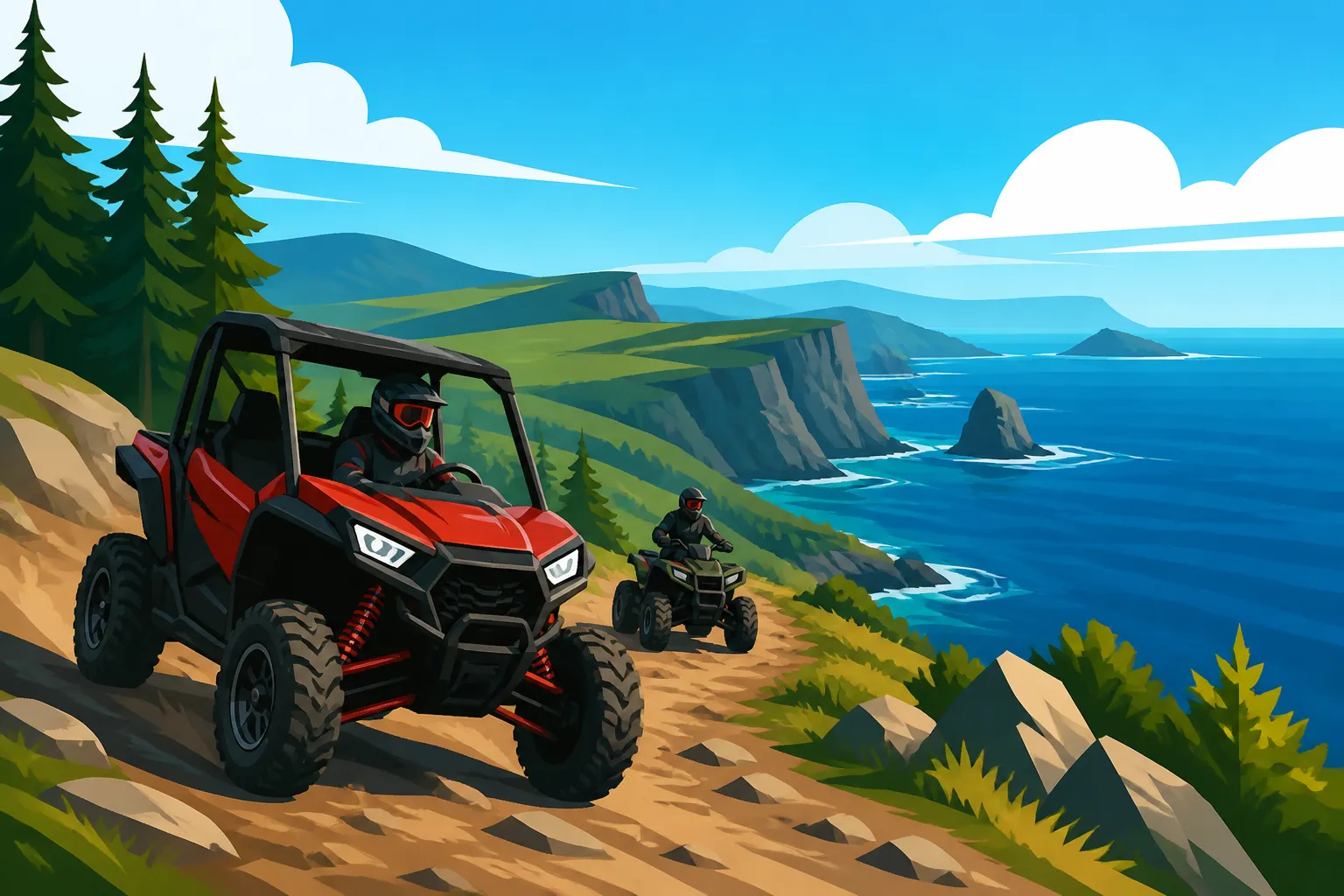
A map may show a trail running near the shore without showing whether riders can legally reach the shoreline itself. The trail could pass above a cliff, skirt a private parcel, or approach a beach where machines are not allowed. Keep your route on approved trails and roads, and do not ride down to the water unless access for off-road vehicles is clearly permitted.
That distinction matters especially around sensitive coastal habitats. A shortcut across wet ground can leave deep ruts, damage vegetation, or disturb wildlife. A track that seems firm when it is dry may turn into a muddy, vulnerable area after rain. If the marked route ends or becomes unclear, turn around instead of following tire marks toward the coast.
For a broader overview of access rules, read [Newfoundland Crown Land Access Rules] and [Newfoundland Restricted Area Permissions]. If a route is near a national park, do not assume that a scenic trail is open to machines; check the specific rules for the area. [Newfoundland National Park Machine Rules] is a useful place to start.
How to choose a coastal ride that suits your group
Match the route to your machine and experience
A scenic route is only a good choice if your group can ride it comfortably. A smooth gravel or railbed section may work for newer riders, while a narrow, rough, exposed route may be tiring or risky for a group with children, passengers, or limited off-road experience. Check the expected surface, distance, elevation changes, and opportunities to turn back before you commit.
For a side-by-side, check that the route permits the machine’s size and type. A wide vehicle may not fit comfortably on narrow trails, and a route used by hikers or cyclists requires extra patience and space. If you are riding a mixed group, plan around the least experienced rider rather than the most confident one.
| Planning factor | What to check | Why it matters |
|---|---|---|
| Access | Is the route approved and open to your vehicle type? | A visible track is not proof of permission |
| Surface | Gravel, rock, mud, bog, or mixed terrain | Affects difficulty, speed, and recovery needs |
| Exposure | Wind, fog, steep edges, or limited shelter | Coastal weather and terrain can change the ride quickly |
| Distance | Total route length and safe turnaround points | Helps prevent a short outing from becoming an exhausting one |
| Services | Fuel, food, cell coverage, and parking | These may be limited away from communities |
| Group needs | Passenger comfort, rider skill, and machine width | Keeps the route manageable for everyone |
An app such as onX Offroad can help you organize route ideas and save notes when planning, where its mapping coverage is useful. Treat it as a planning aid—not as confirmation that a route is legal, open, or safe. Cross-check with provincial information, trail operators, and local authorities where needed. For help thinking about difficulty, see [Newfoundland Trail Difficulty Ratings].
Plan around weather, visibility, and the return trip
Coastal weather can change the feel of a ride fast. Fog may reduce visibility, wind can make exposed stretches uncomfortable, and rain can change the condition of a trail. Check the forecast for the route area, not just the nearest town, and be prepared to shorten the ride. If you can no longer see the trail clearly or judge the terrain ahead, slow down or turn back.
Build in time for the return trip. Riders sometimes focus on reaching a viewpoint and forget that the same distance still has to be covered back to the trailer or cabin. Estimate a realistic pace for the whole group, allow for breaks, and agree on a turnaround time before leaving. A scenic stop should not become pressure to push on after conditions have worsened.
Cell service can be unreliable in remote areas. Save useful route information before you leave, carry a paper map where practical, and tell someone where you expect to ride and when you plan to return. onX Offroad may be useful for keeping your own notes or reviewing route options, but have a backup plan if your phone loses signal or battery power. [Cell Dead Zones Along the Railbed] and [Carrying a Paper Map Where There Is No Signal] cover two common planning headaches.
Coastal riding etiquette and safety
Stay on the route and give other trail users room
Ocean-view routes can attract more than ATV and UTV riders. You may meet walkers, cyclists, other riders, or vehicles servicing a trail. Reduce speed when approaching others, give them room, and wait until it is safe to pass. On a shared corridor, a relaxed pace is often the difference between a pleasant day out and a close call.
Do not widen a trail to get around mud or a puddle. Riding around the edge can damage plants and turn a narrow soft spot into a broad, persistent rut. If the route is too difficult for your machine or the group, turn around rather than creating a new line. Pack out food wrappers, broken straps, and other gear; litter and trail damage can affect access for everyone.
Before setting off, confirm that your machine is properly registered and that you have the required documents and equipment. If you are new to riding in the province, review [Newfoundland ATV Rules Riders Get Wrong] and [Newfoundland Trail Etiquette Locals Expect]. A little preparation can prevent an avoidable stop or a disagreement about access.
Prepare for a breakdown away from help
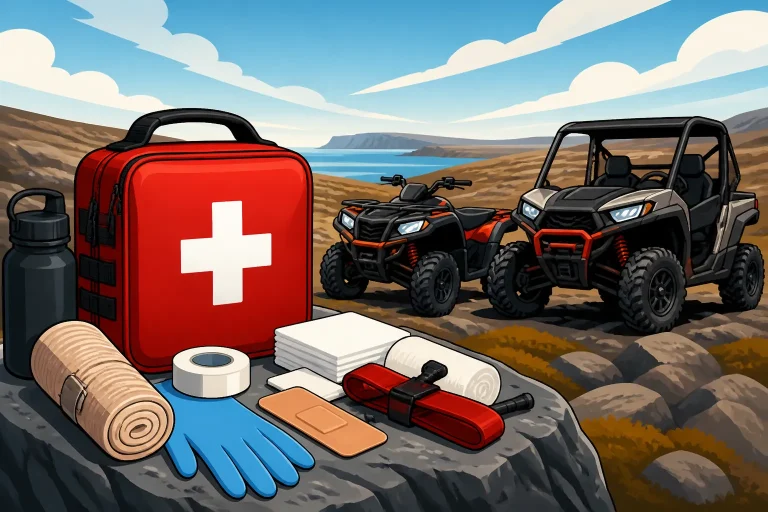
A coastal ride can take you beyond quick access to fuel, help, or a roadside service. Carry water, basic first aid, a charged phone, and the tools and recovery gear suitable for your machine. A tow strap is useful, but only if you know how to use it safely and have an appropriate recovery point. Avoid trying to pull a stuck machine from an unsafe angle or from unstable ground near water or steep terrain.
Before departure, check tires, brakes, lights, fuel, and any belts or fluids your machine requires. Secure cargo so that it cannot shift or obstruct the plate. If your route includes rough or remote sections, tell your group what to do if a machine becomes disabled: who stays with the rider, who contacts help, and whether the rest of the group should proceed to a safer place.
A map app can help you keep track of planned stops, but it should not be your only safety tool. Download or save what you need before leaving service, carry an offline backup where possible, and make sure at least one other person knows your route. For a deeper preparation checklist, see [Packing for Weather That Changes Every Hour] and [What to Carry for First Aid on the Barrens].
A practical checklist before you ride
Confirm access, then make a flexible plan
Before loading up, verify that the route is open and that your vehicle is allowed. Check whether the trail has seasonal closures, operator requirements, or special restrictions. If a route crosses private land, do not rely on an old tire track or a map line as permission. Ask the landowner or the relevant trail operator when access is uncertain.
Use this quick sequence:
- Choose a confirmed trail or route in the region you want to explore.
- Check vehicle access, closures, and any local restrictions.
- Review the surface, distance, and difficulty for the least experienced rider.
- Check local weather and identify a sensible turnaround point.
- Save route information and tell someone your plan.
- Inspect the machine, secure your gear, and carry supplies for delays.
- Stay on the route, respect other users, and turn back if conditions change.
If you are using onX Offroad to collect route ideas, compare what you see with authoritative local access information before riding. A mapped line can be helpful for orientation, but it cannot replace signs, current closures, or permission from a landowner.
Leave room for the day to change
The best coastal ride is not necessarily the one that reaches the farthest point. It is the one that stays enjoyable and safe for the whole group. Fog, a washed-out section, a tired passenger, or a route that feels rougher than expected are all good reasons to change the plan. Turning around is a sound decision, not a failed outing.
If you are visiting an unfamiliar area, ask a local trail operator or community office about current access before you travel. Keep your plans flexible, avoid assuming that every scenic coast is open to machines, and give yourself enough daylight and fuel for the return. Those habits make it easier to enjoy Newfoundland’s coastal landscapes without putting people, property, or trails at risk.
Disclaimer
This article is for general informational purposes only and does not constitute professional advice. Laws, prices and regulations vary by location and change over time. Consult a qualified professional for guidance on your specific situation.