Newfoundland Riding on the Bonavista Peninsula
Riding the Bonavista Peninsula can mean anything from a relaxed inland outing to a long, exposed day where fog, bog, and changing weather complicate the plan. The hard part is knowing which routes are actually open to ATVs and side-by-sides. This guide explains how to plan responsibly, check access, prepare your machine, and make better decisions on the trail.
Planning a Bonavista Peninsula Ride
Start with a route, not just a destination
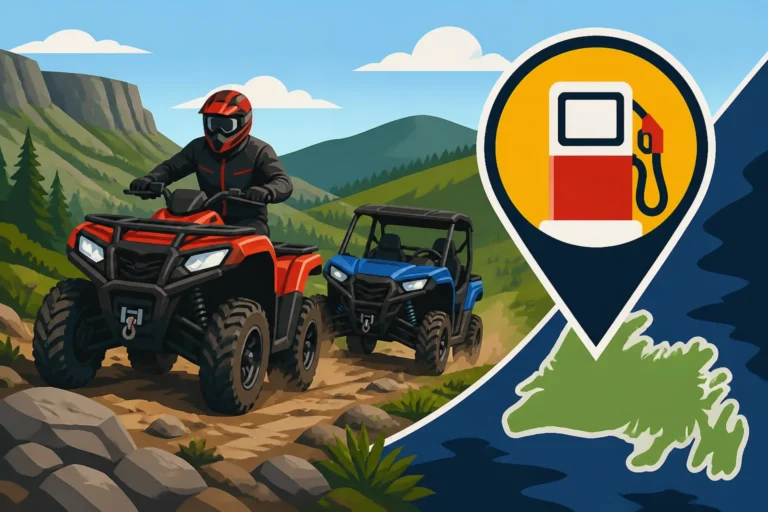
The Bonavista Peninsula is dotted with communities, coastal viewpoints, old roads, inland terrain, and private property. Seeing an inviting track on a map does not mean it is an authorized ATV route. Before unloading near Bonavista, Trinity, Port Rexton, Elliston, or Catalina, work out where you are permitted to ride and how you will get there legally.
Start with a specific destination and a conservative route plan. Check whether the route is on an approved trail or area, whether it crosses private land, and whether any seasonal or temporary restrictions apply. If the route connects to a community road, do not assume that road is open to off-road vehicles. Local bylaws and signs may affect access, and permission from a landowner may be needed to cross private ground.
It also helps to plan a shorter first ride rather than trying to connect several communities in one day. A route that looks straightforward on a screen can take much longer when it includes rough ground, stops to check directions, or a weather delay. For broader regional context, see [Newfoundland ATV Trails: The T'Railway and Beyond]. The T’Railway is one part of Newfoundland’s trail network, but it should not be treated as blanket permission to ride any track near the peninsula.
Confirm access before you load the trailer
Check official provincial information and contact the relevant trail operator, land manager, or community office when the route is unclear. Maps can help you understand the terrain, but they do not always show whether a trail is open to ATVs, whether a section has been closed, or whether a line crosses land where you need permission. If you are using an app such as onX Offroad to review routes or record a ride, treat it as a planning aid rather than proof that access is legal.
A useful check is to compare several sources: the provincial approved-area information, local signs, trail-operator updates, and direct guidance from the office responsible for the land. The same mapped line may pass through different land types, each with its own rules. If no one can confirm that a route is open, choose a route that is clearly authorized instead of testing the boundary on the day.
Keep a simple record of what you checked and when. That can be as practical as noting the contact you spoke with, saving a map screenshot, and writing down any closure information. Conditions and access can change, so recheck before a later trip rather than relying on last season’s plan. [Finding Approved Areas on the Provincial Map] offers a useful starting point for understanding how to check approved riding areas.
Build in more time than the map suggests
A peninsula ride can feel slow even when the distance looks modest. Rough surfaces, narrow trails, washouts, wet ground, and frequent navigation checks all add time. A group also travels at the pace of its least experienced rider, not the pace of the fastest machine. Plan turnaround times and a firm point at which the group heads back, especially if the route is exposed or unfamiliar.
Give someone who is staying behind your planned route and expected return time. Agree on what they should do if you are overdue, and update them if your plan changes. On the ride itself, keep the group together at junctions: wait for the last rider, confirm the next turn, and avoid leaving anyone to guess which track the others chose.
If you are visiting the area, your first day is a good time to keep things simple. Ask locally about recent conditions, choose a route with a clear return plan, and avoid stretching a ride just to reach a distant viewpoint. A shorter outing with enough daylight to handle a delay is usually a better introduction than a long loop that leaves no room for a wrong turn.
Choosing Routes and Understanding Access
Public land is not automatically open riding land
One of the easiest mistakes to make is assuming that land without a fence or house is open for motorized recreation. Newfoundland’s Crown land rules distinguish between areas where riding is permitted and places where access is restricted or limited to designated trails. Private land can also lie within a larger-looking wilderness area, and a track across it may require the owner’s permission.
Before riding, look into [Newfoundland Crown Land Riding Rules] and check whether the proposed area is approved for the type of machine you plan to use. Pay attention to signs and barriers, and do not move, bypass, or ride around them. A route that was open on a previous trip may have changed because of a closure, land-use decision, damage, or local restriction.
A ride that crosses multiple kinds of land needs more than one quick map check. Ask who manages each section and whether your intended machine is allowed. If you cannot identify the land manager or confirm access, choose another route. The inconvenience of changing plans at home is far smaller than the trouble of discovering a restriction after you have unloaded.
Look beyond the line on a digital map
Digital maps can be useful for seeing terrain, locating intersections, and keeping track of your position. They can also create a false sense of certainty. A line may be an old woods road, an informal track, a property boundary road, or a route intended for another use. It may not be maintained, open, or suitable for an ATV or side-by-side.
If you use onX Offroad or another mapping tool, check what the map layer actually represents and compare it with official access information. Download or save the information you may need before leaving a reliable connection, and bring a backup such as a paper map or a second device. Battery loss, poor signal, and a cracked screen are ordinary problems on a long ride, not rare emergencies.
Pay special attention to junctions. Parallel tracks can appear close together while leading to very different places, and a small navigation mistake can put a group on private land or beyond the intended route. Stop somewhere safe to confirm the direction rather than turning around abruptly in a narrow trail. [Newfoundland Trail Conditions Before You Ride] is also worth reviewing when you are planning a route in unfamiliar terrain.
Treat community roads and private approaches carefully
A road near a community is not necessarily an ATV route. Some roads may be public streets, some may serve private property, and some may be access roads with rules set by a municipality or landowner. Do not ride through a settlement or along a public road simply because it seems like the most convenient way to join two trails. Check local rules and posted signs first.
The same caution applies to driveways, wharves, fields, and tracks leading to coastal viewpoints. These places may be privately owned or actively used by residents, fishers, or local businesses. Riding across them without permission can create conflict and damage the community’s willingness to welcome riders. If you are unsure, stop and ask rather than treating an open gate or well-used track as an invitation.
For a route that approaches a town, contact the community council or town office about local rules before unloading. A quick question can clarify whether a street or access road is open to off-road vehicles and whether there are restrictions that do not appear on a regional map. Leave room in your plan for an alternate route if the answer is no.
| Planning question | What to check | A safer response if unclear |
|---|---|---|
| Is this trail open to my machine? | Official access information and signs | Choose a route with confirmed access |
| Does the route cross private land? | Property information and landowner permission | Do not cross without permission |
| Is a road open to ATVs? | Local bylaws and posted restrictions | Ask the town office or avoid the road |
| Has the trail changed recently? | Operator updates and local reports | Recheck close to departure |
| Will my map work without service? | Offline access, battery, and backup navigation | Carry a second navigation option |
Preparing for Peninsula Conditions
Expect weather to change the ride
Coastal Newfoundland weather can shift quickly. Fog may reduce visibility, wind can make an exposed section uncomfortable, and rain can turn soft ground into a slower, more demanding route. A forecast that looks manageable in town may not describe conditions on open ground farther along the peninsula. Before leaving, check the local forecast and pay attention to wind and visibility as well as rain.
Set a simple decision rule for the group. For example, agree that you will turn back if visibility becomes poor enough that riders cannot keep a safe distance, or if the route becomes too wet to travel without rutting it. Having that conversation before the ride makes it easier to change plans without one person feeling pressured to continue.
Pack for a full day even if you expect a short outing. Bring rain gear, warm layers, water, food, a first-aid kit, and a charged phone stored where it is protected from water. Add a paper map or offline navigation, and make sure someone in the group knows how to use it. The useful test is not whether you expect to need the gear; it is whether you would be comfortable if a mechanical problem delayed your return.
Ride gently through boggy or soft ground
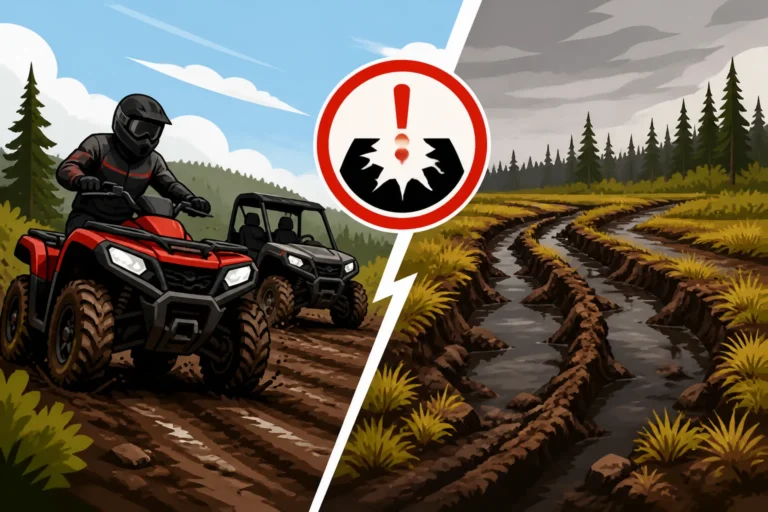
Soft ground is not just a traction problem. Repeated passes through wet or vulnerable terrain can cut deep ruts that channel water and make the route worse for everyone. If a section is too soft to cross without spinning tires or digging in, do not treat more throttle as the solution. Stop, assess the surface, and consider turning back or taking a confirmed alternate route.
Avoid widening an existing trail to get around mud. Riding around a wet patch can damage vegetation and create a second track that encourages others to do the same. If a route is visibly deteriorating, report the issue to the appropriate trail operator or land manager rather than trying to “fix” it with repeated vehicle passes.
Carry a tow strap and know how your group will use it safely before anyone gets stuck. Choose a recovery point and keep bystanders clear of tensioned straps. If a recovery would require damaging a machine, pulling from an unsafe point, or entering deeper ground, stop and reassess. [Newfoundland Trail Closures After a Storm] can help explain why waiting for conditions to improve may be the responsible choice.
Prepare your machine and passengers
Before a ride, check tires, brakes, steering, lights, belts where relevant, and any loose cargo. Make sure the plate is visible and the machine is equipped as required for the way you intend to ride. A quick inspection at home is easier than discovering a loose wheel or weak battery after reaching a remote trailhead.
Bring basic tools and the parts your machine is most likely to need, based on its condition and the trip length. A spare belt may be useful on some machines, while a tire repair kit, inflator, and tow strap are practical additions for many groups. Secure fuel and cargo properly, and do not overload a rack or passenger area in a way that affects handling.
Passengers need a proper seat and protective gear, and the operator should be comfortable with the machine before taking someone along. Explain how to stay seated, where to hold on, and what to do if the group stops. If children are riding, check the rules that apply to age, supervision, training, and passenger seating before the trip. Keep the plan appropriate to the least experienced rider in the group.
Riding Responsibly Around Local Communities
Keep noise and trail behaviour considerate
The peninsula is home to year-round communities, not just a riding destination. A machine that feels quiet on an open trail can be disruptive near homes, cabins, or a community road. Use a properly functioning muffler, avoid unnecessary revving, and slow down near residences and other trail users. If a route passes close to a home or work area, keep the group moving calmly and avoid stopping to gather beside the property.
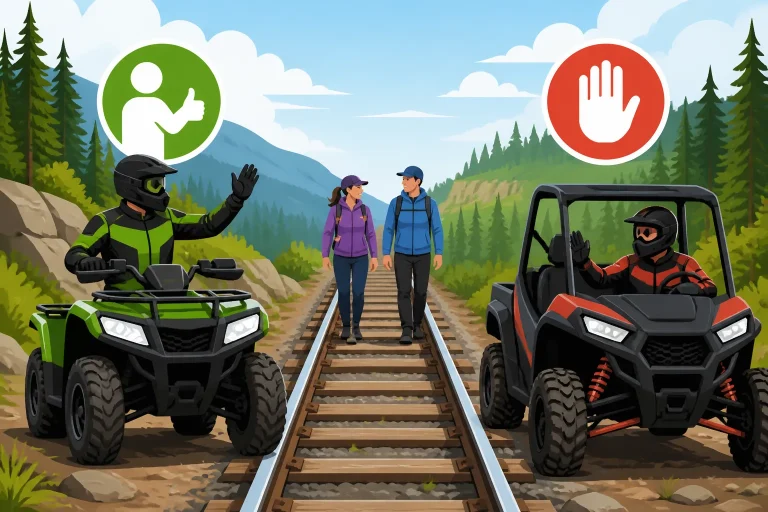
Shared trails may also be used by hikers, cyclists, snowmobilers, or other vehicles. Slow down when approaching people, give them space, and follow posted directions. On a narrow trail, make sure the other user has a safe place before passing. Dust, noise, and flying debris can be especially unpleasant when someone is walking or cycling, so reduce speed rather than expecting them to step aside.
Good etiquette protects access in a practical way. A respectful group is less likely to prompt complaints or conflict, while careless riding can make local residents less comfortable with motorized access. For a fuller set of expectations, see [Newfoundland Trail Etiquette Locals Expect]. It is worth discussing the basics with everyone in the group before the first machine starts.
Leave gates, signs, and land as you found them
A closed gate is a clear reason to stop and check, not an obstacle to work around. Do not move a barrier, remove a sign, or take an unofficial detour to get around a closure. If a gate is open, that alone does not prove the route is authorized; it may have been left open for local work or property access.
Pack out food wrappers, broken parts, and anything else your group brings in. Do not dump waste, cut vegetation, or create a new route around a difficult section. If you spot damage, a fallen tree, or a washed-out area, note the location and report it to the trail operator or land manager. Avoid posting precise directions to a sensitive or restricted location as though it were a public riding spot.
When using a cabin or stopping point, keep noise and parking considerate and do not assume that a building, shelter, or clearing is public. A space that looks unused may belong to someone or serve a specific local purpose. Ask permission when needed and leave the area clean enough that the next visitor would not know your group had stopped.
Respect wildlife and other outdoor users
Wildlife may appear unexpectedly, particularly on quiet stretches away from settlements. Reduce speed when visibility is limited, avoid chasing or crowding animals, and give them room to move away. If an animal is on the trail, stop at a safe distance and wait rather than accelerating toward it or surrounding it with several machines.
Stay on permitted routes and avoid riding through sensitive habitat or wet ground simply to get a closer look. A machine can cause lasting damage even when the rider intends to be careful. If posted information identifies a restricted area or seasonal closure, follow it and reroute. Local wildlife rules and access restrictions can change, so check current guidance before a trip rather than relying on what another rider remembers.
Other visitors may be looking for a quiet walk, a view, or a place to fish. Slow down near trailheads and popular stopping points, and do not block access with a group of parked machines. When in doubt, leave more space than you think is necessary. A little patience makes shared use safer and helps protect the welcome riders receive in communities around the peninsula.
Sample Ride-Day Plan and Final Checks
Use a simple before-you-go routine
A short checklist can prevent the familiar last-minute scramble: a machine is loaded, someone has forgotten their certificate, and no one knows whether the planned route is open. The day before, confirm access, check local conditions, and tell your contact at home where you expect to ride. On the morning of the trip, check the forecast again and make a go-or-no-go decision based on the group’s experience and the route.
Before unloading, review the route with everyone. Point out major junctions, the planned turnaround point, places where the group will regroup, and the procedure if someone becomes separated. Confirm that the lead rider and sweep rider have working communication and that each person knows who to follow. A group does not need elaborate systems, but it does need a shared plan.
Carry required registration, insurance, training, and trail-related proof for the ride you are taking. Check what applies to your machine and route instead of assuming one document covers every requirement. If you are unsure about the rules, review the relevant provincial guidance before departure. Useful background includes [Newfoundland Safety Training Is Mandatory] and [The Trail Sticker and Training Proof Newfoundland Requires].
Make a flexible day plan
A sensible peninsula outing leaves room for stops, navigation, and a change of weather. One example is to unload at a confirmed legal trailhead, ride a modest loop or out-and-back, and return with enough daylight to handle a delay. The exact route depends on access, conditions, and the group; the important point is to avoid making an ambitious distance the measure of a successful day.
Set check-in points where the group can safely stop and confirm that everyone is together. If a rider is uncomfortable, the route is deteriorating, or visibility is worsening, use the next safe opportunity to turn around. Do not let the fact that you have already driven to the peninsula or unloaded machines become a reason to push through a bad decision.
For a multi-day visit, reassess each morning. Conditions that were fine on one section may be different elsewhere, and a route that worked yesterday may be affected by rain, maintenance, or a new restriction. Keep a note of what you learned, but verify it again before repeating the ride. [Newfoundland Riding Season and Weather] can help you think through how the season affects planning across the province.
Know when to shorten or cancel the ride
Cancel or shorten the trip if you cannot confirm legal access, if severe weather is expected, or if the group lacks the equipment and experience for the planned route. It is also reasonable to stop when a machine develops a problem, a rider becomes tired, or a trail becomes too soft to cross without damage. Calling it early is not a failure; it is good judgment.
A particularly useful rule is to agree in advance that anyone can ask for a turnaround without needing to defend the decision. That helps newer riders speak up before a small concern becomes a safety issue. If the group splits for any reason, make sure every rider has a clear route back and a way to communicate; otherwise, stay together.
The Bonavista Peninsula rewards a slower, more thoughtful approach. Confirm where you are allowed to ride, prepare for changing conditions, and leave room for the unexpected. With those basics in place, you can enjoy the landscape without turning a pleasant outing into a stressful search for a way back.
Disclaimer
This article is for general informational purposes only and does not constitute professional advice. Laws, prices and regulations vary by location and change over time. Consult a qualified professional for guidance on your specific situation.